

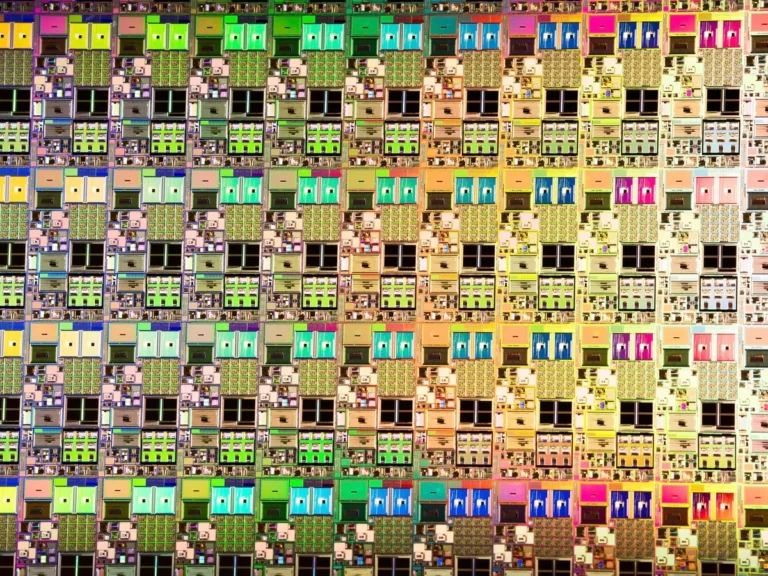

The groundbreaking Huawei SuperCluster, engineered on the revolutionary Peerium architecture, is designed to unify a massive array of 1 million AI accelerator chips into a cohesive supercomputer capable of training 40-trillion-parameter neural networks.
The Huawei SuperCluster and the Challenge of Multi-Trillion-Parameter AI
The global race to construct next-generation artificial general intelligence has collided with severe physical bottlenecks: standard server clustering architectures are rapidly hitting diminishing returns. Training frontier foundation models requires orchestrating hundreds of thousands of high-performance accelerators, yet actual compute utilization plummets due to crippling latency during cross-node gradient synchronization. Addressing this systemic challenge, technology giant Huawei has unveiled a radical departure from traditional supercomputing paradigms called Peerium.
Announced during the company’s annual flagship CONNECT conference, computing systems powered by Peerium are specifically engineered to train foundation language models ranging from 10 to 40 trillion parameters. For context, contemporary western technological flagships—such as NVIDIA’s GB200 NVL72 liquid-cooled rack architecture and Cerebras’s wafer-scale CS-3 engine—are currently calibrated to handle models at the single-trillion parameter threshold.
According to Liao Heng, chief scientist for Huawei’s semiconductor design arm HiSilicon, approximately six to seven frontier AI laboratories in China will be actively training models between 10 and 40 trillion parameters over the next two years. Supporting such ambitious computational workloads makes scaling infrastructure to one million interconnected processors an unavoidable strategic imperative.
The fundamental barrier in training models of this immense scale is the communication-to-computation ratio. As model parameters scale exponentially, the overhead required for all-reduce collective communications across disparate server chassis frequently outstrips the time taken for forward and backward tensor passes, leaving clusters idling up to 70% of the time.
Three Pillars of Peerium: Making One Million Chips Function as One Machine
Traditional datacenter configurations house accelerators in discrete blade chassis connected via standard Ethernet switches or InfiniBand fabrics. As clusters scale into tens of thousands of nodes, processors spend unacceptable portions of runtime waiting for packet transfers across adjacent racks. Peerium circumvents this structural impasse through three synchronized architectural breakthroughs.
The first pillar is nested parallelism. Workloads are recursively divided across hierarchical processing tiers: local matrix layers execute within intra-chassis chip modules, intermediate activations distribute across localized racks, and global model synchronization coordinates across macro SuperPoDs. This mirrors an efficient corporate structure where localized teams execute tactical tasks autonomously without encumbering executive leadership.
The second element is unified memory addressing. Every processor in the cluster is granted direct read-and-write access to memory spaces across remote server racks, eliminating intermediate host-memory buffering through central CPUs. The third core pillar consists of peer-to-peer interconnects, facilitating low-latency, point-to-point communication directly between silicon fabrics without reliance on central switches.
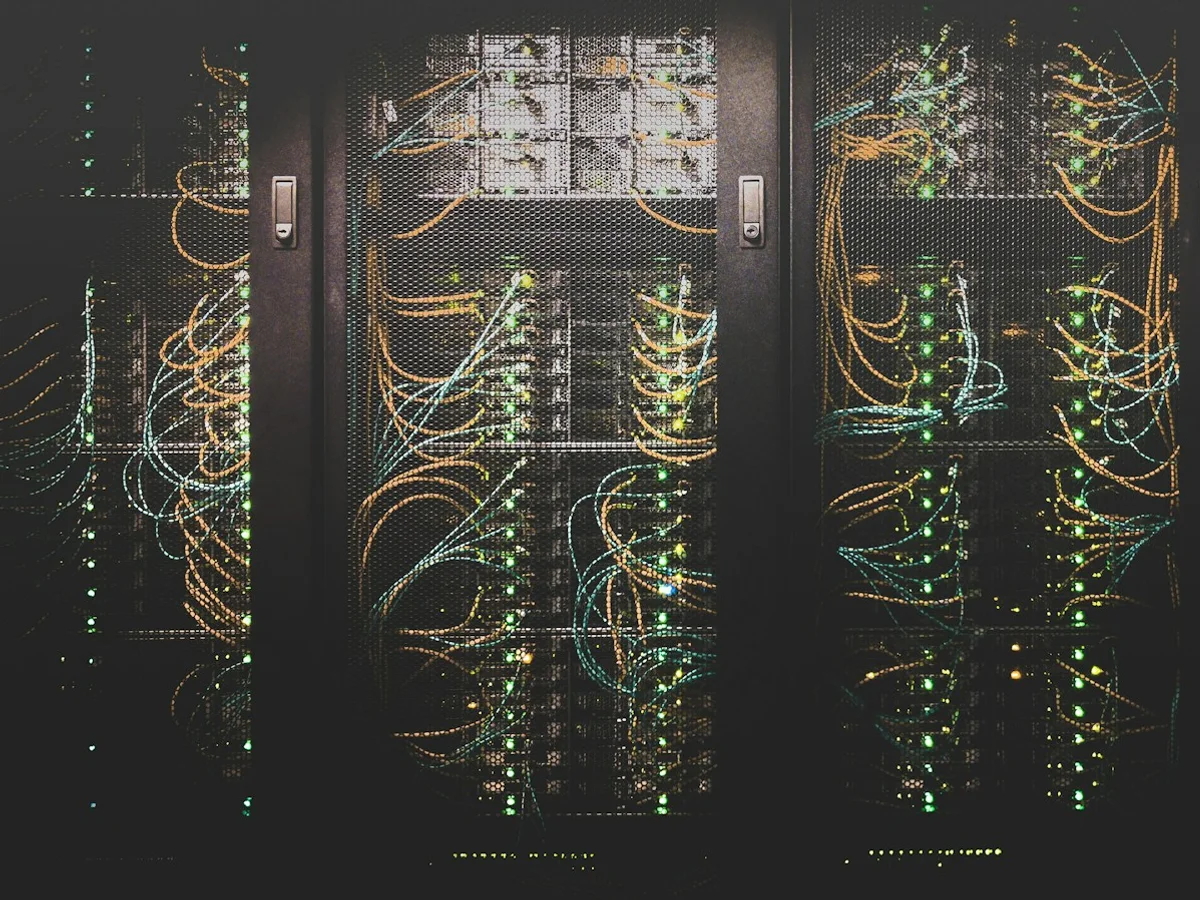
This coherent distributed fabric establishes a unified global memory pool spanning tens of petabytes with sub-microsecond access latencies, an indispensable prerequisite for ultra-long context window generation exceeding millions of tokens.
«When one million processors work as one computer, this lays the foundation for better and more efficient AI training and inference. Therefore, I see UnifiedBus as the path for the future AI era.»
Eric Xu, Rotating Chairman of Huawei
UnifiedBus Versus InfiniBand: Shattering Inter-Rack Bandwidth Ceilings
The critical vulnerability of existing high-performance computing clusters lies in the inter-rack communication fabric. While NVIDIA utilizes ultra-fast NVLink fabrics for intra-rack communications, inter-rack data transfer still relies upon optical InfiniBand networks. In this standard deployment, inter-rack communications bandwidth peaks at approximately 200 GB per second per rack.
Eric Xu, rotating chairman of Huawei, addressed this issue bluntly: with an inter-rack communications bandwidth constrained to 200 GB/s, it is mathematically impossible to coordinate one million processors as a unified computing fabric. Gradient divergence and communication stall would rapidly collapse multi-trillion parameter training runs.
To overcome this ceiling, Huawei developed its proprietary optical interconnect infrastructure, dubbed UnifiedBus. Delivering an inter-rack communication bandwidth of up to 800 GB per second—a fourfold throughput enhancement over traditional InfiniBand—UnifiedBus provides the essential high-speed circulatory system required to sustain 40-trillion-parameter neural network scaling.
Leveraging silicon photonics and dense wavelength-division multiplexing (DWDM), UnifiedBus dramatically reduces energy consumption per transmitted bit, allowing datacenter topologies to span multiple server halls without signal degradation or thermal throttling.
Hierarchical decomposition of tensor operations prevents network congestion and permits modular execution across massive accelerator groupings.
A fourfold increase in inter-rack bandwidth overcomes historical communication bottlenecks during synchronization of massive neural networks.
Global memory addressing allows chips across different racks to directly manipulate remote tensor weights without host CPU buffering.
Massive parallel interconnect scaling offsets lithography restrictions by extracting peak collective throughput from mature silicon nodes.
Atlas 950 SuperPoD and Real-World Deployments at 256,000 Accelerators
The primary building block of the Peerium architecture is the Atlas 950 SuperPoD computing system. Each liquid-cooled SuperPoD module integrates over 8,000 proprietary Ascend 950DT artificial intelligence accelerator processors into a dense unified computing engine. Multiple SuperPoD units interconnect hierarchically to assemble massive SuperClusters.
Huawei confirmed that an experimental production SuperCluster comprising 256,000 computing cards is already deployed and undergoing rigorous benchmark evaluations. Preliminary operational data demonstrates noticeably higher hardware FLOPs utilization efficiency compared to conventional non-Peerium topologies. For further exploration of recursive technological evolution, read our detailed analysis on recursive AI self-improvement and the singularity roadmap.
Equipped with direct-to-chip liquid cooling technology, the Atlas 950 SuperPoD dissipates thermal energy directly from the bare silicon die, achieving a power usage effectiveness (PUE) rating below 1.15 under continuous sustained training workloads.
- Massive Frontier Scale: Engineered to train foundational AI models scaling between 10 and 40 trillion parameters.
- SuperPoD Modular Unit: Combines over 8,000 Ascend 950DT neural processing units in a single high-density chassis.
- Proven Live Cluster: A 256,000-accelerator testing configuration is currently operational in performance evaluations.
- Interconnect Superiority: UnifiedBus delivers 800 GB/s inter-rack bandwidth compared to 200 GB/s on traditional InfiniBand.
Geopolitical Ramifications and Silicon Independence
The engineering triumph behind Peerium and the UnifiedBus fabric carries immense geopolitical significance amidst stringent semiconductor export controls. Barred from accessing cutting-edge EUV photolithography scanners, Chinese engineers have pivoted to architectural compensation—leveraging ultra-dense optical interconnects to extract peak collective efficiency from mature silicon nodes.
Should this million-chip cluster demonstrate sustained fault tolerance and linear scalability over prolonged training campaigns, the global artificial intelligence landscape will possess an independent, high-performance computing pillar capable of challenging Silicon Valley’s architectural dominance.
Ultimately, this paradigm shift proves that supremacy in artificial intelligence will not be decided solely by the nanometer dimensions of individual transistors, but rather by the architectural mastery of systemic optical integration and massive parallel scaling.