

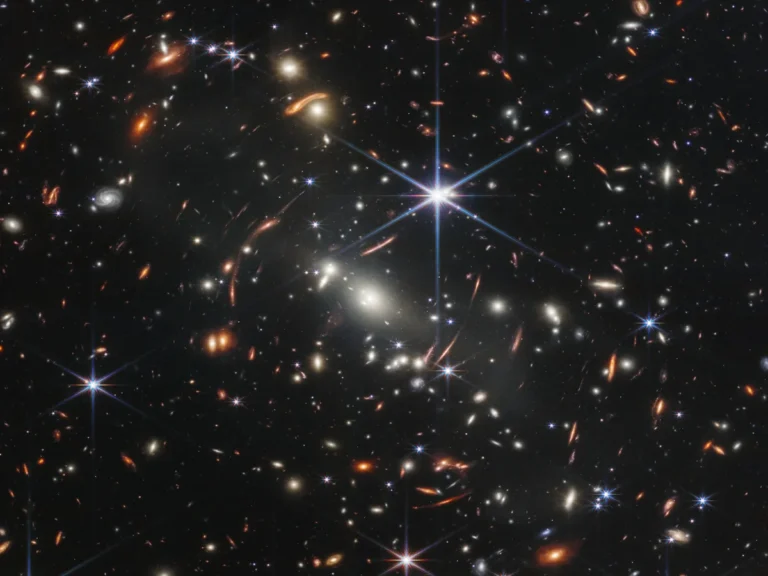

For over a decade, the most vexing puzzle in observational astrophysics—the infamous «Hubble tension»—compelled theoretical physicists to search for exotic flaws in gravitational laws operating during the infant universe, mere moments after the Big Bang. Cosmologists formulated elaborate models invoking Early Dark Energy, decaying sterile neutrinos, and primordial magnetic fields within the first 380,000 years of cosmic history. However, an exhaustive new meta-analysis led by astrophysicists at the University of Portsmouth’s Institute of Cosmology and Gravitation has decisively dismantled that consensus. By integrating precision cosmic microwave background measurements with wide-field spectroscopic galaxy surveys, the researchers proved that early universe physics is virtually immaculate. If the Standard Model of Cosmology (Lambda-CDM) is genuinely breaking down, the elusive «weird physics» is not a relic of the primordial dawn, but is operating right now across the modern universe over the past three billion years.
Anatomy of the Cosmological Divide: Why Cosmic Expansion Rates Disagree
The Hubble constant (H0) quantifies the present-day expansion rate of the cosmos—the speed in kilometers per second at which distant galaxies recede from each other per megaparsec of separation. The crisis stems from the stark mathematical incompatibility between the two premier, highly refined measurement methodologies, which now diverge beyond the five-sigma threshold (less than a one-in-3.5-million probability of occurring by chance).
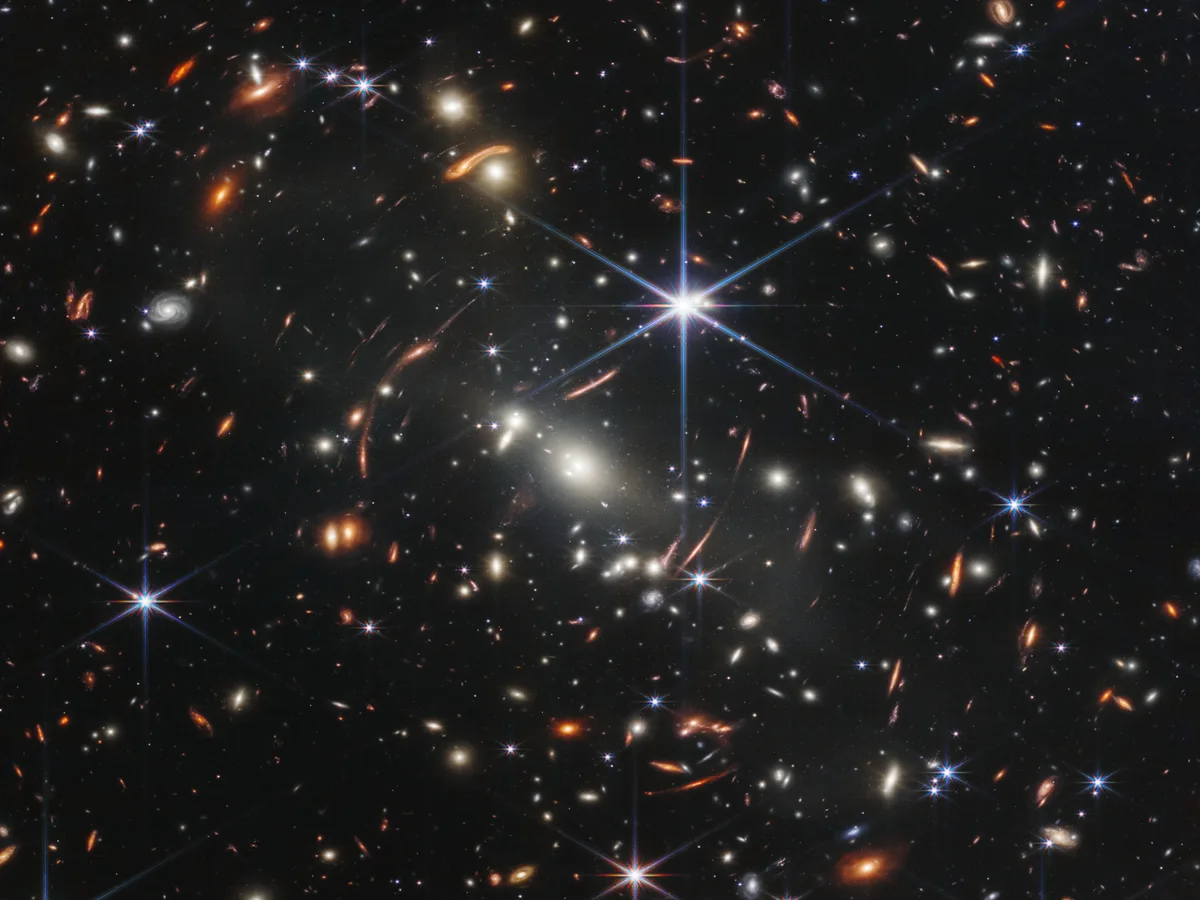
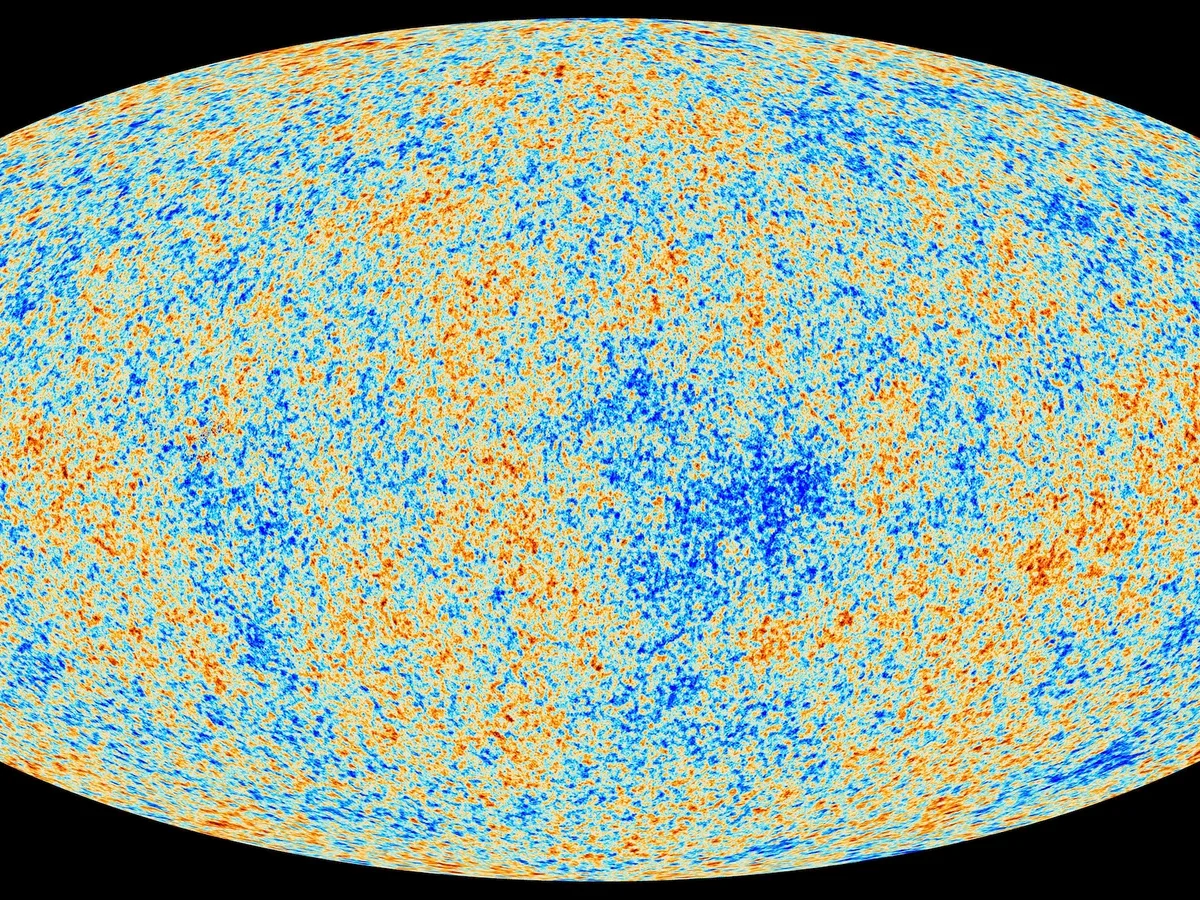
The first approach interrogates the Cosmic Microwave Background (CMB) captured by ESA’s Planck satellite. By measuring acoustic peaks in the relic radiation of the 380,000-year-old cosmos and extrapolating forward 13.8 billion years under the Lambda-CDM framework, physicists predict a modern expansion rate of H0 = 67.4 ± 0.5 km/s/Mpc. Conversely, the direct «cosmic distance ladder» anchored by the Hubble Space Telescope and Adam Riess’s SH0ES project, utilizing Cepheid variables and Type Ia supernovae in the local universe, measures H0 = 73.0 ± 1.0 km/s/Mpc.
The discrepancy between 67 and 73 km/s/Mpc cannot be attributed to measurement bias or instrumental systematics, as corroborated by independent observations from the James Webb Space Telescope. Modern astrophysics has reached an undeniable impasse.
The Demise of Early-Time Solutions: Why Early Dark Energy Failed the Test
The most prominent theoretical avenue to reconcile the Hubble tension was Early Dark Energy (EDE). This hypothesis posited that an ephemeral scalar field burst into existence shortly before recombination, providing a temporary burst of negative pressure that accelerated sound horizon expansion and shrunk the physical sound horizon scale.
However, the Portsmouth research team conducted a rigorous cross-examination, combining CMB polarization datasets with Baryon Acoustic Oscillation (BAO) measurements from the Dark Energy Spectroscopic Instrument (DESI) and weak gravitational lensing surveys. The verdict was definitive: while EDE models can artificially nudge the Hubble constant upward, they severely degrade the fit to large-scale structure clustering, exacerbating the separate S8 matter-clustering tension.
The early universe exhibits unwavering adherence to standard general relativity. Much like how orbital mechanics govern planetary seasonal asymmetries with strict Newtonian predictability, the pristine physics of the cosmic microwave background leaves zero room for speculative primordial fields.
«For ten years, the global community tried to resolve the Hubble tension by tinkering with recombination-era physics in the infant universe. Our comprehensive statistical analysis demonstrates that the early universe adheres to Einsteinian general relativity with astonishing fidelity. Every modification proposed to fix the tension early on inevitably degrades fits to other precision cosmological datasets. The true mystery is firmly anchored in the late universe—anomalies are unfolding right in our cosmic backyard at redshifts below 0.3.»
Eleonora Di Valentino, Astrophysicist and Co-author of the Global Cosmological Study
The Late-Universe Frontier: Dynamical Dark Energy and the 3-Billion-Year Threshold
With early-universe solutions largely ruled out, cosmological attention has pivoted toward low-redshift phenomena (z < 0.5), corresponding to the most recent two to three billion years of cosmic history. This epoch coincides directly with the transition where dark energy overcame gravitational matter clustering, inaugurating the current phase of cosmic acceleration.
In standard Lambda-CDM, dark energy is modeled as Albert Einstein’s immutable cosmological constant (Λ) characterized by a static equation-of-state parameter w = -1. However, groundbreaking results from DESI’s survey of over six million extragalactic spectra suggest that dark energy may be dynamical. The equation-of-state parameter w(z) exhibits tentative temporal evolution, hinting that dark energy density is not constant, but varies over cosmic epochs.
This revelation presents physicists with a profound conceptual challenge: dark energy may represent a dynamical quintessence field, chameleon scalar interactions, or an indication that general relativity requires infrared modification on cosmological supercluster scales.
The statistical tension between Planck CMB predictions (67.4) and SH0ES supernova observations (73.0) exceeds 5 sigma.
Expansion rate anomalies are strictly confined to the modern late universe rather than the primordial recombination era.
Spectroscopic observations from DESI suggest dark energy density evolves dynamically over cosmic time rather than staying static.
The hypothesis that the Milky Way resides inside a 20% underdense cosmic void, driving localized expansion acceleration.
The Local Void Hypothesis: Are We Drifting Within a Cosmic Underdensity?
Another compelling late-time mechanism is the Keenan-Barger-Cowie (KBC) void scenario. Wide-angle galaxy luminosity surveys suggest that our Milky Way and the Local Group reside within an immense cosmic underdensity spanning approximately one billion light-years, where matter density is roughly 20% lower than the cosmic mean.
In an underdense bubble, gravitational deceleration is weaker, while surrounding overdense superclusters—such as the Great Attractor and the Shapley Concentration—exert outward gravitational pulls on void galaxies. Consequently, space within our local bubble expands measurably faster than the global background cosmos, creating the illusion of an elevated global Hubble constant.
Resolving whether a local void accounts for the tension demands advanced multi-scale computational modeling: just as evaluating recursive cognitive architectures requires re-evaluating baseline computational boundaries, cosmologists must scrutinize whether the assumption of large-scale homogeneity holds strictly in our immediate cosmic sector.
- The Lambda-CDM model accurately describes the early universe; theories modifying Big Bang physics are disfavored by data.
- The Hubble tension is driven by physical mechanisms operating in the late universe over the past 2 to 3 billion years.
- Dark energy may be a dynamical quintessence field rather than Einstein’s static cosmological constant.
- Next-generation surveys from Euclid and the Roman Space Telescope will deliver definitive answers by 2027–2028.
Cosmic Observatories on the Horizon: The Verdict from Euclid and Roman
To definitively resolve whether late-time physics is transforming our universe, the international scientific community is looking toward next-generation orbital platforms. The European Space Agency’s Euclid observatory, now surveying deep extragalactic space, and NASA’s upcoming Nancy Grace Roman Space Telescope will construct the most intricate 3D map of cosmic structure ever assembled, cataloging billions of galaxies across thousands of square degrees.
If high-precision spectroscopy confirms that cosmic acceleration departs from Einstein’s cosmological constant at z < 0.3, it will trigger the most transformative scientific paradigm shift since the birth of quantum mechanics. It would confirm the existence of a fifth fundamental force or the decay of the vacuum state.
The crisis in cosmology is no longer cloaked in the inaccessible fog of the first seconds following the Big Bang. It is active in the modern cosmos around us, demonstrating that the deepest secrets of cosmic destiny are waiting to be uncovered in our local sky.