

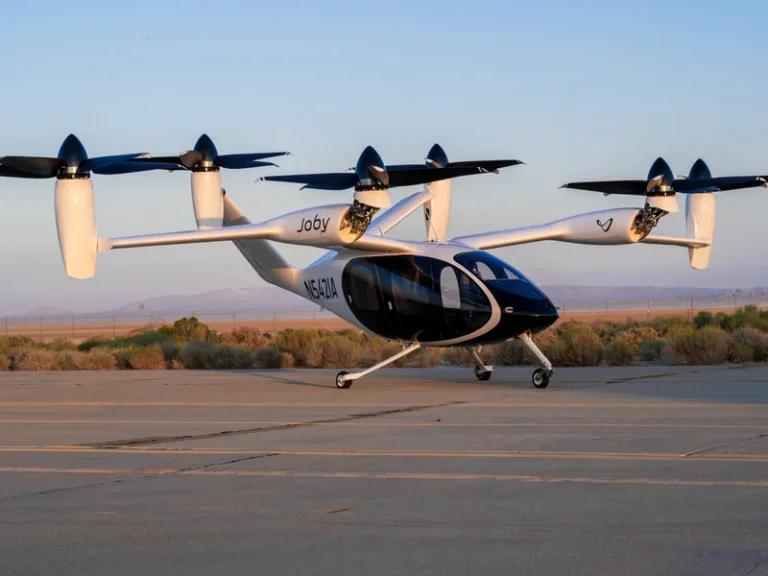

Elon Musk’s recurring assertions that the next-generation Tesla Roadster will feature an optional SpaceX package equipped with cold gas thrusters capable of hovering or flying have ignited fervent debate across the automotive and aerospace worlds. Yet when the audacious theatrics of Silicon Valley collide with the uncompromising laws of atmospheric aerodynamics and the institutional rigor of the Federal Aviation Administration (FAA), reality diverges dramatically. Today, flying car Tesla Roadster eVTOL FAA certification aviation regulations serve as a critical benchmark delineating the boundary between marketing spectacle and airworthy personal aviation engineering.
SpaceX Cold Gas Thrusters vs Rotor Downwash: Rocket Aerodynamics
Musk’s concept of equipping an automobile with cold gas thrusters borrows directly from the Composite Overwrapped Pressure Vessels (COPV) utilized in Falcon 9 upper stages.
Theoretically, venting compressed nitrogen gas at pressures approaching 10,000 psi (700 bar) through convergent-divergent nozzles generates substantial instantaneous thrust capable of overcoming the vehicle’s two-ton curb weight and achieving brief airborne elevation.
However, fundamental gas dynamics exposes an impassable hurdle: the specific impulse of ambient-temperature compressed gas is exceedingly low (roughly 60 to 70 seconds). The finite propellant mass carried within an automotive chassis would be depleted within three to five seconds of continuous burn.
Moreover, the supersonic acoustic overpressure and high-velocity exhaust blast produced by such jets would shatter surrounding glass and imperil pedestrians, precluding certification on public rights-of-way.
In aerospace rocketry, COPV vessels undergo exhaustive non-destructive testing prior to each fueling cycle. Installing such extreme pressure vessels within an automotive chassis subjected to persistent road vibrations, debris impacts, and thermal cycling introduces severe catastrophic burst risks comparable to energetic explosive ruptures.
Moreover, managing a dynamic thrust vector exceeding 20 kilonewtons demands microsecond gimbal actuation response times. The slightest asymmetric pressure loss or aerodynamic moment would induce immediate, violent angular roll and pitch divergence beyond human recovery capacity.
The eVTOL Paradigm: Engineering Authentic Personal Urban Aviation
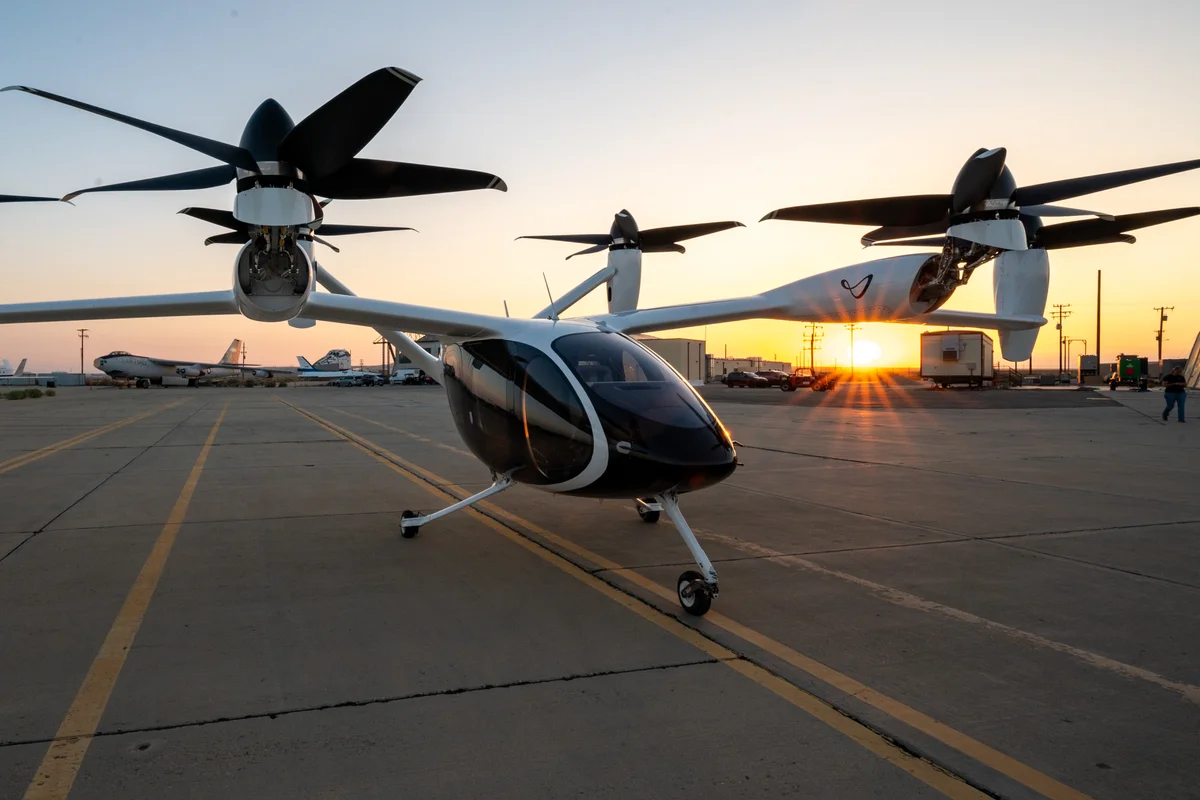
While Tesla explores rocket propulsion theatrics, the aerospace industry has united around eVTOL (Electric Vertical Takeoff and Landing) architectures.
Innovators such as Joby Aviation, Archer Aviation, and Alef Aeronautics rely on Distributed Electric Propulsion (DEP), leveraging arrays of high-efficiency multirotors or tilting wing-mounted propellers.
The aerodynamic figure of merit for a rotary propulsor vastly outclasses rocket nozzles: rotors accelerate massive volumes of ambient air at low velocities, sustaining prolonged hover with acceptable electrical draw.
Nevertheless, the volumetric energy density of contemporary lithium-ion battery chemistries (250–300 Wh/kg) remains a limiting constraint, restricting practical mission radii to 100–150 miles after accounting for mandatory FAA 30-minute instrument flight reserves.
In contrast, eVTOL systems navigate the challenging transition phase between vertical rotor hover and wing-borne cruise aerodynamics. Managing flow separation across articulating tiltrotors during deceleration and gusting crosswinds requires sophisticated fly-by-wire flight control laws with triple-modular redundancy.
Thermal dissipation also emerges as an acute engineering boundary: sustained peak-power draw during vertical liftoff generates massive heat loads within permanent magnet synchronous motors, demanding robust liquid-cooling architectures that impose weight penalties on structural payload capacity.
Cold gas thruster specific impulse is constrained to 60–70s, exhausting vehicle propellant stores within seconds of hover.
The new regulatory class requires systems to demonstrate catastrophic failure probabilities under 1 in 1 billion flight hours.
Piloting vertical lift craft requires FAA pilot credentials, extensive instrument flight ratings, and aviation medical exams.
Current electrochemistry limits operational eVTOL ranges to 100–150 miles with mandatory reserve requirements.
The FAA Regulatory Moat: Part 21, Part 61, and the Powered-Lift Classification
The moment an occupied passenger vehicle leaves the earth’s surface, it transitions instantly into national airspace governed exclusively by FAA Title 14 CFR regulations.
Achieving commercial airworthiness necessitates enduring multi-year certification campaigns under Part 21 and Part 23 airworthiness standards, requiring rigorous mathematical proof that catastrophic system failure rates remain below 10^-9 per flight hour.
In 2024, the FAA formalized its first novel aircraft classification in decades: the Powered-Lift category, establishing the permanent regulatory framework for vertical-thrust electric aircraft.
Consequently, operating an airborne passenger vehicle cannot be authorized under a standard driver’s license or Part 107 drone certificate. Operators must complete rigorous instrument flight training (IFR), pass Class 2 aeromedical screenings, and hold accredited airman ratings.
The FAA Powered-Lift rule establishes unprecedented benchmarks for battery safety, demanding rigorous containment protocols against cascading thermal runaway. If a single lithium pouch cell fails catastrophically, the pack architecture must isolate the event and prevent propagation to adjacent modules.
Furthermore, certification requires complete structural fault tolerance: any individual rotor, motor controller, or flight computer failure must be seamlessly compensated by the distributed architecture without degradation of controlled flight safety.
«Aviation permits zero tolerance for mechanical failure. If an automobile engine stalls on the highway, you pull onto the shoulder; if a passenger-carrying craft suffers propulsion loss at three hundred feet over an urban suburb, it is a catastrophic event. Operating in three dimensions is governed entirely by aerospace certification, not motor vehicle statutes.»
Tom Hale, Senior Science Writer, IFLScience
Urban Air Traffic Management: Navigating Dense Municipal Skies
Beyond airworthiness certification, municipal integration demands autonomous Unmanned Traffic Management (UTM) architectures.
Envisioning uncoordinated consumer flight beneath cloud ceilings and among commercial high-rises without rigid 3D flight corridors and geofenced routing is an operational impossibility.
Rotor downwash turbulence, blade-pass frequency acoustics, and bird-strike hazards necessitate dedicated rooftop vertiport nodes isolated from pedestrian flow.
Any telemetry degradation or primary flight computer fault must trigger deterministic failsafe logic, automatically commanding immediate autorotation or ballistic parachute deployment.
- Vertical takeoff aircraft require thrust-to-weight ratios exceeding 1.25 to manage sudden wind shear and atmospheric gusts.
- Municipal acoustic guidelines mandate that flyover noise must remain below 60 dBA at 300 feet altitude.
- The Powered-Lift rule is the first new category of civil aircraft formalized by the FAA since helicopters were recognized in the 1940s.
- Modern eVTOL prototypes are required to incorporate whole-aircraft ballistic parachute recovery systems.
The Realistic Trajectory of Personal Airborne Mobility
A viable bridge between automobiles and aviation is embodied by pioneering prototypes like the Alef Model A, which secured FAA Special Airworthiness Certification.
By employing an internal mesh body concealing vertical lift fans while operating as a low-speed electric street vehicle, it illustrates the pragmatic compromises demanded by physics.
For the foreseeable decades, dual-mode personal flying vehicles will remain high-value, niche solutions for aeromedical evacuation and specialized regional transit rather than ubiquitous consumer garage appliances. Also read our related investigative feature on neurobiological investigations into brain function and focus mechanisms.