

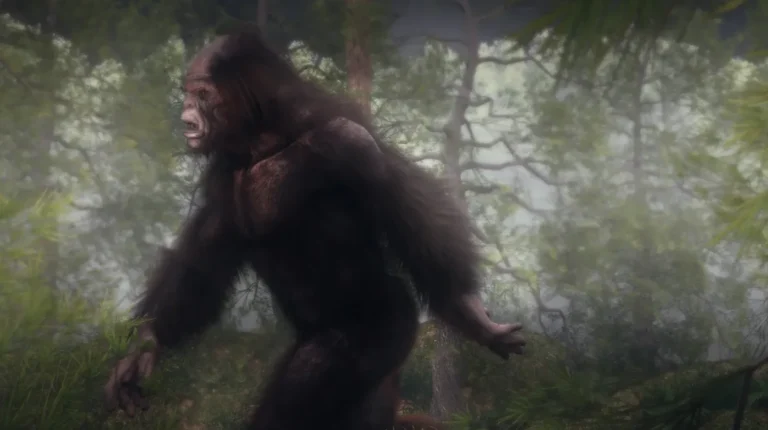

The US Forest Service has quietly uploaded three historical documents to its public archives—these newly surfaced Bigfoot files US government agencies maintained detail a 1982 Oregon track investigation and decades-old Montana encounters.
Bigfoot Files US Government: Inside the Quiet FOIA Release
Without press releases or fanfare, the US Department of Agriculture’s Forest Service added three historical records to the “Bigfoot/Sasquatch Records” section of its online Freedom of Information Act (US Forest Service FOIA Reading Room).
Federal agencies routinely publish archived records when topics attract sustained public or historical interest. This release brings together a June 1982 wildlife biologist’s field report from Oregon alongside retrospective accounts and regional newspaper clippings from Montana.
While the idea of government Sasquatch dossiers sparks immediate curiosity online, reading the actual documents reveals methodical field skepticism rather than proof of an undiscovered North American ape.
The 1982 Oregon Investigation: Measuring Tracks in Mill Creek Watershed
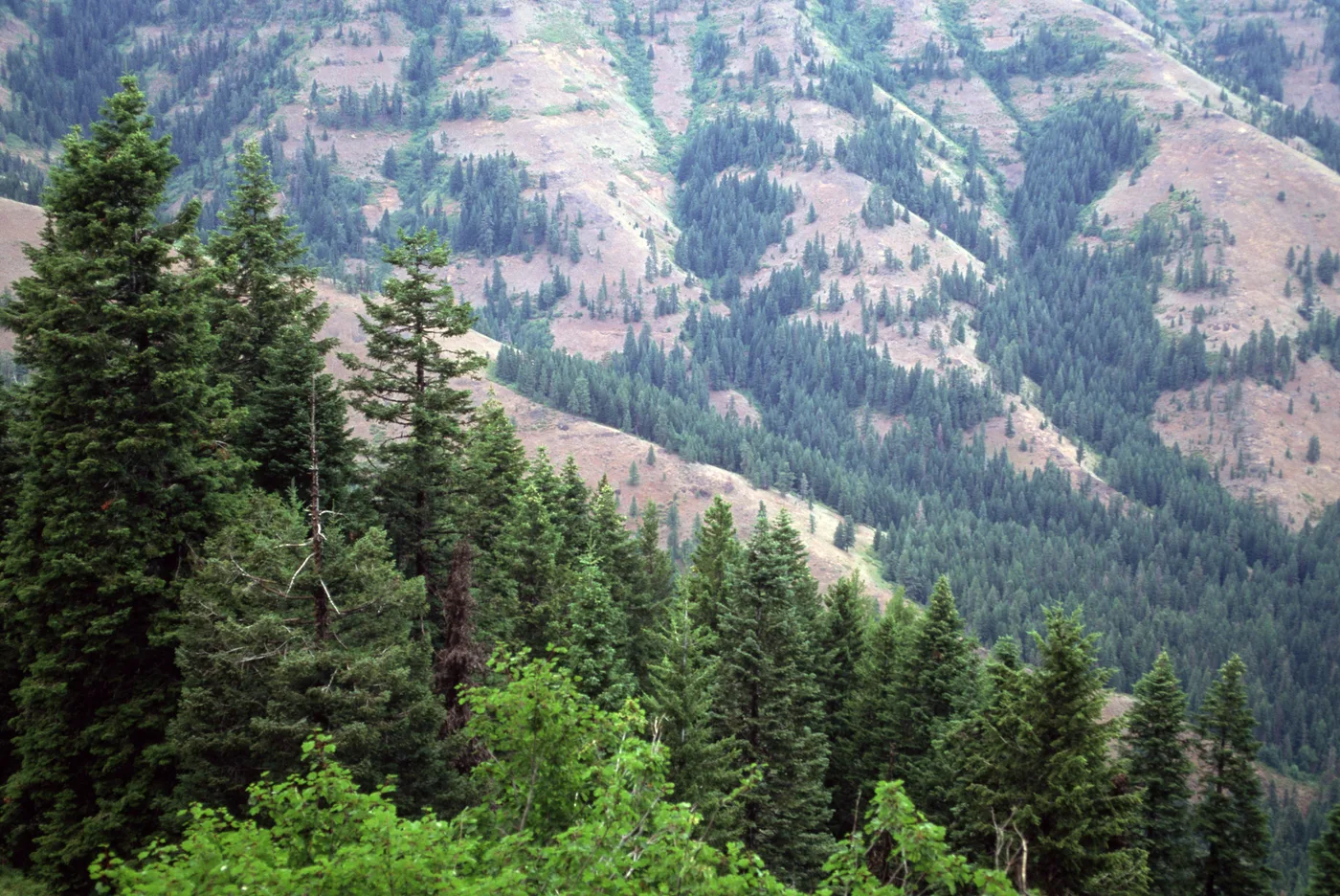
The centerpiece of the release is a June 1982 report examining unusually large, human-like footprints discovered in the Mill Creek Watershed of Oregon’s Umatilla National Forest. A Forest Service wildlife biologist inspected the trail and documented its physical geometry.
The biologist noticed a telling biomechanical flaw: the stride length remained virtually unchanged regardless of slope steepness. Any heavy bipedal animal climbing or descending uneven forest terrain would naturally shorten or lengthen its steps.
Even so, the investigator noted that the impressions looked remarkably natural and included fine anatomical contours—concluding that if the tracks were fabricated, whoever staged the hoax went to extraordinary lengths.
«If the tracks were faked, someone went to a great deal of trouble and detail. The print marks on the foot would have to be very hard to duplicate. They appear very natural.»
June 1982 US Forest Service Mill Creek Watershed Biologist Report
Montana Accounts: Leo T. Kinney and the 1940s Petty Creek Incident
The second and third files shift focus to Montana. A 1980 document written by Leo T. Kinney recounts an unsettling experience in the 1940s near Petty Creek, describing heavy movement, an odd odor, and a palpable sense of unease among witnesses in the timber.
Kinney wrote that while none of the men admitted fear on the trail, they later agreed none had wanted to catch up with whatever was ahead of them. Another document reproduces a January 2003 article from the Clark Fork Valley Record quoting Bob Mesing on purported tracks.
As modern wildlife bioacoustics research shows, familiar forest mammals such as bears, elk, and cougars frequently create eerie sounds and ambiguous impressions in dense twilight woods.
Three archived documents were quietly added to the USDA Forest Service Bigfoot/Sasquatch Records.
A wildlife biologist examined Mill Creek prints and flagged an unnaturally uniform stride across slopes.
Leo T. Kinney’s 1980 memoir recounts unsettling sounds and chills experienced near Petty Creek.
Trail cameras and environmental DNA surveys have never verified an unknown North American primate.
What Modern Wildlife Science and eDNA Say Today
In the four decades since the 1982 Oregon inspection, ecological monitoring has been transformed by thousands of motion-triggered trail cameras, thermal drones, and environmental DNA (eDNA) sampling of soil and water.
Every credible DNA test of hair or tissue attributed to Sasquatch has matched known species—mostly black bears, wolves, deer, or humans—contrasting sharply with verified paleoanthropological discoveries backed by physical fossils.
Still, the Forest Service’s FOIA archives offer a fascinating window into how federal biologists documented and evaluated cryptid reports long before digital wildlife surveillance.
- Published without fanfare in the USDA Forest Service FOIA Reading Room.
- The 1982 Oregon report praised the craftsmanship of the footprints while concluding they were likely faked.
- Includes firsthand folklore from Leo T. Kinney and a 2003 Clark Fork Valley Record quote from Bob Mesing.
- Reflects routine agency transparency for historically popular public-interest archives.
Why the Sasquatch Legend Endures: Psychology, Terrain, and Forest Folklore
Even without a single verified bone, fossil, or confirmed genetic sample of an unknown North American ape, Sasquatch lore remains deeply woven into Pacific Northwest culture. Psychologists and anthropologists point to the vast, rugged expanses of forest across Oregon, Washington, and Montana, combined with the human brain’s evolutionary tendency to perceive familiar human-like silhouettes and intentions in ambiguous shadows and forest noises—much like the cultural curiosities behind top autumn TV shows and documentaries.
The 1982 Umatilla National Forest report illustrates why these stories continue to captivate audiences. When a federal biologist acknowledges that footprint ridges looked remarkably natural, enthusiasts highlight the craftsmanship, while skeptics point to the decisive biomechanical clue of an unvarying stride length on steep slopes. As Bob Mesing remarked in the 2003 Clark Fork Valley Record article, whoever staged a hoax did a remarkably thorough job.
By placing these historical records into its public FOIA reading room, the US Forest Service demystifies the idea of hidden government vaults—showing instead how field scientists calmly investigated local mysteries with tape measures, observation, and healthy skepticism.
These documents also highlight how dramatically field biology has evolved over the past half-century. Whereas rangers in the 1940s through the 1980s relied on tape measures, plaster casts, and handwritten witness statements, modern conservationists deploy genome sequencing, acoustic sensors, and continuous camera traps. As a result, Sasquatch has shifted from a biological hypothesis to a compelling case study in regional folklore, cultural storytelling, and human perception across the rugged forests of Oregon and Montana.