

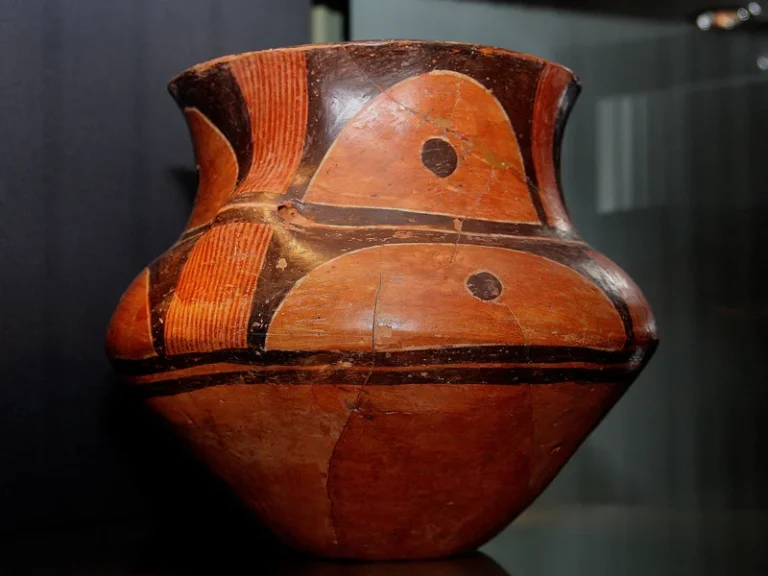

The Cucuteni-Trypillia megasites represent one of the most astonishing enigmas of prehistoric Europe: a millennium before the construction of Egypt’s first pyramids, sprawling proto-cities thrived without monarchs, armies, or palaces. Across the fertile landscapes between the Carpathian Mountains and the Dnieper River over six thousand years ago, an advanced agrarian society erected concentric settlements spanning hundreds of hectares, which were ritually set ablaze and razed to the ground every 60 to 80 years.
Cucuteni-Trypillia Culture and the Earliest European Megasites
Flourishing between roughly 5400 and 2700 BCE, the Cucuteni-Trypillia culture reached its zenith during the Copper Age (4100–3600 BCE). Across modern Ukraine, Moldova, and Romania, researchers have excavated colossal megasites including Talianki, Maidanetske, Nebelivka, and Dobrovody. Talianki alone covered more than 450 hectares and accommodated an estimated population of 15,000 to 25,000 inhabitants, making these settlements the largest urbanized agglomerations on Earth at the time.
Modern geomagnetic surveys have revealed a masterfully organized radial-concentric layout. Thousands of two-story wattle-and-daub dwellings were arranged in concentric oval rings centered around a vast open public plaza. The outermost perimeter of contiguous houses formed a formidable defensive rampart punctuated by radial thoroughfares.
The Ritual Burning Paradox: Cosmological Cycle or Sanitary Measure?
The intentional, periodic combustion of entire proto-cities remains the most fascinating hallmark of Trypillian society. Excavation layers consistently uncover extensive deposits of vitrified, brick-red baked clay flooring displaying distinct impressions of oak timber frames. Archaeothermometric analysis indicates burning temperatures exceeded 1000–1200 °C, proving dwellings were deliberately stoked with combustible straw and resinous brushwood prior to ignition.
Scholars debate two prevailing paradigms: the symbolic-cosmological and the ecological-hygienic. The ritual hypothesis posits that dwellings were viewed as living communal entities. Upon the expiration of a generation’s natural lifecycle (roughly 70 years), the house underwent a sanctifying death by fire to transition into the ancestral realm, prompting the community to reconstruct their settlement nearby. Conversely, the sanitation model emphasizes that intentional incineration neutralized pest infestations and pathogens within dense, pre-sewer urban settlements.
Vast elliptical rings comprising thousands of two-story dwellings facing expansive communal gathering plazas.
Thermal demolition of settlements every 60–80 years at temperatures exceeding 1000 °C before coordinated relocation.
Complete absence of monarchical palaces, royal tombs, or central citadels alongside high civic cooperation.
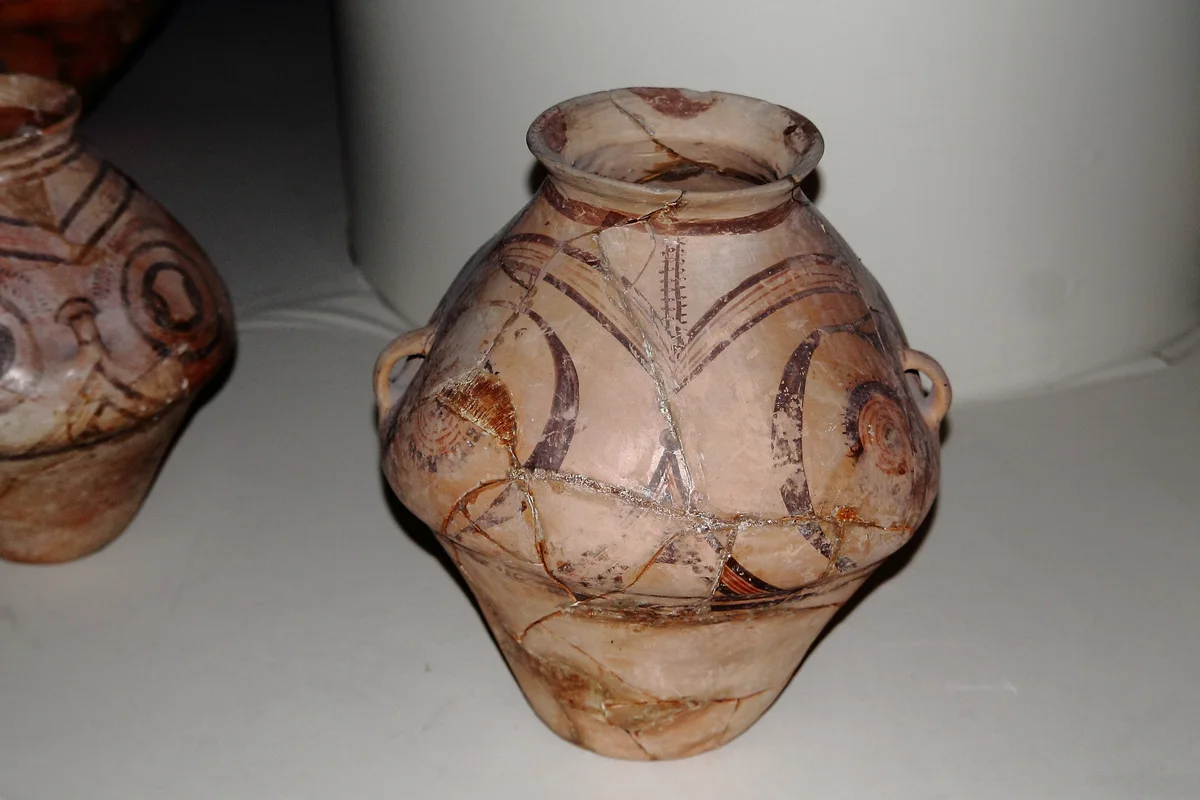
Sophisticated polychrome spiral motifs, ritual binocular vessels, and sacred anthropomorphic fertility figurines.
Societies Without Autocrats: The Egalitarian Urban Miracle
Unlike contemporaneous settlements in Mesopotamia, where dominant zigurat complexes and royal administrative quarters symbolized authoritarian rule, Trypillian megasites demonstrate remarkable egalitarian architecture. Houses exhibit remarkably consistent floor plans and artifact distributions. Every household possessed grain grinders, loom weights, ritual clay altars, and exquisite ceramics.
«The Cucuteni-Trypillia megasites provide undeniable evidence that multi-thousand urban populations could maintain centuries of social cohesion through decentralized, egalitarian community structures.»
Prof. Johannes Müller, Institute of Prehistoric and Protohistoric Archaeology, Kiel University
The economic foundation of these settlements rested upon sophisticated plough agriculture (cultivating emmer and barley), cattle pastoralism, copper metallurgy, and extensive trade networks spanning salt deposits in the Carpathians. Discover more about groundbreaking research into historical and scientific foundations in our report on how historical discoveries rewritten the foundations of life sciences.
Decline and Lasting Legacy
Toward the conclusion of the fourth millennium BCE, a severe regional aridification event paired with local soil degradation and pastoralist migrations prompted the gradual dispersal of megasite populations into smaller, fortified river canyon enclaves.
The Cucuteni-Trypillia legacy endures as a shining demonstration that urbanization can achieve astonishing scale while maintaining social equality, architectural balance, and profound respect for natural cycles.