


Humanity is preparing to launch one of the most audacious interplanetary exploration campaigns of the twenty-first century. The flagship mmx mission mars phobos (Martian Moons eXploration), spearheaded by the Japan Aerospace Exploration Agency (JAXA) in collaboration with European partners CNES and DLR, is nearing its scheduled launch on the powerful H3 rocket. This robotic vanguard will execute an unprecedented deep-space voyage to the Martian satellites Phobos and Deimos, deploy the autonomous Idefix rover across a bizarre microgravity landscape, and return pristine core samples of primordial extraterrestrial regolith to Earth by 2031.
The Origin Enigma of the Martian Moons: Captured Asteroids or Proto-Planetary Debris
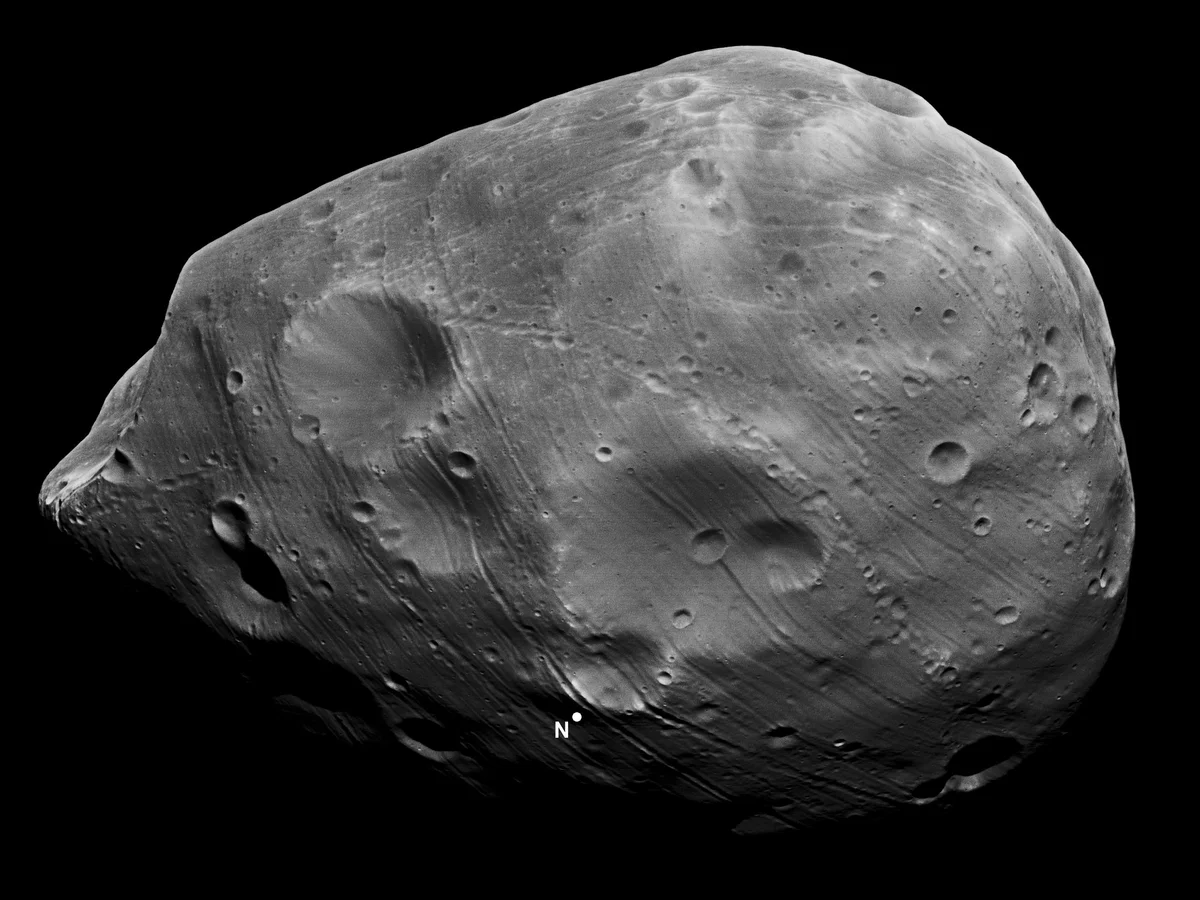
Ever since their discovery by American astronomer Asaph Hall in August 1877, the twin moons of Mars—Phobos (“Fear”) and Deimos (“Dread”)—have presented astronomers with a deep celestial dilemma. Unlike Earth’s massive spherical Moon, the Martian satellites are jagged, potato-shaped rubble agglomerations measuring 26×22×18 kilometers and 15×12×10 kilometers respectively. Their surface reflectance is exceptionally low, possessing a geometric albedo of approximately 0.07, meaning they absorb more than 93% of incident sunlight. Moreover, their visible and near-infrared optical spectra strongly resemble primitive carbonaceous C-type and D-type asteroids commonly found orbiting within the outer Main Asteroid Belt and Jupiter’s Trojan swarms.
For decades, planetary scientists leaned toward the dynamic capture hypothesis. In this model, during the chaotic infancy of the Solar System, dense gas drag in the circum-Martian proto-nebula or three-body gravitational interactions with migrating planetesimals slowed passing outer-belt asteroids, trapping them into Martian orbit. However, celestial mechanicians have pointed out a severe physical flaw in this concept: both Phobos and Deimos follow nearly perfect circular orbits aligned almost precisely with the equatorial plane of Mars. The probability that two captured asteroids wandering from disparate orbital inclinations would naturally settle into coplanar, near-zero eccentricity orbits without colliding is astronomically remote.
To reconcile these discrepancies, astrophysicists formulated the giant impact hypothesis. High-resolution numerical simulations suggest that over 4.2 billion years ago, a proto-planet roughly the size of dwarf planet Ceres slammed into Mars, excavating the gigantic Northern Polar Borealis Basin. The resulting debris disk of vaporized silicates and basalt settled around Mars and accreted into several generations of moons. Over cosmic epochs, tidal forces caused the inner bodies to crash into Mars, leaving Phobos and Deimos as the sole surviving remnants. Decisively resolving this origin controversy requires direct laboratory isotopic ratios of oxygen, chromium, and titanium from samples returned by MMX.
Spacecraft Architecture and H3 Rocket: Engineering the MMX Mission Mars Phobos
The engineering architecture of MMX leverages JAXA’s proven heritage from the pioneering Hayabusa and Hayabusa2 missions, which successfully retrieved samples from asteroids Itokawa and Ryugu. However, dispatching a heavy scientific explorer to Mars demands an exponential leap in capability. As ISAS Director General Hitoshi Kuninaka (Hitoshi Kuninaka) pointed out, the spacecraft’s wet mass at launch will reach approximately 4,000 kilograms, making it the heaviest and most sophisticated interplanetary probe ever built by Japan.
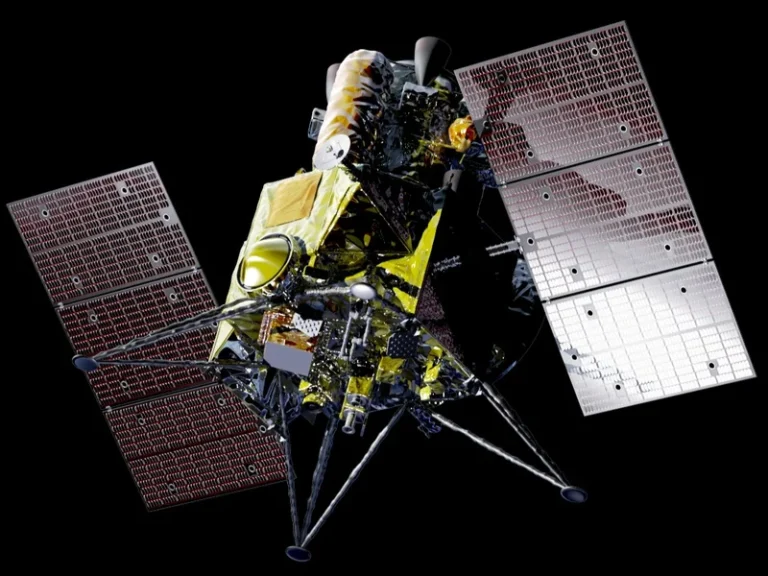
The spacecraft adopts an innovative three-module modular architecture stacked vertically: a high-thrust bipropellant Propulsion Module designed to execute translunar and trans-Martian injection, orbit braking, and orbital insertion; a dedicated Exploration Module housing eleven advanced remote-sensing instruments, landing gear, the Idefix rover, and sampling tools; and a Return Module containing the hermetically sealed Earth Entry Capsule (EEC). A detailed technical synthesis of this architecture was outlined in the comprehensive mission blueprint in Earth, Planets and Space.
Launching this massive spacecraft requires Japan’s newly certified heavy-lift workhorse: the H3-24L launch vehicle, manufactured by Mitsubishi Heavy Industries. Propelled by dual LE-9 expander bleed cycle hydrogen-oxygen engines and four strap-on SRB-3 solid rocket boosters, the H3 will fling MMX into a trans-Mars injection trajectory. Following a ten-month planetary cruise, MMX will fire its main engines to enter an elliptical Mars capture orbit, progressively transitioning into a series of stable Quasi-Satellite Orbits (QSOs) relative to Phobos at altitudes ranging from 100 kilometers down to tens of meters.
The 4,000-kg MMX stack integrates a dedicated propulsion transfer stage, an exploration science module with landing legs, and an Earth return capsule.
Redundant capture mechanisms feature a robotic coring drill reaching deeper than 10 cm and high-pressure pneumatic gas jets firing directly into footpads.
Developed jointly by CNES and DLR, the 25-kg wheeled rover will be released from tens of meters above to assess regolith mechanics before spacecraft touchdown.
Following three years of survey operations, the hermetically sealed return capsule carrying over 10 grams of regolith will land at the Woomera Prohibited Area.
The Idefix Rover: Autonomous Locomotion on Phobos’s Microgravity Surface
Among the mission’s most audacious components is the deployment of the Idefix nanorover, a joint development by the French Space Agency (CNES) and the German Aerospace Center (DLR). Named after the faithful diminutive companion from the classic Asterix comic series, this 25-kilogram scout will be dropped onto Phobos months before the main spacecraft descends, serving as an advance scout to characterize regolith mechanics and landing hazards.
Navigating on Phobos presents unprecedented engineering challenges due to its ultra-weak gravitational field. Surface gravity hovers between 0.003 and 0.008 m/s²—barely one-thousandth of Earth’s gravitational acceleration. The escape velocity on Phobos is a modest 11 meters per second (about 40 km/h). Under such conditions, standard wheeled rover drivetrains are useless: a single wheel spin could launch a vehicle into an uncontrolled upward trajectory or induce tumbling in vacuum.
To overcome this barrier, DLR roboticists designed Idefix with active wheel-leg articulation and internal momentum-reaction wheels. MMX will drop the rover from a safe altitude between 40 and 100 meters. After bouncing several times across the rocky terrain and coming to rest, Idefix will independently determine its spatial orientation, right itself using motor-actuated legs, unfold solar arrays, and begin driving across the surface. Equipped with stereoscopic navigation cameras, the WheelCam surface imager, and the ultra-compact RAX Raman spectrometer, Idefix will perform in-situ laser spectroscopy on mineral grains directly beneath its wheels.
«Phobos serves as a pristine natural time capsule for the entire inner Solar System. It not only holds the definitive solution to the enigma of how Martian moons formed, but for four billion years it has acted as a cosmic collector, capturing ejecta blasted off the surface of early, wet Mars by violent impactors. Retrieving these pristine materials will fundamentally transform our understanding of terrestrial planet evolution.»
Dr. Yasuhiro Kawakatsu (Yasuhiro Kawakatsu), MMX Project Manager at the Institute of Space and Astronautical Science (ISAS / JAXA)
Deep Coring and Pneumatic Capture: Retrieving Phobos Regolith for 2031 Delivery
Once data from Idefix confirms that the regolith bearing capacity is sufficient and free of treacherous chasms, the MMX mother craft will initiate autonomous descent. To guarantee mission success, JAXA engineers implemented strict hardware redundancy, outfitting the lander with two distinct sampling mechanisms: a robotic coring arm (C-Sampler) and a high-speed pneumatic gas gun (P-Sampler).
The primary C-Sampler features a 2-meter articulated robotic manipulator tipped with an auger drill bit designed to bore deeper than 10 centimeters into the lunar bedrock. Penetrating below the surface is essential because the uppermost millimeters of Phobos have suffered relentless space weathering from galactic cosmic rays and solar energetic particles over eons. The sub-surface core will safeguard unadulterated hydrated silicates, volatile species, and primordial grains. Concurrently, the secondary P-Sampler, embedded within the lander’s footpads, fires high-pressure nitrogen gas upon contact, driving aerosolized dust particles into collection cyclones within milliseconds.
Maneuvering and anchoring in microgravity demands extraordinary control. Just as researchers model porous rubble aggregates when assessing how nuking an asteroid and simulating Earth defense on the Z machine induces kinetic deflection, the MMX landing legs feature specialized crushing dampers to absorb kinetic impact energy without elastic rebound. Once more than 10 grams of regolith are securely sealed inside the sample canister, the Exploration Module will fire its ascent thrusters, rendezvous with the Earth Return Module, and embark on a high-speed trajectory back toward the Australian Woomera test range in 2031.
- The mission is slated to launch aboard Japan’s flagship H3 launch vehicle from the Tanegashima Space Center during the optimal planetary window in 2026.
- Gravitational acceleration on Phobos is a mere 1/1000th of Earth gravity, turning landing into a high-precision docking maneuver with an irregular rotating body.
- The Idefix rover, equipped with the RAX Raman spectrometer and adaptive wheels, will become the first wheeled robot to traverse a microgravity celestial body.
- Planetary models estimate that between 0.1% and 0.5% of Phobos regolith consists of Martian mantle and crust ejected during ancient Noachian impacts.
- ISAS Director General Hitoshi Kuninaka (Hitoshi Kuninaka) emphasized that MMX will validate critical sample-return architectures for future crewed Mars missions.
A Natural Time Capsule of Early Mars: Why Phobos Dust Outweighs Direct Martian Soil
A remarkable insight of contemporary planetology is that retrieving regolith from Phobos may yield a more comprehensive historical archive of Mars than a localized surface rover drill. The explanation lies in Phobos’s intimate proximity to its parent planet: orbiting at a mean altitude of roughly 6,000 kilometers above the Martian cloud tops, Phobos is closer to its primary planet than any other moon in the Solar System.
During the ancient Noachian and Hesperian epochs (3.8 to 4.1 billion years ago), Mars harbored a thick atmosphere, active volcanoes, flowing rivers, and standing crater lakes. Concurrently, Mars suffered catastrophic bombardment during the Late Heavy Bombardment. Cataclysmic impacts that carved out the Hellas and Argyre basins blasted trillions of tons of pulverized crustal fragments into circum-Martian orbit. Because Phobos revolves directly within this equatorial debris corridor, it has functioned as a colossal celestial dust sponge for four billion years, sweeping up ejecta from every major geologic province on Mars.
Hydrodynamic impact simulations reveal that between 0.05% and 0.1% of all Phobos regolith consists of genuine Martian material, including ancient hydrothermal clays, carbonates, and sedimentary minerals from eras when Mars was potentially habitable. Crucially, if primordial Mars supported microbial life, fossilized biochemical biomarkers and organic molecules could remain preserved in the freeze-dried, sterile vacuum environment of Phobos. The MMX mission thus provides science with an unparalleled gateway into the deep history of planetary habitability, returning tangible pieces of early Mars directly into our hands.