

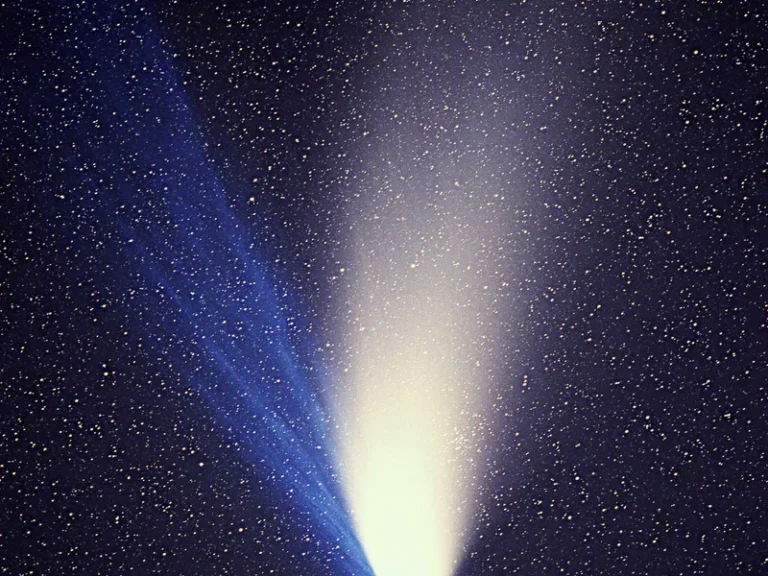

For decades, one of the most compelling narratives in astrobiology held that the foundational chemical building blocks of life were ferried to the primordial Earth by icy comets raining down during the Late Heavy Bombardment. However, groundbreaking computer simulations and thermodynamic impact analyses conducted by astrophysicists at the University of Cambridge have dealt a decisive blow to this long-cherished theory. The new research demonstrates that comets traveling through Earth’s deep gravitational well struck at velocities so violent that fragile prebiotic organic molecules were instantly vaporized, whereas the collision dynamics on ancient Mars were far more hospitable to the survival of carbon-based compounds.
Deconstructing the Panspermia Paradigm: Why Early Earth Was a Cosmic Crematorium
The concept that comets seeded terrestrial biology gained widespread traction over the past few decades, bolstered by space missions such as NASA’s Stardust and ESA’s Rosetta, which sampled comet Wild 2 and 67P/Churyumov–Gerasimenko. Spectrometric instruments firmly detected glycine, methylamine, phosphorus, and hydrogen cyanide (HCN)—indispensable precursors for RNA synthesis and cellular membranes.
It seemed entirely logical that a steady hail of icy cometary nuclei raining onto Hadean oceans approximately four billion years ago created the proverbial primordial soup. Yet Dr. Richard Anslow (Richard Anslow) and his team at the University of Cambridge’s Institute of Astronomy set out to rigorously test whether these delicate chemical cargoes could realistically survive the physical catastrophe of arrival.
Employing high-fidelity shock-physics simulations, the researchers modeled thousands of collision parameters involving comets ranging from hundreds of meters to several kilometers in diameter. The findings were unambiguous: under standard orbital mechanics, the aerothermal environment created during atmospheric entry and planetary impact obliterated virtually all complex organic cargo.
The Thermodynamics of Annihilation: Why Prebiotic Bonds Shatter on Impact
The fundamental bottleneck is Earth’s substantial escape velocity of 11.2 km/s. Comets descending from eccentric orbits in the outer Solar System arrive with minimal encounter velocities exceeding 15 to 70 km/s, depending on whether their trajectory aligns with or opposes Earth’s orbital path.
Upon colliding with the dense atmospheric mantle, an extreme hypersonic bow shock forms ahead of the bolide, compressing ambient gases into a white-hot plasma exceeding 10,000 °C. When the projectile strikes the oceanic or basaltic crust, shock pressures escalate beyond hundreds of gigapascals.
Under these thermal and baric extremes, the covalent bonds holding amino acids, nucleobases, and long-chain hydrocarbons together undergo instantaneous pyrolytic cleavage. The chemical constituents are shattered into elemental gases like carbon monoxide, nitrogen, and steam, completely nullifying their capacity to serve as structural templates for nascent biology.
Earth’s substantial gravitational field accelerates comets to extreme speeds, where kinetic collision energy flash-incinerates organic compounds.
Hypersonic atmospheric shockwaves generate intense plasma sheaths that dissociate hydrogen cyanide and amino acids into simple atomic radicals.
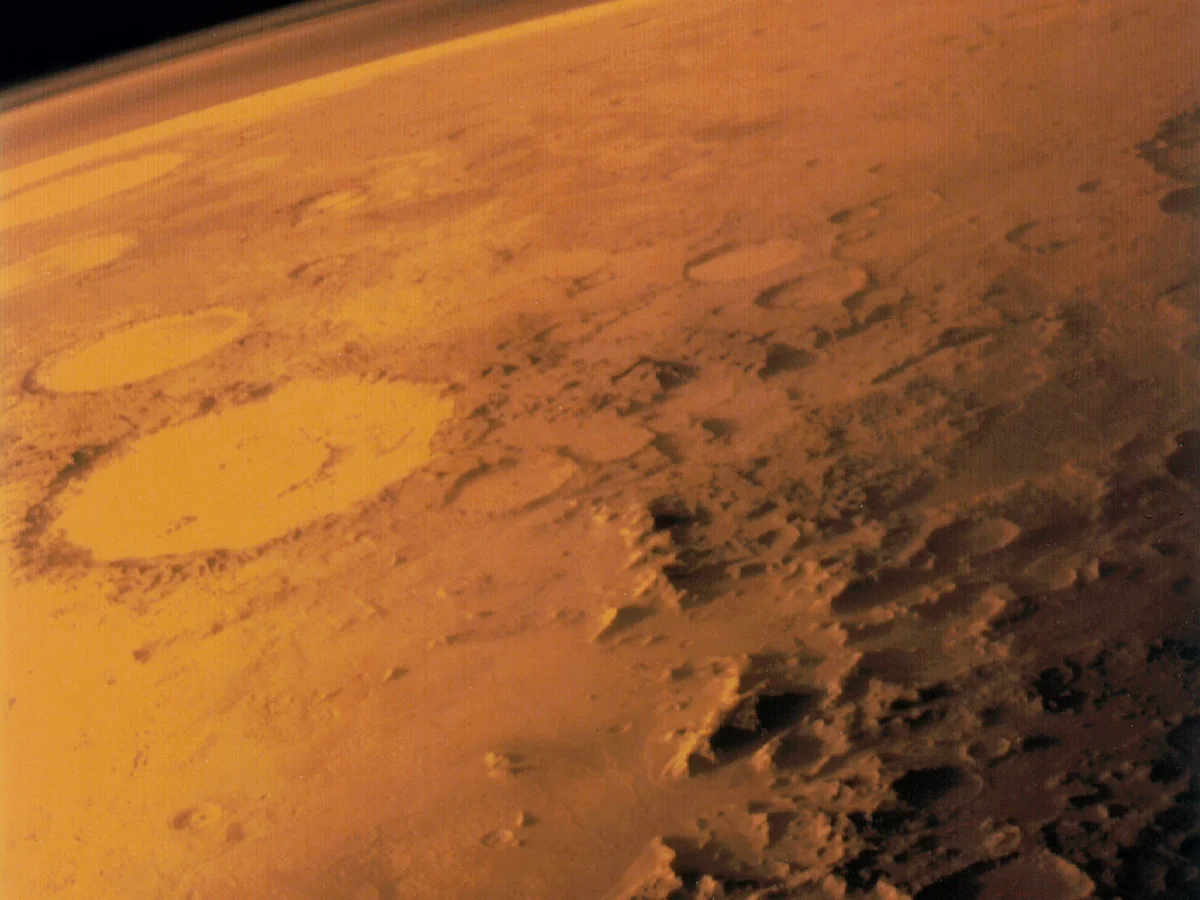
The Red Planet’s lower mass resulted in substantially gentler approach velocities and shallower entry trajectories for incoming comets.
Only exceptionally rare glancing impacts occurring at angles under 5 degrees could deposit intact prebiotic compounds on Earth.
The Martian Sanctuary: How Lower Gravitational Velocity Spared Prebiotic Cargo
While Earth proved to be an organic incinerator, the astrophysical calculus shifts dramatically when applied to Mars. Possessing roughly 11% of Earth’s mass, Mars exhibits an escape velocity of just 5.03 km/s—less than half that of our planet.
Because of this weaker gravitational acceleration, incoming comets struck Mars at much lower relative speeds. Cambridge’s hydrodynamic modeling demonstrated that a sizable fraction of cometary impacts occurred below the critical thermal threshold that triggers molecular disintegration. Crucial feedstock chemicals like hydrogen cyanide had a high statistical probability of surviving intact.
Moreover, the ancient Martian atmosphere—while thick enough to slow small objects—was sufficiently tenuous to limit catastrophic explosive fragmentation during the initial entry phase. This allowed comets striking at shallow angles to deposit high concentrations of pristine prebiotic material across ancient crater lakes and river deltas.
«The impact velocity of comets entering Earth’s gravitational envelope is overwhelmingly destructive, tearing delicate carbon-nitrogen chemical bonds apart in microseconds. Seeding Earth was a one-in-a-million statistical anomaly, whereas on Mars, the physics of impact actually facilitated the delivery of intact organics.»
Dr. Richard Anslow (Richard Anslow), Institute of Astronomy, University of Cambridge
Alternative Roots of Terrestrial Life: Hydrothermal Syntheses and Cosmic Dust
Ruling out cometary delivery as the primary driver of life on Earth does not undermine abiogenesis; rather, it refocuses scientific scrutiny onto indigenous geochemical engines operating within the early Earth itself.
Prominent geochemists increasingly point toward alkaline hydrothermal vent systems on the primordial ocean floor, similar to modern “Lost City” fields. Within the catalytic micro-cavities of iron-sulfur minerals, sustained proton gradients, dissolved hydrogen, and carbon dioxide provided ideal energetic conditions for autonomous organic synthesis without extraterrestrial input.
Additionally, non-destructive cosmic delivery occurred via interplanetary dust particles (IDPs) and micrometeorites. Microscopic grains measuring fractions of a millimeter decelerate gently in the high mesosphere, gently filtering down thousands of tonnes of unaltered carbonaceous matter into terrestrial basins annually.
- Entry trajectory angle: glancing, low-angle descents minimize peak hydrodynamic deceleration;
- Atmospheric column density: modulates the extent of aerothermal ablation prior to surface impact;
- Planetary escape velocity: establishes the absolute thermodynamic energy floor for collisions;
- Thermal stability thresholds of heterocyclic polymers and hydrated silicates embedded within comet matrices.
Targeting Martian Astrobiology: Guiding Exploration for Rovers and Return Missions
The insights delivered by Anslow and his colleagues offer immediate tactical guidance for exploration initiatives involving NASA’s Perseverance rover at Jezero Crater and ESA’s upcoming Rosalind Franklin rover. If Mars received an abundance of intact cometary organics, its lacustrine clay strata could preserve remarkable prebiotic chemical archives.
While cometary delivery alone does not guarantee that Martian chemistry successfully crossed the threshold into replicating biological organisms, it establishes that the raw ingredients were present in abundance.
As space agencies prepare to retrieve cached rock and soil samples from the Martian surface through Mars Sample Return architecture, laboratory analysis will soon test the Cambridge impact models directly against physical rocks from the Red Planet.
Contrasting Planetary Destinies: A Tale of Two Neighboring Worlds
The divergent evolutionary arcs of Earth and Mars illustrate the delicate balance governing planetary habitability. Earth possessed the mass to retain a deep ocean and a protective magnetosphere, but was denied gentle cometary seeding by that very same gravitational weight, forcing life to bootstrap itself endogenously.
Conversely, Mars possessed the ideal proportions to capture cosmic organic treasures, yet lacked the geological heft to retain its internal dynamo and atmospheric envelope over deep time. In uncovering these disparate fates, astrobiologists are learning that the origin of life is not a uniform cosmic recipe, but an intricate dance between orbital mechanics, geology, and atmospheric physics.