

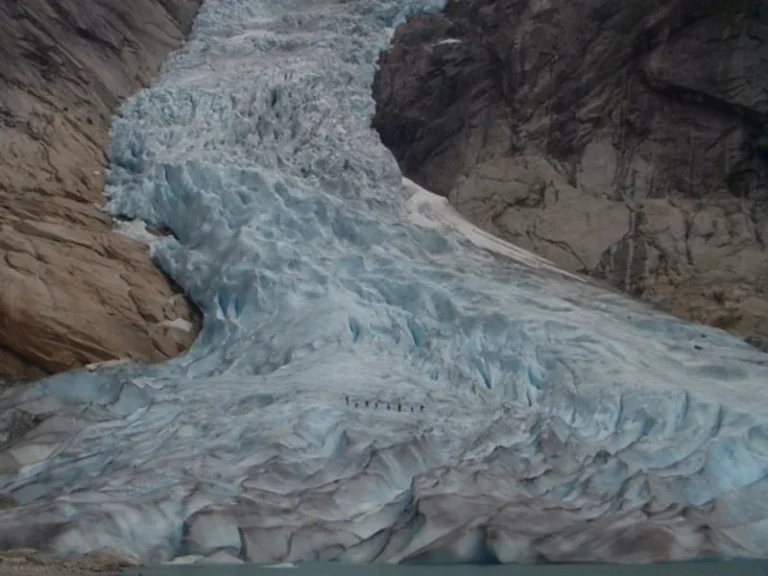

For the past three million years, Earth’s climate system marched to a stately astronomical cadence, alternating between continent-crushing glacial periods and fleeting, temperate interglacials governed by subtle wobbles in our planet’s orbit around the Sun. However, landmark Earth-system simulations conducted by climatologists at the Potsdam Institute for Climate Impact Research (PIK), published in the journal Nature, have confirmed an extraordinary reality: human industrial activity has emerged as a dominant planetary geological force. The massive pulse of anthropogenic greenhouse gases emitted over the past 150 years has permanently disrupted Earth’s astronomical clock, canceling the onset of the next ice age for at least 100,000 years.
The Astronomical Metronome: How Orbital Mechanics Ruled the Pleistocene
Throughout the Quaternary Period, vast continental ice sheets advanced and retreated across North America and Eurasia in a majestic rhythmic oscillation. In the 1920s, Serbian mathematician and geophysicist Milutin Milankovitch (Milutin Milankovitch) formulated the orbital theory of glaciation, proposing that the trigger for glacial inception is governed by the volume of solar radiation reaching 65° northern latitude during summer.
When orbital cycles align such that northern summers receive minimal insolation, winter snowfall across Canada and Fennoscandia fails to melt. The surviving snowpack reflects sunlight back into space via high surface albedo, driving a runaway positive feedback loop that builds ice sheets kilometers thick over millennia.
Yet a persistent missing link in climate science was establishing the precise quantitative relationship between orbital insolation and atmospheric carbon dioxide. Dr. Andrey Ganopolski (Andrey Ganopolski) and his team at PIK solved this mystery utilizing CLIMBER-2, an advanced intermediate-complexity Earth-system model that successfully simulated the onset and termination of the last eight consecutive ice ages with unprecedented fidelity.
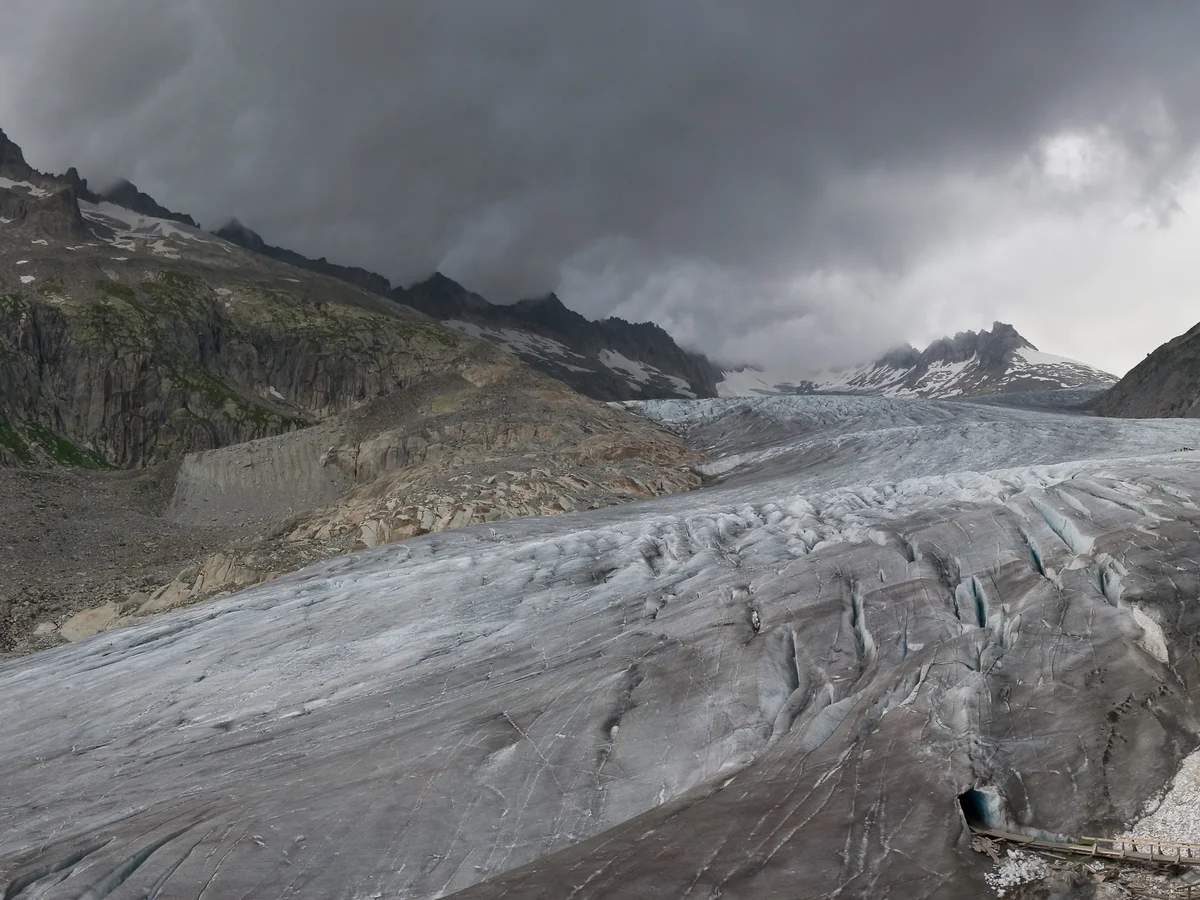
The Ganopolski Relation: The Physics of Glacial Inception Interruption
The core breakthrough achieved by the Potsdam researchers was deriving a mathematical formula linking summer insolation thresholds with atmospheric CO2 concentrations. Significantly, the calculations revealed that even under natural conditions, Earth was poised to experience an unusually prolonged interglacial epoch.
At pre-industrial baseline carbon levels of 280 ppm, Earth’s near-circular orbit meant that the next natural glacial inception would not have occurred for another 50,000 years. However, the release of industrial greenhouse emissions fundamentally transformed that trajectory.
By elevating atmospheric carbon dioxide concentrations beyond 420 ppm, humanity erected an impermeable thermal blanket. Because CO2 persists in the ocean-atmosphere system for thousands of years, cumulative anthropogenic emissions exceeding 1,000 gigatonnes of carbon will effectively suppress glacial inception for more than 100,000 years, forcing the Earth system to skip a full glacial beat.
Atmospheric greenhouse forcing has definitively suppressed the growth of Northern Hemisphere ice sheets slated for natural expansion.
Atmospheric carbon concentrations have surged to levels unseen on Earth since the mid-Pliocene warm epoch 3 million years ago.
Even during periods of minimal high-latitude summer insolation, residual atmospheric heat prevents winter snow survival.
The thermal impact of cumulative anthropogenic carbon emissions rivals the vast flood basalt eruptions of ancient geological history.
A Dangerous Misconception: Why Canceling Glaciations Is a Crisis, Not a Blessing
In popular culture and climate contrarian commentary, postponing the next ice age is occasionally celebrated as a beneficial human triumph that spared civilization from being crushed under sheets of ice. Climatologists warn that this perspective represents a profound and dangerous misunderstanding of planetary dynamics.
Natural glaciations manifest with glacial slowness over tens of thousands of years, allowing terrestrial ecosystems and human populations ample generational time to migrate toward equatorial refugia. In stark contrast, anthropogenic warming is occurring within decades—a geological blink of an eye.
The immediate consequences are utterly catastrophic: the accelerated melting of the cryosphere is driving multidecadal sea-level rise, threatening inundation for low-lying coastal cities where hundreds of millions reside, while intensifying mega-droughts across global agricultural heartlands. Averting a distant ice age 50,000 years hence offers zero comfort to a civilization facing acute destabilization today.
«It is mind-boggling that human civilization is capable of interfering with a fundamental mechanism that shaped our world for millions of years. We have not merely warmed the atmosphere—we have forced the planet to completely skip an entire glacial cycle.»
Dr. Andrey Ganopolski (Andrey Ganopolski), Senior Climatologist, Potsdam Institute for Climate Impact Research
Welcome to the Anthropocene: Humanity as a Macro-Geological Force
The PIK investigation provides compelling empirical substantiation for the formal recognition of the Anthropocene as a new geological epoch. Throughout planetary history, disruptions of this magnitude were exclusively triggered by colossal external catastrophes, such as bolide impacts or vast flood basalt volcanic provinces.
The realization that collective human industrial energy has overpowered the orbital celestial mechanics of the Solar System underscores the awesome scale of planetary responsibility resting upon modern society.
Just as ancient climatic shifts dictated the expansion and survival of prehistoric human populations—as documented in recent archaeological research detailing how hunter-gatherers navigated the Americas during the Last Glacial Maximum—our contemporary technological choices are dictating the thermal state of the Earth system across deep time.
- Orbital eccentricity: variations in Earth’s elliptical path modulating solar flux (100,000-year periodicity);
- Axial obliquity: cyclical shifts in planetary tilt from 22.1° to 24.5° driving seasonal contrast (41,000-year cycle);
- Axial precession: the slow spatial wobble of Earth’s rotational axis (21,000 to 26,000-year periodicity);
- The critical threshold coupling high-latitude summer insolation at 65° N with ambient atmospheric CO2.
Polar Ice Sheets on the Brink: Greenland and West Antarctica
Suppressing future glacial cycles carries immediate existential peril for existing relic ice sheets. The Greenland Ice Sheet, housing enough freshwater to raise global sea levels by over seven meters, is rapidly approaching a critical tipping point beyond which its collapse becomes irreversible, even if surface temperatures eventually plateau.
Simultaneously, the marine-based ice sheets of West Antarctica—anchored by the Thwaites and Pine Island glaciers—are being destabilized from below by warm circumpolar deep water. Total cryospheric collapse would transition Earth into a “hothouse” regime unseen since the Eocene epoch fifty million years ago, when lush subtropical forests thrived at the poles.
The findings establish that human civilization has demonstrated the capacity to manipulate Earth’s planetary thermodynamic controls. The urgent challenge ahead is learning to de-escalate that intervention before runaway feedback loops transform our habitable home into an inhospitable furnace.
A Reckoning with Deep Time: Planetary Stewardship Beyond Human Scales
Confronting the reality that carbon emissions will alter Earth’s atmospheric dynamics for 100,000 years demands a fundamental expansion of human philosophical consciousness. Modern sociopolitical systems operate on short-term horizons governed by electoral terms and quarterly financial reports, yet our atmospheric footprint persists across deep geological time.
In one hundred millennia, human languages, political borders, and civilizations may be unrecognizable, yet the planet’s atmosphere will still reflect the thermal imprint of fossil fuel combustion from the nineteenth through twenty-first centuries. Embracing this truth provides the ultimate moral imperative for advancing carbon-neutral infrastructure and planetary stewardship.