


The historic ecological Yangtze River recovery has achieved a groundbreaking milestone: China’s unprecedented ten-year commercial fishing ban, enacted across the entire river basin in 2021, has officially halted seven decades of devastating freshwater biodiversity decline. According to an exhaustive empirical study published in the prestigious journal Science by an international research consortium led by Dr. Yushun Chen (Юйшунь Чэнь), completely removing commercial fishing pressure triggered a dramatic doubling of fish biomass and catalyzed the rebound of critically endangered endemics. The most visible ambassador of this resurgence is the iconic Yangtze finless porpoise (Neophocaena asiaeorientalis), whose population has registered its first significant growth in over forty years.
Seven Decades of Decline: The Near-Collapse of Asia’s Greatest River
Stretching over 6,300 kilometers from the glaciers of the Qinghai-Tibet Plateau to the East China Sea, the Yangtze River is the third-longest river on Earth and the cradle of Chinese civilization. Spanning a basin that sustains more than 400 million people and accounts for nearly 20 percent of China’s landmass, the Yangtze historically harbored astonishing freshwater biodiversity, boasting over 400 fish species and rare aquatic mammals found nowhere else on the planet. However, seven decades of rapid post-war industrialization, population explosion, and relentless commercial exploitation transformed this majestic river system into an ecological crisis zone.
Between the 1950s and the late 2010s, commercial fishing extraction surged beyond all sustainable biological limits. Annual harvest volumes peaked at nearly 450,000 metric tons in the mid-20th century. As target stocks diminished, fishers adopted increasingly destructive gear, including fine-mesh “devil’s gillnets”, electro-fishing rigs, bottom trawling, and underwater detonation. Once adult breeding stocks collapsed, operations shifted to harvesting juveniles, virtually decapitating the reproductive pipeline of native fishes. By 2018, commercial catches plummeted below 100,000 metric tons—representing less than 0.2 percent of China’s total freshwater seafood output. Commercial fishing had ceased to be an economic necessity, becoming instead a catastrophic engine of ecological annihilation.
This harvesting frenzy coincided with severe habitat loss, extensive sand mining that pulverized natural spawning shoals, heavy vessel traffic, and millions of tons of untreated industrial and municipal wastewater discharged directly into the current. The devastating consequence was a cascade of biological extinctions. In 2006, scientists declared the Baiji dolphin (Lipotes vexillifer) functionally extinct—marking the first cetacean extinction driven by human activity in modern history. In 2022, the International Union for Conservation of Nature (IUCN) officially declared the extinction of the Chinese paddlefish (Psephurus gladius), an ancient colossus that had survived the asteroid impact that ended the age of the dinosaurs.
The Ten-Year Fishing Moratorium: An Unprecedented Socio-Ecological Initiative
Confronted with the irreversible ecological death of its primary waterway, the Chinese State Council enacted an intervention of historic proportions. Following a phased ban across 332 nature reserves in 2020, China launched a full ten-year fishing moratorium on January 1, 2021, covering the entirety of the Yangtze mainstream, major tributaries, and large connected lake systems such as Poyang Lake and Dongting Lake. A ten-year duration was deliberately chosen based on evolutionary life histories: it provides sufficient biological leeway for native fishes to undergo two to three complete reproductive cycles, allowing depleted cohorts to reach sexual maturity and rebuild spawning stocks.
The socioeconomic scope of the initiative was staggering. To clear the river of commercial operations, government authorities decommissioned and dismantled more than 111,000 commercial fishing boats and confiscated countless kilometers of illegal nets. Over 231,000 registered fishers across ten provincial-level regions were permanently retired from the trade. Backed by tens of billions of yuan in public financing, authorities rolled out extensive welfare programs: ex-gratia compensation for surrendered gear, state pensions, retraining allowances, and low-interest business subsidies. Crucially, thousands of veteran fishers were re-employed as state-sponsored river rangers, utilizing their intimate navigational knowledge to police the waters against poaching.
To enforce the moratorium, authorities established a cutting-edge technological monitoring perimeter. Thousands of high-definition optical and thermal infrared cameras integrated with artificial intelligence computer vision were installed along riverbanks to detect suspicious nighttime vessels automatically. Fleets of autonomous aerial drones and radar-equipped patrol boats maintain continuous surveillance across remote stretches. This strict enforcement successfully eliminated illegal extraction, creating the peaceful biological sanctuary required for deep ecological regeneration.
Enacted on January 1, 2021, the 10-year ban covers over 6,300 km of mainstream and major lakes. More than 111,000 vessels were decommissioned and 231,000 fishers transitioned to new livelihoods.
Long-term monitoring revealed average fish biomass more than doubled across surveyed mainstream habitats, with middle and lower river sections recording up to three-fold surges in fish density.
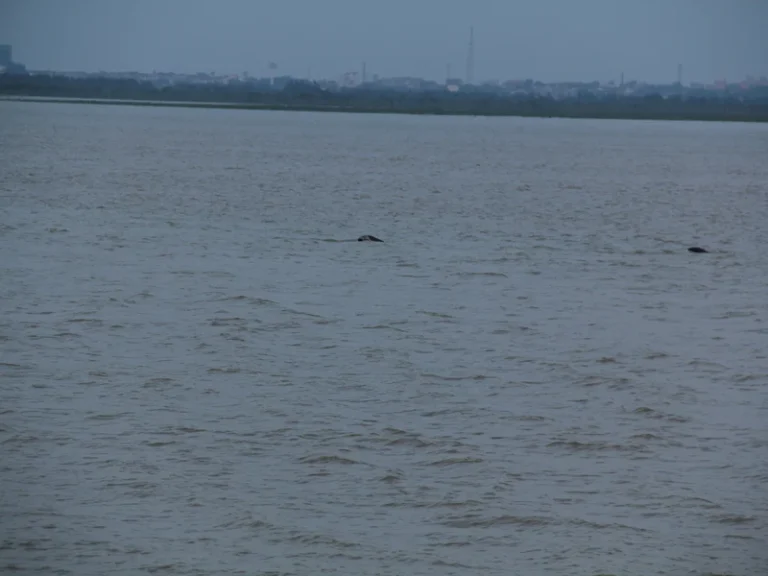
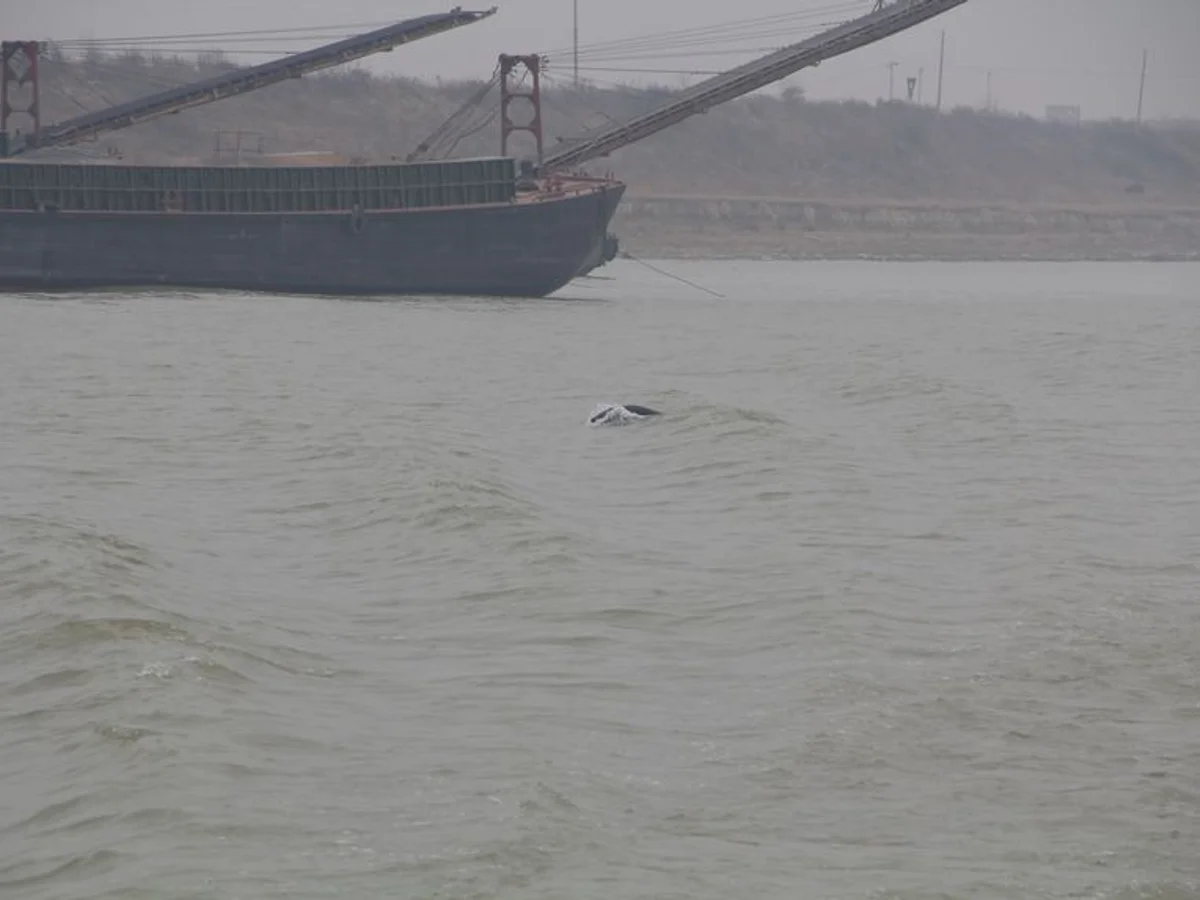
The Yangtze finless porpoise (Neophocaena asiaeorientalis) population increased from 1,012 individuals in 2017 to 1,249 by 2022 (+23.4%), frequently hunting along waterfronts of major cities.
More than 50,000 hydropower dams, including the massive Three Gorges Dam, continue to block historical spawning migrations of critically endangered anadromous species like the Chinese sturgeon.
Explosive Biomass Surge: Groundbreaking Findings from the Science Study
Definitive empirical validation of the moratorium’s ecological efficacy arrived with a landmark study published in the peer-reviewed journal Science (Xiong et al., Fishing ban halts seven decades of biodiversity decline in the Yangtze River). Led by Dr. Yushun Chen (Юйшунь Чэнь) and Dr. Fangyuan Xiong (Фанъюань Сюн) of the Institute of Hydrobiology at the Chinese Academy of Sciences, and co-authored by international scholars including Dr. Sébastien Brosse (Себастьен Бросс) from Université Paul Sabatier Toulouse and Dr. Julian D. Olden (Джулиан Олден) from the University of Washington, the investigation synthesized standardized monitoring data across dozens of hydrological stations from 2018 through 2023.
The findings revealed an extraordinary recovery trajectory. Total fish biomass across the surveyed Yangtze mainstream more than doubled (+120%) following the ban’s implementation, with certain middle and lower sections witnessing up to a three-fold increase in fish density. Researchers recorded marked improvements in the Fulton condition factor (body fullness) and mean body weight among key commercial and native taxa, including crucian carp (Carassius auratus), silver carp (Hypophthalmichthys molitrix), and grass carp (Ctenopharyngodon idella). Fish were not merely more numerous; individual specimens were significantly larger and entering healthy reproductive stages.
The recovery adhered to a classic trophic cascade, mirroring ecological restorative dynamics observed in broader global aquatic ecosystem preservation and deep-water biodiversity research. A rapid surge in lower-trophic omnivorous and planktivorous species established a robust energetic base. This foundation subsequently spurred the recovery of apex predatory fishes, such as the yellowcheek (Elopichthys bambusa) and predatory carp, restoring functional predation pressure and re-establishing long-lost structural equilibrium across the freshwater food web.
«The seven-decadal biodiversity loss was halted with improvements in fish biomass, body condition, species diversity, and initial recovery of threatened species. Eliminating fishing pressure was likely key to this recovery, in addition to actions targeting water quality improvement, hydrological and riparian habitat restoration, and vessel traffic reduction.»
Dr. Yushun Chen (Юйшунь Чэнь), lead author and Professor at the Institute of Hydrobiology, Chinese Academy of Sciences
The Return of the ‘Smiling Angel’: Resurgence of the Yangtze Finless Porpoise
The ultimate litmus test of the Yangtze River’s ecological revitalization is the fate of the Yangtze finless porpoise (Neophocaena asiaeorientalis ssp. asiaeorientalis). Known affectionately as the “smiling angel” for the upturned contour of its mouth, this charismatic cetacean is the only freshwater finless porpoise subspecies in existence. Following the tragic extinction of the Baiji, the porpoise became the river’s sole surviving mammalian sentinel. Yet its survival remained perilous: by 2017, relentless habitat loss and entanglement had driven the wild population down to an alarming 1,012 individuals, declining at a dangerous trajectory of nearly 10 percent annually.
The comprehensive 2022 Yangtze River Basin Aquatic Biological Resources Survey brought triumphant news: the wild finless porpoise population had rebounded to 1,249 individuals. This marked a remarkable 23.4 percent population increase—the first historical reversal in population decline recorded since systematic censuses began in the 1980s. Encouragingly, over 40 percent of surveyed pods included nursing mothers and playful calves, demonstrating that bountiful fish stocks and quieted acoustic environments have stimulated healthy reproductive rates.
Equally astonishing is the behavioral shift among the porpoises, who have reclaimed waterways adjacent to bustling megacities. pods of “smiling angels” are now regularly photographed leaping from the water along the metropolitan embankments of Wuhan, Nanjing, and Anqing, hunting schools of fish right before thousands of urban onlookers. Semi-natural oxbow nature reserves, such as Tian-e-zhou, have achieved self-sustaining breeding populations, serving as an irreplaceable biological genetic reservoir against future localized environmental shocks.
- Unprecedented Scale: The most comprehensive and geographically expansive freshwater conservation policy ever attempted, safeguarding over 6,300 kilometers of fluvial habitat.
- Rapid Trophic Response: Lower trophic level forage fishes recovered within 24 months, providing an abundant prey base for apex aquatic predators and marine mammals.
- AI and Drone Enforcement: Basin-wide deployment of intelligent thermal cameras, AI computer vision, and autonomous patrol drones eliminated illegal poaching networks.
- Global Proof of Concept: Empirical proof that large-scale, politically committed environmental interventions can reverse decades of severe freshwater degradation.
Hydropower Dams and Fragmentation: Critical Obstacles Beyond the Fishing Ban
While the success of the ten-year moratorium offers a historic conservation blueprint, the authors of the Science paper stress that halting fishing pressure cannot single-handedly solve deep structural wounds. As co-author Dr. Sébastien Brosse (Себастьен Бросс) highlights, the Yangtze basin remains one of the most heavily dammed river networks in the world, with over 50,000 reservoirs, dominated by the colossal Three Gorges Dam and Gezhouba Dam. These concrete megastructures have severely disrupted natural seasonal flow pulses and fragmented longitudinal river connectivity.
This fragmentation poses an existential crisis for long-distance migratory species. The critically endangered Chinese sturgeon (Acipenser sinensis), which undertakes extensive upstream spawning runs from coastal waters, has been physically barred from reaching its ancestral gravel breeding shoals in the upper reaches. Field monitoring reveals that natural sturgeon spawning in the wild has practically halted, leaving the species almost entirely reliant on artificial hatcheries and restocking releases. Furthermore, dam hypolimnetic discharges alter seasonal water temperatures, disrupting the thermal cues required by riverine fishes to initiate breeding cycles.
Compounding these hydrological disruptions are lingering chemical contaminants in riverbed sediments and persistent underwater acoustic noise generated by high-density commercial cargo navigation. To sustain these monumental ecological gains after the ten-year moratorium concludes in 2030, China must transition toward comprehensive hydrological restoration. This will require establishing eco-friendly reservoir discharge protocols, constructing effective fish passage bypasses, restoring riparian wetlands, and enforcing stringent acoustic management zones across this irreplaceable freshwater artery.