

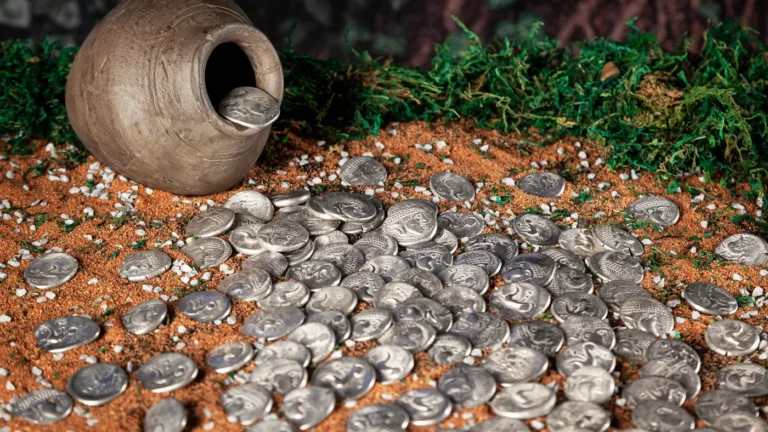

Archaeologists have unearthed a spectacular 2,200-year-old Celtic silver coin hoard during preemptive salvage excavations ahead of electrical substation construction in western Hungary. Weighing roughly 4.4 pounds (2 kilograms) of high-purity silver, this remarkable discovery represents the largest find of Celtic silver coinage in Central Europe in more than half a century, illuminating ancient mercenary warfare, trade corridors, and ritual hoarding practices of the European Iron Age.
Discovery Near Szombathely: From Power Substation to Archaeological Wonder
Conducted between 2023 and 2025 in the Szombathely region of western Hungary, the excavations were initiated ahead of infrastructure work for a major electrical substation by power distributor E.ON. Archaeologists initially discovered isolated silver coins scattered throughout topsoil layers. Local agricultural workers had occasionally unearthed solitary ancient coins while plowing the farmland over recent decades, but nobody suspected that a pristine, untouched hoard lay buried merely inches beneath the plow zone.
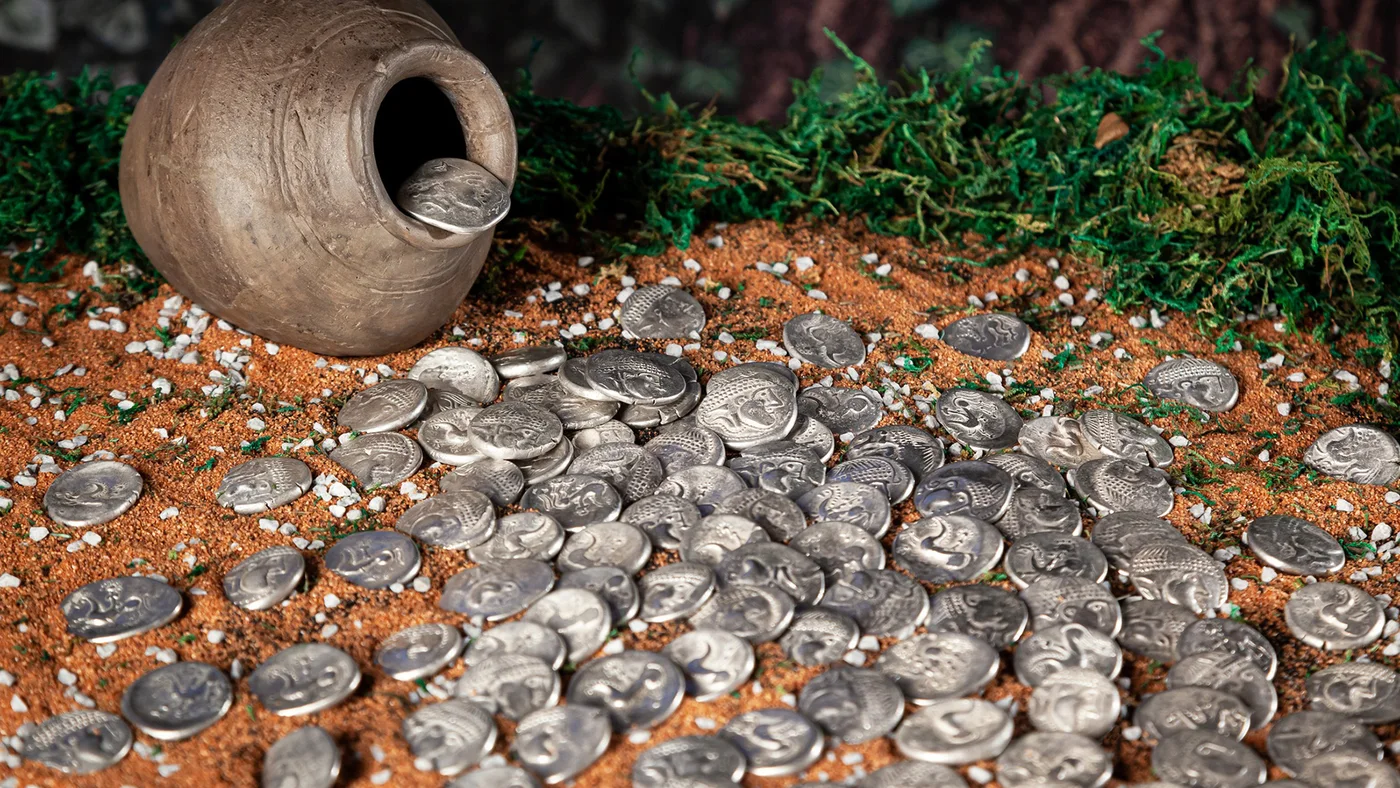
Utilizing advanced metal detectors and magnetometry surveys, a research team from Hungary’s National Archaeological Institute pinpointed a powerful subsurface metallic anomaly. At a depth of approximately 16 inches (40 centimeters), excavators uncovered a small ceramic vessel packed with heavy silver coins. For over two millennia, this magnificent Celtic silver coin hoard had rested undisturbed just beneath the surface of the soil.
The total weight of the recovered coin hoard reaches roughly 4.4 pounds (2 kilograms). While raw silver scrap value alone exceeds $2,000 at current market prices, the historical, numismatic, and archaeological value of the cache is truly priceless. Specialists noted that a Celtic silver hoard of this magnitude had not been discovered on Hungarian soil since the late 1960s.
Similar breakthroughs in European archaeology shed light on cultural continuity, just as documented in prehistoric analyses: Rødhals Man and the Neolithic Agricultural Transition. The Hungarian discovery highlights the profound roots of Central European settlements.
Stratigraphic mapping revealed that dense alluvial clays acted as a protective barrier, insulating the brittle ceramic vessel from deep seasonal freeze-thaw cycles and intensive modern agriculture.
The Velem Tetradrachms: Greek Inspirations and Celtic Stylistic Autonomy
Detailed numismatic examination confirmed that the coins are high-status Celtic imitations of Greek tetradrachms — large silver coins introduced in Athens during the late sixth century B.C. The newly discovered specimens date to between the late second century B.C. and the early first century B.C., a pivotal era of Iron Age metallurgy and tribal confederations.
Specialists classify these coins as the distinct “Velem” type, named after the renowned Celtic fortified hilltop settlement, or oppidum, of Velem-Szent Vid, located approximately 10 miles (15 kilometers) to the west. This fortified mountain redoubt served as the paramount metalworking, economic, and minting hub of the Boii tribe prior to the Roman annexation of Pannonia.
The iconography of the coins demonstrates an extraordinary synthesis of Hellenistic tradition and Celtic abstract expressionism. The obverse depicts a stylized profile of the Greek god Apollo, crowned with geometric curls, while the reverse features a helmeted warrior mounted atop a galloping steed. Rather than mechanically duplicating Hellenistic prototypes, Celtic die-engravers reinterpreted classical figures into energetic, mythologically charged abstract forms.
Metallurgical assaying confirms remarkable alloy consistency: silver purity levels regularly exceed 90-95%, demonstrating centralized tribal authority over quality standards and metallurgical refining processes at the Velem oppidum mint.
«This is a genuine rarity in Europe. A hoard of this scale and numismatic caliber has not been found in Hungary since the late 1960s. The site offers an extraordinary 7,000-year window from the Neolithic to the Roman era.»
Eszter Kreiter, senior archaeologist at Hungary’s National Archaeological Institute
7,000 Years of Human Presence: From Neolithic Adzes to Roman Underfloor Heating
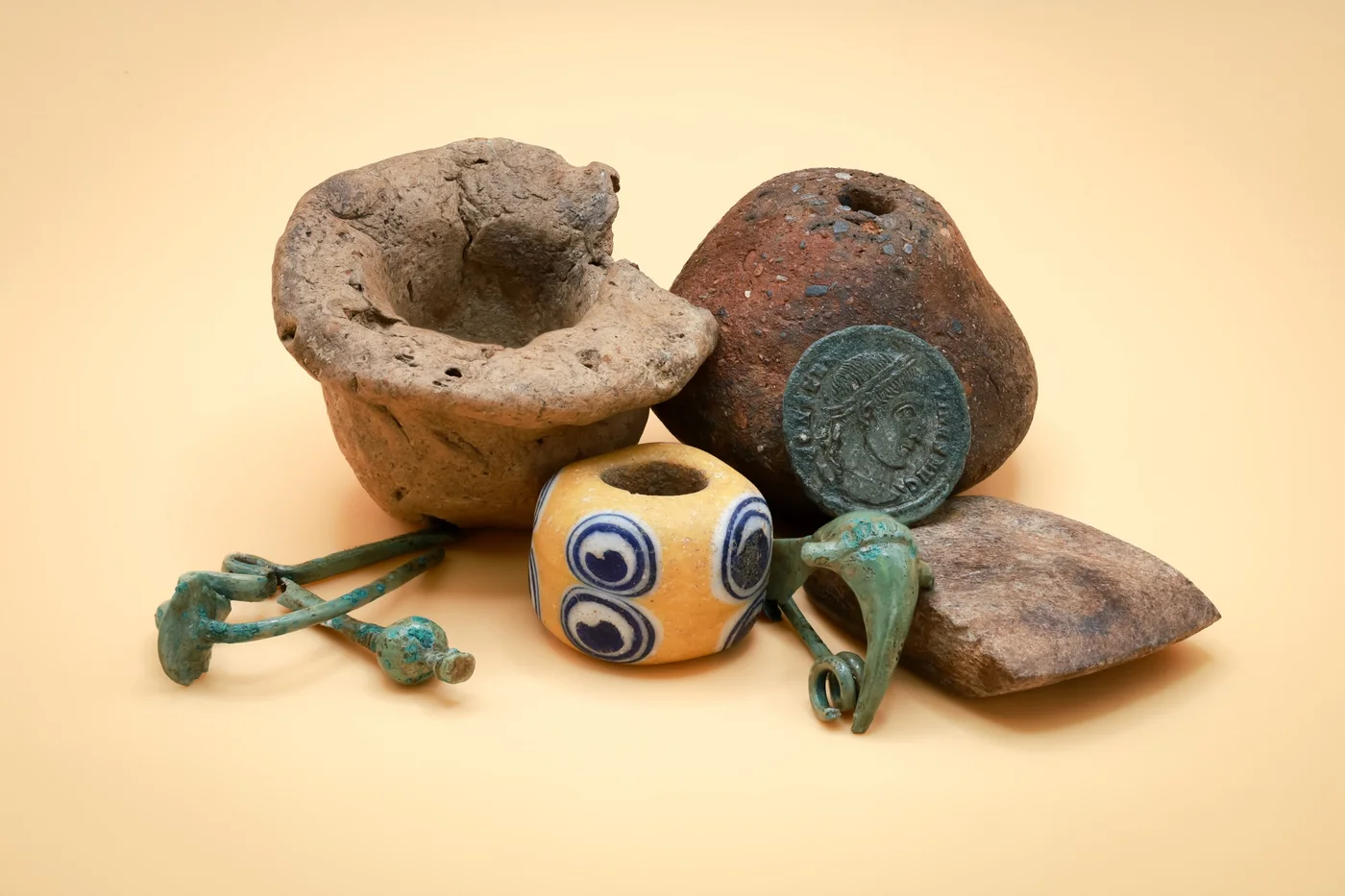
The chronological depth of the Szombathely site extends far beyond the Celtic Iron Age. Archaeological stratigraphy revealed continuous and episodic human occupation spanning over seven millennia. The oldest artifact recovered is an exquisite, polished stone chisel dating back nearly 7,000 years, used for woodworking by early Neolithic farmers.
Another standout discovery is an ornate glass bead adorned with a striking “peacock’s eye” motif, produced during the sixth or seventh century B.C. by artisans of the Hallstatt culture. The presence of such elite imported glass goods demonstrates that the Carpathian Basin was plugged into sophisticated trans-European exchange networks long before the rise of the Roman Empire.
Centuries after the Celts buried their silver treasure, a luxurious Roman rural estate (villa rustica) was erected directly atop the prehistoric settlement. Excavations successfully mapped out the villa’s architectural footprint, including an underfloor hypocaust heating system and an authentic fired Roman brick bearing the footprint of a domestic dog, pressed into soft clay two thousand years ago.
This exceptional occupational continuity underlines the geographical advantages of the site, which offered reliable freshwater streams, rich arable loam, and control over crucial crossing points along the Rába river valley.
The paramount industrial and minting citadel of the Boii tribe situated just 10 miles away, renowned for prehistoric bronze and silver metallurgy.
Celtic warriors serving Macedonian and Greek monarchs brought silver wealth back to the Carpathian Basin, sparking local minting.
From Neolithic polished adzes (5000 B.C.) to Roman villas with hypocaust heating, demonstrating deep multi-millennial occupation.
The most substantial Celtic silver hoard discovered in Hungary since the 1960s, designated for permanent public display.
Hellenistic Mercenaries and Divine Offerings: Why Celts Cached Silver
The emergence of indigenous Celtic coinage was inextricably linked to military campaigns in the Mediterranean. As noted by Oxford numismatics scholar Christopher Howgego in the Journal of Roman Studies, Celtic warriors frequently served as mercenary cavalry in Hellenistic armies across Greece, Thrace, and Macedonia, returning home laden with silver tetradrachms.
In the Carpathian Basin, local chieftains leveraged rich silver deposits to strike regional issues. Because Velem-type tetradrachms carried immense purchasing power, they were never utilized for mundane daily transactions. Instead, they functioned as prestige reserves for tribal elites, diplomatic dowries, or ransom funds.
The deliberate concealment of the coins within a clay vessel at the boundary of a settlement points toward two primary interpretations: a hasty burial during tribal unrest prior to Roman expansion, or a formal votive dedication to chthonic deities, a prevalent Celtic religious ritual.
Professor Christopher Howgego emphasizes that accumulating vast caches of silver was a profound public statement of aristocratic authority, securing spiritual favor and binding vassal clans together through conspicuous displays of wealth.
- The cache contains dozens of heavy silver coins weighing approximately 4.4 lbs (2 kg), buried in a clay vessel 16 inches underground.
- Coins are rare Celtic copies of Greek tetradrachms of the “Velem” type, depicting Apollo and a mounted cavalry warrior.
- Salvage excavations uncovered 7,000 years of occupation: Neolithic stone tools, Hallstatt glass beads, and a Roman villa rustica.
- Found prior to electrical substation development by utility firm E.ON in western Hungary.
- Curated and researched by the National Archaeological Institute of Hungary.
A New Milestone for European Archaeology
The Szombathely hoard provides a vital benchmark for lead-isotope and metallurgical analysis, pinpointing whether the silver originated from Alpine or Carpathian mines. The data will deepen scholarly comprehension of tribal economics prior to Julius Caesar’s Gallic Wars.
Furthermore, comparing trace elements in the coins will reveal how trade networks shifted as Roman commercial influence expanded north of the Danube in the first century B.C.
Following comprehensive restoration and conservation by the National Archaeological Institute of Hungary, the entire assemblage will become the centerpiece of the Savaria Museum in Szombathely, celebrating a 7,000-year crossroads of European civilizations.