

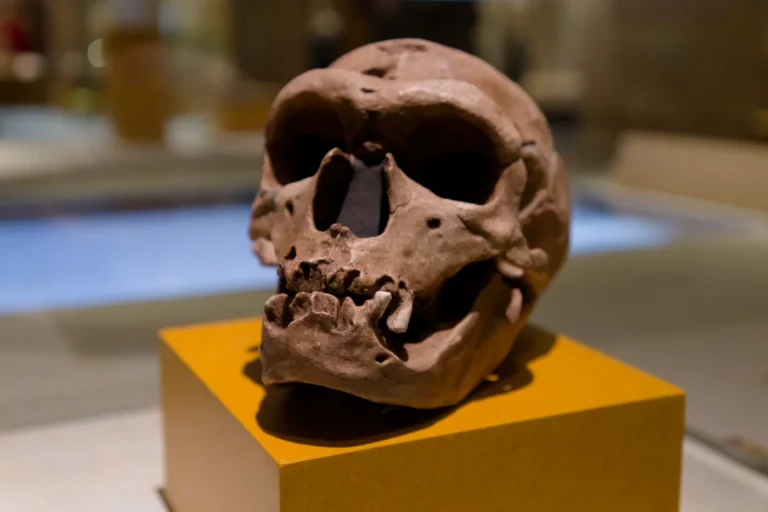

The enigmatic Neanderthal extinction (Homo neanderthalensis), following hundreds of millennia of undisputed ecological dominance across Eurasia, has long ignited fierce debate between proponents of catastrophic climate change and champions of competitive exclusion by modern humans. Now, a landmark study combining continental paleoclimate modeling with dynamic demographic simulations has established a transformative conclusion: severe climate oscillations alone rarely triggered the total demise of Neanderthals. Instead, their ultimate extinction was precipitated by the expansion of Homo sapiens, which trapped fragmented populations in inescapable demographic dead-ends.
The MIS 3 Climate Conundrum: Why Ice Age Freezes Weren’t the Lone Culprit
For decades, standard paleoanthropological models argued that the volatile climate of Marine Isotope Stage 3 (MIS 3) — spanning roughly 60,000 to 27,000 years ago — was the primary driver of Neanderthal extirpation. During this era, Greenland ice cores reveal extreme Dansgaard–Oeschger oscillations: rapid, violent transitions between bitter glacial stadials and brief temperate interstadials occurring in mere decades.

To test whether environmental shocks alone could wipe out an entire continent-spanning species, a team led by paleoanthropologist Ana B. Marín-Arroyo and Marco Vidal-Cordasco at the University of Cantabria, under the European Research Council’s SUBSILIENCE project, constructed cutting-edge ecological models. They simulated dynamic plant productivity, herbivore biomass (including woolly mammoths, bison, and red deer), and human carrying capacity across Europe.
The simulations yielded an unexpected revelation: while harsh stadials inevitably caused sharp regional population crashes, driving Neanderthals into southern refugia across the Iberian, Italian, and Balkan peninsulas, they consistently rebounded and recolonized northern landscapes once warmer conditions returned. In the absence of Homo sapiens, continental-scale extinction occurred in less than one percent of model runs.
The Homo Sapiens Factor: Severed Migration Corridors and Resource Compression
The demographic equilibrium collapsed irreversibly when researchers introduced the dispersal of anatomically modern humans into the simulation, beginning around 45,000 years ago. Early modern humans did not wage systematic warfare against Neanderthals; rather, their competitive advantage stemmed from subtler ecological levers: higher baseline population densities, broader social cooperation networks, and versatile hunting strategies.
When subsequent climatic downturns decimated game biomass, Neanderthals retreated toward their southern ancestral havens. However, as conditions normalized, their traditional corridors of northward and eastward expansion were occupied by thriving communities of Homo sapiens. This dynamic mirrors prehistoric survival adaptations seen in 125,000-year-old early human desert settlements, where tactical innovation dictated territorial dominance.
«Without Homo sapiens, continental-scale Neanderthal extinction was extremely rare», emphasizes Ana B. Marín-Arroyo. Blocked from recolonizing their former hunting ranges, Neanderthals were effectively confined to fragmented, isolated geographical pockets where survival became an uphill battle against statistical probability.

«Our simulations demonstrate that without Homo sapiens, continental-scale Neanderthal extinction was extremely rare. It was the lethal combination of environmental stress and human demographic pressure that made their collapse inevitable.»
Ana B. Marín-Arroyo, Professor of Paleoanthropology at the University of Cantabria
The Extinction Vortex: Severe Inbreeding and Genetic Deterioration
The structural fragmentation of Neanderthal habitat precipitated a disastrous demographic spiral. In conservation biology, small, disconnected populations inevitably encounter an extinction vortex: when breeding populations fall below several hundred individuals, inbreeding depression accelerates rapidly, fixing deleterious mutations and depressing fertility rates.
Fossil genome sequencing from key archaeological sites, such as El Sidrón Cave in northern Spain and Vindija Cave in Croatia, provides definitive empirical support for these simulation findings. Late Neanderthal DNA exhibits exceptionally low genetic heterozygosity, widespread skeletal abnormalities, and severe immune vulnerabilities, indicating generations of close-kin mating in dying enclaves.
Simultaneously, interbreeding with the steadily expanding modern human populations — which bequeathed 1% to 2% Neanderthal DNA to modern non-African humans — acted as an assimilative drain, effectively dissolving the remaining relict Neanderthal lineage into the greater Homo sapiens gene pool.
State-of-the-art simulations demonstrate that Pleistocene climate volatility reduced local numbers but rarely triggered continental extinction on its own.
The influx of modern human populations closed off migration routes, preventing fragmented Neanderthal clans from returning north after cold spells.
Geographic isolation forced late Neanderthals into chronic inbreeding, accumulating deleterious mutations that eroded immunity and birth rates.
Homo sapiens prevailed through denser cooperative networks and superior population replenishment rather than raw physical supremacy.
Archaeological Evidence: Contrasting Mousterian and Aurignacian Toolkits
The technological divergence between archaic and modern humans is plainly visible in the late Middle and Upper Paleolithic stratigraphy. Neanderthals relied predominantly on the Mousterian industry — robust Levallois flakes and heavy stone thrusting spears. Subduing woolly rhinos and giant bison with hand-held thrusting weapons required close physical combat, a perilous strategy reflected in the staggering frequency of healed fractures and cranial trauma found across Neanderthal skeletons.
In stark contrast, early Aurignacian modern humans deployed advanced projectile technologies: spearthrowers (atlatls), split-base bone points, and stone bladelets that enabled lethal hunting from safe stand-off distances. Furthermore, modern humans invented eyed bone needles to sew airtight, tailored multi-layered fur garments and moccasins, insulating infants and nursing mothers against lethal hypothermia during sub-zero Pleistocene blizzards.
Modern humans also established expansive long-distance social networks. Archaeological sites across central Europe contain marine cowrie shells transported over 400 kilometres from the Mediterranean, proving sustained inter-tribal alliances. Neanderthals, operating in isolated family bands rarely venturing beyond thirty kilometres from home caves, were deprived of raw material reserves and rapid technological contagion.
- ERC SUBSILIENCE Research: First comprehensive synthesis of paleoclimate dynamics, trophic biomass, and prehistoric human demographics.
- Herbivore Carrying Capacity: Depleted game resources heightened competitive tension between rival apex predator populations.
- Refugia Isolation: Entrapped in southern European mountain valleys, relict Neanderthal populations collapsed from genetic stagnation.
- Living Legacy: Ancient hybridization gifted modern humans vital immune adaptations that facilitated survival in temperate and arctic climates.
Evolutionary Insights: Shattering the Inferiority Myth
This groundbreaking research permanently dismantles the outdated colonial trope of Neanderthals as cognitive failures or brutish evolutionary dead-ends. Archaeological records demonstrate they were masterful big-game hunters who buried their deceased with grave goods, manufactured advanced composite adhesives, adorned themselves with raptor feathers, and created abstract cave art.
Their tragic disappearance was an intricate ecological drama driven by compounded vulnerabilities: climate instability diminished baseline ecosystem productivity, while modern humans occupied the ecological margins necessary for demographic recovery. Homo sapiens did not triumph through singular brilliance, but through slightly superior reproductive rates and expansive social cohesion.
As modern civilization grapples with accelerating climate disruptions and systemic biodiversity loss, the lesson of Neanderthal extinction resonates with chilling clarity. Even the most resilient and specialized apex species can vanish when environmental instability intersects with habitat fragmentation and resource competition.