

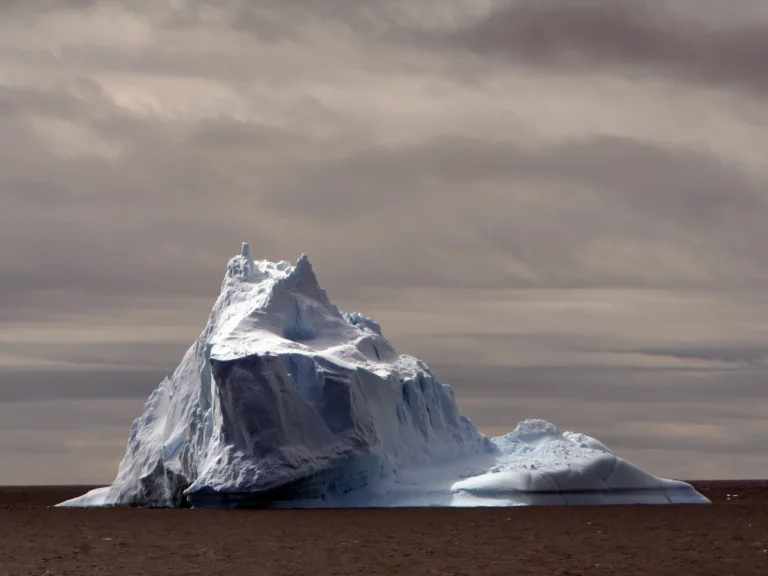

Even a temporary breach of the Paris Agreement’s 1.5°C global warming limit above pre-industrial levels will inflict catastrophic, irreversible devastation on Earth’s cryosphere, locking in centuries or even millennia of irreversible global consequences. This stark, uncompromising warning emerges from the landmark «State of the Cryosphere 2024: Lost Ice, Global Damage» report, published by the International Cryosphere Climate Initiative (ICCI) and endorsed by over fifty leading polar and glacier scientists in collaboration with the United Nations Environment Programme (UNEP). The findings decisively dismantle the comforting political myth of a «safe overshoot»—the dangerous assumption that global temperatures can temporarily rise to 1.8°C or 2.0°C and later be engineered back down through carbon dioxide removal technologies without permanently destabilizing the frozen pillars of our planetary climate.
The Dangerous Overshoot Illusion: Why Cryospheric Physics Forbids Delay
Many contemporary international decarbonization roadmaps quietly lean on the premise of a temperature «overshoot»—a scenario in which worldwide temperatures temporarily surpass 1.5°C between the 2030s and 2050s, only to be dialed back by 2100 through massive deployment of direct air carbon capture and storage (DACCS) and reforestation. However, the comprehensive assessment compiled by ICCI shows that for the cryosphere—encompassing ice sheets, mountain glaciers, sea ice, snow cover, and permafrost—an overshoot is not a temporary inconvenience, but an irreversible planetary threshold.
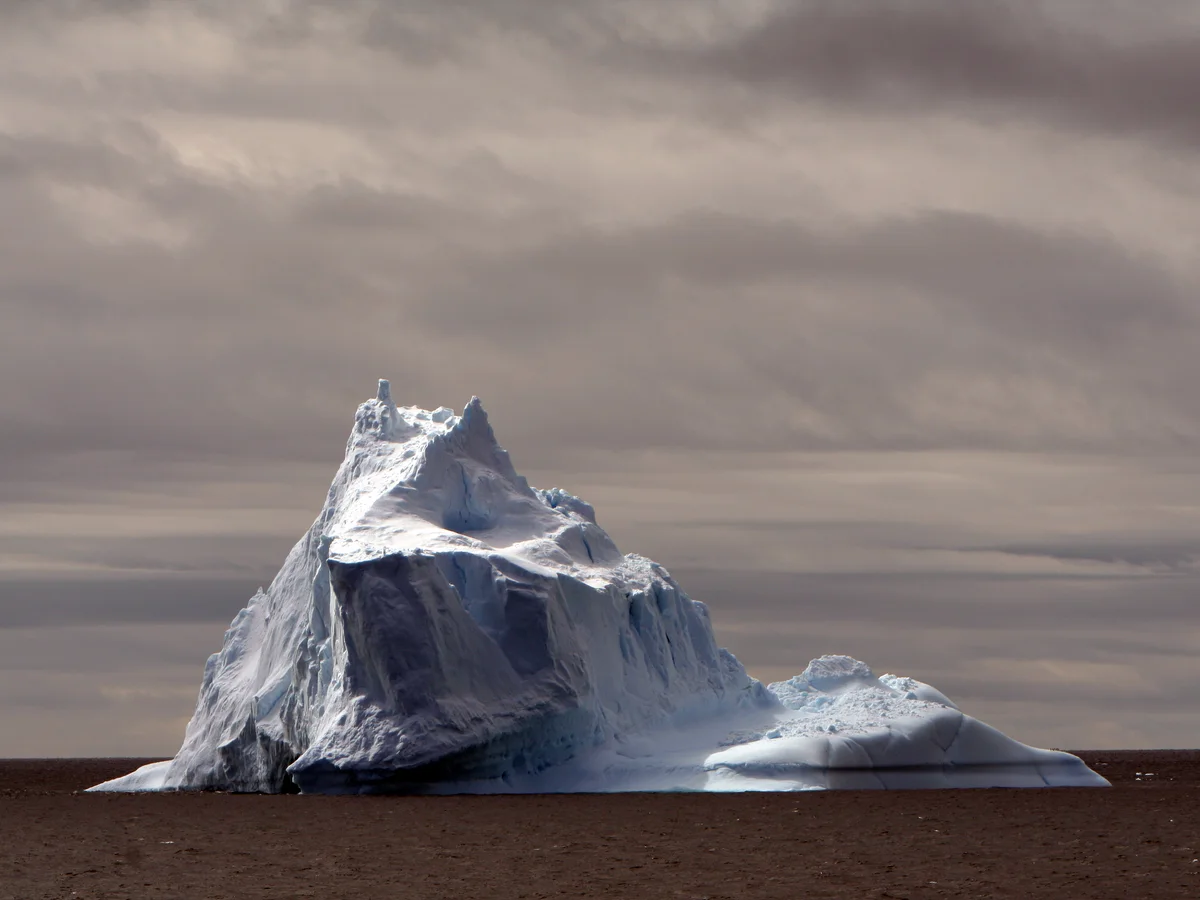
Polar ice sheets possess immense thermal and dynamic inertia. While the atmosphere may respond relatively quickly to net-zero emissions, deep oceanic currents retain and circulate heat for centuries. When warmer seawater penetrates the grounding lines of marine-terminating glaciers, it triggers runaway Marine Ice Sheet Instability (MISI), a physical process that continues independently of atmospheric surface conditions.
As emphasized by report lead authors including glaciologist Dr. Miriam Jackson from the International Centre for Integrated Mountain Development (ICIMOD) and Professor Georg Kaser of the University of Innsbruck, 1.5°C represents an absolute physical threshold for cryospheric survival rather than an arbitrary political bargaining target. Furthermore, paleoclimate records indicate that long-term stabilization of global ice cover requires atmospheric temperatures closer to 1.0°C or below.
Arctic Sea Ice and Albedo Collapse: Uncovering the Dark Planetary Mirror
Arctic sea ice represents one of the most sensitive tipping elements in the entire Earth system. Although summer sea ice extent naturally expands and contracts each season, perennial multi-year sea ice has already plummeted by more than 40% since the mid-20th century. Climatologists warn that the first ice-free September in the Arctic Ocean is now practically inevitable before 2050 under nearly every realistic emissions scenario.
The core danger of losing polar sea ice lies in the rapid degradation of Earth’s planetary albedo. Bright white sea ice reflects up to 85–90% of incoming solar radiation back into space. When that reflective crust vanishes, exposing dark ocean water, solar heat absorption surges to 90%. This creates a potent self-amplifying feedback loop: warmer water inhibits winter refreezing and accelerates permafrost degradation across surrounding sub-Arctic coastlines.
This dynamic interacts closely with how summer seasons differ between Earth’s hemispheres due to orbital physics and ocean circulation, where oceanic reservoirs act as primary thermal buffers.
«Earth’s giant ice sheets do not negotiate with political timelines and cannot be turned on and off like a living room thermostat. Once the thresholds for the West Antarctic and Greenland ice sheets are crossed, centuries of multi-meter sea level rise will be irrevocably locked in, regardless of whether atmospheric temperatures are subsequently cooled.»
Pam Pearson, Director and Founder of the International Cryosphere Climate Initiative (ICCI)
A Ticking Climate Clock: Permafrost Thaw and the Batagaika Megaslump
Equally alarming is the rapid thaw of permafrost, which underlies roughly a quarter of the Northern Hemisphere’s landmass. Frozen soils across Siberia, Alaska, and northern Canada contain an estimated 1,500 billion metric tons of organic carbon—nearly double the amount currently circulating in Earth’s atmosphere.
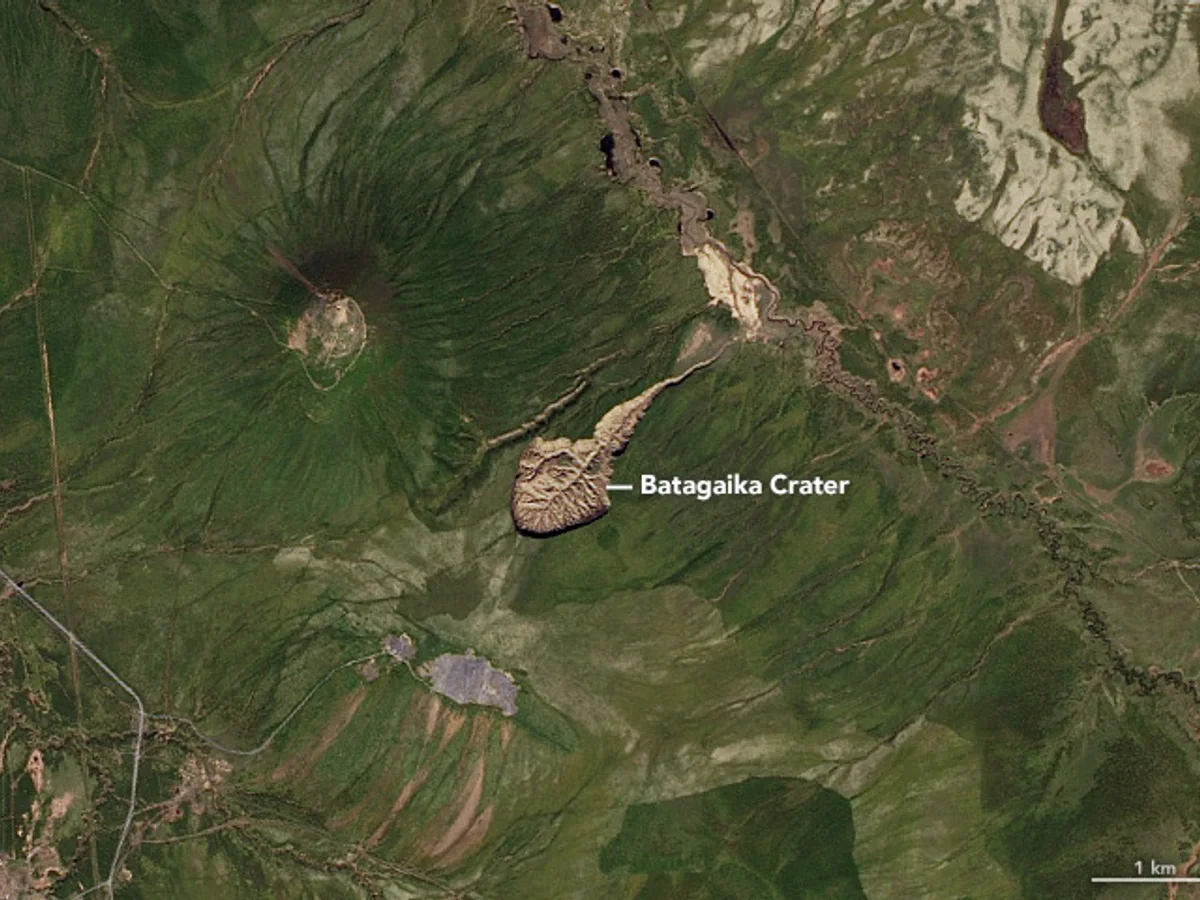
Crossing the 1.5°C threshold triggers catastrophic thermokarst collapse and ground subsidence. Nowhere is this clearer than at Siberia’s Batagaika crater, a massive «megaslump» expanding by tens of meters annually. As subterranean ice wedges liquefy, ancient Pleistocene plant and animal matter is exposed to microbial decomposition.
Under oxygen-deprived conditions in thermokarst thaw lakes, anaerobic microbes emit vast plumes of methane (CH₄)—a greenhouse gas with a warming potential over 80 times that of carbon dioxide over a 20-year timescale. Consequently, permafrost is rapidly shifting from a historical millennial carbon sink into an autonomous carbon source, threatening to neutralize global emissions reductions.
At sustained warming above 1.5°C, melt becomes irreversible as the ice surface lowers into warmer, denser atmospheric layers.
Marine ice sheet instability allows warm circumpolar deep water to rapidly undercut the grounding lines of Thwaites Glacier.
Thawing Siberian and Canadian peatlands discharge billions of tons of CO₂ equivalent annually through autonomous microbial decay.
A locked-in 2 to 5 meter sea level rise will unfold over the next 500 years even if atmospheric temperatures are later cooled.
The Plight of Mountain Glaciers: Water Security for Two Billion People
While the melting of Greenland and Antarctica directly threatens coastal megacities from New York to Shanghai, the retreat of mountain glaciers jeopardizes continental interiors. The glacier networks of the Himalayas, Karakoram, Andes, and European Alps act as natural water towers that regulate seasonal river discharge for vital waterways such as the Indus, Ganges, Yangtze, and Mekong.
Under a 1.5°C overshoot scenario, mid-latitude and tropical mountain glaciers will lose 50% to 70% of their total mass by the end of the century. After an initial spike in catastrophic glacial lake outburst floods (GLOFs), downstream populations will experience severe summer water shortages. Over two billion people currently depend on these meltwater river basins for drinking water, agriculture, and hydropower.
Geological studies emphasize the scale of this intervention: scientists previously proved that industrial greenhouse emissions have already postponed the next planetary ice age, but unmitigated global warming threatens catastrophic ecosystem collapse.
- 1.0°C Ceiling: The historical upper boundary required to guarantee the long-term survival of polar ice sheets.
- 1.5°C Danger Zone: The critical tipping boundary beyond which marine ice sheet collapse becomes self-sustaining.
- 2.0°C Catastrophe: Triggers inevitable multi-meter global sea level rise, submerging coastlines worldwide.
- Oceanic Thermal Lag: Deep-sea heat absorption sustains ice-shelf undercutting for centuries after atmospheric stabilization.
Scientific Consensus: The Imperative to Halt Cryosphere Collapse
In their closing assessment, the authors of the ICCI report call on delegates at international climate negotiations to reject any tolerance for temperature overshoot. Empirical ice-sheet modeling indicates that permitting temperatures to reach 2.0°C guarantees the catastrophic ungrounding of the Thwaites Glacier («Doomsday Glacier») in West Antarctica, committing global coastlines to 3 to 5 meters of unavoidable sea level rise.
The scientific imperative demands immediate, aggressive decarbonization by 2030, rigorous curbs on short-lived climate pollutants such as methane and black carbon soot, and a strict commitment to capping global warming well below 1.5°C with the eventual objective of restoring temperatures toward 1.0°C.
The complete scientific report, accompanied by interactive cryospheric mapping tools, is available in the official State of the Cryosphere 2024 publication on the ICCI portal.