

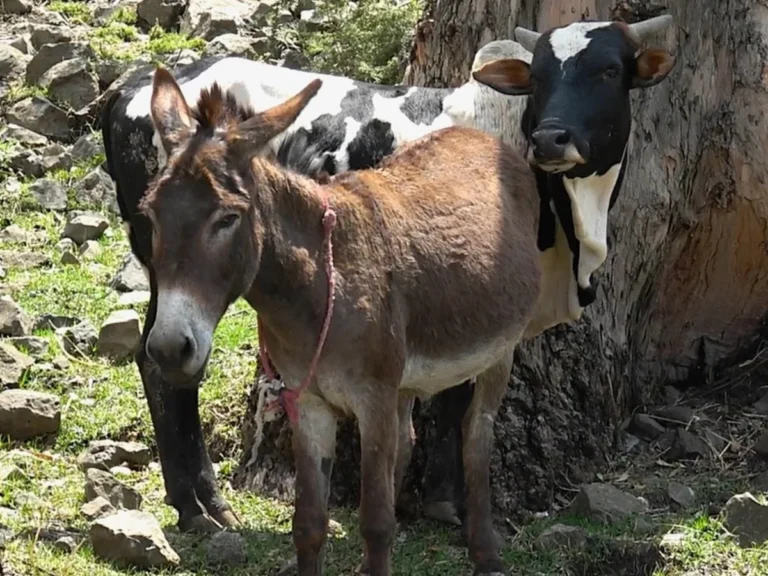

In classical evolutionary biology, non-reproductive sexual interactions between individuals of distinct taxonomic species were historically dismissed as maladaptive errors or reproductive confusion—sporadic hormonal misfires in captive animals deprived of conspecific partners. However, a landmark field study conducted by Italian ethologists from the University of Pisa and published in Current Biology has fundamentally challenged these orthodoxies. Researchers documented an extraordinary, multi-year, and highly selective sexual and emotional bond between an adult bull and a male domestic donkey grazing freely across the Ethiopian highlands. The pair engaged not merely in routine sexual mounting, but in an elaborate repertoire of gentle affiliative social rituals, proving that animal sexuality and social attachment serve vital adaptive functions far beyond species propagation.
Achille and Patroclo of Tigray: A Groundbreaking Ethological Discovery
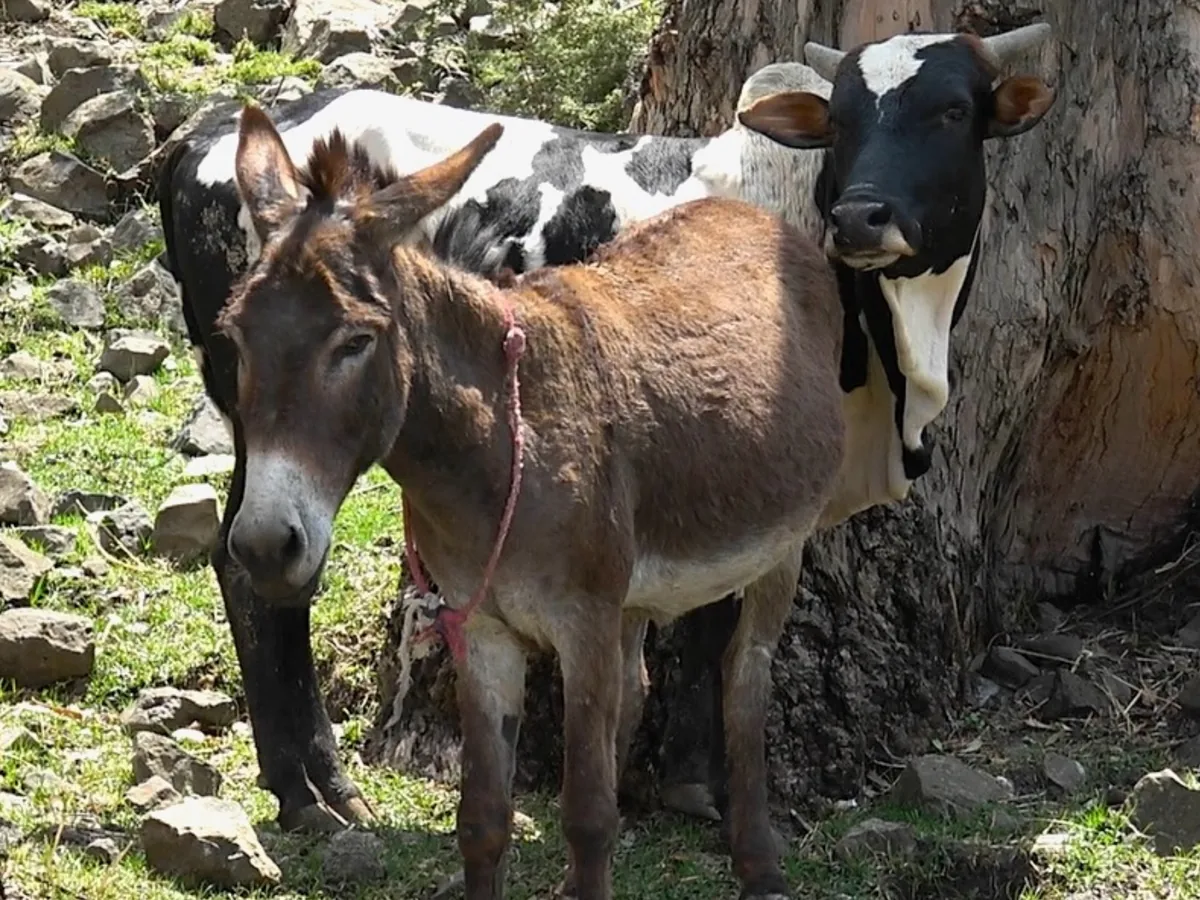
The unprecedented alliance unfolded in a rural pastoral village in the high-altitude Tigray region of northern Ethiopia, where domestic livestock graze freely under traditional extensive husbandry. The protagonists were a mature zebu bull (Bos taurus indicus), designated Achille by researchers, and an adult male domestic donkey (Equus asinus), named Patroclo. These two species belong to entirely separate mammalian orders—Artiodactyla (even-toed ungulates) and Perissodactyla (odd-toed ungulates)—whose evolutionary lineages diverged over 65 million years ago.
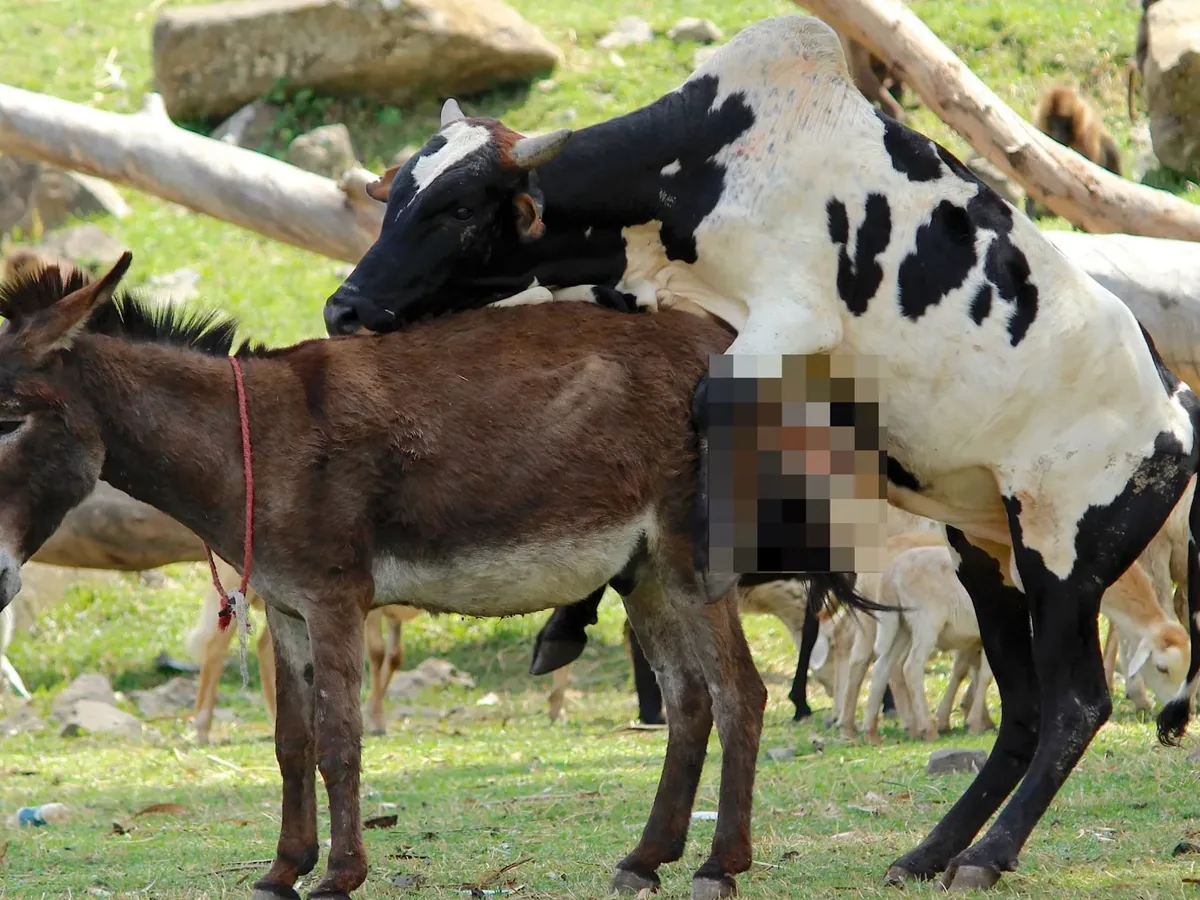
Over prolonged observation seasons, the research team documented 51 distinct mounting episodes, with 34 resulting in complete intromission. What stunned the ethologists was the active receptivity of Patroclo: the donkey never attempted to flee, bite, or kick. Instead, he proactively approached the bull, assumed a receptive standing posture, presented his hindquarters, and patiently accommodated the giant bovine partner whose body mass exceeded his own by more than threefold.
Conversely, when Achille occasionally approached other donkeys in the grazing area, they aggressively repelled him with violent rear kicks and warning brays. This confirmed that the partnership was not an artifact of random dominance or sexual coercion, but an exclusive mutual preference anchored in individual consent.
The Architecture of Trust: Allogrooming, Mutual Licking, and Bodily Proximity
The sexual component of their relationship represented only one facet of a deeply integrated social partnership. Ethological focal sampling demonstrated that sexual encounters were embedded within extensive periods of affiliative, non-sexual caregiving behavior.
Achille and Patroclo spent hours grazing shoulder-to-shoulder, maintaining inter-individual distances of less than half a meter. Achille would gently lower his massive horned head to tenderly lick Patroclo’s neck, withers, and ears with his rough tongue, while Patroclo responded by softly nuzzling and grooming the bull’s flanks. In mammalian ethology, allogrooming of this intensity is the gold standard indicator of deep dyadic trust and parasympathetic stress reduction.
Such multifaceted behavioral plasticity demonstrates the profound emotional richness of animal life: just as animal populations under extreme ecological pressures forge novel adaptive behaviors, domestic ungulates possess the neurological capacity to form personalized friendships that defy rigid species boundaries.
«For decades, ethology was constrained by a reductive reproductive mandate: if a behavior did not yield offspring, it was categorized as a biological blunder. The case of Achille and Patroclo proves otherwise. Both animals enjoyed unrestricted daily access to numerous male and female conspecifics, yet consistently chose one another. Their sexual encounters were invariably preceded and followed by extensive allogrooming, mutual licking, and close bodily contact, demonstrating the formation of a genuine, resilient dyadic social bond.»
Elisabetta Palagi, Professor of Ethology at the University of Pisa and Senior Study Director
Dismantling the Reproductive Myth: Why Animal Sexuality Transcends Procreation
Conventional zoology long marginalized homosexual and interspecies interactions as anomalies stemming from confinement. Yet Palagi’s findings compel science to acknowledge that sexuality in complex animals is inherently multifunctional. Achille and Patroclo were not experiencing mate scarcity: the surrounding pastures teemed with fertile cows and jennies in estrus.
Same-sex and non-conceptive sexual behaviors have been documented in over 1,500 animal species, from bottlenose dolphins and bonobos to giraffes and black swans. In gregarious mammals, socio-sexual behaviors modulate group tension, reduce systemic cortisol, solidify protective alliances, and generate psychological reassurance.
In human psychology, unconventional relational dynamics similarly reveal that emotional safety often transcends rigid norms: for instance, research shows how relaxing domestic perfectionism paradoxically strengthens family cohesion and genuine bonding, eliminating artificial barriers. In the case of the bull and donkey, shedding interspecies inhibitions afforded both animals profound mutual reassurance.
34 instances resulted in complete intromission, characterized by proactive receptive presentation by the donkey without coercion.
The partners belong to separate mammalian orders (Artiodactyla and Perissodactyla) separated since the Cretaceous extinction.
Both animals had unrestricted access to dozens of conspecific partners of both sexes, but consistently sought each other out.
Hours of mutual licking and gentle head-rubbing demonstrated deep parasympathetic calming and enduring social trust.
Neuroendocrinology of Interspecies Friendship: Oxytocin and Endogenous Opioids
What biochemical pathways enabled two creatures separated by millions of years of evolution to sustain an affectionate partnership? Ethologists point to the evolutionary conservation of the oxytocinergic and endogenous opioid systems. During gentle tactile stimulation, mutual licking, and sexual arousal, the mammalian hypothalamus releases surges of oxytocin, which downregulates amygdala fear responses and fosters selective attachment.
Because oxytocin receptor distributions in the limbic system are virtually identical across ungulate taxa, tactile cues of safety, warmth, and affection translated seamlessly between the bovine and equine nervous systems. Sensory differences in vocalizations and species-specific odors were easily overridden by the neurochemical reward of companionship.
This finding underscores that the emotional architecture of mammals is built upon ancient, shared subcortical circuits, demonstrating that empathy, tenderness, and the desire for social connection are fundamental traits of sentient life.
- Socio-sexual behaviors in natural animal environments serve vital bonding functions beyond procreation.
- Cross-species relationships can emerge through free partner choice rather than sensory deprivation.
- The oxytocinergic neurochemical attachment system is deeply conserved across diverse mammalian orders.
- Farm animals exhibit sophisticated emotional lives and the capacity for voluntary, individualized friendships.
A Paradigm Shift in Comparative Psychology and Animal Sentience
The longitudinal study of Achille and Patroclo marks a transformative milestone in the scientific dialogue surrounding farm animal sentience. For centuries, livestock species were viewed through a strictly mechanistic lens—as agricultural commodities devoid of complex inner emotional lives.
The enduring partnership observed in Ethiopia proves that cattle and donkeys possess distinct personalities, selective social agency, and the capacity for authentic, non-utilitarian cross-species companionship.
Published in Current Biology, this research establishes an empirical foundation for modernizing ethical standards in animal welfare. Recognizing that domestic animals experience genuine emotional attachments compels humanity toward a more empathetic, respectful coexistence with the non-human world.