

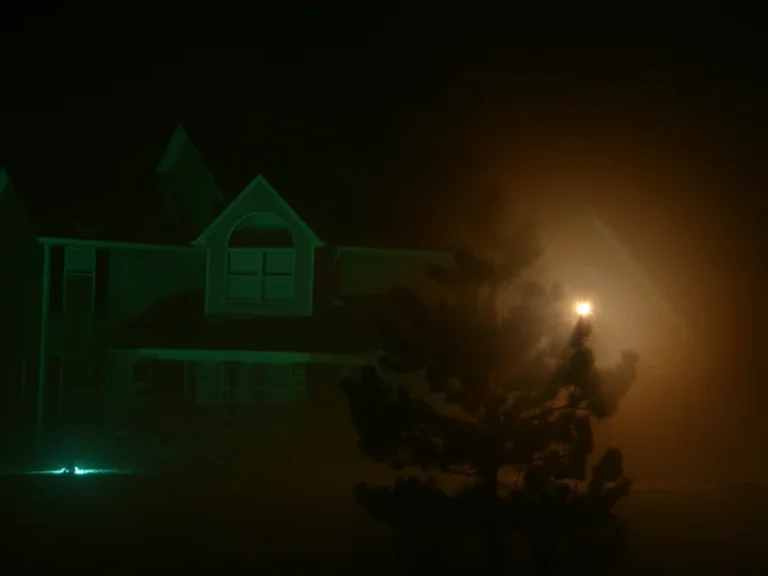

For centuries, folklore and popular media have perpetuated the archetype of the haunted house, attributing ghostly manifestations and poltergeist outbreaks to cursed properties and restless spirits. However, a groundbreaking decade-long investigation conducted by cognitive psychologists has fundamentally dismantled this supernatural geography: anomalous phenomena originate not within ancient walls, but inside the subtle architecture of the human nervous system. Known scientifically as Haunted People Syndrome (HP-S), this biopsychosocial framework demonstrates that chronic distress, thin psychological boundaries, and social contagion converge to make the brain project perceived entities into physical space.
The San Antonio Disturbances: When Apparitions Pack Their Bags
Throughout history, ghost stories have shared an unshakable premise: supernatural entities belong to specific physical locations. From Victorian manors to derelict sanatoriums, cultural folklore firmly rooted poltergeists in brick and mortar. Yet empirical psychology recently encountered an extraordinary real-world case that dismantled this paradigm entirely. Known in parapsychological literature as the «San Antonio Disturbances», the study documented a decade-long ordeal experienced by a close-knit American household: retired healthcare professional Nell, her husband Rod, and their adult daughter Jill.
Within their living space, heavy furniture shifted unassisted, electronic appliances activated autonomously without power, disembodied footsteps paced empty hallways, and dark humanoid silhouettes manifested beside beds. Desperate to escape what they perceived as an evil infestation, the family relocated repeatedly. Over ten years, they inhabited five entirely different properties, ranging from modern suburban houses to rented townhomes. Yet within weeks of each move, the disturbances resumed. This eliminated localized physical confounders—such as infrasound resonances, toxic mold spore exposures, or regional electromagnetic spikes—and pointed unequivocally toward a mobile biological carrier.
To decipher this enigma, an international team led by clinical researcher Dr. James Houran and behavioral scientist Dr. Brian Laythe took on the referral. Publishing their findings in Frontiers in Psychology, the authors established the framework of Haunted People Syndrome (HP-S), arguing that hauntings represent an internalized cognitive phenomenon rather than external metaphysical incursions.
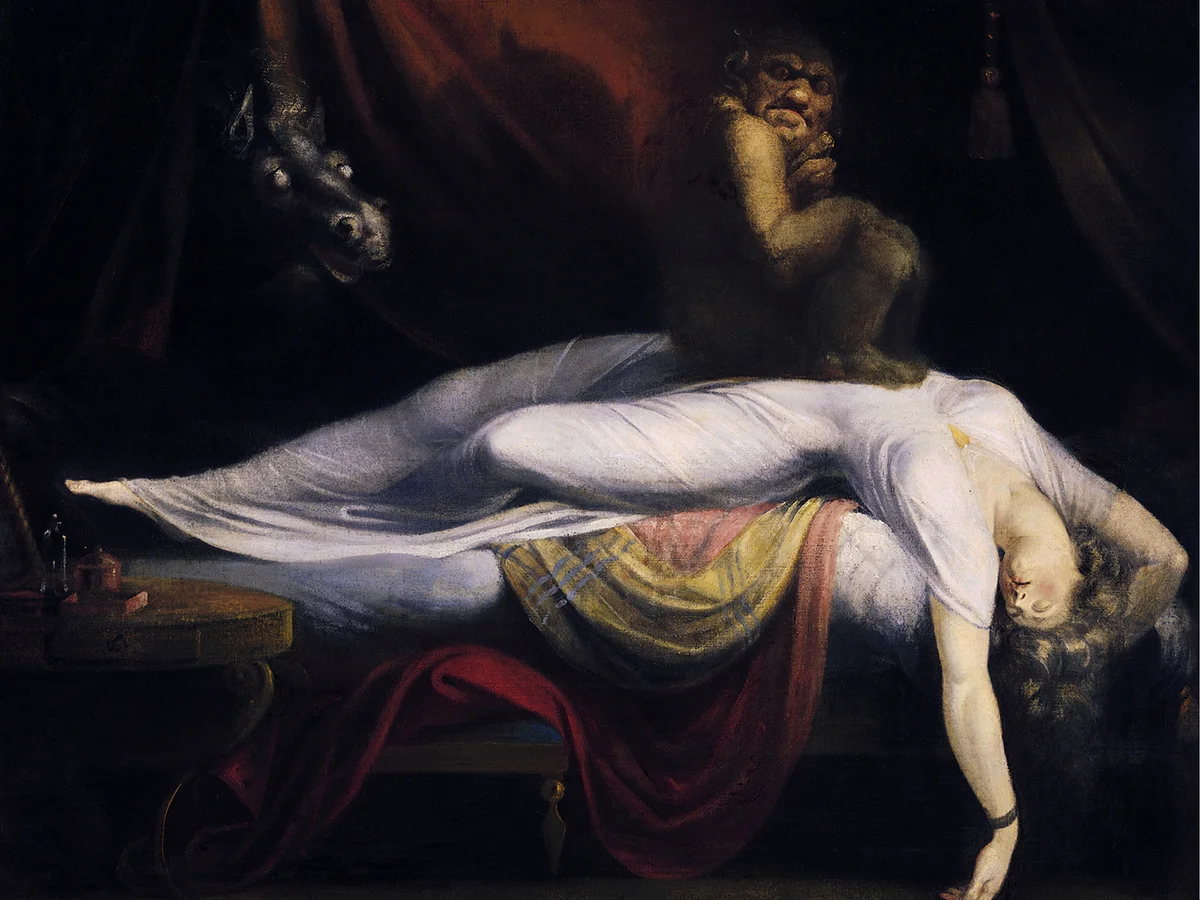
The Biopsychosocial Architecture of HP-S: Transliminality and Dis-ease
Haunted People Syndrome is anchored in a triad of neurobiology, subjective stress, and cognitive contextualization. The core psychometric predictor in this dynamic is transliminality—a construct developed by Michael Thalbourne and refined by psychologist James Lange. Transliminality describes the permeability of the cognitive barrier separating unconscious imagery, sensory noise, and involuntary somatic impulses from conscious waking awareness. In neurotypical individuals, this barrier functions as an efficient gatekeeper. In high-transliminal individuals, the threshold is exceptionally porous.
High transliminals demonstrate remarkable creative aptitude, sensory richness, and high empathy. However, when such individuals encounter prolonged psychological or physiological distress—termed a «dis-ease state» by the researchers—their cognitive gating collapses. Under the strain of relationship conflicts, medical illness, or chronic sleep deprivation, the nervous system becomes flooded with raw internal data. Latent anxieties, hypnagogic fragments, and somatic twitches bleed into conscious reality.
Neuroimaging and behavioral indices compiled by Dr. James Houran and Dr. Brian Laythe suggest that recurrent haunt experiences mirror transient temporal lobe lability. When the brain is burdened by chronic stress, minor physiological anomalies—such as middle-ear spasms or peripheral vascular flushes—are immediately translated by the somatosensory cortex into tactile sensations of icy touches or invisible presences.
Transliminality measures the ease with which unconscious material, somatic cues, and latent emotional states breach the threshold of waking awareness, generating an uncanny sensation of external agency.
Chronic stress («dis-ease states») induces temporal-lobe hyperexcitability and somatic sensitization: routine drafts, micro-vibrations, or ambient temperature fluctuations are misattributed to physical contact.
Within tightly knit families or groups, fear behaves like an infectious contagion: hyper-vigilance from a primary percipient lowers the cognitive thresholds of others, aligning their sensory interpretations.
An overactive Hyperactive Agency Detection Device (HADD) paired with visual pareidolia forces a fatigued brain to construct purposeful humanoid forms from random shadows and domestic acoustic noise.
Evolutionary Traps of Perception: HADD, Pareidolia, and Illusory Agency
The human brain is not a passive recording device; it is a predictive biological organ shaped by hundreds of thousands of years of survival pressure. Evolutionary psychologists term one of our most critical cognitive adaptations the Hyperactive Agency Detection Device (HADD). On the ancestral savanna, mistaking the rustle of dry grass for an ambush predator carried negligible evolutionary cost (a false positive). Conversely, mistaking a stalking predator for harmless wind proved instantly fatal (a false negative). Natural selection ruthlessly favored minds calibrated toward over-detecting intentional agency.
Consequently, our brains reflexively seek deliberate actors behind random environmental events. In individuals experiencing Haunted People Syndrome, the activation threshold of HADD drops drastically. A floorboard settling under thermal expansion is no longer perceived as material contraction; it is decoded as deliberate stealth. Simultaneously, visual pareidolia causes the visual processing centers to rapidly assemble ambiguous shadows into menacing human silhouettes («shadow people»).
These misperceptions align seamlessly with contemporary neuroscientific models explaining how the brain utilizes analog computations to synthesize internal realities. When predictive priors are heavily biased toward danger, incoming sensory noise is molded to fit the pre-existing threat narrative, generating a fully immersive, multisensory experience of an apparition.
«Rather than hunting for ghosts in haunted houses, science must investigate the people themselves. Our Haunted People Syndrome model reveals that anomalous experiences arise at the intersection of somatic vulnerability, chronic dis-ease states, and perceptual contagion within social units. Ghosts do not possess GPS coordinates; they travel within the neural networks of their witnesses.»
Dr. James Houran, lead research fellow at Integrated Research Partners
Perceptual Contagion: The Family Unit as an Amplifying Resonance Chamber
Among the most revealing insights from the San Antonio Disturbances was the documentation of perceptual contagion within the domestic sphere. Mainstream mythology commonly portrays the ghost hunter or solitary witness confronted by the paranormal in isolation. Yet historically, the most intense, long-lasting poltergeist episodes occur within tightly knit families. Why do multiple sane, educated adults report witnessing the identical impossible phenomenon?
The research team discovered that such haunt episodes are consistently anchored by a «primary percipient»—the individual possessing the highest baseline transliminality and bearing the acute brunt of distress. In San Antonio, this anchor was Nell. Enduring somatic strain and perceptual lapses, she projected her internal alarm into the communal environment, alerting her family: «Did you hear that knock? Someone is standing by the doorway».
Bound by deep emotional empathy and shared domestic stressors, family members rapidly synchronize their vigilance. Their own HADD faculties prime for immediate action. A feedback loop of perceptual convergence takes hold: husband Rod and daughter Jill scrutinize the ambient noise floor of the home, framing every acoustic transient through Nell’s supernatural lens. The haunting becomes a collective, unspoken coping mechanism, uniting the family against a phantom adversary while masking deeper emotional tensions.
- A comprehensive ten-year longitudinal case study led by Dr. James Houran and Dr. Brian Laythe tracked an American family (percipients Nell, Rod, and Jill) experiencing continuous poltergeist activity.
- The family relocated across five distinct residences in Texas, yet knocking sounds, moving objects, and shadowy figures persistently accompanied them to each new home, refuting environmental contamination theories.
- Psychometric testing revealed that all family members exhibited exceptionally elevated transliminality scores and Rasch-scaled paranormal belief metrics.
- Spikes in reported haunt phenomena correlated directly with periods of domestic crisis and somatic health declines, as published in the peer-reviewed journal Frontiers in Psychology.
Clinical Distinction: Haunted People Syndrome Versus Psychopathology
A vital question confronted by clinical psychologists is whether individuals reporting recurrent hauntings should be diagnosed with psychiatric disorders. The creators of the HP-S construct offer an emphatic rejection of this assumption. Nell, Rod, Jill, and hundreds of participants across similar studies exhibit no symptoms of schizophrenia, schizotypal personality disorder, or clinical psychosis. Their logical reasoning remains intact, their speech is coherent, and their professional lives are fully functional; Nell served as a respected healthcare worker for decades.
Haunted People Syndrome is categorized as a benign, reversible sub-clinical state of adaptive strain. It occurs when a fundamentally healthy brain equipped with permeable cognitive boundaries is subjected to severe external stress. Analyzing such states, much like exploring the frontiers of extraordinary memory in hyperthymesia, deepens our comprehension of human neuroplasticity under extreme conditions.
Demystifying ghosts through the lens of Haunted People Syndrome provides profound therapeutic liberation. In the case of the San Antonio family, once researchers helped the members recognize how transliminality, sleep disruption, and mutual stress-priming drove their sensory anomalies, the frequency of paranormal events plummeted. When the mind is freed from the terror of external phantoms, the apparitions vanish back into the complex, beautiful, and exhausted neural circuitry where they were born.