

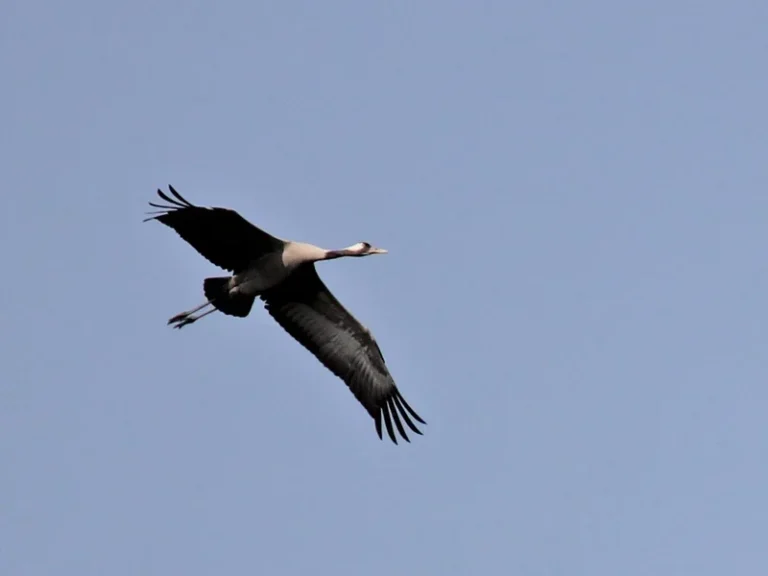

Avian magnetoreception and the quantum compass of migratory birds represent one of the most stunning manifestations of quantum biology in nature: cryptochrome 4 (Cry4) proteins within the retina enable birds to literally see Earth’s geomagnetic field lines. Each year, billions of migratory birds cross vast oceans and continents, navigating flawlessly across pitch-black skies and dense fog banks through quantum entanglement of electron spins within their retinal photoreceptors.
Quantum Biology in the Eye: The Cryptochrome Radical Pair Mechanism
For decades, the physical mechanism underpinning avian navigation remained an unsolved riddle. Earth’s geomagnetic field is remarkably weak, measuring between 30 and 60 microteslas—thousands of times weaker than an ordinary household refrigerator magnet. Standard biochemical reactions were widely considered incapable of sensing such minute magnetic interactions, as thermal ambient energy (kT) within warm living tissue readily drowns out such weak signals.
Theoretical physicist Klaus Schulten proposed a radical hypothesis in 1978, which has recently received definitive experimental confirmation through the research of Prof. Henrik Mouritsen at the University of Oldenburg: migratory birds such as the European robin (Erithacus rubecula) express an optimized flavoprotein called cryptochrome 4 (Cry4) within their retinal cone cells. When struck by a blue photon, an electron cascades along a chain of four tryptophan residues toward a flavin adenine dinucleotide (FAD) cofactor, creating a spin-correlated radical pair.
Spin Dynamics: How Birds Perceive Geomagnetic Lines
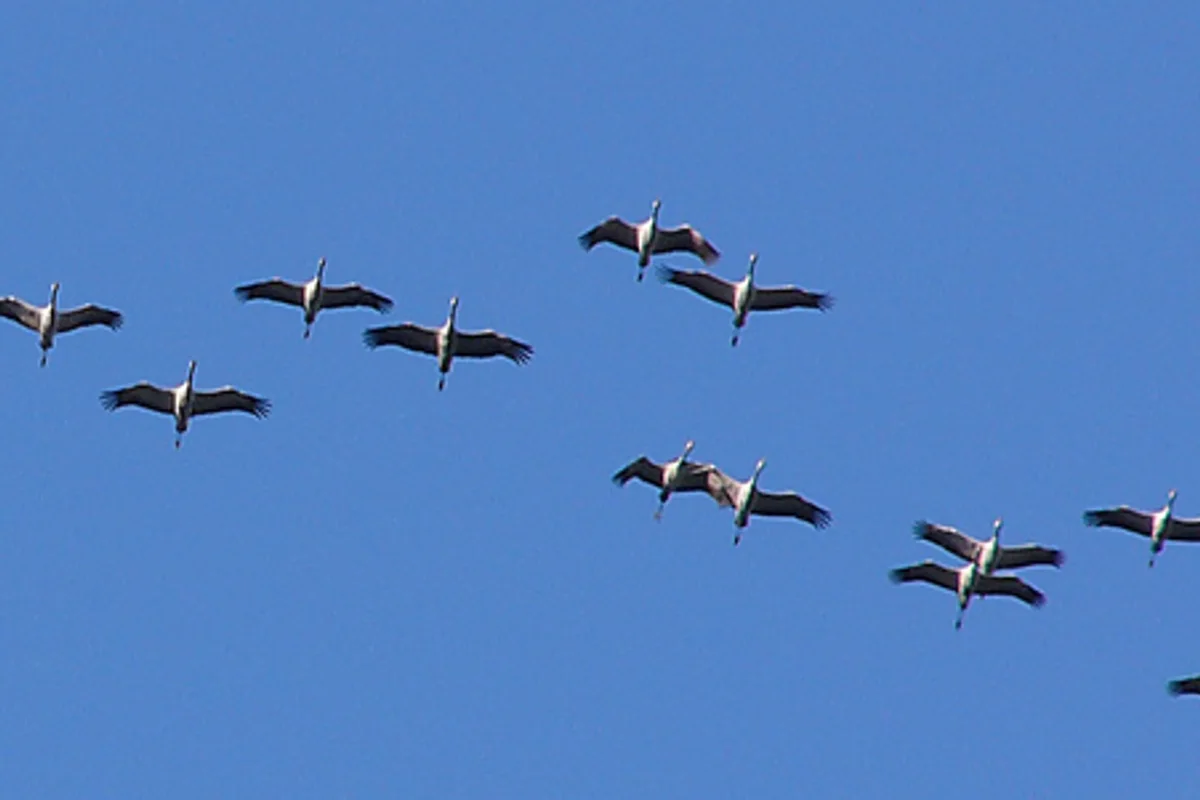
This transient radical pair exists in a quantum-coherent state, oscillating between singlet (antiparallel spins) and triplet (parallel spins) quantum configurations. Even an exceptionally subtle external magnetic field alters interconversion rates between these states, dictating the duration of the signaling-active state and modulating visual neural pathways connected to the bird’s visual cortex (Cluster N).
Consequently, the bird does not perceive magnetic fields through an internal compass needle, but rather as spatial patterns of lightness and dark overlaid across its normal visual landscape. This sensory system is fundamentally an inclination compass: rather than discerning magnetic polarity (north versus south), it detects the inclination angle at which geomagnetic field lines intersect the planetary surface, supplying precise coordinates of latitude.
Specialized flavoprotein localized within retinal cone photoreceptors, activated by blue-spectrum photons (400–470 nm).
Coherent spin correlations between [FAD•−] and [TrpH•+] persist for microseconds, enabling magnetic modulation.
Sensing the precise dip angle of magnetic field lines provides accurate latitude coordinates across both hemispheres.
Urban radiofrequency electromagnetic fields (50 kHz–5 MHz) induce spin decoherence, blinding avian navigation.
Urban Electromagnetic Smog and Navigational Disruption
Because cryptochrome magnetoreception relies upon delicate quantum spin coherence, it is uniquely vulnerable to anthropogenic electromagnetic fields. Research has demonstrated that broadband radiofrequency electromagnetic background noise generated by modern urban centers (spanning 50 kHz to 5 MHz from communications infrastructure and electrical grids) disrupts spin transitions and blinds the birds’ internal compasses.
«Anthropogenic radiofrequency noise completely disrupts electron spin coherence in migratory birds, disabling their geomagnetic sense across hundreds of miles around cities.»
Prof. Henrik Mouritsen, Institute of Biology, Carl von Ossietzky University of Oldenburg
Inside magnetically shielded Faraday cages, birds instantly regain their orientational abilities. Outside, however, disorientation leads to collisions with illuminated urban structures. Unraveling these delicate quantum mechanics helps us safeguard migratory biodiversity; read also our investigation on how relativistic cosmic jets interact with planetary magnetic environments.
Bio-Inspired Quantum Navigation Devices
The deciphering of Cry4 is now catalyzing breakthroughs in quantum engineering. Physicists are synthesizing bio-inspired quantum magnetometers that operate at room temperature without cryogenic cooling, providing unjammable positioning systems for autonomous vehicles when GPS satellites are unavailable.
Nature engineered functional quantum coherence within avian retinas hundreds of millions of years before humanity first theorized the existence of quantum mechanics.