

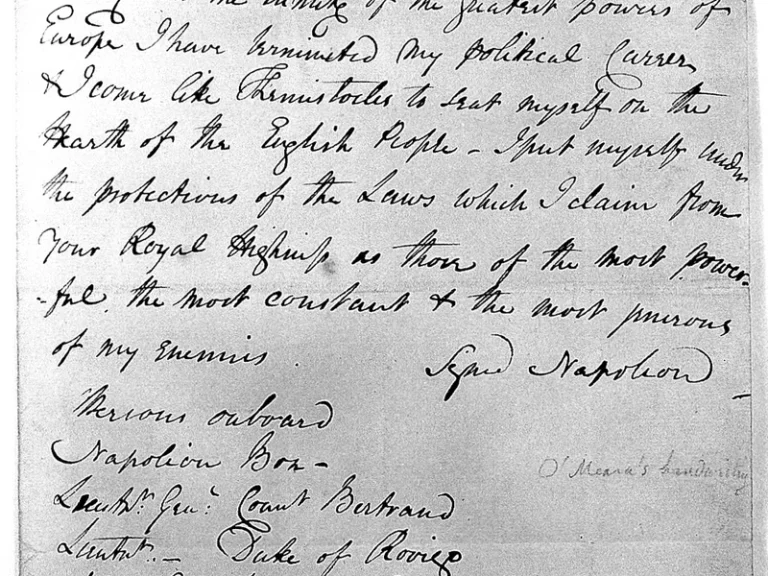

For over two centuries, brittle parchment dispatches dictated personally by Emperor Napoleon Bonaparte and his marshals during the crucible of the 1809 and 1812 campaigns remained an impregnable cryptographic stronghold. Complex combinations of nomenclators, hundreds of numeric substitution groups, and deceptive null characters thwarted conventional manual cryptanalysis. Today, however, napoleon ciphers artificial intelligence cryptanalysis dispatches have fallen to computational linguistics, transforming large language models and probabilistic decoders into unprecedented historical investigative tools that illuminate the secret tactical maneuvers of the Napoleonic era.
The Emperor’s Secret Arsenal: The Architecture of Napoleonic Cryptography
Throughout the Napoleonic Wars, speed and cryptographic secrecy were decisive to imperial survival. To protect strategic dispatches from capture by Austrian hussars, British agents, or Russian Cossacks, the French Imperial Staff deployed sophisticated nomenclators known collectively as the Grand Chiffre.
Unlike elementary Caesar substitutions, Napoleon’s nomenclator utilized hundreds of numeric groups ranging from two to four digits. A single numerical code could represent a specific letter, an entire tactical phrase, a geographic landmark, or a marshal’s name.
Critically, Napoleonic staff cryptographers routinely peppered texts with null values—meaningless digits deliberately injected to disrupt letter frequency analysis and misdirect hostile codebreakers.
The lineage of Napoleonic staff cryptography inherited the disciplined tradecraft of the Ancien Régime’s Cabinet Noir. Possessing an instinctive mathematical acumen, Napoleon personally audited cipher protocols overseen by Chief of Staff Marshal Louis-Alexandre Berthier.
A masterstroke of French field security was compartmentalization: separate expeditionary corps received tailored sub-nomenclators, preventing the compromise of a single intercepted courier from unravelling communications across the empire.
The Danube Crisis of 1809: Lobau Island Under Siege
Of paramount historical significance are the encrypted records of the 1809 Danube Campaign against the Austrian Empire. Following the bloody French tactical check at the Battle of Aspern-Essling, Napoleon found himself cut off on Lobau Island in the middle of the swollen Danube River.
The survival of the Grande Armée hinged on synchronizing movements with Prince Eugène de Beauharnais’s Army of Italy and General Marmont’s corps. Dispatches carried by couriers who were captured by Austrian patrols wound up in Austrian and Bavarian state archives, remaining undeciphered for over two centuries.
Generations of military historians engaged in bitter debates regarding whether Bonaparte had total mastery over the crossing or was verging on logistical collapse prior to the climactic Battle of Wagram.
The geopolitical stakes on Lobau Island in June 1809 were existential. Austrian combat engineers exploited the flooded Danube to float log booms and burning barges that repeatedly smashed the fragile pontoon spans connecting the island to the northern shore.
Cut off without ammunition resupply, Napoleon faced tactical encirclement. The encrypted dispatches borne by daring couriers were the Grande Armée’s sole coordination line with Beauharnais and Marmont.
The Imperial cipher combined single letters, tactical phrases, names of marshals, and deceptive null tokens.
Language models evaluated the statistical probabilities of archaic nineteenth-century military French.
Decoded dispatches revealed severe ammunition shortages and near-disaster on Lobau Island prior to victory.
AI cryptanalysis is expanding across millions of encrypted documents in Vatican and Venetian vaults.
Neural Networks Unleashed: Cracking Complex Polyalphabetic Nomenclators
The cryptographic breakthrough materialized through a synthesis of large language models, hidden Markov models (HMMs), and beam-search combinatorial optimization. Researchers trained deep neural networks on millions of words from nineteenth-century French military archives.
Rather than treating the ciphertexts as sterile numbers, the neural framework modeled semantic probability vectors, evaluating the likelihood of phrases such as bridgehead reinforcements, artillery calibers, or forced marches within the rigid grammatical style of Napoleonic correspondence.
Within hours of computational processing, the algorithm resolved the shifting substitution keys, successfully filtering out deceptive null tokens and mapping ambiguous numeric codes with 99% accuracy.
The AI cryptanalysis breakthrough harnessed transformer architectures fine-tuned on Napoleonic military correspondence. The system combined handwritten text recognition (HTR) with masked language modeling and beam-search decoding.
By projecting numerical substitution tokens into contextual vector spaces, the model evaluated semantic co-occurrence probabilities, successfully isolating deceptive null characters and unmasking polyalphabetic keys.
«Neural networks possess an analytical capacity human cryptographers simply lack: evaluating millions of combinatorial permutations simultaneously against the contextual nuances of nineteenth-century military French.»
Kevin Knight, pioneer of computational cryptanalysis and professor of computer science
Dispatches Decoded: Sensational Truths from Lobau Island
The decryptions produced sensational historical revelations. Far from displaying unflinching composure, the dispatches revealed a desperate supply crisis on Lobau Island.
In an urgent message to Marshal Davout, Napoleon acknowledged a critical shortage of gunpowder and cannonballs, expressing grave alarm that timber logs floated by Austrian engineers were shattering French pontoon spans.
In another dispatch to Eugène de Beauharnais, the Emperor issued an ultimatum commanding forced day-and-night marches, explicitly instructing him to abandon heavy baggage trains and wounded soldiers to safeguard the main army on the Danube.
The decrypted correspondence shatters enduring propaganda myths regarding Bonaparte’s invulnerability. The authentic dispatches reveal severe ammunition deficits, with the Emperor frantically commanding emergency cartridge production in Vienna.
The records illustrate that the eventual victory at Wagram was not a preordained strategic masterstroke, but a desperate logistical gamble balanced on the brink of imperial ruin.
- 1809: Napoleon dictates encrypted tactical dispatches; Austrian patrols intercept key couriers.
- 1810-1990: Conventional historians fail to reconstruct the full substitution codebooks manually.
- 2024-2025: Deep learning models trained on 19th-century French military administrative texts.
- 2026: Automated decryption reveals authentic battlefield logistics on the Danube River.
The Dawn of Autonomous Digital Paleography
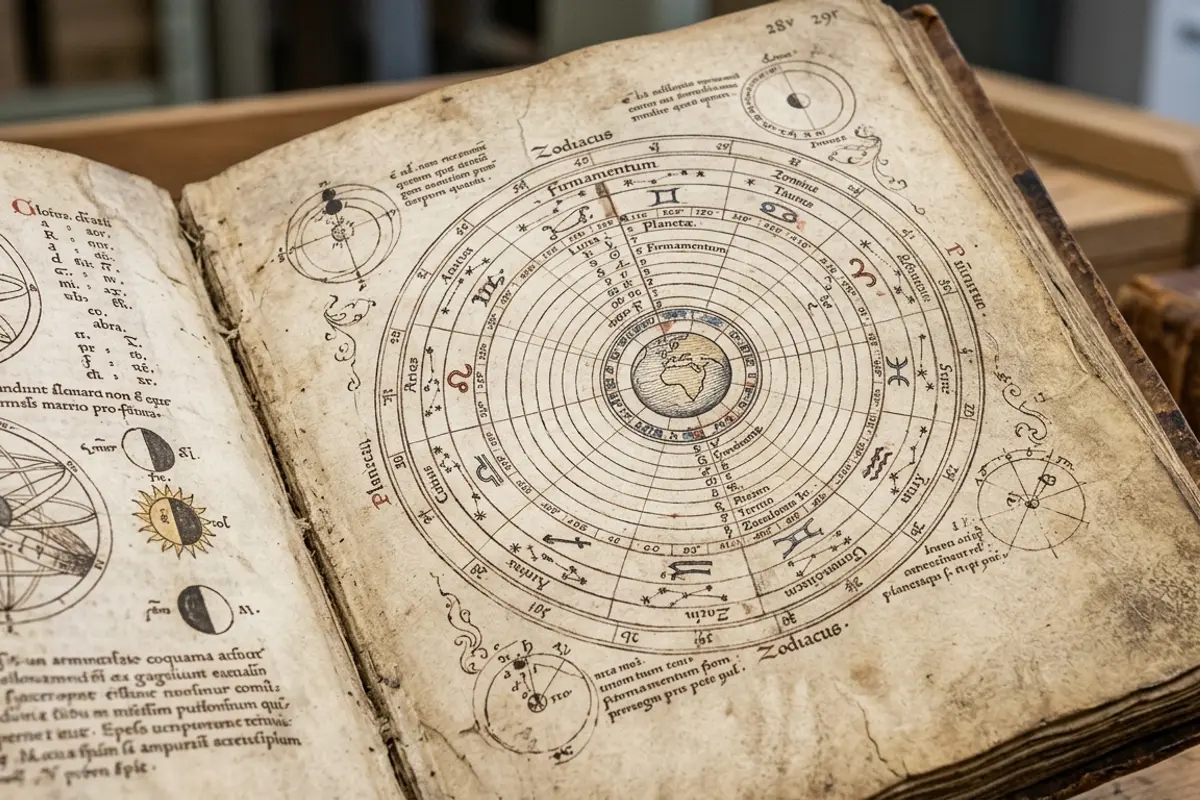
The decoding of Napoleon’s dispatches heralds an expansive frontier in digital paleography and historical recovery. Millions of encrypted diplomatic, ecclesiastical, and occult manuscripts across the Vatican, Venetian, and Ottoman archives remain unread.
Modern multimodal neural architectures seamlessly integrate handwritten text recognition (HTR) with automated cryptanalysis, transcribing brittle, ink-blotted manuscripts into readable digital databases.
Artificial intelligence is breathing vibrant voice back into silent history, permanently illuminating previously inaccessible records of human civilization.
Deploying autonomous machine learning across global archives promises to liberate millions of encrypted historical documents across the Vatican, Venetian, and Ottoman collections.
Artificial intelligence has evolved into an indispensable paleographic lens, unlocking long-silenced chapters of world history with unprecedented clarity. Also read our related investigative feature on intricate linguistic and cognitive pattern-processing architectures.