


When world leaders ratified the historic Paris Climate Agreement in December 2015, the aspirational ambition of restricting the global temperature rise to 1.5°C above pre-industrial levels was heralded as the defining defensive barrier for planetary stability. However, the unforgiving laws of atmospheric thermodynamics, compounded by relentless industrial emissions, have dismantled political optimism. Today, global warming 1.5 threshold climate models carbon budget evaluations paint an undeniable trajectory: the remaining allowable carbon budget will be exhausted within three to five years, prompting the world’s most distinguished climatologists to formally concede the inevitability of overshoot.
Thermodynamics of the Carbon Budget: A Mathematical Verdict on Paris Targets
Modern planetary climatology is fundamentally anchored in the Cumulative Carbon Budget concept. The physics governing Earth’s radiative equilibrium displays a remarkably linear relationship: every trillion tons of anthropogenic carbon dioxide (CO2) injected into the troposphere produces an exact, quantifiable escalation in global mean surface temperature.
In its definitive Sixth Assessment Report (IPCC AR6), the Intergovernmental Panel on Climate Change calculated that to maintain a 50 percent probability of capping warming at 1.5°C, humanity possessed a finite budget of approximately 250 gigatons of CO2 as of early 2023.
With global industrial, agricultural, and land-use emissions persistently exceeding 40 gigatons annually, this residual buffer is disintegrating with alarming velocity. Rigorous arithmetic demonstrates that the atmospheric concentration threshold will be irreversibly breached prior to 2030.
Furthermore, the climate system harbors substantial oceanic thermal inertia. Even under an impossible scenario in which all global combustion ceased this instant, existing radiative forcing would continue driving planetary warming for several decades.
Furthermore, the carbon budget framework rigorously incorporates the radiative forcing exerted by short-lived climate pollutants (SLCPs), including methane, tropospheric ozone, and black carbon aerosols. While abating these emissions offers transient localized cooling, it fails to alter the fundamental long-term thermal equilibrium dictated by cumulative atmospheric carbon concentrations.
Planetary thermodynamics exhibits profound thermal hysteresis: the physical pathways governing planetary cooling do not mirror those of warming. Even in speculative scenarios featuring aggressive atmospheric carbon dioxide removal (CDR) deployed late this century, biological disruptions, ocean thermal expansion, and ice shelf collapse cannot be simply reversed on human timescales.

Global Climatologist Consensus: Deep Skepticism Among IPCC Lead Authors
A landmark 2024 comprehensive survey examining hundreds of senior authors and scientific reviewers from the IPCC yielded startling disclosures: over 80 percent of surveyed atmospheric scientists anticipate global temperatures will surge by at least 2.5°C above pre-industrial baselines by 2100.
Nearly half of respondents forecast catastrophic warming exceeding 3.0°C, a threshold carrying severe disruptions for coastal stability, agricultural output, and terrestrial habitability.
Researchers emphasize that the chasm between diplomatic decarbonization pledges and physical fossil fuel exploitation remains vast. Capital investment in hydrocarbon exploration continues unabated, while the deployment rates of grid-scale renewable generation and electrified logistics lag behind IPCC modeled pathways.
Maintaining the pretense that 1.5°C is preserved paralyzes institutional urgency, fostering complacency and deferring vital infrastructural adaptation initiatives.
The residual carbon allowance for limiting warming to 1.5°C will be fully exhausted within 3 to 5 years at current emission rates.
Over 80% of IPCC lead authors survey respondents anticipate warming exceeding 2.5°C above pre-industrial levels by 2100.
Permafrost thaw releases massive volumes of methane, possessing 80 times the radiative forcing of CO2 over a 20-year horizon.
Glacial freshwater dilution in the North Atlantic threatens to decelerate the Gulf Stream system, destabilizing European weather.
Planetary Tipping Points: Non-Linear Cascades Across Earth’s Systems
The profound peril of crossing the 1.5°C threshold stems from the triggering of self-sustaining, non-linear planetary tipping points rather than incremental warmth alone.
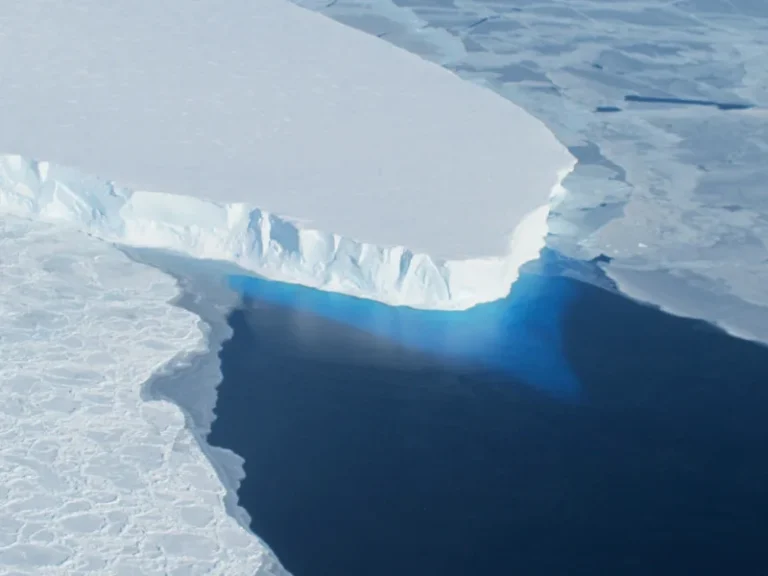
Foremost among these vulnerabilities is the structural destabilization of the Greenland Ice Sheet and Antarctica’s Thwaites Glacier, colloquially designated the Doomsday Glacier. Subglacial meltwater reduces basal friction against bedrock, accelerating marine-terminating ice velocity and posing multi-meter sea-level rise hazards.
Equally perilous is the abrupt thawing of circumpolar permafrost across Siberia, Alaska, and Northern Canada. Permafrost preserves vast paleolithic reservoirs of undecomposed organic carbon. Thawing triggers anaerobic microbial decomposition, releasing massive pulses of methane (CH4), a greenhouse gas bearing 80 times the short-term warming potency of CO2.
Simultaneously, the influx of buoyant freshwater into the North Atlantic impairs the density gradient driving the Atlantic Meridional Overturning Circulation (AMOC), threatening to collapse the Gulf Stream and instigate climatic turmoil across Western Europe.
Equally destabilizing is the impending tipping point threatening the Amazon rainforest basin. Pushed by persistent drought and anthropogenic clearing, the basin risks crossing a threshold from an indispensable planetary carbon sink into a net carbon emitter, collapsing terrestrial transpiration pumps and shifting mid-latitude rainfall belts globally.
This interconnectedness underscores the domino dynamic of Earth’s subsystems: the loss of reflective Arctic summer sea ice depresses surface albedo, driving accelerated oceanic heat absorption that in turn intensifies coastal permafrost thermal degradation.
«The political rhetoric suggesting that limiting warming to 1.5°C remains within feasible reach has metastasized into a dangerous delusion. We must confront empirical reality: absent an immediate, draconian cessation of fossil fuel emissions, Earth is irrevocably bound for a 2.5°C or greater temperature rise by century’s end.»
Alfredo Carpineti, Astrophysicist and Senior Science Writer, IFLScience
From Mitigation to Adaptive Engineering: A New Civilization Paradigm
Acknowledging that the 1.5°C milestone is mathematically compromised must not provoke surrender; rather, it demands an urgent reorientation toward aggressive technological and structural adaptation.
Global coastal centers must construct fortified surge barriers, regional agriculture must pivot to drought-hardy engineered cultivars, and urban grids must deploy passive cooling infrastructure and municipal-scale desalination.
Concurrently, sustained capital must flow into Direct Air Capture (DAC) and enhanced silicate rock weathering technologies to capture carbon from ambient air, despite present energetic and economic hurdles.
Every tenth of a degree prevented retains monumental importance: the ecological disparity between a 1.8°C and a 2.5°C future represents the survival versus total mortality of warm-water coral reefs and the displacement of hundreds of millions of human beings.
- Global anthropogenic carbon emissions exceed 40 billion metric tons of CO2 annually without plateauing.
- Warming beyond 1.5°C is projected to trigger irreversible bleaching and mortality for over 90% of coral reef ecosystems.
- The Thwaites Glacier shelf experiences basal melting at rates threatening the catastrophic destabilization of West Antarctica.
- Civilian infrastructure adaptation for a 2.5°C warmer world will necessitate hundreds of trillions of dollars in global capital.
Solar Geoengineering and Deep Energy Decarbonization
In academic circles, Solar Radiation Management (SRM) techniques, particularly stratospheric sulfur aerosol injection modeled after volcanic cooling dynamics, are being actively debated.
Yet such interventions carry profound existential risks, including stratospheric ozone depletion, regional monsoon disruptions, and complete indifference to the relentless chemical progression of ocean acidification.
The sole durable safeguard resides in replacing fossil combustion through advanced fission, fusion breakthroughs, and utility-scale renewable storage grids. Also read our related investigative feature on scientific research conducted by deep-sea oceanic observatories.