

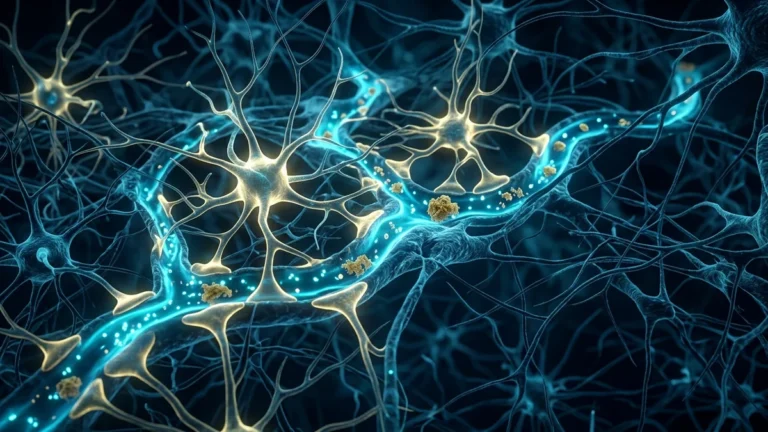

Every night, as consciousness recedes into deep slow-wave sleep, the human cranium initiates one of the most intricate and indispensable fluid-transport operations in biology: the brain’s waste clearance cycle. The discovery of the glymphatic system by Danish neurobiologist Dr. Maiken Nedergaard revolutionized modern medicine, solving the ancient riddle of why humans must spend a third of their lives asleep and demonstrating that impaired nocturnal clearance directly drives Alzheimer’s disease and neurodegeneration.
An Evolutionary Paradox: Why the Brain Lacks Classical Lymphatics
Throughout peripheral somatic tissues, interstitial metabolic waste and cellular fragments are continuously filtered via lymph nodes. However, the rigid cranium imposes unforgiving volumetric constraints, tightly packing neurons, astrocytes, and vasculature. Embedding a parallel lymphatic vessel tree would compromise computational density.
For over a century, physiologists assumed the central nervous system discarded waste through sluggish passive diffusion across tortuous extracellular gaps. In 2012, utilizing real-time in vivo two-photon laser scanning microscopy, Nedergaard’s team unmasked a convective hydraulic highway operating across glial channels and cerebrospinal fluid (CSF).
Nocturnal Hemodynamics: Neuronal Shrinkage and Aquaporin-4 Channels
The defining feature of the glymphatic system is its strict sleep-state gating. During wakefulness, astrocytes and neuronal somas maintain tight cell-to-cell proximity, restricting interstitial space volume fraction to approximately 14%. Waste clearance drops to negligible baselines because metabolic resources prioritize neurotransmission.
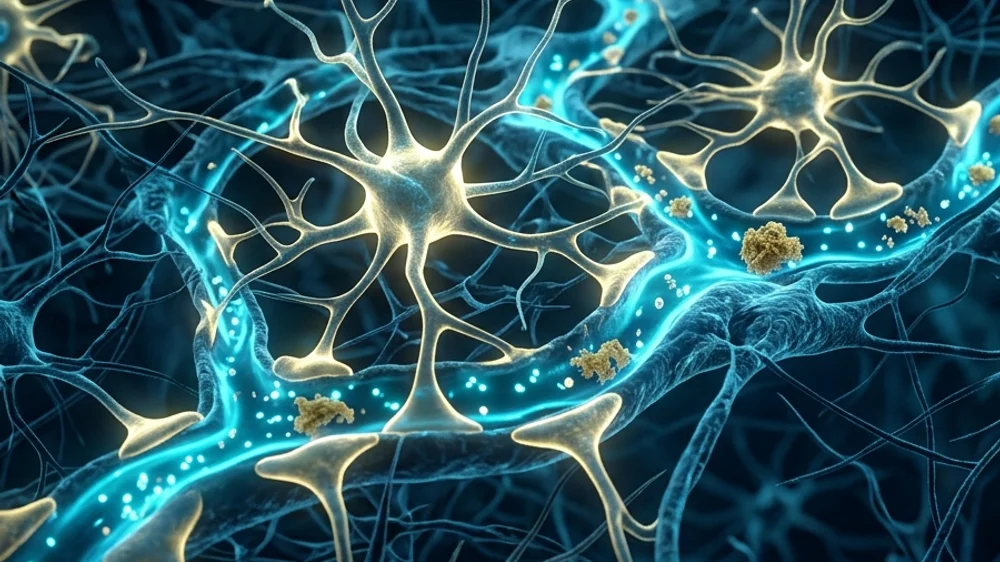
Upon transitioning into slow-wave NREM (delta) sleep, central noradrenergic tone collapses. In response, interstitial volume fraction expands by 60% as cortical cells shrink. This dramatic morphological change unseals expansive perivascular pathways surrounding penetrating cerebral arteries. Polarization of aquaporin-4 (AQP4) water channels on astrocytic endfeet facilitates convective bulk flow of CSF across brain parenchyma.
Extracellular channels widen during deep sleep to permit surging convective fluid waves.
Astrocytic aquaporin-4 pumps drive directional bulk flow of cerebrospinal fluid.
Side-sleeping posture accelerates toxic protein clearance by 25–30% in imaging trials.
Nocturnal convective flow flushes amyloid-beta and tau before insoluble plaques form.
Amyloid-Beta and Tau Clearance: Defending Against Alzheimer’s Pathology
The primary molecular cargo purged by glymphatic flux into the deep cervical lymph nodes consists of neurotoxic monomers and oligomers of amyloid-beta and hyperphosphorylated tau. The progressive accumulation of these misfolded aggregates initiates Alzheimer’s, Parkinson’s, and frontotemporal dementia cascades.
Human lumbar CSF assays show that even a single night of acute sleep deprivation triggers a 30–35% spike in cerebral amyloid-beta burden. Chronic sleep fragmentation causes amyloid seeds to coalesce into insoluble plaques, which subsequently disrupt AQP4 channel localization and cripple glymphatic flux irreversibly.
«The brain accounts for roughly 20% of total basal metabolism, generating immense quantities of toxic cellular debris. Yet unlike all peripheral tissues, it lacks lymphatic vasculature. The glymphatic system is nature’s hydraulic masterpiece: it transforms the entire sleeping brain into a pulsating self-cleaning organ.»
Professor Maiken Nedergaard, Co-Director of the Center for Translational Neuromedicine, University of Rochester
Sleep Architecture and Body Posture: Evidence-Based Insights
Neuroimaging investigations demonstrate that physical body position during slumber exerts a profound influence on glymphatic drainage efficiency. Dynamic contrast-enhanced MRI reveals that lateral sleep posture (sleeping on one’s side) enhances convective clearance by 25–30% relative to prone or supine positions, driven by optimal gravitational venous drainage via internal jugular veins.
Furthermore, consistent circadian bedtimes, maintaining ambient bedroom temperatures between 17–19°C, and abstaining from ethanol and heavy meals prior to bedtime maximize slow-wave delta duration, safeguarding daily neural detox cycles.
- Prioritize 7.5 to 8 hours of uninterrupted nocturnal sleep to maximize deep slow-wave NREM stages.
- Adopt a lateral (side) sleeping position to optimize gravitational cerebrospinal fluid outflow.
- Eliminate alcohol before bed: ethanol suppresses delta brainwaves and paralyzes AQP4 channel polarization.
- Maintain daily aerobic exercise: arterial pulsatility during sleep serves as the hydraulic engine of glymphatic flow.
Translational Horizons: Pharmacological Glymphatic Rejuvenation
Biopharmaceutical development is accelerating around synthetic glymphatic enhancers. Candidate molecules that restore polarized AQP4 clustering on reactive astrocytes, combined with non-invasive 40 Hz auditory gamma/delta entrainment, have shown remarkable efficacy in clearing pathological protein aggregates in translational trials.
The elucidation of the glymphatic mechanism dispels the pervasive myth that cognitive performance can endure chronic short sleep durations. Deep sleep is an indispensable, active biological filtration process that dictates lifelong brain health and cognitive resilience.