

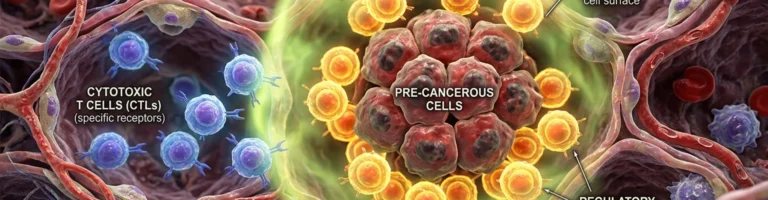

In a watershed discovery published in the prestigious journal Nature, scientists at the University College London (UCL) Cancer Institute have identified an “immune fog” that blankets lung tissue months or even years prior to the emergence of detectable malignant tumors. Led by Dr. James Reading and Professor Sam Janes, this breakthrough illuminates why lung cancer successfully eludes the body’s natural defenses for so long, providing an unprecedented roadmap for “cancer interception” before full malignancy can ever take hold.
A Cloak of Invisibility: How Regulatory T Cells Blind the Immune System
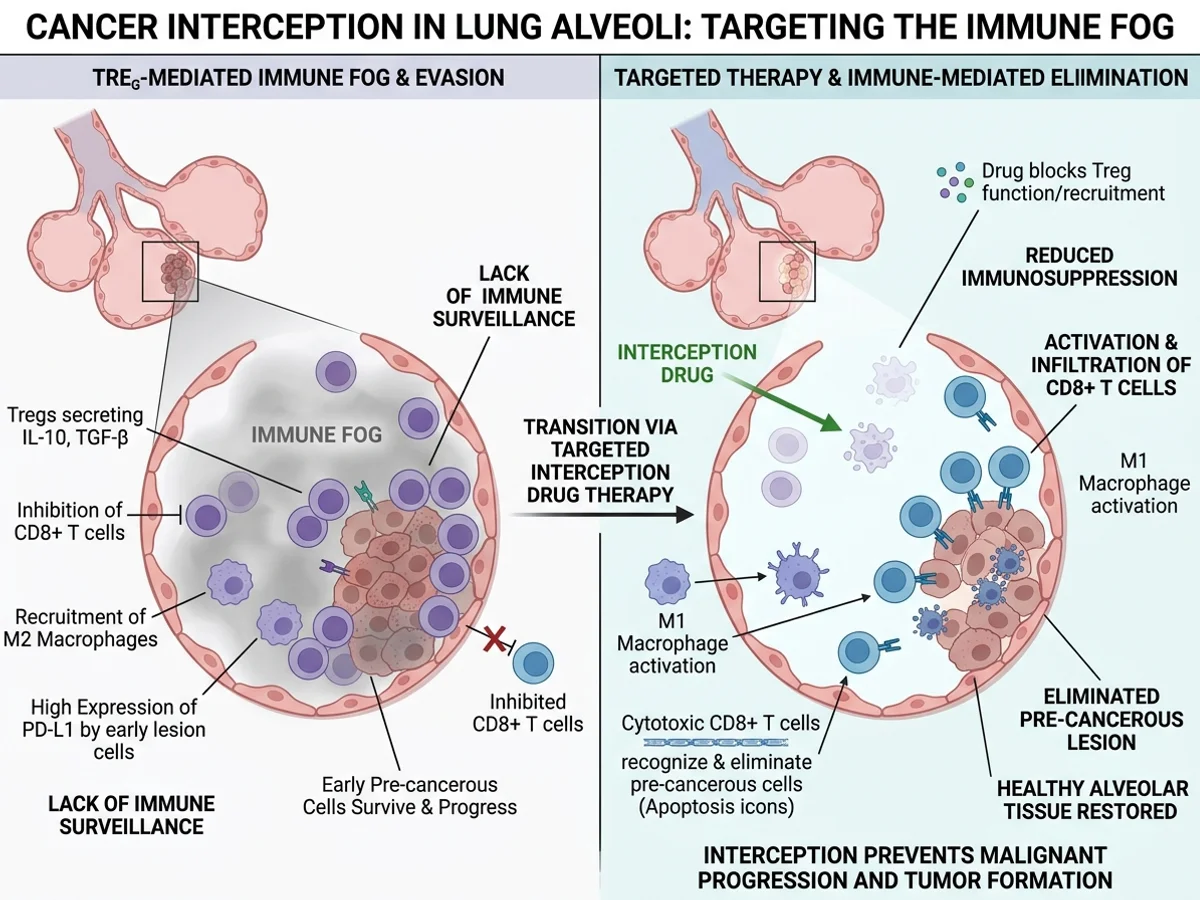
Under healthy physiological conditions, the human immune system maintains rigorous tumor surveillance. Specialized cytotoxic CD8+ T cells continuously patrol alveolar tissues, pinpoint oncogenic genetic abnormalities, and prompt apoptosis in compromised cells long before they proliferate into malignant clusters.
However, the UCL research team discovered that well before physical lesions turn into identifiable tumors, a massive accumulation of regulatory T cells (Tregs) establishes itself in pre-cancerous lung microenvironments. Normally, Tregs prevent life-threatening autoimmune reactions by dampening hyperactive immune responses. But in nascent tumor niches, these cells weave a dense biochemical shield—an “immune fog” driven by suppressive cytokines (such as IL-10 and TGF-β) and inhibitory immune checkpoint ligands. This suppressive barrier lulls killer T cells into exhaustion, granting aberrant cells free rein to multiply in total stealth.
Key Breakthroughs of the UCL Nature Study:
- Early Cloaking Mechanism: Suppressive Treg accumulation forms years before tumors become visible on conventional low-dose computed tomography (CT) scans.
- Preemptive Interception: In preclinical animal models, administering targeted therapeutics designed to disrupt Treg immunosuppression slashed tumor development rates by 50% and entirely blocked the formation of aggressive large nodules.
- Actionable Biomarker: Molecular signatures of the immune fog can be isolated via prototype liquid biopsy blood assays, offering a minimally invasive early-warning system.
Pioneering Cancer Interception: Stopping Malignancy Before Diagnosis
Lung cancer remains the foremost cause of cancer mortality globally, claiming more than 1.8 million lives annually. The overwhelming challenge lies in its silent evolution: most patients receive their diagnosis at Stage III or IV, when metastasis has occurred and surgical resection is no longer viable.
The identification of this immune fog initiates a fundamental philosophical pivot toward “cancer interception.” Rather than waiting for symptomatic clinical manifestations, clinicians will soon be equipped to screen high-risk individuals—such as long-term smokers or patients with occupational silica exposure—using blood biomarkers. A short, targeted regimen of immunotherapy could then be administered to clear the suppressive fog, empowering the native immune system to eliminate mutant cells autonomously.
Video Exploration: How Cells Evade Immune Defenses
In this scientific exploration from Kurzgesagt, the cellular mechanisms governing anti-tumor surveillance and immune evasion are visually dissected:
The Horizon of Preventive Medicine and Precision Vaccines
This landmark finding dovetails with cutting-edge prevention initiatives, including the development of the LungVax preventive vaccine by Oxford University and the Francis Crick Institute. Combining proactive vaccination that trains lymphocytes against neoantigens with drugs that disperse immunosuppressive fogs could transform lung cancer from a fatal diagnosis into a preventable condition within the next decade.