

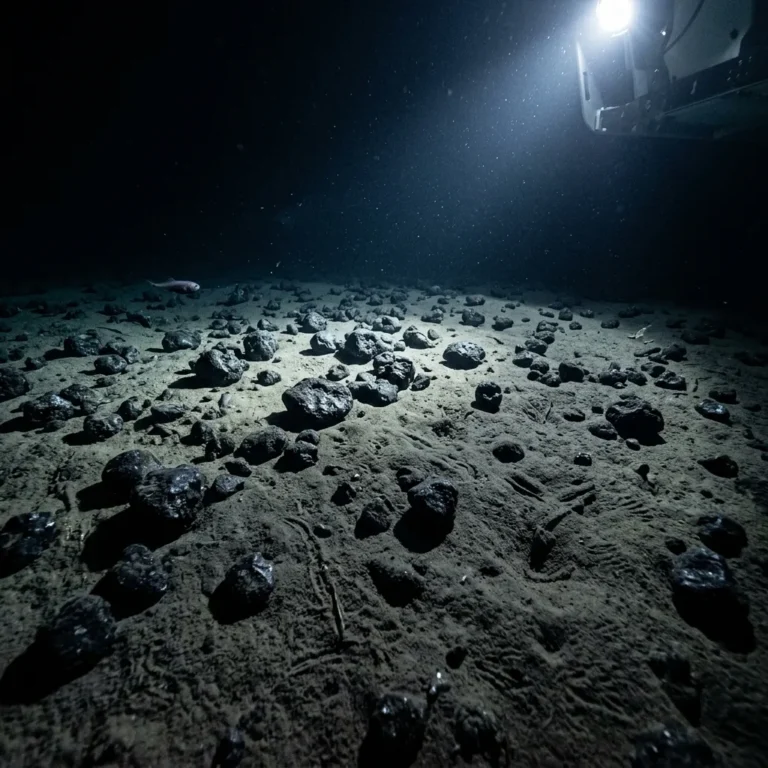

An international team of researchers has made a discovery that upends the fundamental tenets of biology. At a depth of 4,000 meters in the Pacific Ocean, where no ray of sunlight can penetrate, active oxygen generation has been detected. This phenomenon, dubbed “dark oxygen,” challenges the long-held belief that all oxygen on Earth is produced exclusively through photosynthesis.
Electric Batteries on the Ocean Floor
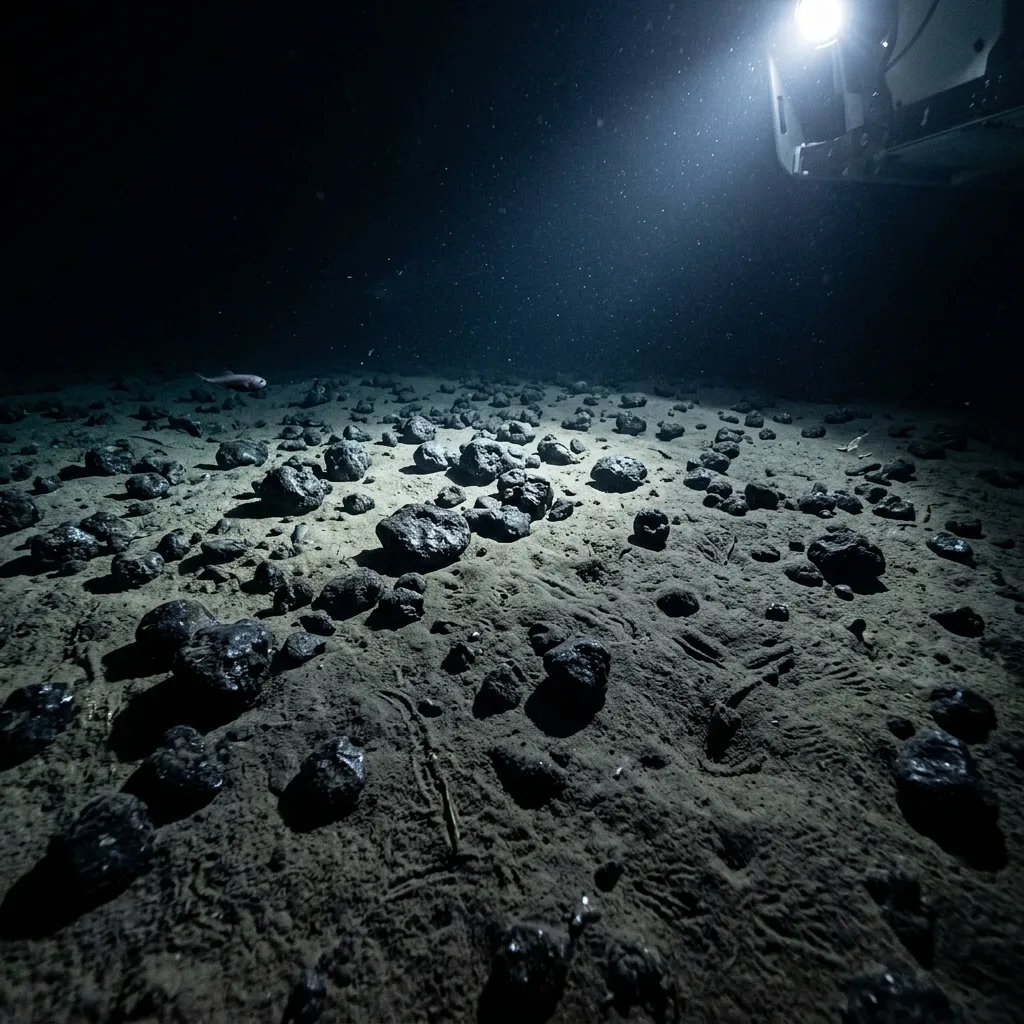
The discovery was made in the Clarion-Clipperton Zone, a massive underwater region between Hawaii and Mexico. During an expedition, Scottish scientists noticed anomalous readings from their underwater sensors, which detected a steady influx of oxygen where there shouldn’t have been any. Initially, the researchers assumed the equipment was faulty, but repeated tests confirmed that oxygen was being generated right on the seafloor.
The culprits turned out to be polymetallic nodules—potato-sized mineral formations rich in manganese, nickel, cobalt, and copper. As it turns out, these stones act as natural geo-batteries. Studies have shown that the surface of the nodules can generate up to 1.2 volts of electricity. Much like the mysterious Gangkhar Puensum mountain, which hides its secrets from climbers, the ocean depths harbor processes that science had previously never even suspected.
Geochemical Electrolysis
When multiple polymetallic nodules cluster together on the seabed, their combined voltage becomes sufficient to trigger the electrolysis of seawater. The electrical current splits water molecules into hydrogen and oxygen, supplying a whole deep-sea ecosystem with life-sustaining gas.
“For aerobic life to begin on the planet, there had to be oxygen and our understanding has been that Earth’s oxygen supply began with photosynthetic organisms. But we now know that there is oxygen produced in the deep sea, where there is no light. I think we therefore need to revisit questions like: where could aerobic life have begun?”
Professor Andrew Sweetman, expedition leader from the Scottish Association for Marine Science
The Threat of Deep-Sea Mining
This discovery has monumental implications for global ecology and geopolitics. The Clarion-Clipperton Zone is a prime target for deep-sea mining companies. The metals contained within the nodules are critical for manufacturing batteries for electric vehicles and smartphones.
However, it is now clear that removing these “batteries” could destroy the sole source of oxygen for unique deep-sea creatures that survive in this extreme environment. Environmentalists are calling for a moratorium on deep-sea mining until the impact of “dark oxygen” on oceanic ecosystems is thoroughly understood.
Sources: Original study published in Nature Geoscience.