

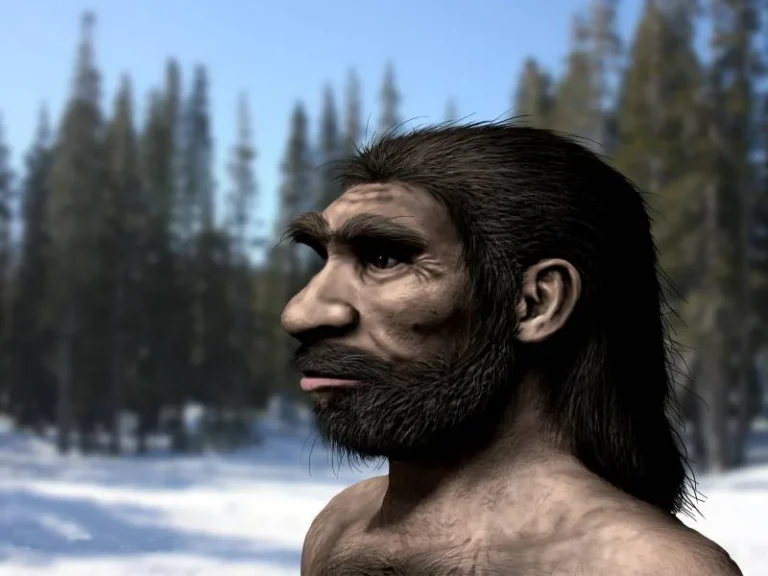

For more than a decade and a half following the dramatic identification of an ancient pinky bone fragment in Siberia’s Denisova Cave, these extinct relatives of Homo sapiens existed as evolution’s most enigmatic «genetic ghosts»—lineages whose surviving DNA endures in millions of living humans today, yet whose actual anatomical face remained completely unknown to science. Until now, paleoanthropologists could not definitively connect the unique Denisovan genome to extensive cranial and facial bones. However, a landmark investigation published in Nature by an international research team led by the Institute of Vertebrate Paleontology and Paleoanthropology (IVPP) of the Chinese Academy of Sciences has achieved an extraordinary breakthrough: utilizing cutting-edge paleoproteomic sequencing on hominin fossils from the Xujiayao site in northern China, scientists have successfully completed the face of denisovans reconstruction, revealing a striking blend of archaic robustness and modern human cranial architecture.
Ghosts of the Human Tree: Why Denisovans Remained Faceless for Decades
The discovery of Denisovans in 2010 by a team led by Nobel laureate Svante Pääbo fundamentally reshaped modern evolutionary anthropology. By sequencing ancient DNA preserved in a juvenile distal phalanx from Denisova Cave in the Altai Mountains of Siberia, researchers demonstrated the reality of an archaic human sister group that separated from Neanderthals approximately 400,000 years ago. Yet for subsequent years, Denisovans endured primarily as a genomic concept. While significant signatures of Denisovan ancestry were cataloged in contemporary Oceanic, Aboriginal Australian, and East Asian populations, museums lacked even a single diagnostic skull to display.
The recovery of the 160,000-year-old Xiahe mandible from Baishiya Karst Cave on the Tibetan Plateau in 2019 provided crucial evidence of their high-altitude adaptation and immense jaw proportions. Still, because the specimen lacked cranial vault components, the orbits and supraorbital structure remained conjectural. Scientists argued over whether Denisovans resembled midfacially projecting Neanderthals or preserved earlier plesiomorphic proportions seen in Homo erectus.
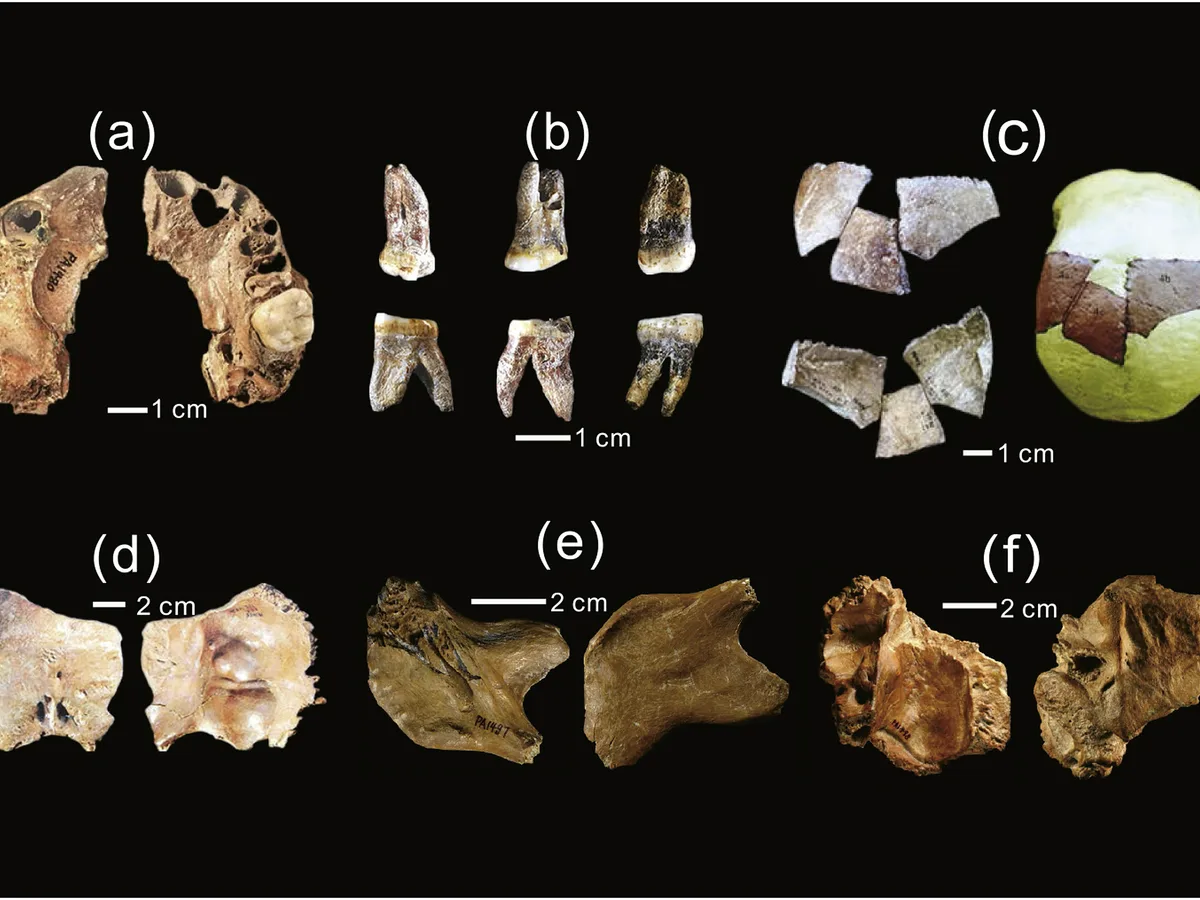
The missing evidence was quietly waiting in museum vaults in northern China. Excavated between 1976 and 1979 in the Nihewan Basin across Hebei and Shanxi provinces, the Xujiayao site yielded roughly twenty hominin fossil pieces representing at least ten individuals. Exhibiting an perplexing mixture of traits, these fossils had been variously designated as archaic Homo sapiens, Asian pre-Neanderthals, or enigmatic regional variants.
Paleoproteomics Unlocks Deep Time: How Ancient Peptides Identified the Fossils
The principal impediment to genomic sequencing at Xujiayao was antiquity—spanning 138,000 to 199,000 years before present—combined with environmental conditions that degraded ancient DNA chains into minute fragments. In such thermal regimes, standard PCR and DNA hybrid capture routinely fail. To overcome this barrier, scientists turned to paleoproteomics—the high-resolution mass spectrometric sequencing of ancient endogenous proteins, which survive within the biomineral matrix far longer than nucleic acids.
The team led by paleogenomicist Qiaomei Fu implemented liquid chromatography coupled with tandem mass spectrometry (LC-MS/MS). By demineralizing micro-samples from tooth roots and cranial parietal bones, researchers successfully mapped peptide fingerprints of type I collagen (COL1A1 and COL1A2). Crucially, the specimens displayed an amino acid substitution—specifically a distinctive lysine mutation—known only from verified Denisovan reference proteomes.
This biochemical match firmly anchored the Xujiayao fossils within the Denisovan lineage. For the very first time, researchers possessed correlated sets of parietal, temporal, occipital, and maxillary bone fragments, unlocking the doorway to empirical anatomical reconstruction.
Type I collagen sequencing detected a diagnostic amino acid substitution (lysine marker) exclusive to the Denisovan evolutionary lineage.
Optical luminescence and uranium-thorium dating established the Middle Pleistocene timeframe of hominin occupation at Xujiayao in the Nihewan Basin.
Low, flattened cranial vault and thick bone plates comparable to Homo erectus coexist with a high temporal cranial expansion and Neanderthal-like inner ears.
Enormous multi-cusped molar teeth with three distinct roots and robust mandibles reflect powerful biomechanical adaptation to hard, fibrous diets.
Anatomy of an Archaic Relative: The Face of Denisovans Reconstruction
By integrating high-resolution industrial micro-computed tomography (micro-CT) scans into three-dimensional anatomical models, scientists assembled a comprehensive cranial portrait. The empirical face of denisovans reconstruction revealed an expansive, low-vaulted skull characterized by heavy cranial vault thickness rivaling archaic Homo erectus. Despite this primitive low-profile vault, endocranial capacity was remarkably voluminous, measuring approximately 1,700 cubic centimeters—exceeding contemporary human and Neanderthal population averages.
The midfacial anatomy revealed critical contrasts with Neanderthals. Denisovans did not exhibit the pronounced midfacial prognathism or inflated maxillary sinuses typical of European Neanderthals. Instead, their zygomatic arches and cheek planes were relatively flat and frontally oriented, bearing surprising resemblances to early modern human morphology. Their eye sockets formed broad, rectangular apertures capped by a prominent, continuous supraorbital brow ridge that merged into a sloping frontal bone.
Their dentition demonstrated extraordinary masticatory power. The molar teeth featured complex enamel crenulations, broad occlusal surfaces, and robust three-rooted configurations anchored into thick alveolar bone. This configuration indicates strong selection for processing tough, fibrous, or abrasive dietary resources in arid, cold steppe environments.
«Extracting ancient collagen peptides and identifying the distinct Denisovan amino acid mutation from the Xujiayao fossils enabled us to bridge the longstanding divide between bioinformatics and physical morphology. We no longer understand Denisovans solely as algorithmic plots; we now observe the structural architecture of their skulls, their flat cheeks, and broad vaults directly.»
Qiaomei Fu (Цяомэй Фу), Professor of Paleogenomics and Molecular Anthropology at the IVPP, Chinese Academy of Sciences
Genomic Legacies in Modern Humans: Evolutionary Bridges Across Millennia
The morphometric identification of the Xujiayao hominins provides physical context for the genetic legacies Denisovans contributed to modern human lineages. Detailed scans of the petrous temporal bone demonstrated that Denisovans shared an inner ear semicircular canal morphology with Neanderthals, corroborating their shared Middle Pleistocene ancestry prior to cladogenesis.
Concurrently, prehistoric introgression events enriched Homo sapiens with crucial physiological adaptations. Indigenous Tibetans owe their high-altitude hypoxia tolerance to the Denisovan-derived EPAS1 haplotype, which regulates erythropoiesis under reduced oxygen partial pressures. Arctic Inuit populations utilize the WARS2 and TBX15 gene complexes inherited from Denisovans to modulate brown adipose tissue thermogenesis, while Oceanic populations carry Denisovan HLA variants that bolster mucosal immunity against endemic tropical pathogens.
With clear facial benchmarks established, anthropologists can now re-evaluate other enigmatic Asian Pleistocene fossils. Specimens from Harbin (Homo longi, or «Dragon Man»), Dali, and Jinniushan likely represent morphological counterparts within an interconnected Denisovan evolutionary complex that populated vast swathes of eastern Eurasia for hundreds of millennia.
- The project was directed by Professors Qiaomei Fu and Song Xing of the Chinese Academy of Sciences in partnership with leading global anthropologists.
- Excavated in the late 1970s, the Xujiayao hominin remains lacked definitive taxonomic placement for over forty years due to mosaic skeletal features.
- Tandem mass spectrometry confirmed that the Xujiayao proteome matches the Xiahe Denisovan mandible previously recovered from the Tibetan Plateau.
- Facial features include rectangular eye sockets, continuous supraorbital tori, a low retreating forehead, and an unusually flat midface profile.
- The findings confirm the widespread distribution, continuous presence, and morphological richness of Denisovan populations across Pleistocene Asia.
A New Horizon in Paleoanthropology: Deciphering Ancient Human Origins
The success of the Xujiayao paleoproteomic investigation marks a turning point in evolutionary biology. The longstanding barrier wherein Middle Pleistocene fossils from temperate or subtropical zones were deemed scientifically intractable has been definitively breached. Paleoproteomics now stands as an indispensable taxonomic tool capable of diagnosing evolutionary relationships from minute bone fragments.
Professor Fu’s group is already expanding these methods to late Pleistocene assemblages throughout Southern China, Laos, and island Southeast Asia. Genetic models suggest that ancestral humans interbred with multiple distinct Denisovan lineages across Sundaland and Wallacea, some of which may have persisted into temporal overlap with Homo floresiensis and Homo luzonensis.
By providing a tangible anatomical identity for the Denisovan people, science has transformed a theoretical genomic signal into real ancestors. We can now gaze into the faces of Pleistocene survivalists who crafted sophisticated lithic technologies, traversed the highest plateaus on Earth, and bequeathed essential survival adaptations to our modern world.