

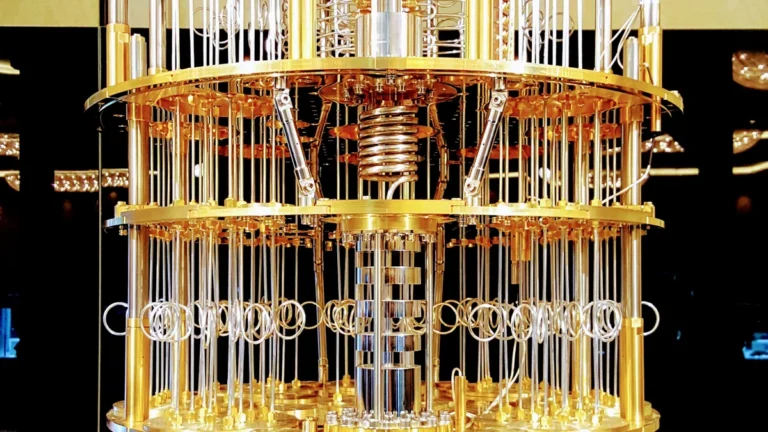

Quantum computing holds the profound potential to transform cryptography, materials discovery, and molecular pharmacology by executing exponentially complex multidimensional calculations. Yet an obstinate physical roadblock has historically impeded real-world scalability: quantum decoherence. Traditional superconducting circuits and trapped-ion qubits are so exquisitely sensitive to stray thermal photons and electromagnetic ripples that they lose their delicate superposition within microseconds. The definitive solution has arrived from topological condensed matter physics. By encoding quantum information into non-local Majorana quasiparticles, topological processors protect qubits at the fundamental hardware level, rendering them immune to localized physical noise.
The Quantum Achilles’ Heel: Decoherence and Overhead Deficits
Classical bits are fundamentally robust because their binary states are stabilized by macroscopic ensembles of billions of electrons. Conversely, a qubit resides in a hypersensitive quantum superposition of phase and amplitude.
A single thermal blackbody photon, a magnetic flux fluctuation, or nuclear spin noise in silicon substrates triggers catastrophic phase-flip errors. Mitigating this with conventional surface codes requires colossal overhead: millions of physical qubits just to run basic cryptographic algorithms.
The Majorana Enigma: Particles That Are Their Own Antiparticles
In 1937, Italian theoretical physicist Ettore Majorana predicted the existence of exotic fermions that act as their own antiparticles. While elementary Majorana fermions remain elusive in free space, condensed-matter physicists successfully engineered their collective analogues within tailored solid-state systems.
When semiconductor indium arsenide (InAs) nanowires coated with epitaxial superconducting aluminum are subjected to precise longitudinal magnetic fields, emergent topological states form: Majorana Zero Modes (MZMs) manifest at the wire’s opposite physical ends.
Conventional qubits degrade within microseconds due to ambient electromagnetic noise.
Non-local quasiparticles split quantum information across opposing nanowire ends.
Computations are executed by braiding non-Abelian anyons, immune to local noise.
Hardware-level protection bypasses the need for millions of physical redundant qubits.
Topological Protection: Braiding World-Lines in Spacetime
The defining triumph of a Majorana qubit is spatial non-locality. A single logical qubit is distributed between a pair of spatially separated Majorana zero modes: half the quantum state resides at the left boundary, and the complementary half at the right.
A localized stray charge or thermal perturbation striking one terminal cannot invert the global topological parity of the system. Quantum computation is executed not by analog voltage pulses, but by geometrically exchanging and braiding non-Abelian anyons around one another across junction networks.
«Attempting to scale conventional qubits using active software error correction is like erecting a skyscraper upon quicksand: you exhaust 1,000 noisy physical qubits merely to sustain a single fragile logical qubit. Topology resolves the challenge at the hardware substrate: quantum information is braided into topological knots that cannot be undone by local thermal perturbations.»
Dr. Charles Marcus, Experimental Physicist at the Niels Bohr Institute and Pioneer in Quantum Materials
Hardware Execution: The Majorana 1 Architecture
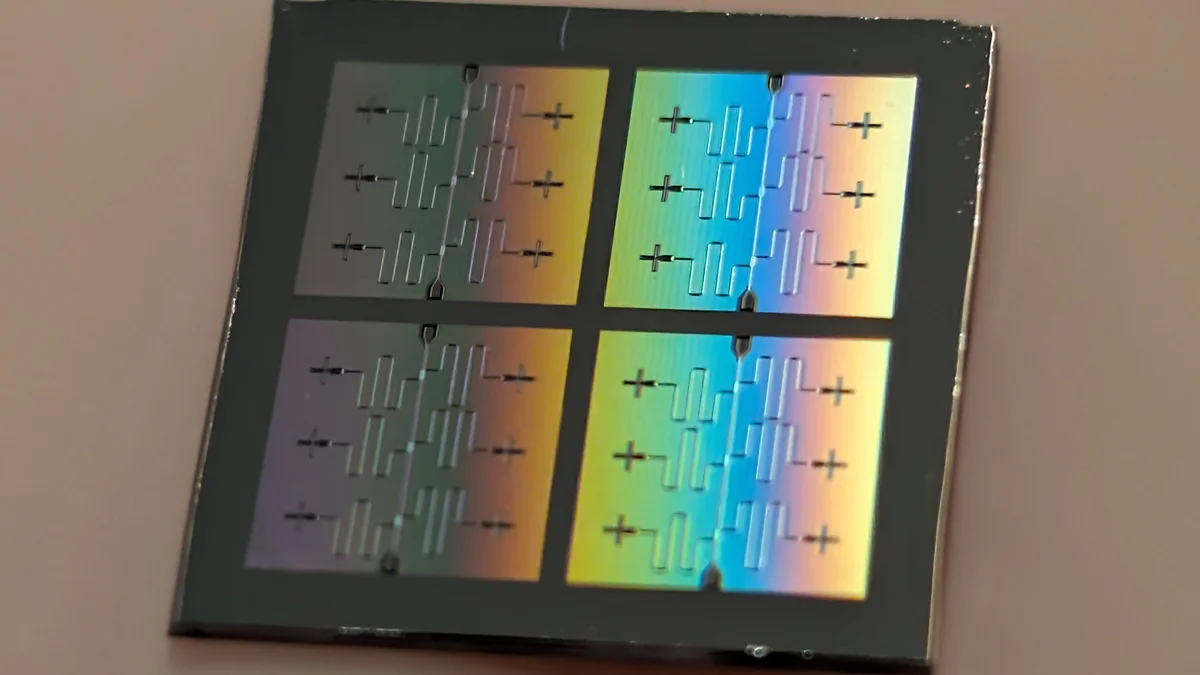
Between 2025 and 2026, topological hardware migrated from theoretical demonstrations to monolithic integrated circuits. The Majorana 1 processor demonstrated readout of topological states using high-speed quantum capacitance and resonant reflectometry.
Experimental measurements confirmed millisecond-scale state lifetimes at base temperatures of 20 millikelvin. This validates a hardware path where fault tolerance is enforced by fundamental topology rather than endless error-correction cycles.
- Spatial non-locality provides intrinsic topological immunity against localized environmental noise.
- Quantum logic gates are executed via topological braiding operations of non-Abelian anyons.
- The Majorana 1 prototype demonstrated millisecond coherence in hybrid superconductor-semiconductor devices.
- Topological hardware provides the definitive blueprint for building million-qubit quantum supercomputers.
The Quantum Horizon: Scaling Toward Million-Qubit Processors
Eliminating the thousandfold physical-to-logical qubit ratio will radically compress dilution refrigerator dimensions. Fully functional fault-tolerant processors featuring millions of logical qubits will emerge within the coming decade.
This computational leap will simulate enzyme catalytic mechanisms (such as room-temperature nitrogenase synthesis), model complex transmembrane ion channels, and decisively resolve intractable challenges across modern chemistry and materials science.