

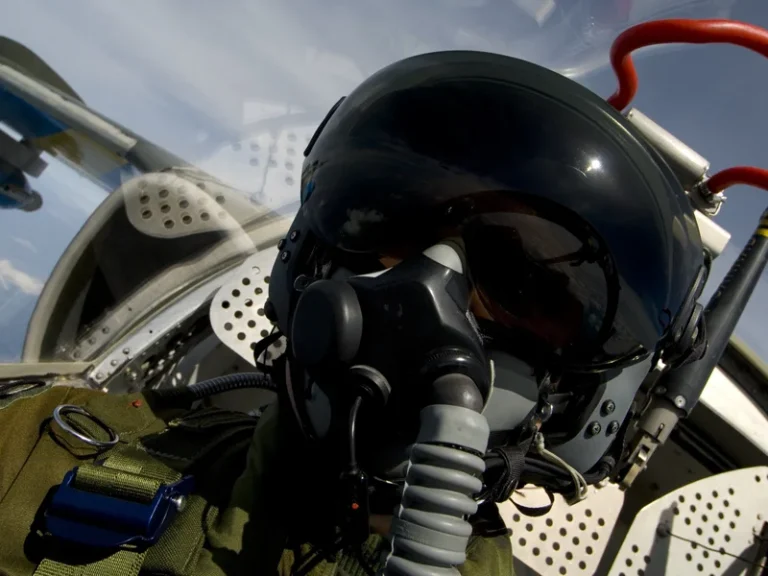

An agonizing and persistent fighter pilot headache baffled civilian neurologists for over a year and a half, nearly grounding an active 29-year-old Indian Air Force aviator from combat flying duties permanently. Recurring two to three times a month and persisting for days, the condition was initially misdiagnosed as refractory migraine and treated with heavy anticonvulsants, until specialized aerospace medicine physicians uncovered an ergonomic culprit hiding in plain sight.
The Grounding Mystery: How the Fighter Pilot Headache Developed
In the demanding realm of high-performance military aviation, an aviator’s physical fitness must be absolute. The 29-year-old Indian Air Force fighter pilot had accumulated hundreds of flawless flight hours in supersonic combat jets, regularly enduring grueling aerial combat maneuvers with gravitational forces reaching up to +9G. Yet, for 18 grueling months, an insidious affliction threatened to terminate his military flying career: severe, recurring headaches striking two to three times every month.
The pain characteristically materialized during late afternoons and displayed a devastating persistence, frequently lasting between 24 and 72 hours. Centered primarily over his forehead, temples, and occipital regions, the headache was accompanied by intense scalp tenderness, cognitive fatigue, and an inability to concentrate. In military aviation, such debilitating episodes necessitate immediate grounding from active sorties to protect flight safety and mission integrity.
Initial clinical evaluations conducted at a premier civilian healthcare facility failed to identify any structural brain abnormalities. High-resolution magnetic resonance imaging (MRI) of the brain, magnetic resonance angiography (MRA) of the circle of Willis, and routine electroencephalograms (EEG) all returned unremarkable results. Hematological markers, inflammatory panels, and vital parameters aligned perfectly with the peak physical standards of an elite aviator.
Confronted by the pulsating quality of the pain and episodes enduring up to three days, the civilian neurologist arrived at a diagnosis of migraine without aura. The physician initiated prophylactic management with divalproex sodium—a potent anticonvulsant and mood stabilizer commonly prescribed for severe chronic migraines. Crucially, the physician informed the aviator that he would need to remain on this pharmaceutical regimen for years, an outcome that under military aviation medical guidelines triggered automatic permanent disqualification from combat jet piloting.
Diagnostic Stalemate and the Aerospace Medicine Breakthrough
Faced with the imminent forfeiture of his wings and life’s passion, the pilot questioned the diagnosis. Daily divalproex sodium failed to stem the tide of pain; the incapacitating episodes returned with unyielding regularity, while the sedative side effects of the medication severely impaired his alertness. Utilizing his service rights, the pilot requested an exhaustive re-evaluation at the Indian Air Force’s prestigious Institute of Aerospace Medicine (IAM) in Bangalore.
The specialized aerospace medical team adopted an operational clinical approach distinct from standard hospital consultations. Rather than observing the pilot in isolation within a sterile examination room, the specialists meticulously reconstructed the chronology of his operational duties. They correlated his detailed sortie logs, full-mission flight simulator sessions, environmental cockpit factors, and the precise timestamps of headache onset.
This granular analysis uncovered a glaring clinical pattern overlooked by prior physicians: the pilot never experienced a single headache episode during annual leave, extended weekends, or ground-duty periods. The attacks erupted exclusively between 15:00 and 17:00 on days when he performed flying duties or participated in extended cockpit drills while wearing full personal life-support gear. This temporal dependency definitively excluded primary neurological migraine.
Further inquiry revealed that approximately 18 months prior, coinciding precisely with the genesis of his symptoms, the squadron had transitioned to updated flight helmets fitted with integrated target tracking visors. The pilot recalled that his new helmet felt noticeably snug and tight across his brow and temporal bones. However, viewing it as standard operational discomfort, he endured the pressure without reporting it to life-support equipment technicians.
Initially diagnosed as intractable migraine, prompting heavy anticonvulsant prescriptions that threatened the pilot’s flying qualification.
Sustained pressure on supraorbital, supratrochlear, and occipital nerves provoked microvascular ischemia and persistent scalp allodynia.
Aerial combat maneuvers up to +8G transformed a 1.5 kg helmet into a 12+ kg compressive mass bearing down on pericranial nerve trunks.
A larger helmet shell paired with customized gel padding eliminated pressure points, achieving complete recovery without drugs.
Pathophysiological Mechanics: External Compression Headache
The aerospace medical panel, led by aviation medicine specialists Dr. P. Kharbanda, Dr. R. K. Ganjoo, and Dr. D. S. Chadha, established the definitive diagnosis: External Compression Headache (ECH), categorized under International Classification of Headache Disorders (ICHD-3 code 4.6.1). This pathology is generated by sustained mechanical pressure, friction, or compression exerted directly upon the superficial sensory nerves traversing the pericranial tissues.
The anatomical substrates victimized by the tight flight helmet were the supraorbital and supratrochlear nerves—terminal sensory branches of the ophthalmic division of the trigeminal nerve—alongside the auriculotemporal and greater occipital nerves. While a modern fighter helmet weighs roughly 1.5 kilograms statically, dynamic high-G aerial maneuvers multiply this load up to 12 to 14 kilograms, dramatically intensifying focal pressure against the cranial vault.
Prolonged compression induces microvascular ischemia within the vasa nervorum, triggering the localized release of algogenic neuropeptides such as substance P and calcitonin gene-related peptide (CGRP). This cascade results in severe nociceptive sensitization of the scalp. Through convergence in the trigeminocervical complex within the brainstem, this localized external nerve traction radiates as a continuous, throbbing cranial ache indistinguishable from vascular migraine.
Compounding this neural irritation, secondary protective muscle spasm in the frontalis and temporalis muscles further impaired local venous drainage. Consequently, even after the pilot landed and unstrapped his helmet, the neurogenic inflammatory cycle remained fully engaged, prolonging the agonizing headache for up to 72 hours post-flight.
The significance of careful anatomical and biomechanical assessment echoes throughout modern diagnostic medicine, much like novel discoveries of biological survival mechanisms in demanding natural settings.
«In aerospace medicine, life-support gear is a functional extension of human anatomy. A mismatch in helmet ergonomics can mimic severe neurological disease and cost a pilot their career.»
Dr. P. Kharbanda, Aerospace Medicine Specialist, Institute of Aerospace Medicine IAF
Ergonomic Customization: Complete Resolution Without Pharmaceuticals
Armed with a definitive physiological diagnosis, the IAM team orchestrated an ergonomic intervention. Life-support equipment engineers evaluated the pilot’s helmet and identified severe pressure hot spots concentrated directly over the supraorbital notches of the frontal bone due to mismatched inner shell geometry.
The aviator was re-equipped with a larger helmet shell customized with pressure-relieving viscoelastic and gel padding. This configuration redistributed mechanical weight uniformly across the broad convexities of the cranium, leaving the anatomical pathways of the supraorbital, temporal, and occipital nerves entirely unconstricted. The tension harness of the oxygen mask was also re-calibrated.
The therapeutic outcome was immediate and definitive. Divalproex sodium was discontinued at once. Over a rigorous twelve-month follow-up period encompassing extensive high-G combat flying, the aviator remained completely symptom-free, experiencing not a single headache recurrence. Full medical flight clearance was restored without operational restrictions.
Understanding how localized physical pressures and physiological stresses impact human performance echoes broader biomedical discoveries, including research into neurotechnology and sensory brain systems operating in demanding environments.
- External Compression Headache (ECH) can precisely mimic the temporal profile and throbbing intensity of vascular migraines.
- Prescribing central nervous system depressants or anticonvulsants fails to address mechanical nerve compression while generating unnecessary toxicity.
- Strict correlation of symptoms with specific duty shifts or gear usage serves as the definitive hallmark of an external mechanical etiology.
- Precision ergonomic fitting of cranial protective equipment is paramount for health preservation and operational longevity in high-performance fields.
Clinical Implications Beyond the Cockpit
The clinical journey of the Indian fighter pilot, published in the Indian Journal of Aerospace Medicine, stands as an indispensable case study on the perils of diagnostic anchoring. External compression headache is far from an exclusive occupational hazard of military aviation; it affects millions of individuals across civilian life.
Motorcyclists wearing undersized full-face helmets, construction personnel bound to heavy hard hats, competitive swimmers donning tight goggles, scuba divers with restrictive mask straps, and corporate workers utilizing tight audio headsets regularly develop identical pericranial neuralgia that is routinely mismanaged with migraine drugs.
Medical practitioners must maintain a high index of suspicion, consistently inquiring about wearable headgear, sports equipment, and protective gear when evaluating persistent atypical headaches. As this case brilliantly demonstrates, identifying and removing a mechanical compression source can permanently cure a debilitating ailment that pharmaceutical therapies completely fail to resolve. Also read our related investigative feature on advances in brain physiology and neural interfaces.