

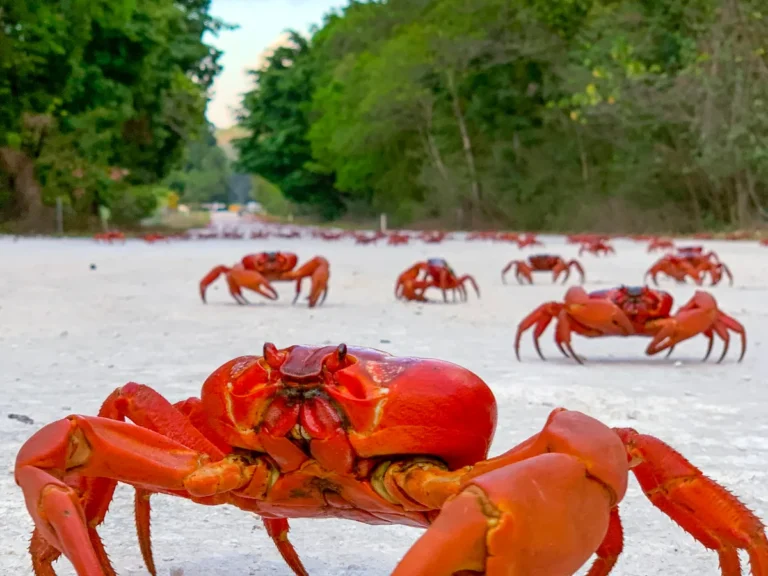

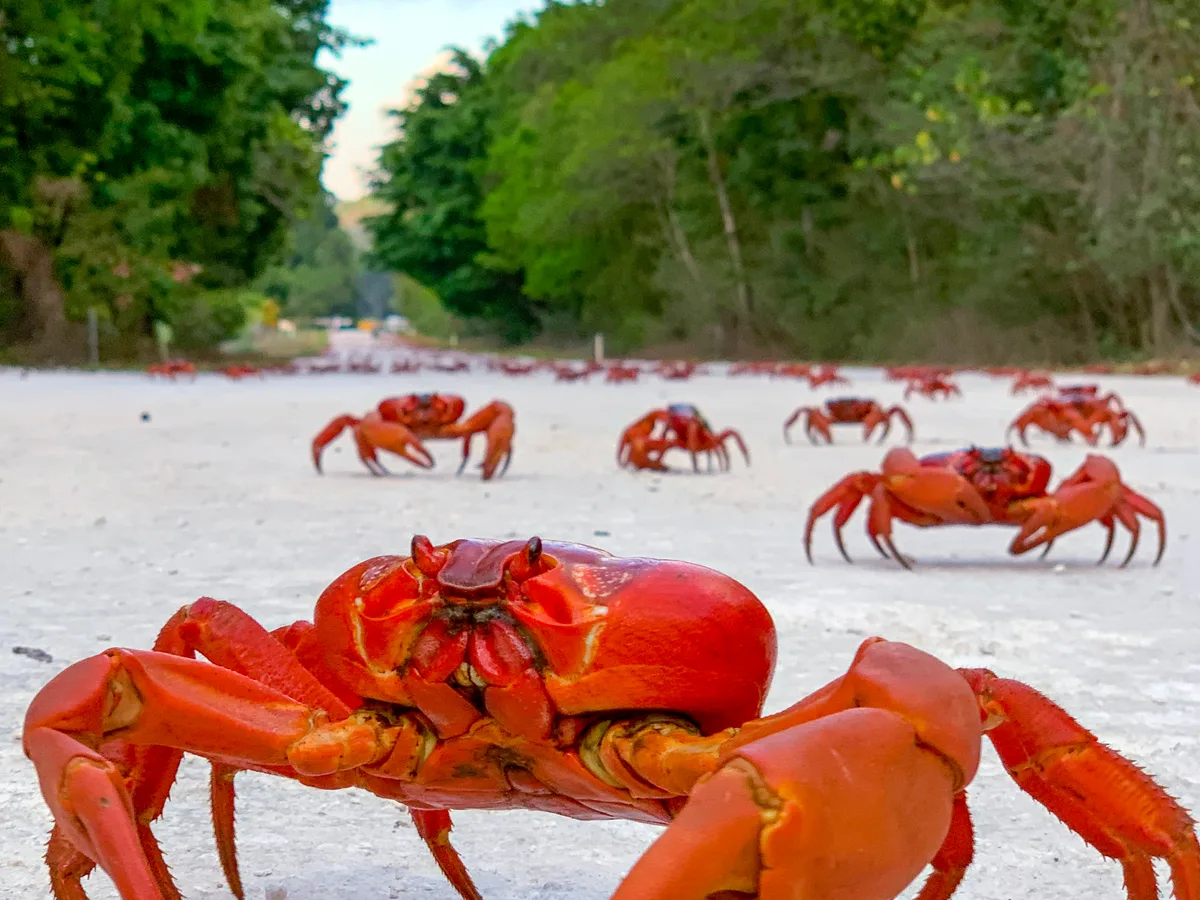
On Australia’s remote Indian Ocean outpost of Christmas Island, one of the planet’s most extraordinary natural spectacles has reached its breathtaking climax: the legendary christmas island red crab migration concluded with hundreds of millions of baby crablets emerging from the crashing surf to march inland into the rainforest. Covering beaches, rugged sea cliffs, and roads in a dense, shimmering crimson carpet, the spectacle prompted biologists and filmmakers to marvel that the island’s floor was literally alive with red lava.
A Twice-in-a-Decade Event: Why Mass Baby Crab Returns Are Exceptionally Rare
The Christmas Island red crab (Gecarcoidea natalis) is a land crab endemic solely to Christmas Island and the neighboring Cocos (Keeling) Islands. In normal years, an estimated 50 million adult crabs inhabit the island’s lush forests, and their annual synchronized trek to the shoreline during the onset of the monsoon rains is world-renowned. However, the successful oceanic development and triumphant return of baby crablets inland is an exceptionally rare event, occurring on a massive scale only once or twice per decade.
Each breeding season, female crabs release hundreds of thousands of eggs directly into the surf during the pre-dawn turn of high tide in the final quarter of the moon. The hatched larvae (zoeae) are swept into open ocean currents, spending roughly four weeks undergoing successive developmental molts into megalopae and eventually tiny, fully formed five-millimeter crablets.
In the pelagic waters, vulnerable larvae face dense concentrations of filter-feeding predators, including majestic whale sharks and manta rays. Only when oceanic temperatures, prevailing currents, and planktonic blooms align flawlessly do immense clouds of larvae survive to return ashore. Much like other evolutionary survival mechanisms in marine and terrestrial ecosystems, the red crab relies on overwhelming reproductive abundance to outpace natural mortality.
Scaling Vertical Sea Cliffs: The Grueling Overland Ascent of Tiny Crablets
When tidal surges wash millions of crablets onto the sands of Flying Fish Cove and surrounding rocky bays, the most grueling phase of their lifecycle begins. At just five millimeters across—scarcely larger than a grain of rice—the young crabs abandon their aquatic respiration, developing modified branchial lungs to breathe terrestrial air.
To reach the rainforest, these miniature adventurers must scale towering, razor-sharp limestone cliffs rising dozens of meters above the breaking swells. Clinging with microscopic dactyl claws to the porous coral limestone, an unbroken red wave crawls vertically upward in defiance of gravity.
Cinematographer Braydon Moloney of the Parks Australia documented this jaw-dropping crustacean surge: “It is literally like the floor is lava. You cannot take a single step without risking hundreds of lives. The ground beneath your feet shimmers and moves, flowing over every obstacle like a living crimson tide.”
«It is literally like the floor is lava. You are surrounded by millions of five-millimeter crablets climbing up cliffs, trees, and rocks in an endless red wave. The sheer scale of this natural phenomenon defies imagination.»
Braydon Moloney, Wildlife Cinematographer, Wild Film Collective
Facing Cannibal Parents: The Brutal Edge of Predator Satiation
One of the most dramatic spectacles of the overland march is the encounter between the new generation and returning adult crabs. In the evolutionary history of Gecarcoidea natalis, parental investment ceases the moment eggs hit the water. Adults returning from the coast to forest burrows meet the legions of their own offspring head-on.
For massive adult crabs weighing up to 500 grams with crushing claws, the endless rivers of tiny crablets represent an abundant, easily captured source of calcium and protein. Adults opportunistically scoop up mouthfuls of baby crabs, consuming them on the spot.
Yet this grim ecological toll is accounted for by the principle of predator satiation. The sheer astronomical volume of emerging crablets—numbering in the hundreds of millions—easily overwhelms the digestive capacity of resident crabs, birds, and predators, allowing the vast majority of the young cohort to safely penetrate the deep interior forest.
While spawning occurs annually, immense larval survival waves occur only once or twice per decade.
Five-millimeter crablets conquer sheer 20-meter limestone sea cliffs during their ascent to the forest.
Hundreds of millions of emerging young overwhelm the appetites of predators and cannibalistic adults.
Park rangers construct dedicated bridges and gently clear marching crablets off roads with leaf blowers.
Conservation Engineering: How Humans Protect the Red Tide
Residents of Christmas Island and rangers from Parks Australia hold these iconic crustaceans in deep reverence. The red crab serves as a vital ecological engineer: by digging extensive burrow networks and devouring vast quantities of leaf litter and fallen fruit, the species recycles essential nutrients and maintains the open structure of the unique rainforest floor.
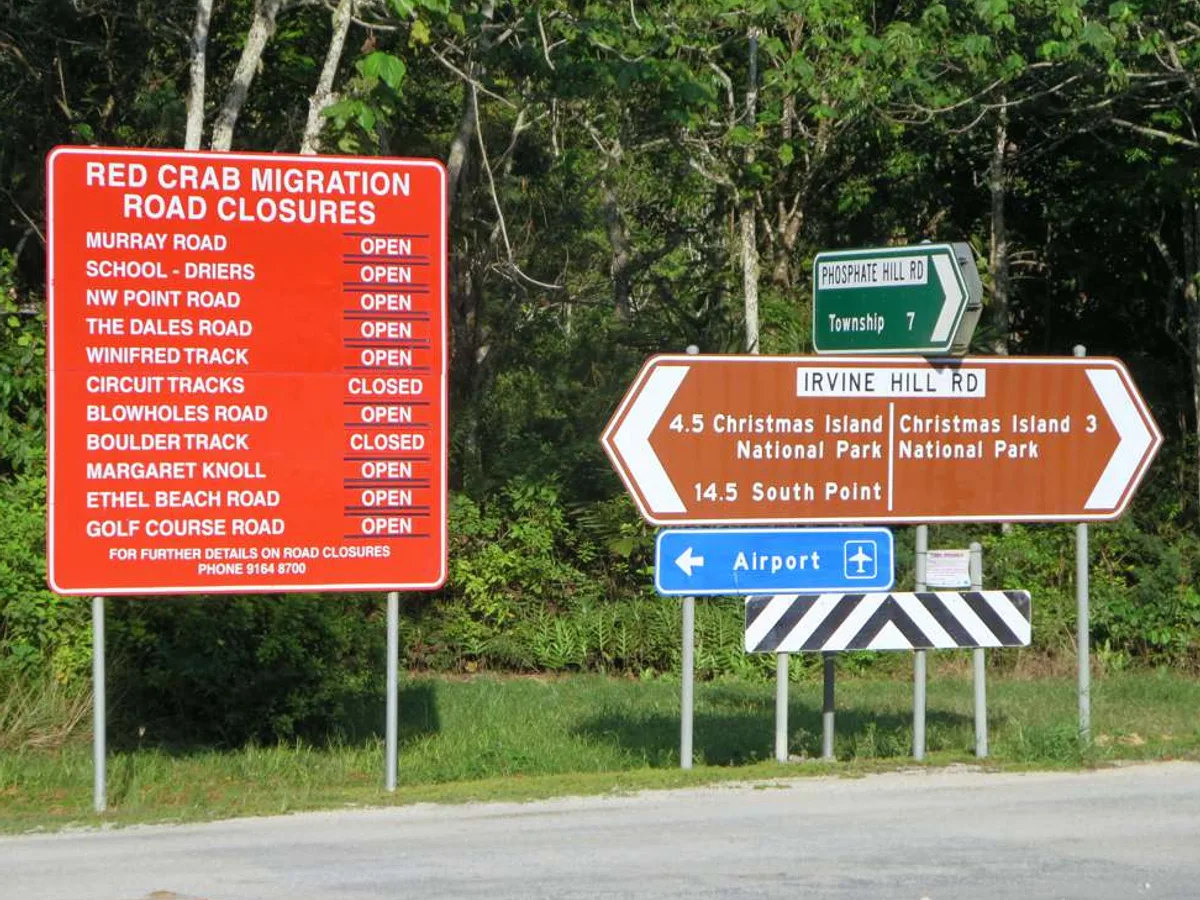
During migration peaks, human daily routines adapt entirely to the crabs. Authorities close major roads, redirecting traffic with temporary barriers. Permanent conservation infrastructure includes dozens of kilometers of drift fences and specialized over-road “Crab Bridges” that guide marching crustaceans safely above vehicular lanes.
To clear roads without causing injury, rangers deploy an ingenious tool: handheld leaf blowers set to a gentle airflow, carefully nudging dense layers of migrating crablets off asphalt and onto roadside verges before official vehicles pass.
- Total island adult crab population exceeds 50 million individuals.
- Crablets take 4 to 5 years of steady growth to reach adult reproductive maturity.
- Each season, the population recycles tons of fallen leaves, enriching rainforest soils.
- Over 20 kilometers of specialized barrier walls and bridges protect migrating crabs.
Climate Variability and Invasive Threats to Island Ecology
Despite this year’s monumental success, conservation biologists remain vigilant regarding future climate threats. Strong El Niño and positive Indian Ocean Dipole events trigger prolonged droughts that delay rainfall, drying out coastal slopes and desiccating millions of migrating crabs before they reach moisture.
Furthermore, invasive yellow crazy ants (Anoplolepis gracilipes) form hyper-aggressive supercolonies that spray formic acid into the eye stalks and joints of native crabs. Through targeted biological control and vigilant monitoring, conservation teams continue to preserve this irreplaceable ecological wonder for generations to come.