

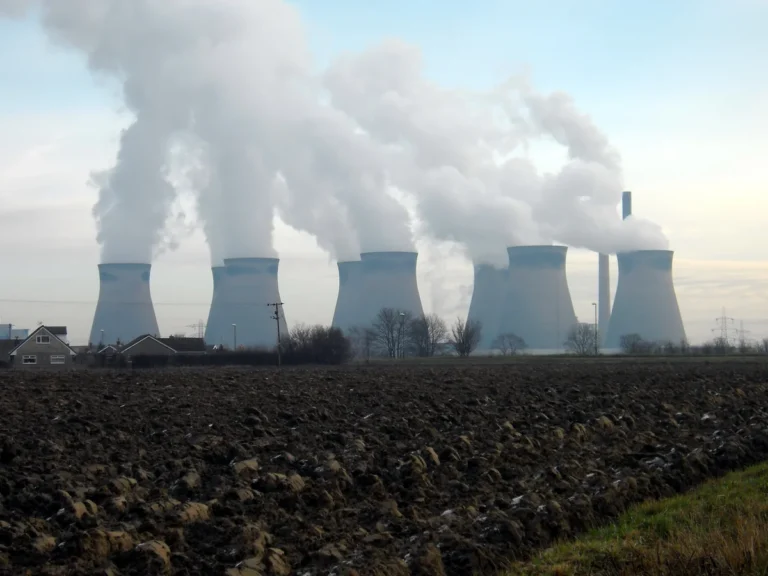

For the first time since the global lockdowns of the pandemic, worldwide carbon emissions drop slightly from fossil fuels: according to the comprehensive Global Carbon Budget 2026 report, industrial emissions will fall by 0.4% to 38.2 billion metric tonnes. However, behind this ostensibly positive environmental development lies a sobering scientific paradox: the reduction is driven less by the triumph of structural climate policies and far more by a severe geopolitical shock around the Strait of Hormuz and volatile fossil supply chain disruptions.
The 2026 Emissions Dip: Behind the Unexpected Peak in Fossil Fuel Output
The release of the annual Global Carbon Budget 2026 report, compiled by an international consortium of more than 120 climate scientists from 80 leading research organizations under the auspices of the Global Carbon Project (GCP) and published in the peer-reviewed journal Earth System Science Data, has triggered intense global debate. For decades, global greenhouse gas emission curves have tracked upward with relentless consistency, punctuated only by acute systemic catastrophes such as the 2008 financial crash or the worldwide economic paralysis of the 2020 pandemic. In 2026, however, global emissions from fossil fuels showed a rare peacetime contraction of 0.4%, dipping to 38.2 billion metric tonnes of CO2.
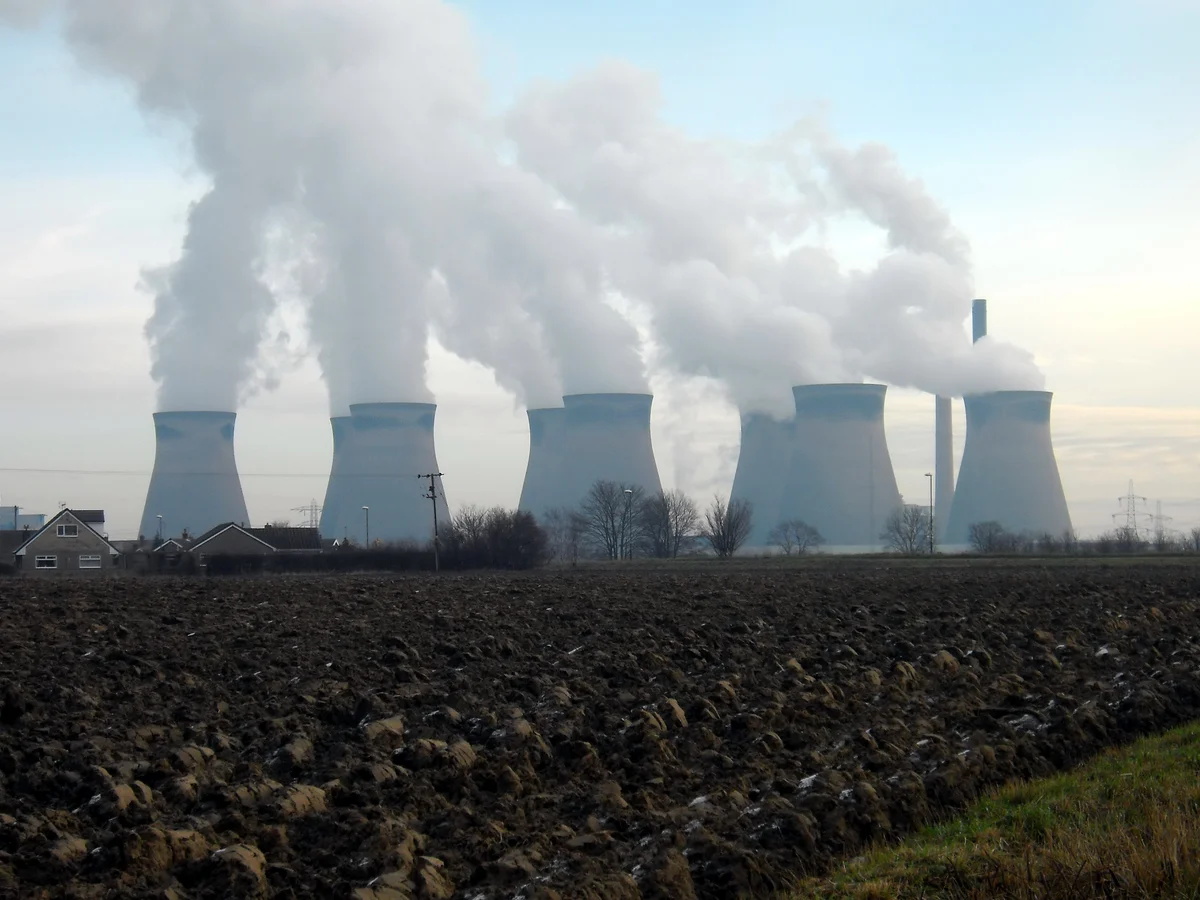
Initial reactions across international policy forums hailed the milestone as evidence that humanity had finally reached ‘peak emissions’—the critical turning point where global carbon output crests before entering sustained secular decline. In accordance with Intergovernmental Panel on Climate Change (IPCC) assessment frameworks, peaking global emissions well before 2030 represents the indispensable prerequisite for averting catastrophic planetary heating. Yet a granular dissection of the underlying energy flows reveals that the mechanisms behind this contraction are far more volatile and precarious than simple technological triumph.
As detailed by the research team led by Professor Pierre Friedlingstein of the University of Exeter’s Global Systems Institute, the decisive downward push in fossil carbon output did not stem primarily from pre-planned coal plant retirements, but from severe geopolitical disruption across the Middle East. The escalating conflict involving Iran and the operational choking of the Strait of Hormuz—the maritime chokepoint responsible for transit of roughly 20% of global petroleum liquids—precipitated an acute physical supply shock across European and Asian energy markets.
Surging crude oil prices forced industrial operators to curtail energy-intensive logistics and compelled commercial consumers to trim discretionary travel and civil aviation routes. Consequently, global emissions from petroleum combustion plunged by 1.9% in a single year. This represents classic price-induced demand destruction: when an indispensable commodity becomes prohibitively expensive or physically obstructed, consumption retreats involuntarily, generating a statistical illusion of environmental progress.
Clean Energy Momentum vs. Geopolitical Disruption: The Role of Renewables and EVs
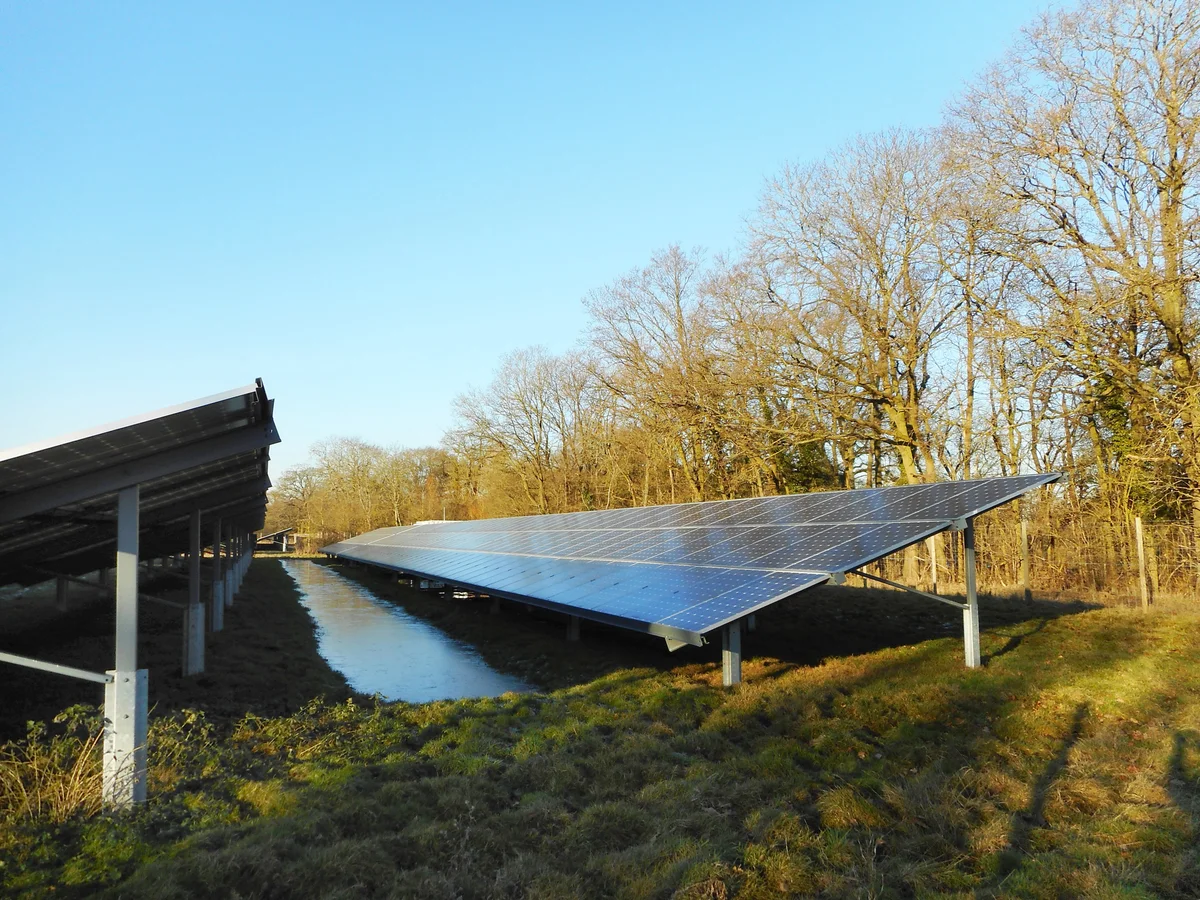
Attributing the entirety of the 2026 emissions trajectory to Middle Eastern naval blockades would overlook profound structural transformations underway in the global power architecture. In tandem with fossil supply turmoil, clean power generation achieved unprecedented scale. Over the preceding twenty-four months, global installations of utility-scale photovoltaic arrays and onshore and offshore wind turbines shattered prior deployment benchmarks, surpassing 600 gigawatts of newly energized capacity annually.
Co-author Professor Corinne Le Quéré of the University of East Anglia emphasized that clean technology additions—spearheaded by solar arrays, wind infrastructure, and the global surge in electric vehicle sales—successfully supplied nearly two-thirds (65%) of total global growth in primary electricity demand. Absent this structural expansion of non-fossil capacity over recent years, fossil fuel emissions would have continued their upward climb despite the severe oil supply crisis.
China remained the epicentre of this renewable acceleration. Responsible for approximately 31% of global emissions, China’s total fossil output decreased by 0.9% in 2026. The commissioning of massive desert solar-wind energy bases across Xinjiang and Inner Mongolia, coupled with electric vehicles capturing more than 50% of domestic passenger car sales, stabilized national thermal coal consumption and yielded a 0.1% contraction in coal power emissions.
A comparable trend manifested across the United States, where carbon emissions declined by 1.3%. American power utilities accelerated the retirement of aging coal facilities, substituting capacity with utility-scale solar installations and grid-scale battery energy storage systems (BESS). Simultaneously, dozens of developed economies have sustained the decoupling of gross domestic product (GDP) expansion from carbon output, demonstrating that modern economic prosperity does not inherently require burning increasing quantities of fossil hydrocarbons.
«A decline in fossil CO2 emissions is encouraging, but a reduction driven partly by geopolitical shocks in the oil trade and high energy prices is not a sustainable climate solution. Without deep, permanent structural decarbonization across heavy industry and transport, fossil fuel demand will inevitably rebound to new records once supply conditions normalize.»
Professor Pierre Friedlingstein, Global Systems Institute at the University of Exeter, Lead Author of the Global Carbon Budget
The Total Carbon Budget Paradox: Why Atmospheric CO2 Hit Record Highs
The central paradox confronting climate scientists in 2026 lies in the distinction between fossil fuel carbon emissions and the total global carbon balance of planet Earth. Industrial emissions represent merely one component of the global atmospheric budget; the secondary pillar involves emissions and uptake associated with land use, deforestation, and ecosystem degradation.
Throughout 2026, severe climate anomalies driven by the volatile transition between El Niño and La Niña climate patterns triggered unprecedented droughts across the Amazon Basin, the Congo peatlands, and tropical Southeast Asia. Rather than functioning as vital carbon sinks absorbing anthropogenic excess, desiccated tropical rainforest biomes suffered catastrophic wildfire seasons. Emissions stemming from land-use change surged by over 8%, completely overwhelming the modest 0.4% reduction achieved in the fossil fuel sector.
As a direct consequence, total planetary carbon emissions from all human activities set a new all-time record of 43.3 billion tonnes in 2026, up from 42.8 billion tonnes the preceding year. As highlighted by Dr. Glen Peters of the CICERO Center for International Climate Research in Oslo, the planet is providing empirical verification of compounding climate feedback loops: destabilized biological sinks are losing their functional capacity to buffer atmospheric emissions.
This atmospheric accumulation is reflected in real-time data from the Mauna Loa Baseline Observatory in Hawaii. Global atmospheric CO2 concentrations reached an unprecedented 427.7 parts per million (ppm) in 2026, standing 54% above the pre-industrial baseline of 280 ppm. Carbon dioxide continues to accumulate in the atmosphere at an annual rate exceeding 2.8 ppm, maintaining relentless upward pressure on planetary energy imbalance.
Emissions from oil and liquid fuels fell by 1.9% as the conflict involving Iran and maritime disruptions around the Strait of Hormuz restricted global supply and triggered forced demand destruction.
Solar installations, wind energy, and the massive acceleration of electric vehicles (led by China and the EU) met two-thirds (65%) of total global growth in primary electricity demand.
Despite the fossil dip, total anthropogenic CO2 emissions climbed to an all-time record 43.3 billion tonnes due to climate-driven Amazon wildfires and land-use carbon sink collapse.
The remaining carbon budget to keep global warming within the 1.5°C threshold shrank to 150 billion tonnes—equivalent to less than four years of emissions at current global rates.
The 1.5°C Carbon Budget Exhaustion: Counting Down the Remaining Years
Perhaps the most critical takeaway from the Global Carbon Budget 2026 report is the scientific recalculation of the remaining carbon budget—the cumulative quota of CO2 humanity can emit while retaining a 50% probability of limiting global average surface temperature rise to 1.5°C above pre-industrial levels.
The updated modeling establishes that the remaining 1.5°C carbon budget has shrunk to approximately 150 billion metric tonnes (150 Gt CO2). When measured against current annual emission volumes exceeding 40 billion tonnes, the arithmetic is stark: the entire carbon allowance for the 1.5°C threshold will be physically consumed in less than four years—placing exhaustion around late 2029 or early 2030.
For researchers specializing in energy transition dynamics, this trajectory reinforces the structural inertia of modern industrial civilization. As examined in comprehensive analysis of the physical impossibility of keeping global warming below 1.5°C, the existing fleet of global blast furnaces, cement kilns, thermal power stations, and petrochemical complexes carries embedded emissions commitments that far exceed the 150 Gt quota, even without constructing a single new fossil facility.
“Treating a fractional, conflict-induced emissions dip as a climate breakthrough is an exercise in perilous complacency,” warns Professor Julia Pongratz of Ludwig Maximilian University of Munich. “A temporary supply squeeze in crude oil routes does not constitute structural transformation. Once shipping channels stabilize and commodity prices recalibrate, latent demand across rapidly industrializing economies—exemplified by India’s 3.2% emissions growth in 2026—threatens to produce a sharp upward rebound.”
- Fossil fuel CO2 emissions decreased by 0.4% (to 38.2 Gt CO2), marking a rare peacetime decline outside global economic recessions.
- Oil emissions experienced a substantial 1.9% contraction, while natural gas emissions continued a modest growth trend (+0.6%).
- China recorded a 0.9% decrease in emissions, and the United States saw a 1.3% drop, heavily driven by solar capacity additions.
- Global atmospheric CO2 concentration reached 427.7 ppm, standing 54% above pre-industrial baseline levels.
- The remaining carbon budget for the 1.5°C Paris Agreement limit will be physically exhausted before 2030 without an immediate tripling of clean power.
The Real Lessons of 2026: Escaping Volatile Shocks Through True Decarbonization
The climate data of 2026 presents global decision-makers with a fundamental choice: will international decarbonization proceed through planned, proactive industrial policy, or will emission reductions occur purely as unintended casualties of armed conflict, supply disruptions, and economic volatility? Historical precedents demonstrate that crisis-driven emissions contractions carry immense societal collateral damage, including heightened food insecurity, inflation, and destabilized public infrastructure financing.
The only robust pathway to enduring climate stability lies in massively scaling capital expenditure into next-generation transmission infrastructure, long-duration energy storage, and industrial-scale deep decarbonization solutions for hard-to-abate sectors. Complete empirical datasets and methodology notes can be reviewed via the Global Carbon Budget 2026 release in Earth System Science Data.
The year 2026 offered the planet an accidental breathing space in fossil fuel emissions growth. Whether this anomaly becomes the historical turning point toward genuine sustainability or fades into a forgotten plateau before renewed climate extremes depends upon the policy and investment choices executed over the next thousand days.