

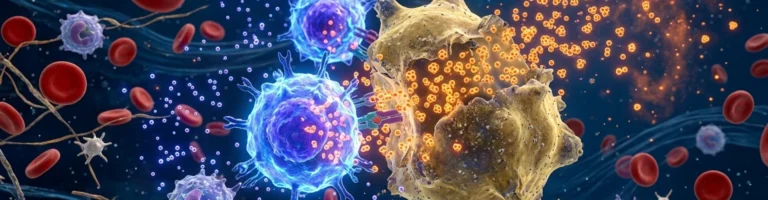

Chronological age frequently diverges from the actual biological deterioration of cardiovascular architecture and parenchymal organs. In a breakthrough investigation published in the journal Immunity, an international consortium of immunologists and biogerontologists has established a new molecular benchmark of human senescence: the phenotypic shift between Granzyme K (GzmK) and Granzyme B in senescent CD8+ cytotoxic T cells. This metric forecasts cardiovascular events and neurodegeneration over a decade before clinical onset.
UK Biobank Cohort: 48,000 Genomes and Longitudinal Immune Profiles
The scale of the empirical investigation is without precedent in human geroscience. Investigators analyzed single-cell transcriptomic libraries and high-dimensional proteomic profiles from peripheral blood specimens across 48,000 UK Biobank participants followed prospectively over a 14-year period.
Utilizing mass cytometry (CyTOF) paired with unsupervised topological clustering, researchers indexed over 120 immune sub-populations. The most decisive prognostic determinant of multiorgan multimorbidity was neither telomere length nor circulating C-reactive protein, but the clonal accumulation of senescent CD8+ T cells defined by high Granzyme K expression.
Biochemical Transition: The Pathogenic Shift from Granzyme B to Granzyme K
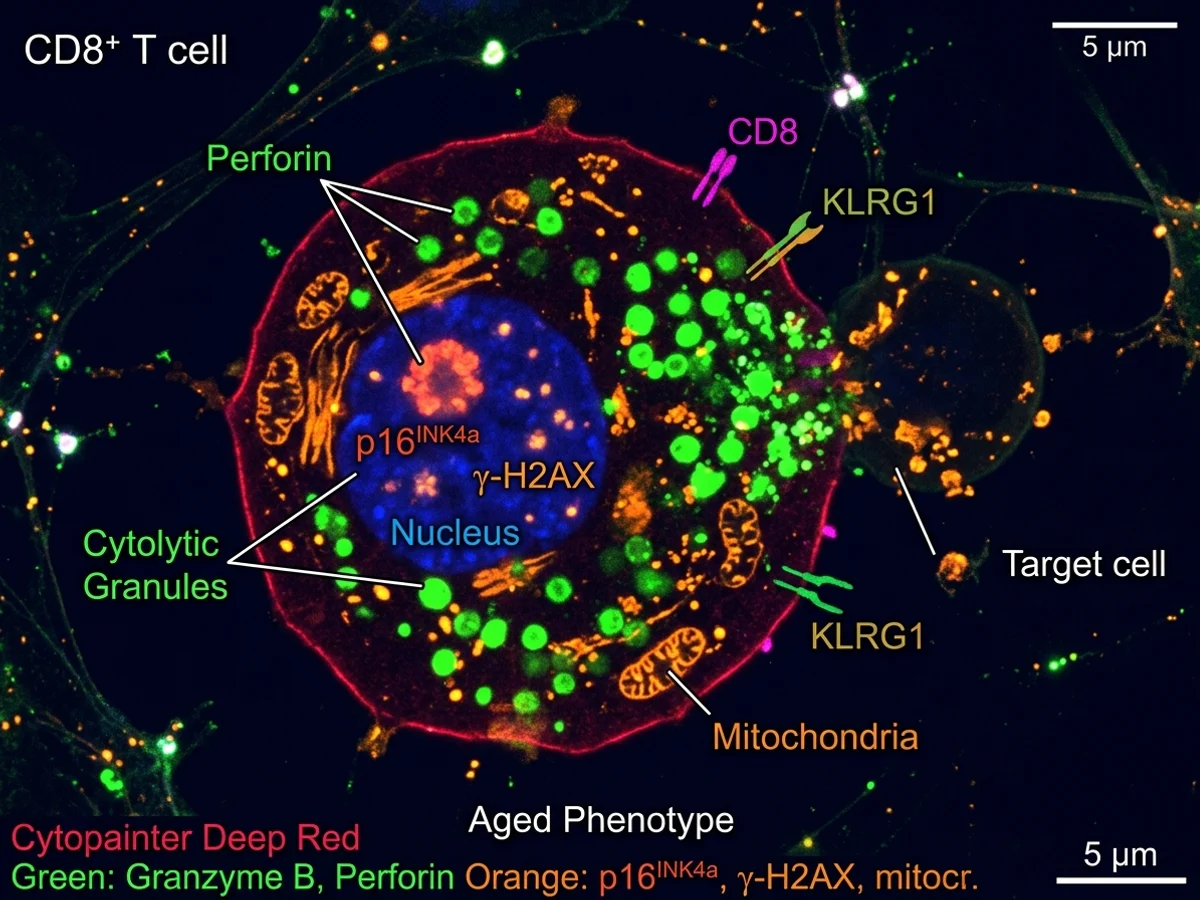
In young, physiologically resilient systems, cytotoxic CD8+ T lymphocytes deploy Granzyme B alongside perforin to trigger targeted apoptosis in virally compromised or oncogenic cells, maintaining structural tissue homeostasis.
Upon reaching replicative exhaustion, these cells persist in a metabolically hyperactive senescent state. They downregulate Granzyme B and massively amplify Granzyme K secretion. GzmK directly cleaves extracellular fibronectin and type IV collagen, transforming vascular endothelial niches into sites of chronic, subclinical inflammatory erosion (SASP).
Landmark UK Biobank dataset validated across 14 years of longitudinal medical outcomes.
Pathogenic enzyme secreted by senescent T cells that degrades vascular matrix.
Elevated GzmK levels predict cardiovascular morbidity more reliably than cholesterol.
Selective senolytic clearance restored arterial elasticity and reduced stiffness by 28%.
Vascular Pathology and Alzheimer’s Disease Progression
Participants presenting with elevated GzmK-positive lymphocyte burdens demonstrated a 3.8-fold increased hazard ratio for progressive carotid atherosclerosis and myocardial infarction, completely independent of LDL cholesterol and systolic blood pressure.
Furthermore, Granzyme K compromises endothelial tight junctions within the blood-brain barrier, permitting invasive transmigration of inflammatory myeloid cells into the cerebral cortex. In cerebrospinal fluid from preclinical Alzheimer’s cohorts, GzmK levels correlated directly with tau phosphorylation rates.
«For decades, gerontologists presumed senescent T cells were simply functionally exhausted. Our data demonstrate the exact opposite: they switch functional programs from precision cytotoxic targeting (Granzyme B) to continuous Granzyme K secretion, acting as a slow-release systemic toxin that degrades extracellular matrix and promotes organ fibrosis.»
Dr. Elena Wojciechowski, Lead Immunologist, Buck Institute for Research on Aging
Targeted Senolytics: Clearing Pathogenic Immune Debris
Pinpointing this biochemical effector provides actionable therapeutic traction. In preclinical primate models, administering monoclonal Granzyme K inhibitors and senolytic regimens (dasatinib plus quercetin) decreased arterial pulse-wave stiffness by 28% and restored skeletal muscle regenerative capacity.
Bioengineers are also designing second-generation senolytic CAR-T interventions calibrated exclusively against cell-surface markers of GzmK-secreting senescent lymphocytes, enabling periodic deep rejuvenation cycles for the human immune system.
- The Granzyme K to Granzyme B ratio provides an objective gold standard for biological immunosenescence.
- Chronic vascular decay is directly driven by persistent secretomes from senescent cytotoxic lymphocytes.
- Enables clinical discrimination between chronological and biological aging via single blood panels.
- Identifies a validated pharmacological target for cardioprotection and neurodegenerative prevention.
Preventive Medicine and Standardized Longevity Diagnostics
The authors project that standardized clinical assays measuring the Granzyme K/B ratio will be integrated into diagnostic pathology panels within the next two years. A single 5 mL venipuncture will quantify biological vascular aging trajectories decades prior to overt pathological manifestation.
We are advancing from passive observational gerontology toward targeted molecular interception. The adaptive immune system is the master architect of organismal longevity.