


Over 99% of the microbial life inhabiting the abyssal ocean floor remained an unreachable scientific ghost because these extreme organisms perished from decompression shock before submersibles ever reached the ocean surface: a transformative engineering breakthrough has now fundamentally revolutionized marine microbiology after fragile deep sea microbes harvested from 1,300 meters depth were successfully maintained alive for 180 days in a laboratory. Developed by an international research consortium, the DISCUSS system (Deep-Sea Intelligent in situ Sampling, Cultivation, and Sorting System) combines convolutional artificial intelligence, gentle microfluidic robotic sampling, and a specialized titanium isobaric bioreactor maintaining native hydrostatic pressures of 13 megapascals, unlocking the biochemical secrets of Earth’s darkest biosphere.
The Decompression Curse: Why Abyssal Organisms Perished at the Surface
The benthic ocean floor beyond depths of 1,000 meters constitutes one of Earth’s most punishing frontiers. In this realm of eternal darkness and near-freezing temperatures (2–4°C), hydrostatic pressure exceeds 13 to 15 megapascals (MPa) — more than 130 times atmospheric pressure at sea level. Yet these benthic sediments house a massive proportion of planetary microbial biomass that regulates global geochemical cycles of carbon, methane, and sulfur.
To survive under immense compressive forces, organisms known as piezophiles (or barophiles) evolved specialized molecular adaptations. Their cellular membranes incorporate high ratios of polyunsaturated, branched-chain fatty acids to maintain fluid crystal dynamics under crushing loads, while their multi-subunit protein complexes rely on specialized salt bridges and hydrophobic packing. Previously, we explored how artificial intelligence applications in marine biology decode complex biosystems across oceanic frontiers.
However, whenever oceanographic expeditions collected benthic mud using traditional gravity corers or Niskin bottles, violent decompression ensued. As submersibles ascended, dissolved gases boiled out of bacterial cytoplasm, lipid bilayers lost structural integrity, and pressure-adapted enzymes irrevocably denatured. Over 99% of captured microbes arrived at deck laboratories dead, leaving researchers with only degraded genomic fragments.
The Architecture of DISCUSS: AI Vision and Titanium Isobaric Bioreactors
To resolve this fundamental bottleneck, an international consortium of marine roboticists and biochemists from Sun Yat-sen University and the University of Manchester — led by Yuanyuan Wang (Yuanyuan Wang), Jianguo He (Jianguo He), and Jian He (Jian He) — engineered the DISCUSS platform.
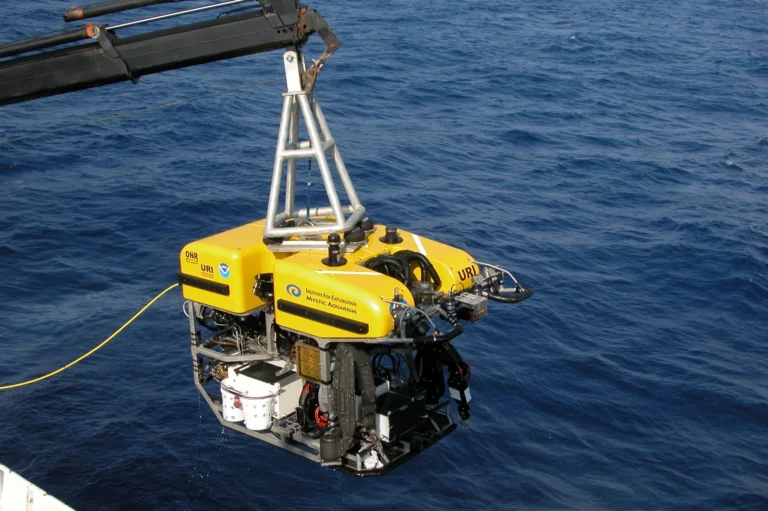
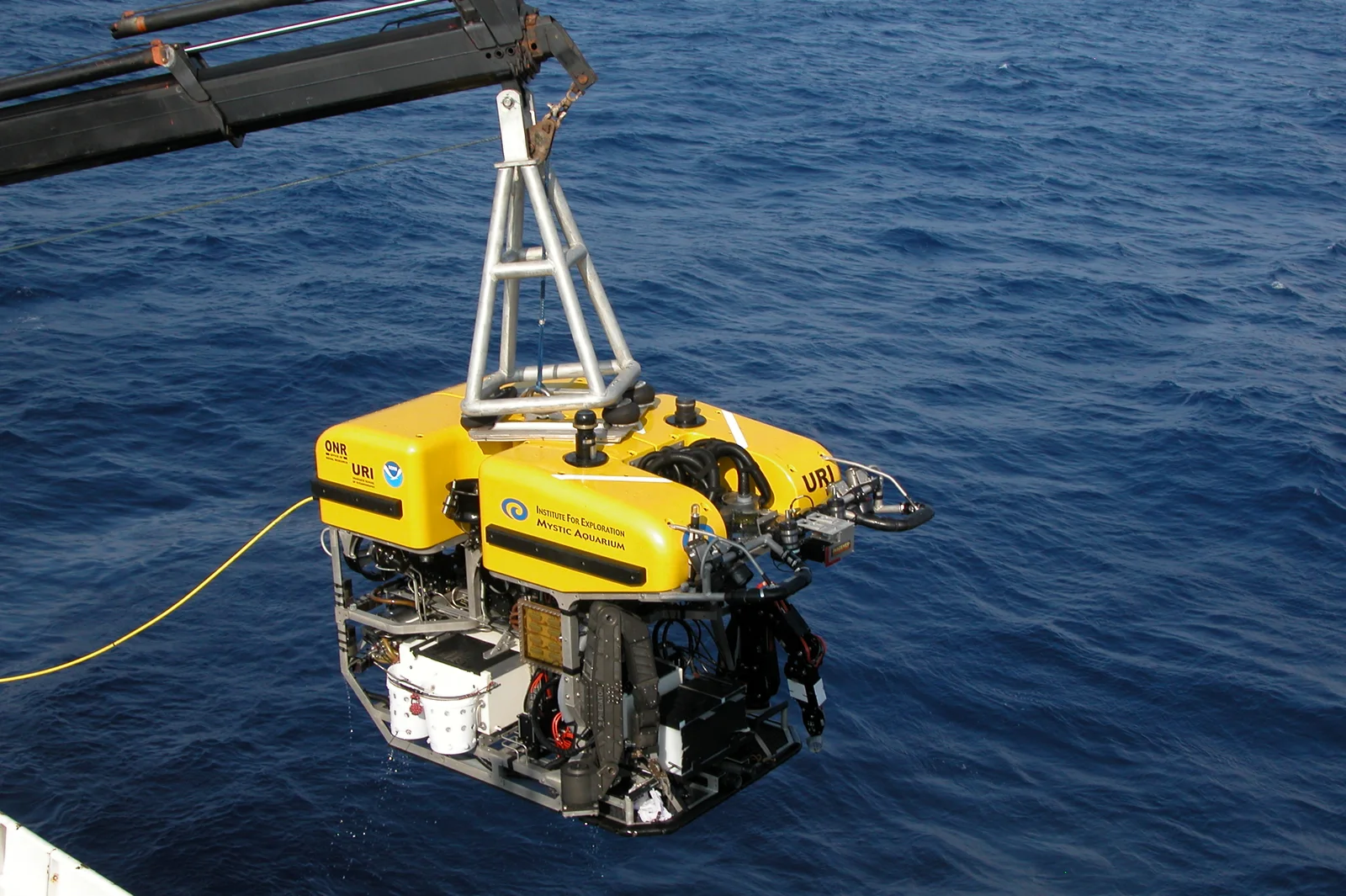
Mounted onto a deep-sea remotely operated vehicle (ROV), DISCUSS integrates three complementary subsystems. First, an AI-powered visual recognition module running custom neural networks processes high-definition video in real time, pinpointing active methane bubbling, gas hydrate mounds, and chemosynthetic microbial mats. Second, an articulated robotic manipulator equipped with a gentle micro-vortex sampling nozzle captures intact microbial aggregates without mechanical shear.
The cornerstone of the system is a mobile titanium isobaric cultivation chamber. Bacterial mats and ambient benthic fluids are drawn into the chamber directly on the seabed and sealed at ambient hydrostatic pressure. An automated hydraulic pressure-compensating loop maintains 13 MPa throughout the ascent to the surface research vessel and subsequent transport to land-based laboratories. For insights into how complex microbial ecosystems and metabolic pathways demand precision sensor monitoring, explore our physiological analyses.
«The decompression barrier has frustrated deep-sea microbiologists for over a century. When obligate piezophiles are hauled to the surface without native pressure, their cell membranes rupture. The DISCUSS system is our first true isobaric bridge into the living deep ocean.»
Yuanyuan Wang (Yuanyuan Wang), lead development engineer, Sun Yat-sen University
The Haima Cold Seep Mission: 180 Days of Continuous Cultivation
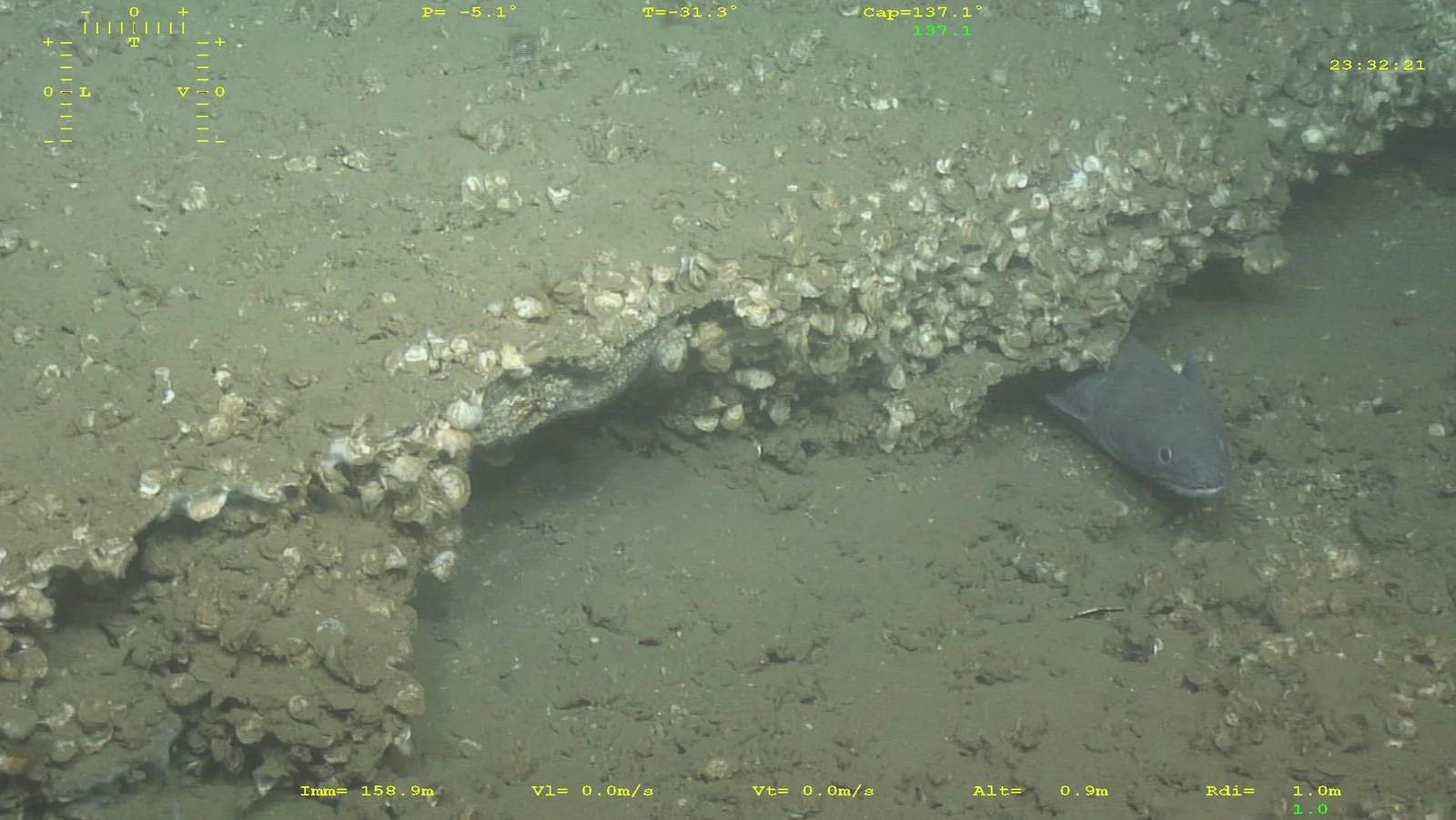
The system was deployed at the Haima cold seep, located at a depth of roughly 1,300 meters in the northern South China Sea. Cold seeps represent profound benthic oases where hydrocarbon-rich fluids seep through sediment fissures, sustaining thriving chemosynthetic biomes entirely independent of solar energy.
The DISCUSS robot identified an active methane vent, smoothly collected dense microbial mats, and sealed them into the isobaric chamber at an in-situ pressure of 13.1 MPa and a temperature of 3.8°C. In the land-based facility, the chamber was coupled to an automated high-pressure microfluidic perfusion system that delivered continuous infusions of dissolved methane, sulfates, and trace nutrients.
The outcome established a historic scientific milestone: the complex, multi-species microbial community not only survived but demonstrated continuous cell division, active methane oxidation, and metabolic stability for 180 days. This shattered all previous records, where delicate piezophilic consortia degraded within two weeks.
Maintained continuous native 13 MPa hydrostatic pressure from ocean floor to land laboratory.
Neural network computer vision identified benthic microbial mats and guided gentle robotic sampling.
Deep-sea piezophilic consortia demonstrated active metabolism and cellular division for six full months.
Recovered living strains of previously unculturable microbes yielding novel extremozymes and antibiotics.
34 Novel Isolates and the Promise of Extremozymes
Over six months of continuous cultivation, researchers isolated and cultured 34 distinct microbial strains previously considered unculturable. The isolates include highly adaptable strains of Pseudomonas songnenensis, spore-forming Bacillus species (including hydrocarbon-degrading Bacillus cereus variants), anaerobic methanotrophic archaea (ANME), and sulfate-reducing bacteria (SRB).
Biochemical profiling of these living strains revealed an extraordinary repertoire of extremozymes — catalytic enzymes optimized to function under extreme cold and immense hydrostatic pressure. These extremozymes represent invaluable assets for industrial biotechnology: they enable cold-temperature enzymatic fermentation in food processing, high-fidelity stereoselective synthesis in pharmaceuticals, and bioremediation of crude oil spills in arctic marine environments.
Furthermore, because abyssal microbes compete intensely for sparse resources in benthic sediments, they deploy potent secondary metabolites to ward off rival colonies. Genomic screening uncovered novel biosynthetic gene clusters coding for specialized peptide antibiotics and antitumor compounds that circumvent conventional antimicrobial resistance mechanisms.
- Definitive engineering solution to the historic decompression barrier in marine microbiology.
- Empirical laboratory simulation of deep-sea carbon and methane geochemical cycles.
- Direct access to unculturable extreme genomes for novel pharmaceuticals and industrial enzymes.
- Robotic prototype architecture for future astrobiological exploration of icy ocean moons.
Global Climate Buffers and the Search for Extraterrestrial Life
The groundbreaking results published in Nature Sensors (Wang et al., 2026) propel biological oceanography into an experimental era.
Benthic methanotrophic communities serve as Earth’s vital atmospheric shield, consuming up to 80% to 90% of methane migrating from oceanic hydrate deposits before it reaches the surface. Maintaining living deep-sea communities in laboratories enables scientists to empirically measure how warming ocean temperatures will impact benthic carbon sequestration.
Moreover, the DISCUSS platform establishes an engineering foundation for planetary exploration. Robotic systems capable of autonomous isobaric sampling and in-situ cultivation will be essential for future space missions exploring the ice-covered oceans of Jupiter’s moon Europa and Saturn’s moon Enceladus, where chemosynthetic life — if present — thrives under identical conditions of high hydrostatic pressure and chemosynthesis.