

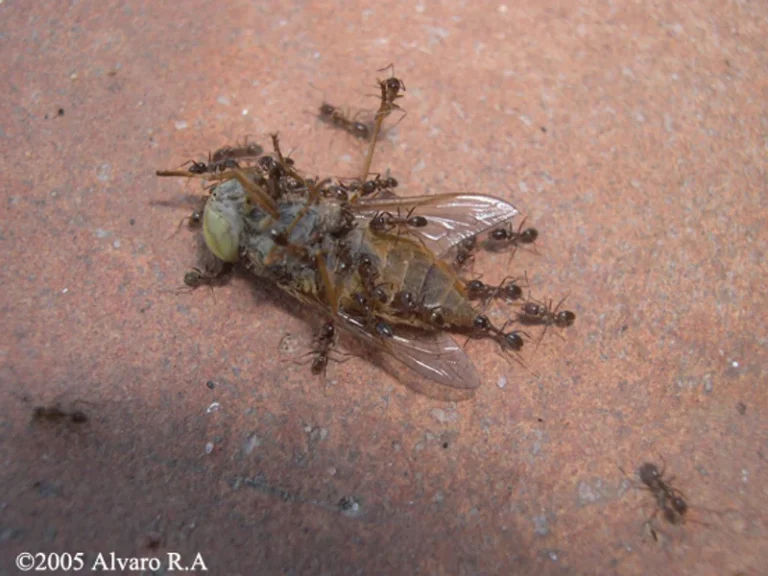

Beneath the arid, chaparral hillsides of Southern California, bordering the tranquil waters of Lake Hodges in northern San Diego County, unfolds the deadliest and most prolonged terrestrial conflict on Earth. The Argentine ant supercolonies war has raged incessantly for over a century, consuming tens of millions of combatants annually along static, trench-like perimeter boundaries. The invasive species Linepithema humile, inadvertently introduced to North American ports via South American coffee and sugar shipments in the late nineteenth century, synthesized gargantuan coast-spanning megacolonies. Yet genetic bottlenecking and subtle evolutionary divergences in cuticular hydrocarbon recognition profiles have splintered this invasive monolith into hostile, rival supercolonies engaged in catastrophic territorial warfare across California’s suburban frontier.
The Genesis of Supercolonies: An Evolutionary Paradox of California Invasion
In its native floodplains along the Paraná River basin of northern Argentina, the Argentine ant (Linepithema humile) behaves as an entirely typical component of a competitive subtropical community. Across its indigenous range, distinct nests remain fiercely divided into localized, territorial outposts whose dominion rarely extends beyond a radius of a few meters. Constant, violent border skirmishes combined with high genetic heterozygosity preserve an ecological equilibrium, preventing any individual lineage from monopolizing the landscape. However, during the closing decades of the nineteenth century, unroasted coffee cargo and maritime agricultural shipments conveyed these inconspicuous, two-millimeter brown insects across the equator into the bustling coastal ports of California.
Upon establishing founder footholds in the American West, Linepithema humile traversed a classic evolutionary genetic bottleneck. A drastically limited cohort of reproductive queens founded the entire Californian diaspora. Inbreeding and rapid allele purging stripped the introduced lineage of the high polymorphic diversity typically governing nestmate recognition genes. Whereas in Argentina two workers from neighboring trees detect minuscule differences in colony scents and attack with lethal vigor, the introduced Californian ants suddenly possessed virtually indistinguishable chemical signatures from one end of the state to the other.
This catastrophic loss of discriminatory genetic markers triggered an unprecedented behavioral transformation: intraspecific territoriality vanished entirely. Rather than squandering reproductive energy and metabolic calories warring against adjacent nests, trillions of ants consolidated into a unified biological empire. They formed the so-called “Very Large Colony” (VLC), a contiguous supercolony stretching more than 900 kilometers from the Mexican border through Los Angeles to the San Francisco Bay Area. In this distributed superorganism, a worker transported from a suburban garden in San Diego to an orchard in Sacramento is immediately welcomed into local nests, freely sharing retrieved nutrients and tending communal brood.
Myrmecologists and systems ecologists frequently liken such vast, cooperative biological networks to the subterranean mycelial fungal webs that integrate forest landscapes. Deep insights into these sprawling living entities can be explored through research into collective self-organizing biological networks and population ecology, demonstrating how the elimination of internal friction enables colonial organisms to channel immense energy reserves toward ecological domination.
Chemical Warfare Protocols: Cuticular Hydrocarbons and the Molecular Friend-or-Foe Code
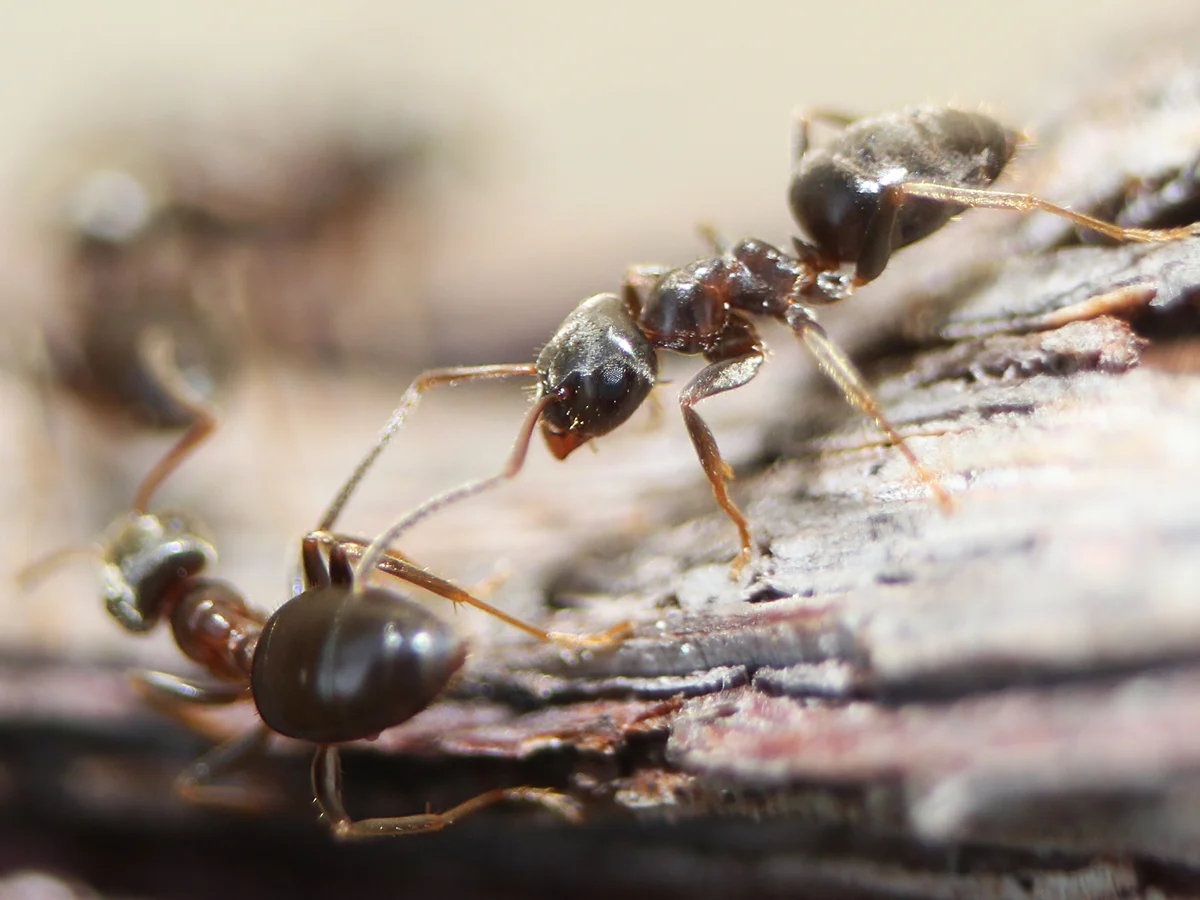
Within the lightless labyrinth of subterranean burrows and rotting detritus, chemical olfaction serves as the sole arbiter of identity, hierarchy, and existential survival. The exterior cuticle of every ant is enveloped in a microscopic, multi-component wax layer comprised of cuticular hydrocarbons (CHCs). While this lipid coating evolved primarily as a physiological barrier against desiccation under the searing arid sun of California, it concurrently functions as an indelible chemical identity card encoding species, caste status, and colonial membership.
Evolutionary biologist Dr. Neil Tsutsui at UC Berkeley has spearheaded decades of analytical research deciphering the chemical ecology of Argentine ants. His laboratory revealed that this CHC cocktail is dominated by complex branched alkanes, alkenes, and methylalkanes of specific molecular weights. When two worker ants encounter each other in the brush, they perform a rapid, ritualized antennal tapping known as antennation, sampling the precise stoichiometric ratios of hydrocarbons coating the other’s exoskeleton. If the sensory chemoreceptors on their antennal flagella register an exact match with their hardwired internal neural template, the encounter proceeds amicably with trophallaxis.
Conversely, should those chemoreceptors detect a fractional deviation in hydrocarbon chain proportions, neural circuitry instantly triggers an explosive, unrelenting aggression cascade. Argentine ants recognize no compromise: an individual bearing an alien hydrocarbon signature cannot be taken prisoner or driven off. The foreign chemical signature releases high concentrations of volatile alarm pheromones—primarily ketones and formic secretions—mobilizing dozens of nearby nestmates into an immediate feeding frenzy of destruction.
This hyper-rigid reliance on cuticular hydrocarbon barcodes is precisely what fractured California’s ant empire. Subsequent isolated introductions and subtle localized genetic drift created distinct enclave populations whose hydrocarbon signatures deviated from the dominant Very Large Colony. Trapped in a biological paradox of their own sensory architecture, these divergent colonies became locked in perpetual, instinctual hatred along invisible territorial fault lines.
Introduced populations lost critical allele diversity in recognition loci, compelling trillions of unrelated ants to perceive each other as friendly nestmates.
Nestmate recognition depends on an external waxy lipid layer (CHCs). A fractional shift in alkane ratios flips colonial behavior from cooperation to lethal aggression.
Along stationary combat boundaries around Lake Hodges and Escondido, ecologists record 15 to 30 million fatalities every six months across modest sectors.
Invasive supercolonies eliminate up to 90% of native ant species, disrupting seed dispersal and starving specialized coastal horned lizards toward extinction.
The Lake Hodges Trenches: Geography of a Millions-Strong Suburban War Zone
The most intense and rigorously documented zone of this subterranean warfare occurs in northern San Diego County, across the riparian scrub surrounding Lake Hodges and the foothills of Escondido. Here, the western expanse of the Very Large Colony collides violently with the eastern perimeter of the independent Lake Hodges supercolony. Encompassing dozens of square kilometers, the Lake Hodges colony maintains a unique genetic and cuticular hydrocarbon profile that its massive neighbor instinctively perceives as an existential threat.
Dr. David Holway of UC San Diego, alongside Australian behavioral ecologist Dr. Melissa Thomas, conducted comprehensive ecological surveys to quantify the human-invisible carnage of this frontline. Installing continuous pitfall traps, perimeter markers, and micro-video monitors, the research team recorded that over a single six-month monitoring period, at least 15 million worker ants were slain along a localized, several-hundred-meter sector of the border. Across the entire multi-kilometer contact boundary, annual casualties comfortably exceed 30 to 50 million combatants—figures dwarfing the deadliest military battles in human history.
The spatial architecture of this insect war mirrors the brutal attrition of World War I trench combat. Between the opposing forces lies a narrow no-man’s-land varying from twenty centimeters to a meter in width. On either side, both supercolonies construct high-density subterranean fortress zones housing thousands of fertile queens and millions of workers. From these forward redoubts, continuous columns of fresh reinforcements stream toward the perimeter along heavily reinforced pheromone corridors, operating with the terrifying mechanical indifference of an industrial assembly line.
At the point of contact, absolute pandemonium reigns. Because Argentine ant workers are monomorphic and lack dedicated soldier castes with enlarged crushing mandibles, victory is secured purely through swarming numbers and collective grappling. The primary combat tactic is limb pin-down: four or five ants from one colony seize the legs and antennae of an adversary, pulling in opposing directions to immobilize the victim while an allied worker severs the opponent’s petiole or sprays concentrated venom into the joint membranes. The soil along the Lake Hodges front line is perpetually carpeted in dismembered antennae, severed heads, and writhing chitinous fragments.
«What is occurring along the subterranean borders in Southern California is the purest ecological equivalent of Western Front trench warfare during World War I. Millions of worker ants march to their deaths along fixed chemical highways with mechanical precision. The combat zone is barely a meter wide and has not budged significantly for decades, yet the cost of this perpetual stalemate is millions of dismembered corpses every month.»
Dr. David Holway, Professor of Ecology and Evolutionary Biology at UC San Diego
Ecological Devastation: How Invasive Mega-Wars Decimate Native Biodiversity
While Linepithema humile supercolonies expend millions of lives in their relentless civil wars, the collateral damage inflicted upon native Californian biodiversity is catastrophic. The ecological packing density of Argentine ants in suburban and agricultural corridors exceeds that of native ant assemblages by orders of magnitude. This overwhelming numerical dominance results in total resource monopolization; Argentine ants aggressively eradicate up to 90% of native ant populations, including crucial seed-harvesting species of the genus Pogonomyrmex.
The obliteration of native myrmecofauna triggers severe trophic cascades across higher terrestrial taxa. A premier victim of this collapse is the coast horned lizard (Phrynosoma blainvillii), a reptile uniquely adapted to preying upon large, solitary native harvester ants while resisting their stings. Tiny, aggressive Argentine ants cannot provide the caloric nourishment required for lizard sustenance, yet swarms of Argentine workers actively invade the lizards’ sand nests, stinging vulnerable hatchlings and consuming embryonic tissue around their eyes and nares.
Furthermore, Argentine ants inflict tens of millions of dollars in agricultural damage throughout California’s citrus groves and vineyards by functioning as aggressive homopteran ranchers. They establish obligate mutualisms with commercial plant pests, including aphids, mealybugs, and scale insects. Worker ants vigorously protect these phloem-sucking parasites from natural predators such as ladybird beetles and lacewings, actively transporting pest nymphs to fresh plant shoots in exchange for carbohydrate-rich honeydew secretions, thereby triggering devastating agricultural sooty mold outbreaks.
The floral architecture of California’s iconic chaparral is similarly degraded by this unending invasion. Native harvester ants play a vital myrmecochorous role, collecting and burying large seeds beneath the soil where they are insulated from destructive wildfires. Argentine ants, by contrast, strip the lipid-rich elaiosomes from seeds right on the soil surface, abandoning the exposed embryo to rodents and desiccation, severely impairing the natural regeneration of native chaparral flora.
- The Argentine ant (Linepithema humile) is native to the Paraná River floodplain in South America, where intense intraspecific competition regulates nest territories.
- Upon invading California, worker loss of aggression yielded the “Very Large Colony” (VLC), an uninterrupted cooperative megacolony spanning over 900 kilometers.
- Southern California hosts at least four isolated rival supercolonies, including the fiercely territorial Lake Hodges and Sweetwater populations.
- Annual casualty counts along California’s subterranean ant front lines far exceed the combatant deaths of any documented human military engagement in history.
Evolutionary Endgame: Why Supercolonies Are Destined for Internal Collapse
From the standpoint of evolutionary genetics, the boundless expansion of unicolonial ant supercolonies constitutes a profound evolutionary dead end. W.D. Hamilton’s classical theory of kin selection dictates that the extreme altruism of sterile insect workers is evolutionarily viable only when workers raise individuals sharing a high degree of genetic relatedness. When an insect worker sacrifices her life defending a nest, she indirectly preserves her own genetic heritage through the reproductive success of her mother queen and fertile siblings.
Within the sprawling expanse of California’s Very Large Colony, however, tens of thousands of distantly related queens are dispersed across hundreds of interconnected nests. Consequently, the coefficient of relatedness between an individual worker and the random brood she tends approaches absolute zero. Under such conditions, kin selection dissolves. Evolutionary models predict the inevitable invasion of selfish lineages—mutant queen lines that cease investing energy into producing costly worker cohorts, redirecting all resources into churning out non-working reproductive alates. Over evolutionary timescales, this internal genetic parasitism undermines the structural integrity of the megacolony.
An equally existential vulnerability stems from the supercolony’s extreme genomic homogeneity. A biological superorganism spanning hundreds of miles with negligible genetic variation represents a monolithic target for specialized infectious pathogens. The emergence of a virulent entomopathogenic fungus such as Cordyceps or Metarhizium, or a lethal RNA virus capable of horizontal transmission, could trigger a catastrophic, range-wide pandemic with no natural immunological resistance barriers to halt its progress.
Entomologists and chemical ecologists are actively exploiting these evolutionary Achilles’ heels to forge innovative biocontrol strategies. Synthetic analogues of cuticular hydrocarbons can now be synthesized to disrupt nestmate recognition, intentionally sparking fratricidal civil wars within nests. The hundred-year war of California’s Argentine ants stands as an enduring ecological lesson: an empire founded on the artificial erasure of genetic diversity is bound by biological law to end in mutual slaughter and evolutionary collapse. Also read our related investigative feature on collective self-organizing biological networks and population ecology.