


Long before modern microbiology, civilizations across the globe believed excruciating dental pain was caused by a tiny creature burrowing inside the jaw—the tooth worm legend endured from ancient Mesopotamia all the way to the Enlightenment.
The Tooth Worm Legend in Mesopotamia: Cuneiform Spells Against Pain
Having a mouth full of exposed enamel structures is essential for chewing and survival, yet it comes with a fierce downside: throbbing, piercing toothaches. According to records curated by the British Museum, the earliest written version of the tooth worm legend dates back to ancient Mesopotamia, the cradle of writing.
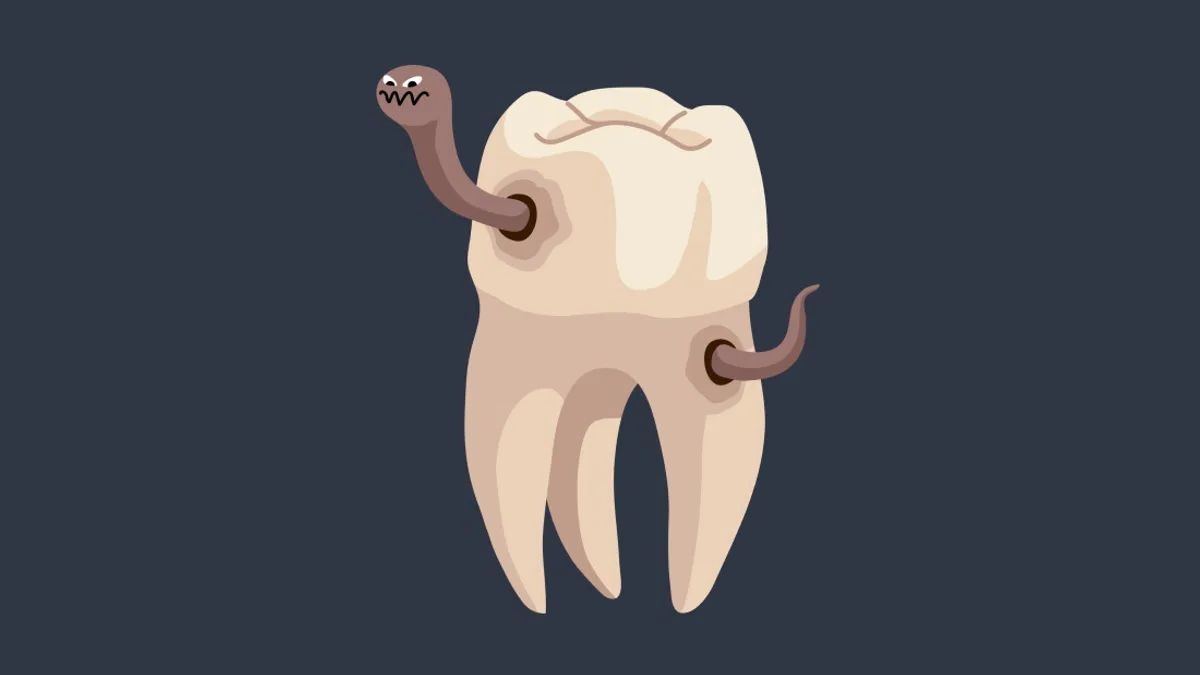
Cuneiform clay tablets describe a creature called tûltu, a worm sent by the gods to feed on food scraps and blood inside the human mouth. One Neo-Assyrian tablet excavated at Nineveh preserves an incantation appealing to the god Marduk to crush the hostile worm.
Another Babylonian cuneiform text even gives the worm a speaking role: rejecting figs and apricots, it demands to be placed between the tooth and the gum so it can drink blood and crumble the tissue.
How the Tooth Worm Myth Spread Across Medieval Europe
Belief in the tooth worm legend was far from unique to Mesopotamia. A comprehensive 1999 medical history study documented how different cultures pictured the culprit: in England it resembled a microscopic eel, while German folklore warned of red, blue, and gray zanewurms.
Early healers believed the worm emerged as a tooth decayed and died when air entered a cavity. In reality, when an infected tooth was cracked open, the softened, stringy nerve pulp inside looked remarkably like a dead worm—reinforcing the illusion for centuries.
From the Enlightenment to Modern Dentistry and Rare Parasites
During the 16th and 17th centuries, advances in microscopy and anatomy finally dismantled the tooth worm legend, revealing that oral bacteria feeding on dietary sugars produce the acids responsible for cavities.
While no worm causes tooth decay, medical literature notes one ultra-rare exception: the nematode Gongylonema, which occasionally migrates through oral soft tissues in humans. You can explore how other historical mysteries compare with modern science in our breakdown of declassified FOIA archives.
«Set me amidst the tooth and let me dwell against the gums, that I may suck the blood of the tooth and destroy the gums!»
Babylonian Cuneiform Toothache Incantation
- The earliest written tooth worm spells date back to ancient Mesopotamian clay tablets.
- Softened dental pulp inside decayed teeth looked like worm remains, keeping the myth alive.
- Microscopy in the Enlightenment proved bacteria—not worms—drive dental cavities.