

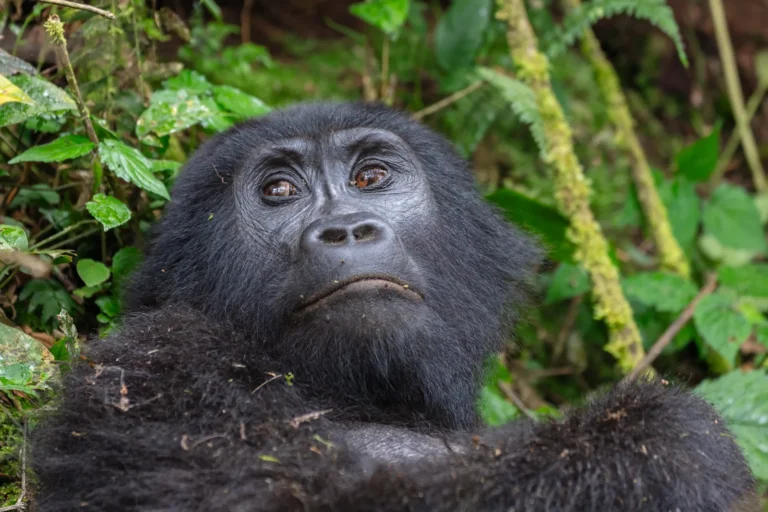

A groundbreaking primatological discovery has challenged long-standing academic dogmas surrounding great ape cognitive capabilities: observational research proves that gorillas have learnt to cooperate by spontaneously constructing coordinated “living ladders” to overcome spatial foraging barriers. Anthropologists from Tel Aviv University documented this unprecedented behavioral sequence among captive western lowland gorillas at the Ramat Gan Safari in Israel. Two adult female half-sisters, Amelia and Lisha, demonstrated a recurring collaborative strategy: the subordinate female voluntarily positions herself on all fours to serve as a stable platform, allowing the dominant female to climb onto her back and snap off inaccessible tree branches hanging over four meters above the ground.
Challenging Primatological Dogma: Why Gorilla Teamwork Surprised Science
For decades, comparative cognition researchers placed chimpanzees and bonobos at the pinnacle of non-human primate cooperative problem-solving. Ever since Wolfgang Köhler’s pioneering gestalt experiments on Tenerife in the early 20th century, chimpanzees were recognized as masters of spontaneous insight, stacking wooden crates to reach suspended bananas and fashioning complex tools from bamboo poles.
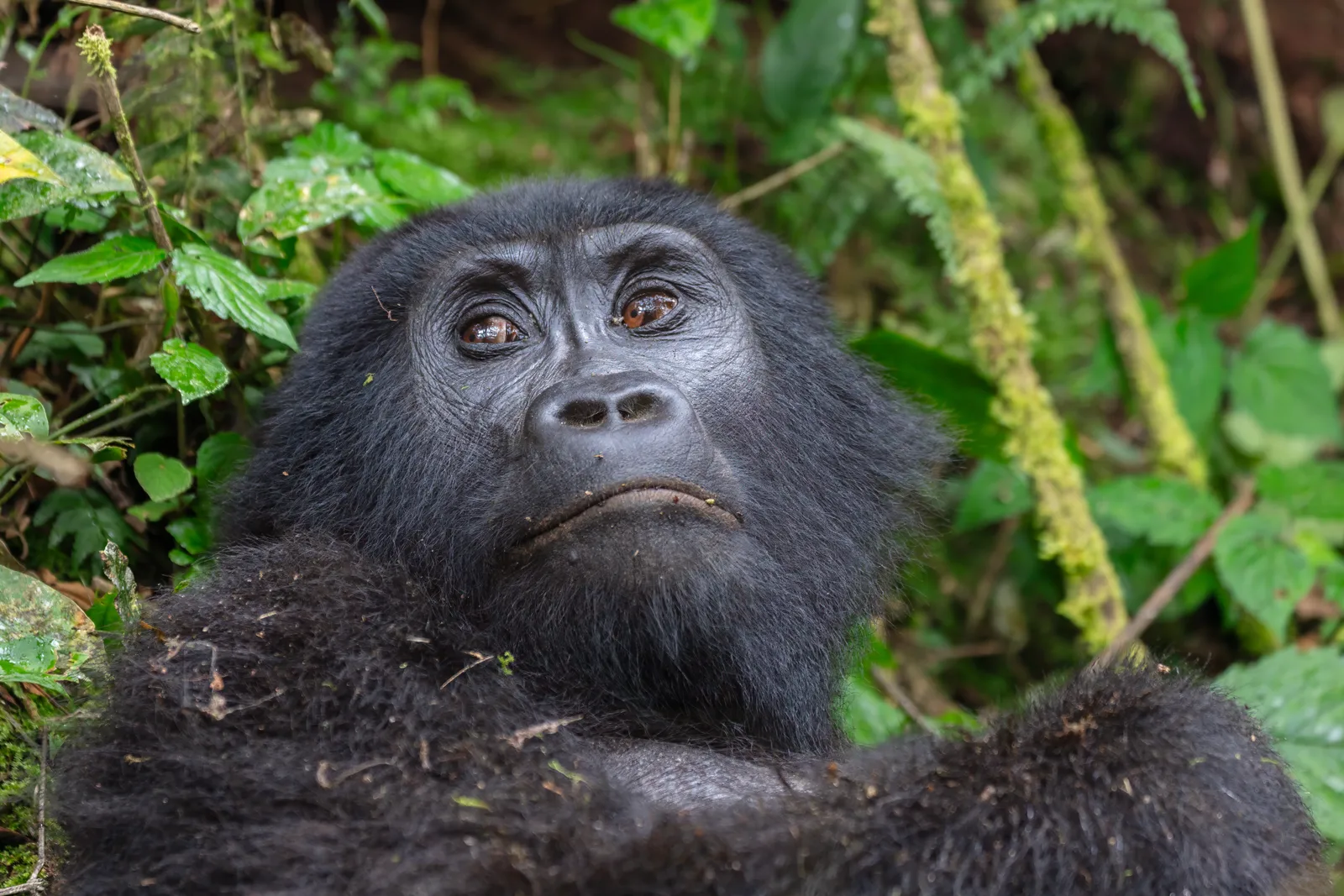
Conversely, gorillas (Gorilla gorilla gorilla) were widely characterized as less cognitively flexible in collaborative contexts, largely due to their cohesive, harem-based social structure dominated by a single silverback. Primatologists assumed that female gorillas had little evolutionary incentive to engage in cooperative problem-solving, relying instead on the silverback for defense and individual brute strength for foraging.
When faced with physical barriers preventing access to food in captive or wild settings, gorillas rarely engaged in complex dual-agent manipulations. Previously, we examined how artificial intelligence and bioacoustics decode animal communication systems, uncovering previously invisible dimensions of wildlife intelligence.
However, systematic security footage from the Ramat Gan Safari Park in Israel collected by Michael Levitzky and Professor Israel Hershkovitz from Tel Aviv University’s Gray Faculty of Medical and Health Sciences has completely rewritten this narrative. Over a multi-year timeline spanning 2021, 2024, and 2025, two adult females consistently executed a dual-body cooperative maneuver.
What makes this observation truly remarkable is its completely unprompted nature. Unlike classic laboratory paradigms where apes receive positive reinforcement to pull simultaneous ropes or pass tokens, this living ladder behavior emerged spontaneously in an enriched outdoor habitat.
The Living Ladder Mechanics: Step-by-Step Biomechanical Execution
The spatial problem arose from an architectural intervention within the gorilla enclosure. A mature Yellow Poinciana tree, prized by the gorillas for its tender foliage and nutritious bark, was protected at its base with a low-voltage electrical barrier to prevent the massive primates from debarking the trunk.
The lowest hanging edible foliage was suspended approximately 4.5 meters (15 feet) above the ground, positioned well out of reach even for an adult gorilla standing bipedally upon a nearby boulder. An adult female gorilla standing bipedally on a flat surface reaches a vertical grasp height of approximately 1.9 to 2.1 meters. Even atop the boulder, an insurmountable elevation deficit of more than one meter remained.
To bridge this spatial gap, Lisha, the younger subordinate female weighing around 80 kilograms, positioned herself on top of the boulder directly beneath the foliage and adopted a rigid quadrupedal posture with locked scapular and pelvic stabilizers.
Amelia, the older dominant half-sister, immediately stepped onto the stone, transferred her weight onto Lisha’s back, planted both feet firmly across Lisha’s lumbar region, and stretched upward to her full extension. Gaining an essential 70–80 centimeters of elevation, Amelia grasped the targeted branch, bent it downward using her body mass, and snapped it off.
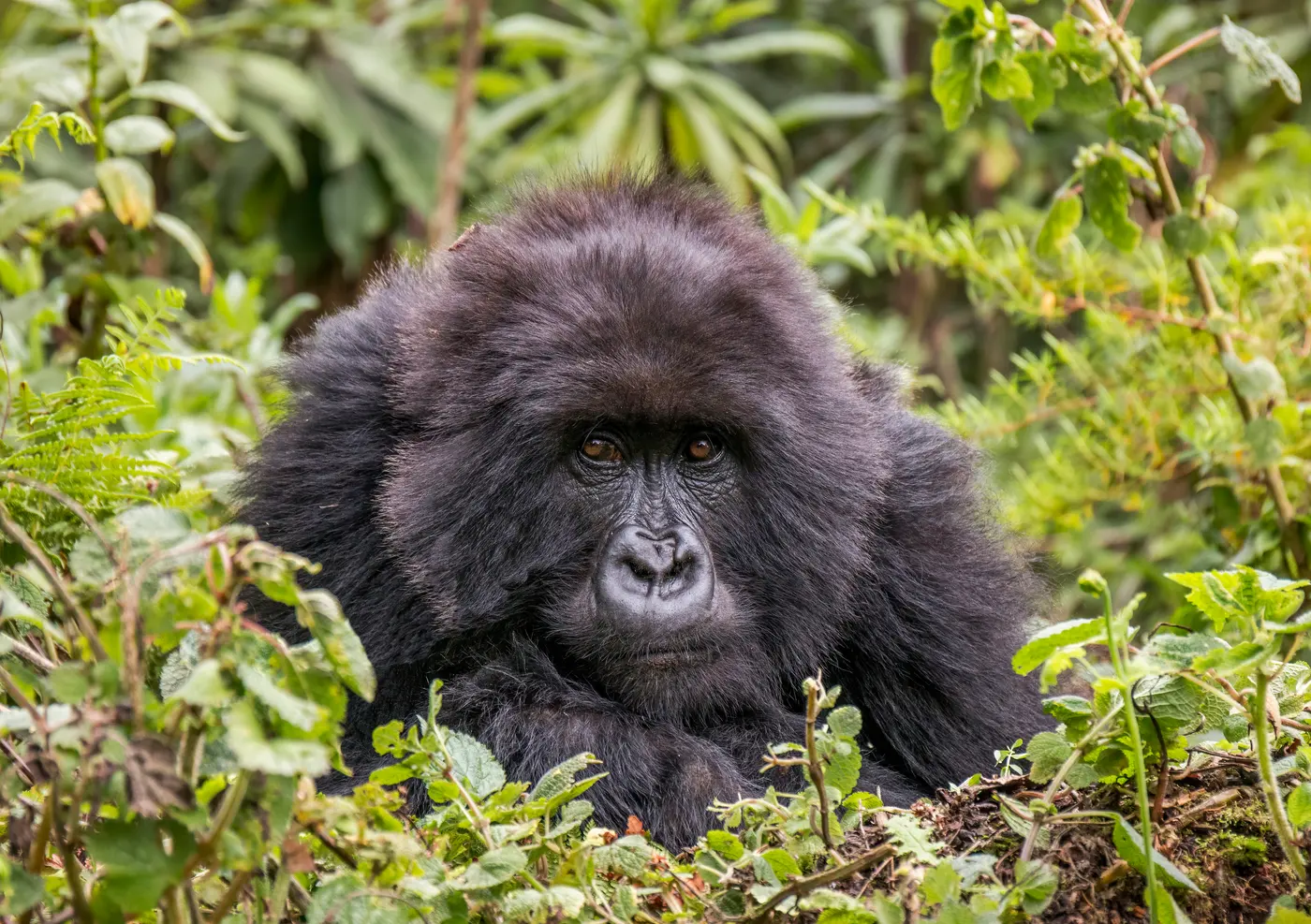
«We observed genuine spontaneous cooperation featuring complex spatial problem-solving, role differentiation, and mutual agency without any prior human conditioning.»
Michael Levitzky, Lead Researcher at the Department of Anatomy and Anthropology, Tel Aviv University
Mutual Agency vs. Tool Use: Proving Voluntary Participation
A critical scientific question addressed in the peer-reviewed journal Primates was distinguishing true cooperative teamwork from passive instrumental coercion. If Amelia had physically pushed, dragged, or intimidated Lisha into position, the behavior would merely represent animate tool use (treating a conspecific as an inanimate ladder).
Detailed video analysis from 2025 conclusively demonstrated voluntary mutual agency. In that recorded event, Lisha independently walked over to the tree, observed Amelia gazing upward, turned her back, and lowered herself into the supporting stance without any physical prompting or aggressive vocalizations from Amelia.
Neurobiologists attribute this coordinated action to advanced mirror neuron systems and the mental representation of “spatial affordances.” Lisha mentally calculated Amelia’s stature, the tree height, and her own load-bearing capacity before executing the posture.
Furthermore, social network analysis revealed an intriguing ecological dynamic: outside of these foraging episodes, Amelia and Lisha were not close social affiliates. They rarely engaged in allogrooming, spent minimal time in physical proximity, and occupied distinct social clusters within the troop. This proves that complex cooperative agency can arise as an opportunistic, pragmatic problem-solving mechanism independent of deep emotional bonding.
The targeted branches hung well beyond individual bipedal reach over an electrified tree trunk barrier.
Lisha voluntarily acted as the weight-bearing platform while Amelia climbed to dislodge the branches.
The collaborative ladder developed entirely without human training, keeper intervention, or artificial prompts.
The cooperative partnership operated successfully despite the absence of intense grooming or daily social bonds.
Resource Sharing and Evolutionary Implications for Early Hominids
The findings, published in Primates (Levitzky & Hershkovitz, 2026), also shed light on resource allocation dynamics. Following the fall of the branch, Amelia consumed the prime leaf clusters, but Lisha consistently gained access to secondary foliage, twigs, and bark.
Despite the asymmetrical distribution of the immediate food prize, Lisha actively re-engaged in the behavior across multiple years. Evolutionary biologists interpret this as a functional demonstration of reciprocal tolerance: secondary foraging returns are sufficiently valuable to justify minimal physical effort that carries negligible risk of injury.
For human evolutionary anthropology, this provides crucial comparative evidence. The coordination of multiple hominid bodies to overcome physical obstacles—whether during collective big-game foraging, predator defense, or crude shelter building—likely preceded the emergence of syntactic language or complex tool kits, rooted in ancient primate cognitive substrates.
Fossil footprints from Laetoli and anatomical reconstructions of Australopithecus afarensis indicate that our ancestors relied heavily on cooperative spatial maneuvers long before fashioning Oldowan stone cleavers. Cooperative bodily support is thus demonstrated to be an ancestral hominid trait.
- First empirical documentation of spontaneous living ladder formation in adult western lowland gorillas.
- Demonstrates sophisticated mental representation of spatial affordances and partner physical capabilities.
- Subordinate female engaged voluntarily, confirming mutual agency rather than passive instrumental exploitation.
- Provides valuable comparative models for the emergence of physical teamwork in early pre-linguistic hominids.
Primatological Conclusions: Rethinking Great Ape Intelligence
The authors urge zoological institutions and wildlife sanctuaries to re-evaluate how they assess gorilla cognitive capacity. Standardized cognitive batteries often fail to capture contextual, spontaneously generated problem-solving strategies that develop naturally within social groups.
Modern open-air safari enclosures create semi-wild conditions where animals encounter genuine environmental challenges. Continuous non-invasive camera surveillance provides high-fidelity observational data that laboratory trials frequently obscure.
The Ramat Gan living ladder stands as definitive proof that gorillas possess sophisticated understanding of spatial affordances, collaborative physical coordination, and mutual agency, demonstrating that the roots of human teamwork run deep across the hominid family tree.