

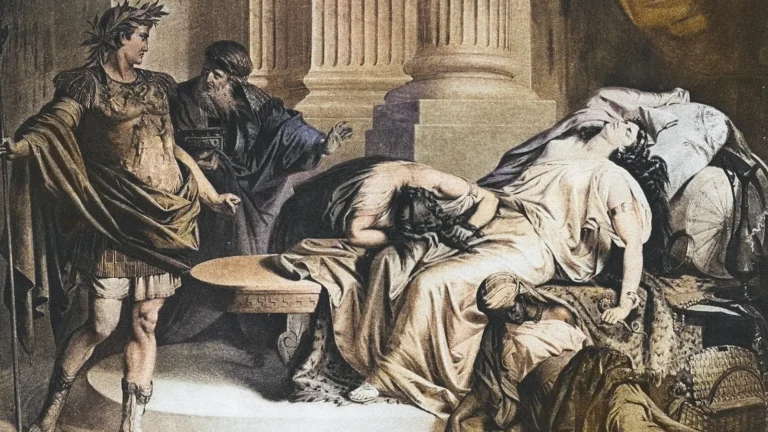

In August of 30 BCE, within an Alexandria besieged by Roman legions, occurred one of antiquity’s most defining milestones: the tragic how did cleopatra really die (Death of Cleopatra VII Philopator) — an event that ended the Ptolemaic dynasty and transformed ancient Egypt into a Roman imperial province. For two millennia, popular imagination has been gripped by the dramatic narrative recorded by Roman historians: that Egypt’s last queen took her own life by clutching a venomous asp smuggled past guards inside a basket of ripe figs. Yet modern toxicologists, herpetologists, and classical scholars have conclusively debunked this romanticized legend: Egyptian cobra venom is medically incompatible with the queen’s peaceful demise, revealing that her death was engineered through sophisticated Alexandrian pharmacology and amplified by the political propaganda of Octavian Augustus (Octavian Augustus).
The Roman Narrative: Sifting Fiction from Octavian’s Propaganda
The conventional account of Cleopatra’s suicide comes almost exclusively from Roman historical accounts written by the victors. The most influential version was penned by Greek biographer Plutarch (Plutarch) over a century after the event, drawing on lost memoirs of the queen’s personal physician Olympus (Olympus).
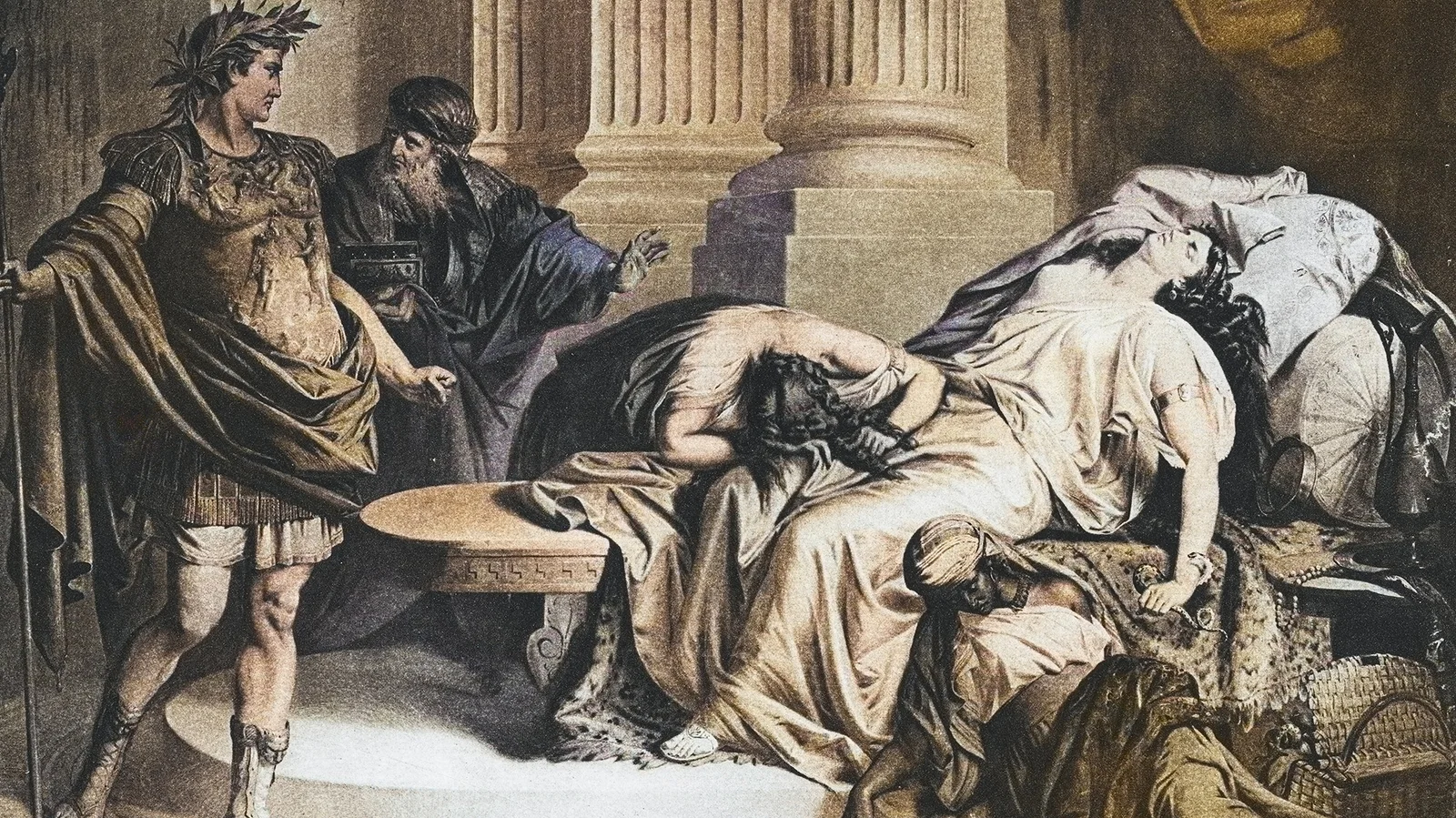
Plutarch relates that following Mark Antony’s (Mark Antony) suicide, the 39-year-old queen was kept under round-the-clock military guard in her royal mausoleum. Determined to avoid being paraded through Rome as a humiliated captive in Octavian’s victory triumph, Cleopatra allegedly received a rustic basket of figs concealing a venomous asp. She exposed her arm, prompted the strike, and expired peacefully on her golden couch alongside her loyal handmaidens Iras (Iras) and Charmion (Charmion).
Roman historian Cassius Dio noted that the sole physical clue was two faint puncture pricks on her arm, though he admitted that no serpent was ever found within the locked bedchamber. Previously, we detailed how forensic methodology and scientific analysis separate genuine historical events from state-sponsored myths.
Biological Impossibility: Why an Egyptian Cobra Could Not Kill Three Women
In the taxonomy of North Africa, the ancient term «asp» refers specifically to the Egyptian cobra (Naja haje) — a massive, aggressive elapid reaching lengths between 1.5 and 2.5 meters (5 to 8 feet). The first major obstacle to the myth is sheer size: smuggling an adult cobra past veteran Roman sentries inspecting provisions is practically inconceivable.
Furthermore, modern toxicologists emphasize that cobra venom is a potent postsynaptic neurotoxin that disrupts neuromuscular junctions. Its lethal progression is neither instantaneous nor gentle: asphyxiation from diaphragmatic paralysis takes between two and six hours, characterized by agonizing localized necrosis, severe edema, foaming at the mouth, muscle tremors, and involuntary vomiting. When Octavian’s officers breached the chamber, Cleopatra was found lying in majestic repose, completely serene without facial contortion or bodily disfigurement.
Moreover, snake physiology renders the simultaneous demise of three individuals virtually impossible. Cobras frequently deliver harmless «dry bites» when defensive, and venom reserves are heavily depleted after a single strike. Delivering three consecutive lethal doses to three adult humans is biological fantasy.
The myth of the asp has persisted precisely because it romanticized tragic love and imperial conquest, blending royal grandeur with dangerous reptilian mystery.
«Cobra venom causes excruciating respiratory paralysis, severe swelling, and violent vomiting over several hours. The fact that Cleopatra and her handmaidens died swiftly and peacefully points to a lethal pharmaceutical cocktail.»
Christoph Schäfer, Professor of Ancient History at the University of Trier and lead toxicological investigator
Alexandrian Pharmacology: The Lethal Blend of Hemlock, Aconite, and Opium
If snakebite is clinically impossible, what caused her demise? The true explanation lies in Alexandria’s status as the intellectual and scientific capital of the Hellenistic Mediterranean. The city’s famous Mouseion housed the most advanced pharmacological research institution in antiquity.
Historical accounts document that Cleopatra spent years studying pharmacology and testing lethal dosages on condemned prisoners, searching for an infallible toxic compound capable of inducing rapid, painless death without disfiguring the physical form.
A comprehensive toxicological reconstruction led by Professor Christoph Schäfer and clinical pharmacologists determined that Cleopatra ingested a precisely calibrated lethal draught. The base of this mixture was poison hemlock (Conium maculatum), which induces ascending motor paralysis, blended with aconite (Aconitum napellus, monkshood) to provoke swift cardiac arrest, and concentrated opium (Papaver somniferum) to eliminate pain, suppress emesis, and induce deep sedation. The compound could easily have been stored in a hollow golden hairpin or poison ring, both noted in ancient testimonies.
Cobra venom takes hours to kill, causing spasms and vomiting that contradict Cleopatra’s serene sleep.
Death was induced by a calculated draught of hemlock, aconite, and opium stored in a hollow hairpin.
Adult Egyptian cobras reach 1.5–2.5 meters in length, making smuggling past Roman guards impossible.
The serpent legend was manufactured to portray the queen as an exotic Eastern sorceress in Rome’s triumph.
Octavian’s Political Calculation: Why Rome Embraced the Serpent Myth
The snakebite story served Octavian’s political interests brilliantly. Cleopatra’s death relieved him of a profound dilemma: executing Caesar’s former queen publicly in Rome risked turning her into a martyr, while keeping her alive posed a constant threat of rebellion.
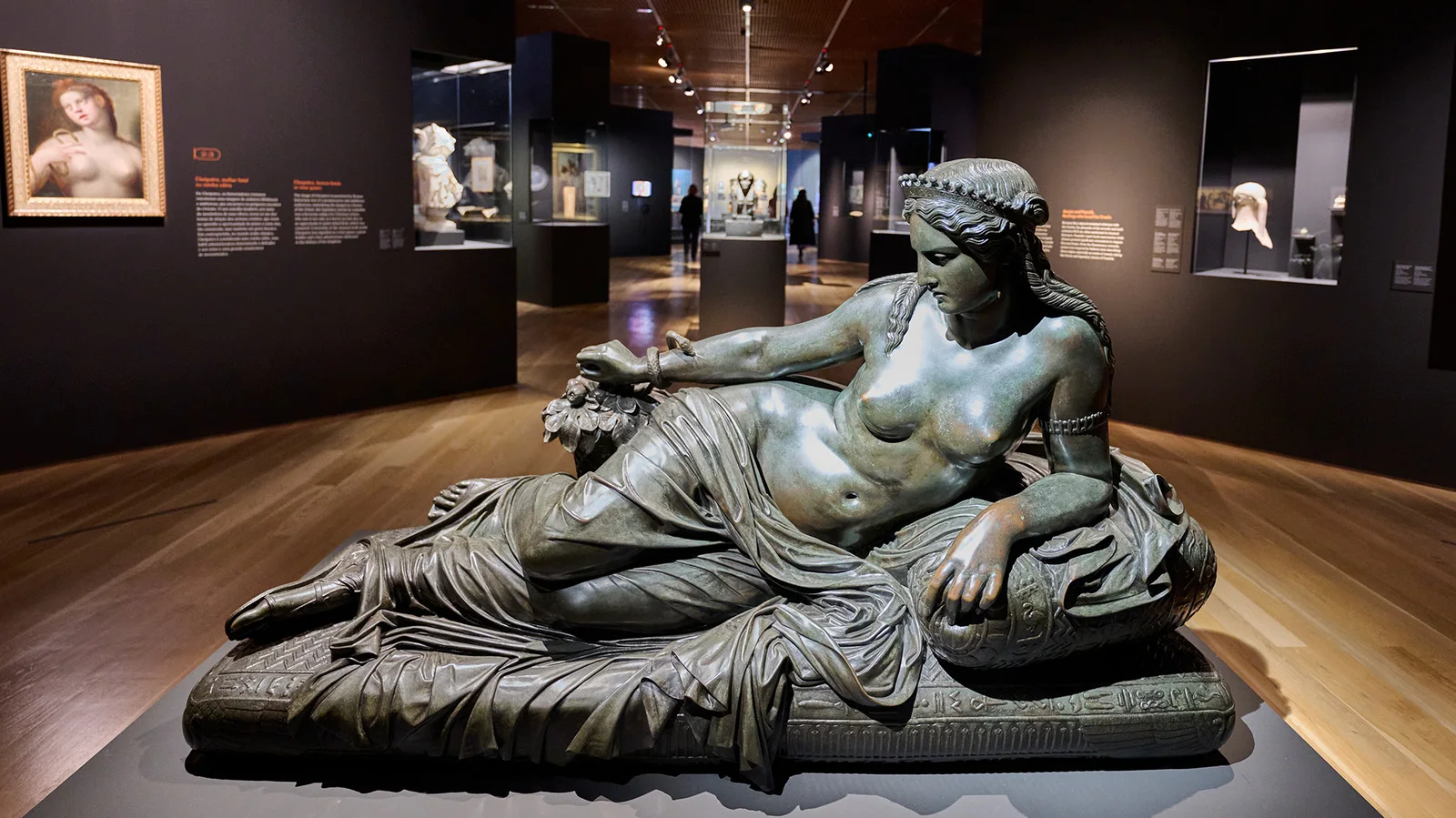
In his subsequent triumphal procession through the Roman Forum, Octavian commissioned a magnificent effigy of Cleopatra with an asp coiled around her arm. In Roman cultural ethos, self-poisoning was seen as a deceitful, cowardly act associated with foreign women, whereas an encounter with a deadly wild serpent elevated Cleopatra into an exotic oriental enchantress whose defeat validated Roman supremacy.
Simultaneously, for the Egyptian population, the uraeus cobra of goddess Wadjet represented the divine protector of sovereign pharaohs. An asp bite symbolized sacred deification and reunion with the sun god Ra. University of Glasgow historian Jane Draycott suggests Roman witnesses may also have confused real snakes with Cleopatra’s gold spiral serpent armbands.
Synthesized in the exhaustive scholarship of Prudence Jones (Cleopatra: A Sourcebook), the evidence confirms that Egypt’s last pharaoh died entirely on her own terms, outmaneuvering Rome’s imperial apparatus to the very end.
- A 6-to-8-foot Egyptian cobra could never be smuggled past vigilant Roman guards in a fruit basket.
- The clinical progression of cobra envenomation is agonizing and incompatible with serene death.
- Alexandria housed the most advanced pharmacological research institution in the ancient world.
- A lethal blend of hemlock, aconite, and opium provided rapid, painless cessation of vital functions.
The Unconquered Legacy of Egypt’s Last Pharaoh
Cleopatra VII was an exceptionally astute statesman, an accomplished polyglot fluent in nine languages, and a master naval strategist who preserved Egyptian independence for two decades amid Rome’s relentless expansion.
Her suicide was not a desperate surrender, but a calculated political masterstroke. By denying Octavian his prized living captive through pharmaceutical precision, she preserved her royal dignity and secured eternal sovereignty in world history.