



For millennia, the prospect of talking to animals belonged strictly to fairy tales of Doctor Dolittle, ancient mythologies, and ambitious science fiction. Yet the explosive convergence of machine learning, advanced bioacoustics, and autonomous underwater sensor arrays is transforming this age-old dream into a frontier of modern empirical science. Today, interdisciplinary research teams across the globe are deciphering the rhythmic codas of sperm whales, the subtle vocal nuances of songbirds, and the communication systems of domestic companions using artificial intelligence. Humanity stands on the threshold of an unprecedented milestone: moving beyond mere observation toward meaningful interspecies dialogue.
How Talking to Animals Works: The Bioacoustic Revolution Powered by AI
Human language has long been celebrated as an evolutionary anomaly—an extraordinary cognitive system defined by combinatorial syntax, hierarchical recursion, and symbolic abstraction. Non-human vocalizations, by contrast, were frequently relegated to instinctual, rigid emotional reflexes. Yet decades of meticulous ethological fieldwork have dismantled this simplistic assumption, revealing that animals navigate intricate communicative landscapes brimming with contextual subtlety.

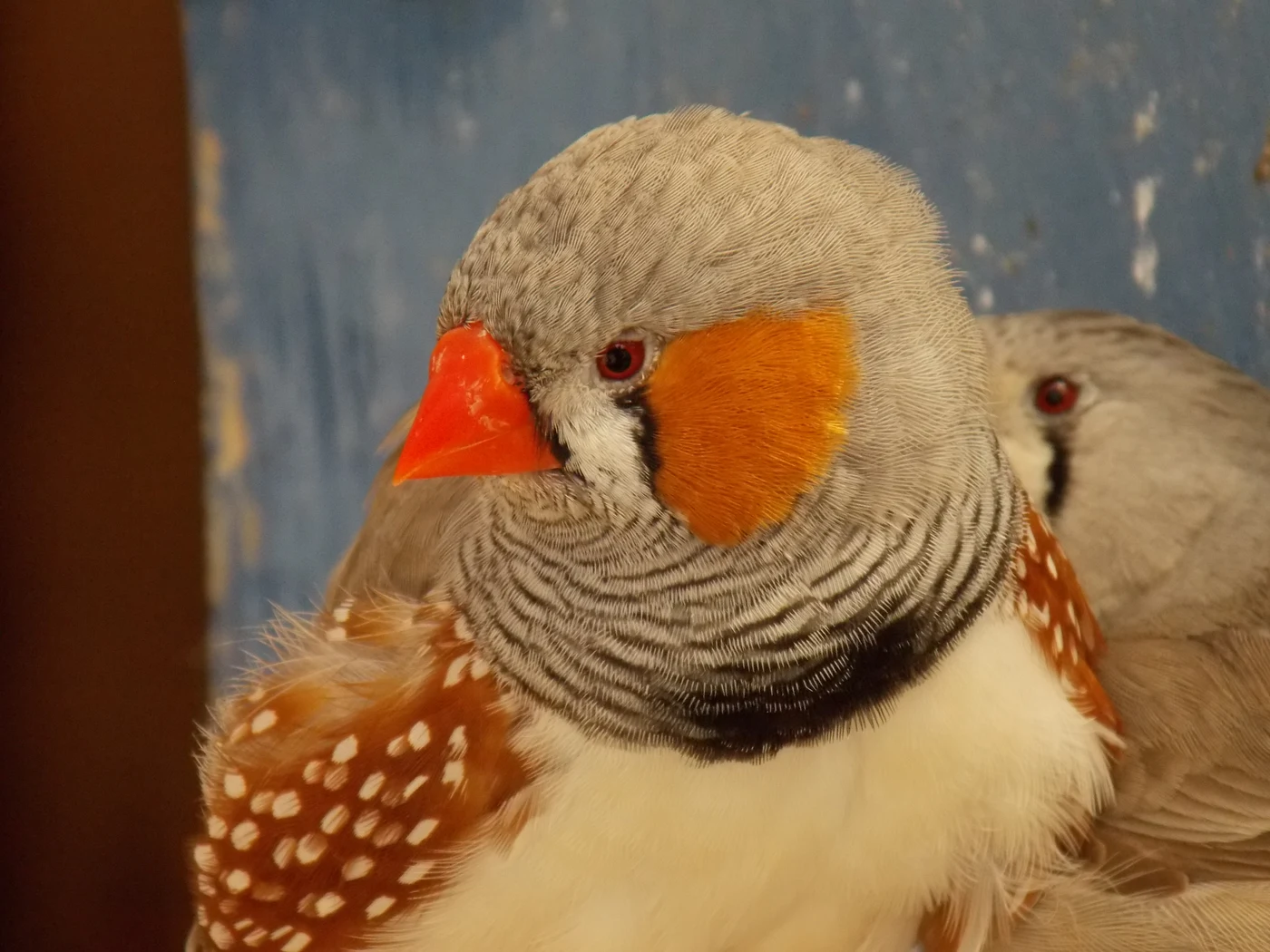
The fundamental barrier has always been human perceptual bandwidth. The human ear and analytical mind cannot readily process acoustic micro-intervals spanning fractions of a millisecond, rapid ultrasonic frequency modulations, or polyphonic vocal dynamics. The advent of deep neural networks and natural language processing (NLP) architectures has fundamentally rewritten these rules. At the University of California, Berkeley, ethologist Julie Elie spearheaded breakthrough research investigating the vocalizations of zebra finches (Taeniopygia guttata). By coupling machine learning algorithms with high-speed behavioral video analysis across tens of thousands of bird calls, Elie demonstrated that finches utilize structurally distinct acoustic profiles for intimate, short-range nest communication versus high-amplitude long-distance contact calls. Previously, we examined how young chimpanzees acquire complex vocal gestures from older mentors, highlighting the profound evolutionary ancestry of learned communicative traditions.
Rather than imposing human linguistic categories upon non-human signals, modern transformer models map bioacoustic recordings into high-dimensional vector embeddings. These systems detect statistical regularities, semantic clusters, and phonological variations entirely unsupervised, laying the technical foundation for the world’s first generalized digital interspecies translator.
Project CETI: The Phonetic Alphabet and Secret Codes of Ocean Sperm Whales
The vanguard of modern interspecies translation is Project CETI (Cetacean Translation Initiative), a global scientific endeavor co-founded by marine biologist David Gruber alongside computer scientist Shafi Goldwasser, roboticist Robert Wood, and machine learning pioneer Michael Bronstein. Project CETI aims to decode the communication of sperm whales (Physeter macrocephalus)—creatures possessing the largest brains in the animal kingdom, who coordinate complex oceanic lives through rhythmic click patterns known as ‘codas.’
Deploying an array of high-precision underwater hydrophones off the Caribbean island of Dominica, the team amassed millions of acoustic pulses. In a landmark study published in the prestigious journal Nature Communications led by Pratyusha Sharma, researchers revealed that sperm whale codas constitute a sophisticated combinatorial system strikingly analogous to human phonetics.
The algorithms demonstrated that codas vary across four distinct, independent structural dimensions: basic rhythm, overall tempo, ‘rubato’ (delicate, continuous variations in phrase duration borrowed from musical notation), and ornamental click inflections. Much like human phonemes assemble into words and sentences, sperm whales combine these four dimensions to convey identity, clan affiliation, and cooperative tactical coordination across miles of deep ocean darkness.
«Sperm whale communication is a multi-dimensional combinatorial system where rhythm, tempo, and ornamentation carry independent informational content. Machine learning allows us to unpack this oceanic language from the ground up.»
Pratyusha Sharma, MIT computer science researcher and lead author with Project CETI
A 20-Minute Conversation with Twain the Humpback Whale: Rehearsal for Extraterrestrial Contact
While Project CETI listens passively to deep-sea echolocation, another historic breakthrough occurred in the waters of Frederick Sound, Alaska. A multidisciplinary research team from the SETI Institute (Search for Extraterrestrial Intelligence), UC Davis, and the Alaska Whale Foundation—led by Brenda McCowan, Laurance Doyle, and Fred Sharpe—conducted what is widely considered the first interactive acoustic exchange between humans and a wild humpback whale (Megaptera novaeangliae).
Broadcasting a recorded humpback ‘contact call’ into the ocean depths, the scientists were greeted by a 38-year-old female whale named Twain. Approaching their research vessel, Twain circled the boat and engaged in a continuous 20-minute acoustic dialogue. When researchers varied the intervals between broadcast signals, Twain matched the timing of her replies, mirroring the cadence in an interactive, turn-taking conversational rhythm characteristic of human communication.
For SETI scientists, this encounter represents an invaluable real-world testbed for the search for extraterrestrial intelligence. If humanity cannot comprehend or converse with sophisticated non-human minds nurtured on our own planet, our prospects of recognizing or decoding a transmission from an alien civilization remain bleak. Just as cutting-edge deep neural architectures reconstruct visual images from brain activity, bioacoustic decoders bridge the cognitive gap between human and cetacean intelligence.
AI models map raw bioacoustic waveforms into high-dimensional geometric spaces without human linguistic preconceptions.
Sperm whale codas feature rubato, rhythm, and tempo modulations, forming a rich combinatorial phonetic alphabet in the deep ocean.
The 20-minute exchange with humpback whale Twain demonstrated real-time behavioral synchronization and conversational etiquette.
True translation requires respecting each species’ unique sensory worldview—from acoustic echolocation to geomagnetic navigation.
Domestic Pets, Soundboards, and the Biosemiotic Boundary of the Umwelt
Fascinating communication breakthroughs are also unfolding much closer to home. Domestic cats, for instance, have undergone thousands of years of convergent vocal evolution specifically tailored to human psychology: adult wild felids seldom meow at one another. Companion cats modulate their meows to incorporate high-frequency acoustic components that mimic the cry of a human infant, instinctively triggering parental care and prompting their human caretakers to provide food or open doors.
Simultaneously, at the University of California San Diego’s Comparative Cognition Lab, cognitive scientist Federico Rossano directs the largest global study on canine and feline augmentative communication. Thousands of companion animals worldwide are utilizing multi-button soundboards that speak English words when pressed (epitomized by Bunny the sheepadoodle). Rigorous statistical analysis has confirmed that button presses are not random trial-and-error behaviors: animals deliberately string words together into multi-concept statements expressing desire, physical pain, or temporal queries.
Nevertheless, leading biosemioticians urge caution against the seductive trap of anthropomorphism. The concept of ‘Umwelt,’ formulated by pioneering biologist Jakob von Uexküll, emphasizes that every organism experiences an entirely distinct subjective sensory world. Sperm whales perceive their environment through three-dimensional acoustic sonar imaging, dogs inhabit a rich olfactory landscape of chemical gradients, and migratory birds navigate via the Earth’s geomagnetic field lines. Genuine interspecies understanding will not involve forcing animals to adopt human vocabulary, but expanding our own intellectual horizon to encompass their unique sensory reality.
- Unprecedented vocal complexity: non-human communication systems exhibit high structural order and context-dependent variability.
- Unsupervised neural pattern discovery: deep learning models identify semantic structures without anthropocentric bias.
- Conservation and bioethics: synthetic acoustic playback must be governed by strict protocols to prevent ecological distress.
- A blueprint for extraterrestrial contact: deciphering terrestrial intelligence is an essential precursor to interstellar communication.