

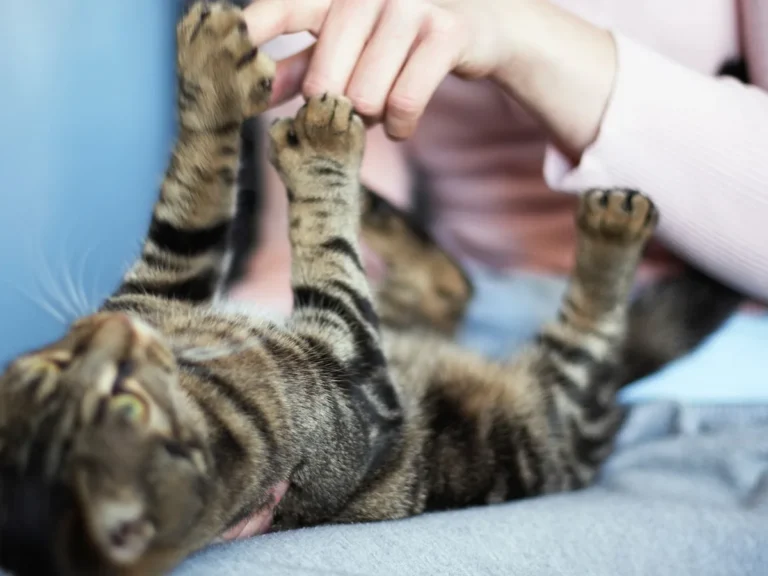

For cat guardians across the globe, few sights are more alluring yet perilous than a purring feline rolling onto its back across the living room rug, revealing a soft, fluffy underbelly. Yet the moment a human hand descends for an affectionate caress, the peaceful companion frequently morphs into a whirlwind of sharp claws and bared teeth. Within veterinary science and animal ethology, this dramatic shift is well understood: the reason cats hate belly rubs and fiercely resist handling of their feet or tail has nothing to do with moodiness or malice, but stems directly from hardwired evolutionary survival mechanisms and complex sensory neurobiology.
The Illusion of Consent: Why Rolling on the Back Is Not an Invitation for Belly Rubs
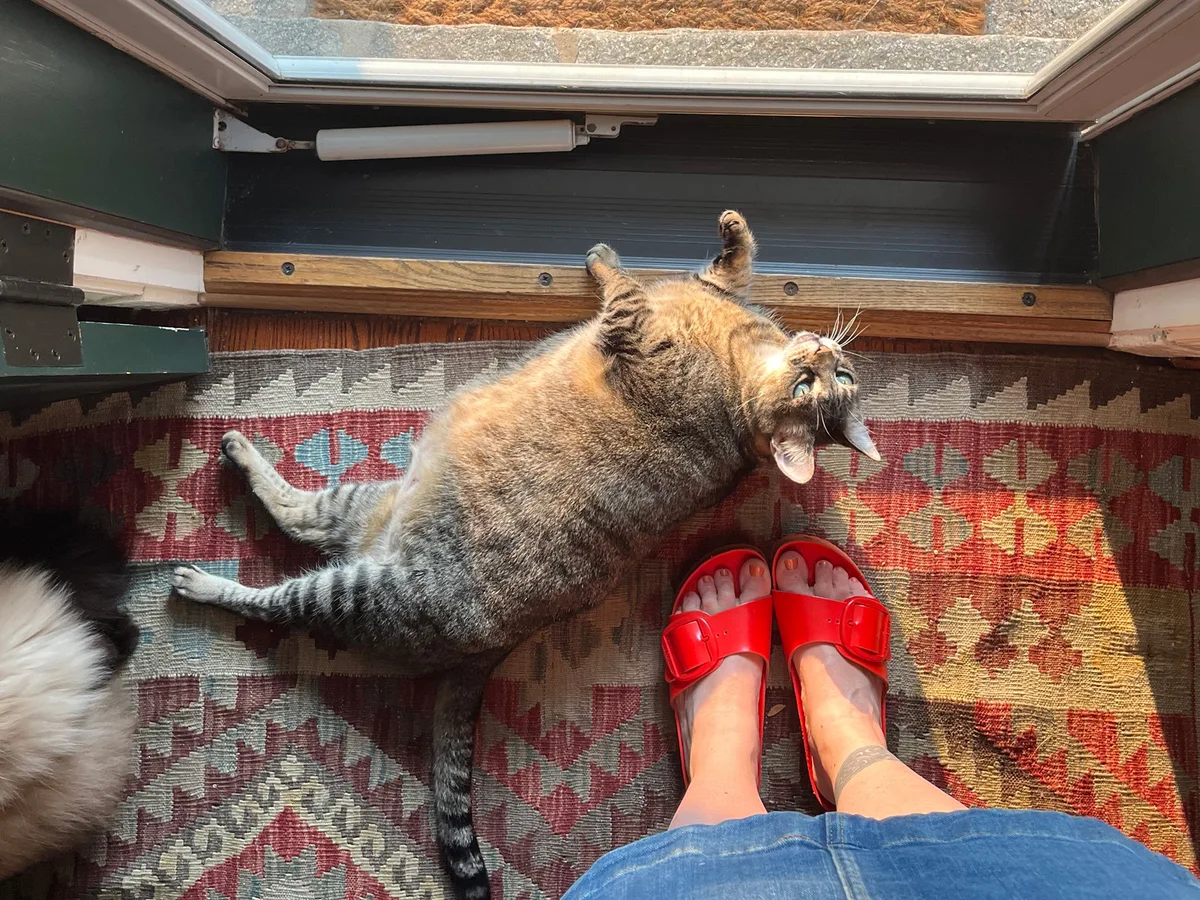
Human companions frequently project canine social behaviors onto their feline pets. In dogs, rolling onto the back and displaying an exposed belly is a quintessential sign of deference, submission, and an explicit request for gentle grooming. Felines, however, evolved along an entirely different evolutionary trajectory. Descended from the solitary North African wildcat (Felis lybica), domestic cats did not develop pack-based dominance hierarchies. When a cat rolls onto its back in a comfortable home environment, it is not asking for physical affection; rather, it is communicating absolute security and tranquility.
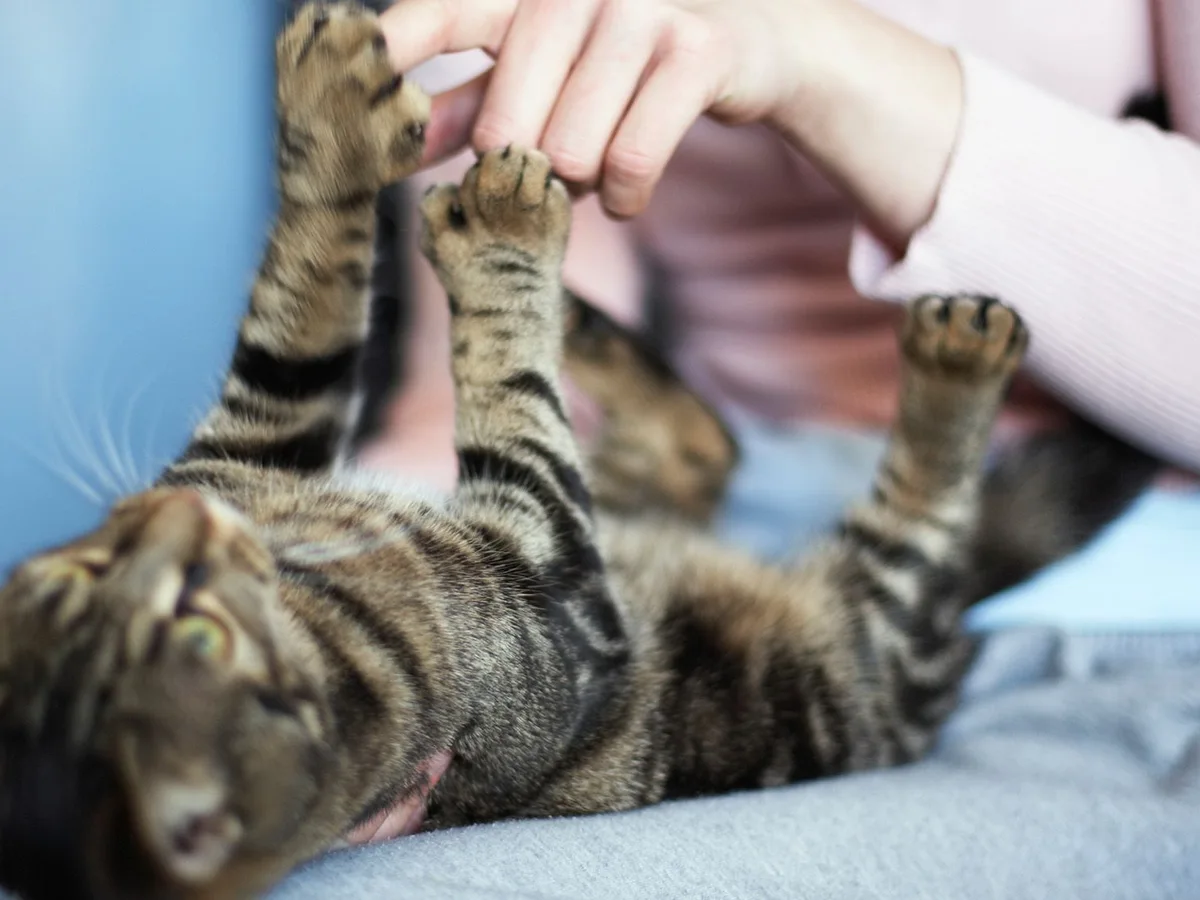
Exposing the belly is a feline proclamation of supreme trust: the cat feels safe enough in your presence to let down its guard and reveal its softest, most vulnerable physical zone. When a human mistakes this posture for an invitation and touches the abdomen, the cat experiences an abrupt violation of its safety bubble. Instinctive defense reflexes take over instantly: pupils dilate, ears pivot flat against the skull, the cat’s head whips around, and the front paws snare the person’s wrist while the muscular hind legs unleash rapid, repetitive lacerating strokes known as the ‘bunny kick’ — a specialized combative maneuver designed in nature to disembowel rival predators.
According to Mikel Delgado, a renowned cat behaviorist and senior research scientist at Purdue University, humans often miss the subtle precursor cues preceding the scratch. A cat rarely strikes without initial warning: microscopic twitches at the tip of the tail, subtle skin rippling along the spine, a sudden cessation of purring, or a tensing of the dorsal musculature all signal escalating irritation. When these discrete thresholds are ignored, the feline nervous system transitions from relaxed sociability into defensive combat.
The Anatomy of the Primordial Pouch: An Evolutionary Shield in Carnivore Combat
The underlying physiological reason for abdominal sensitivity lies in mammalian skeletal geometry. While vital cardiopulmonary organs like the heart and lungs are encased in a protective thoracic ribcage, the abdominal cavity is safeguarded only by superficial muscular bands and skin. Crucial organs including the stomach, spleen, kidneys, liver, and major vascular highways reside just beneath this delicate layer. In the wild, any severe penetrating trauma to this area results in fatal hemorrhaging or peritonitis.
To mitigate these predatory vulnerabilities, felids evolved an intriguing anatomical feature known as the primordial pouch. Often mistaken by pet owners for excess body fat, this sagging flap of loose skin and adipose tissue runs along the belly toward the inguinal region. It is present in all healthy felines, including wild big cats such as cheetahs and leopards. The primordial pouch serves three essential functions: it acts as a shock-absorbing buffer against hostile claws during territorial fights, offers boundless skin flexibility so the spine can fully hyperextend during high-speed leaps, and serves as an emergency lipid reserve during seasonal food scarcity.
Despite this evolutionary padding, a cat’s central nervous system does not gamble with visceral safety. This deep-seated anatomical vigilance mirrors widespread biological survival strategies, where mechanical vulnerability dictates defensive adaptations, as evidenced in broader scientific literature exploring evolutionary mechanisms of biomechanical vulnerability and survival across diverse animal kingdoms.
«Cats in the natural world occupy a dual ecological niche: they are both accomplished predators and potential prey for larger carnivores. Consequently, they are biologically hardwired to fiercely safeguard areas of their anatomy that are critical to survival, particularly the vulnerable abdominal cavity, the paws, and the base of the tail.»
Sarah Ellis, Head of Cat Mental Wellbeing and Behaviour at International Cat Care
The Secret of the Paws: Carpal Whiskers and the Fear of Immobilization
A similarly intense aversion is triggered when humans attempt to grasp, hold, or squeeze a cat’s paws — a frequent challenge encountered during nail trimming or veterinary exams. This defensive sensitivity stems from a dual combination of locomotory survival strategies and extreme sensory nerve density.
First and foremost, a cat’s primary survival strategy when encountering an unfamiliar disturbance is immediate tactical retreat. Capable of accelerating to speeds exceeding 30 mph (48 km/h) in mere strides, felines depend entirely upon unhindered limbs to escape larger predators. The instant a human hand clasps around a paw, subcortical alert circuits in the cat’s brain register confinement: the escape pathway has been severed. Once trapped, the cat instinctively activates its secondary survival tier — explosive physical defense using teeth and unsheathed claws.
Furthermore, feline paws are extraordinary sensory organs. While most people are familiar with facial whiskers, few realize cats also possess specialized carpal vibrissae on the posterior surface of their forelegs above the wrist. These rigid, deeply anchored sensory hairs are connected to rich mechanoreceptor networks. In the wild, carpal vibrissae allow the hunter to detect subtle struggling movements of captured prey in the dark, guiding a swift lethal bite to the cervical vertebrae. Coupled with millions of Pacinian and Ruffini corpuscles embedded within the paw pads to register ground vibrations, squeezing a cat’s foot generates an overwhelming sensory storm that feels intensely unnatural and threatening.
The complete absence of bone protection over vital organs makes physical contact to the belly feel like an imminent predatory threat.
Highly innervated sensory hair follicles located above the wrist joints quickly become overwhelmed by human tactile pressure.
Restricting a cat’s paws eliminates its primary defense mechanism — explosive sprint acceleration — triggering reactive defensive aggression.
Temporal and perioral scent glands around the cheeks, chin, and ears release calming pheromones that welcome social petting.
The Trailing Target: Why Caudal and Sacral Manipulation Sparks Disquiet
A cat’s tail is a marvel of biological engineering consisting of 19 to 23 vertebrae surrounded by intricate muscle sheaths and nerve branches radiating from the sacral spinal cord. Functioning as a counterbalancing gyroscope, it allows a falling cat to realign its torso in midair and land squarely on all fours, while acting as an eloquent barometer of real-time emotional state.
From an evolutionary perspective, the tail is the most exposed anatomical segment during pursuit. When fleeing from coyotes, dogs, or aggressive conspecifics, the tail remains closest to the pursuer’s jaws. Traumatic traction or bites to the tail base risk severe damage to the cauda equina — the terminal cluster of spinal nerves — potentially causing permanent hindlimb paresis and loss of bladder control.
Consequently, cats are intrinsically guarded against tail handling. However, researchers observe a curious physiological exception: gentle stroking right at the dorsal sacral junction often triggers a reflex where the cat elevates its rear pelvis — a behavior playfully termed ‘elevator butt.’ While this area contains dense nerve networks that can feel momentarily pleasurable, sensory overstimulation occurs rapidly, transitioning into irritation. This delicate balance reflects intricate behavioral patterns documented in ethological studies evaluating how species employ behavioral adaptations ensuring predatory and defensive survival in contested environments.
- The feline abdominal region lacks protective skeletal ribcage shielding, leaving vital visceral organs (liver, stomach, intestines, aorta) exposed to lacerations.
- The primordial pouch serves as an evolutionary bumper against territorial claw strikes while facilitating maximal spinal flexibility during sprint jumps.
- Foreleg wrists feature specialized carpal vibrissae — highly sensitive sensory whiskers designed to register microscopic movements of pinned prey.
- Paw manipulation and toe pad compression trigger intense mechanoreceptor overload across Pacinian corpuscles while neutralizing escape options.
- The tail and sacral base represent the primary trailing target during predator pursuits; damage to caudal nerves risks permanent posterior paralysis.
Feline Etiquette: How to Foster Deep Trust and Affection Through Safe Petting
To ensure petting sessions strengthen social bonds without inducing behavioral stress, ethologists recommend concentrating exclusively on feline ‘green zones.’ Cats possess concentrated scent glands along the temporal zones behind the eyes, the perioral glands bordering the lips, and the submandibular region under the chin.
In pride social dynamics, cats rub these scent areas against one another during allogrooming rituals to combine individual odors into a cohesive family colony scent. When a human gently strokes a cat under the chin or along the base of the ears, they mimic this natural intra-species greeting, stimulating the release of calming neuropeptides like oxytocin in the feline brain.
The golden rule of feline interaction is always to respect the animal’s autonomy. Extending an index finger at nose height allows the cat to approach and rub its scent glands against your hand voluntarily. Trust is constructed incrementally through predictable, non-threatening engagement. And if one day your feline companion peacefully permits you to rest your hand upon its warm belly without fear or tension, you can be assured you have received the rarest badge of feline devotion.