

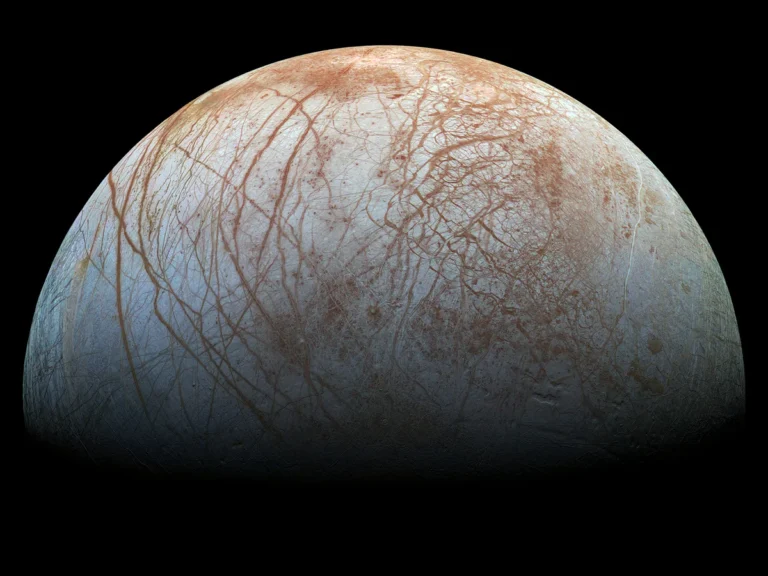

In the relentless search for biological signatures beyond Earth, planetary scientists and astrobiologists are shifting their gaze away from the barren red sands of Mars toward the outer frontier of the Solar System. The premier scientific duel centers on two icy ocean worlds: Jupiter’s moon Europa and Saturn’s moon Enceladus. In resolving the pivotal question of Europa vs Enceladus alien life icy moon habitability, researchers evaluate vast liquid water inventories, tidal gravitational heating, hydrothermal plume chemistry, and the engineering feasibility of sampling pristine oceans.
Ocean Worlds in the Deep Freeze: The Europa vs Enceladus Alien Life Icy Moon Paradigm
For decades, astrobiology defined the “habitable zone” purely by orbital proximity to a host star, ensuring radiant warmth maintained surface liquid oceans. However, the revelation of subterranean oceans orbiting gas giants shattered this paradigm: oceans can thrive at minus 170 °C driven by continuous tidal gravitational flexing.
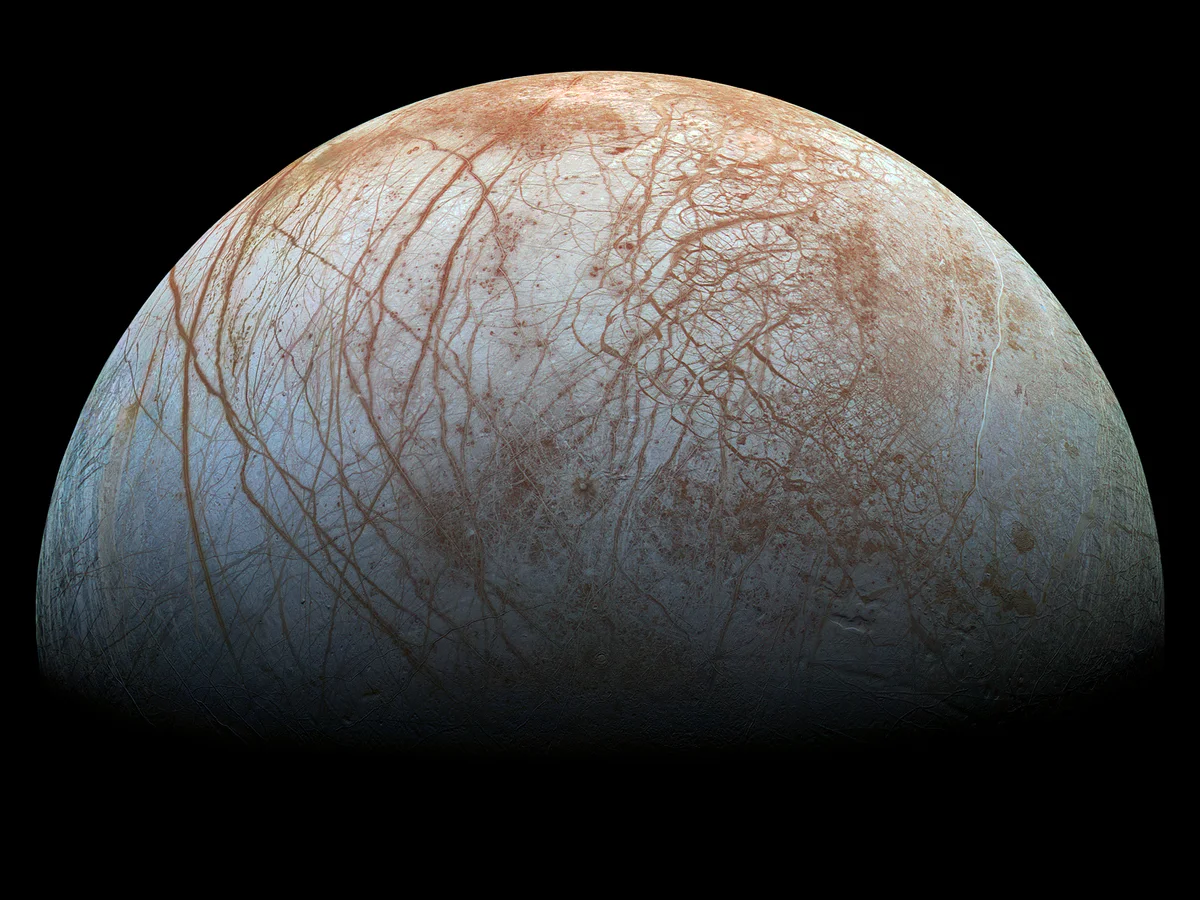
Europa and Enceladus are incessantly squeezed and stretched by the immense gravitational fields of Jupiter and Saturn, locked into resonant orbital dances with sibling moons (Europa with Io and Ganymede; Enceladus with Dione). This tidal friction generates billions of watts of hydrothermal heat within their rocky cores, preventing their global oceans from freezing over billions of years.
Crucially, the rocky sea floors of both moons interact directly with liquid water, driving active serpentinization and hydrothermal venting—analogous to terrestrial deep-sea hydrothermal vents where life on Earth is hypothesized to have originated.
The gravitational thermodynamics governing Europa stem from the famed Laplace orbital resonance: for every single orbit of Ganymede around Jupiter, Europa completes exactly two orbits, while volcanic Io completes four (a strict 1:2:4 resonance). This configuration continuously forces Europa into an eccentric orbit, driving cyclical gravitational tidal flexing. The moon’s rocky interior and icy crust flex by dozens of meters during each 3.5-day orbit, dissipating immense heat within its mantle.
Enceladus: An Accessible Geyser Express Delivering Pristine Ocean Samples
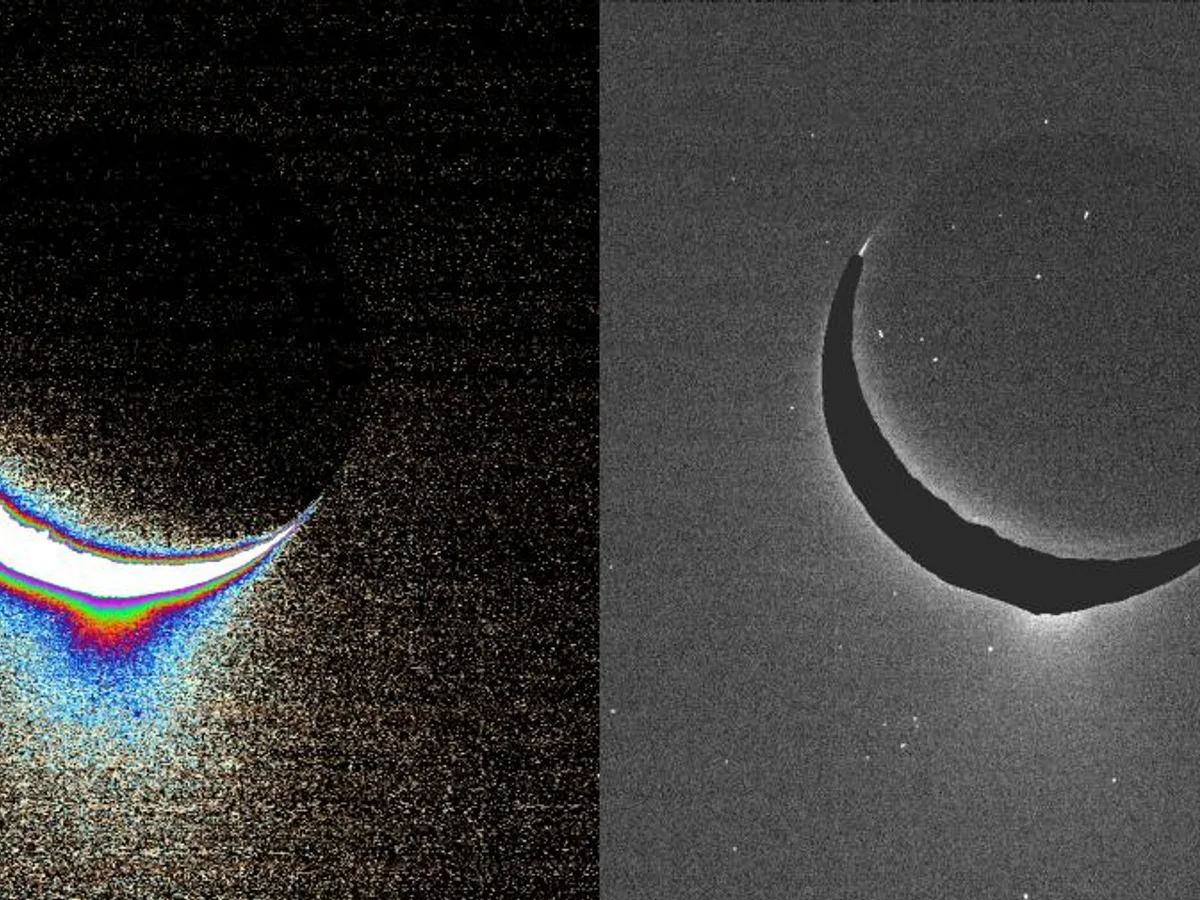
Enceladus’s greatest scientific advantage is its unprecedented accessibility. In 2005, NASA’s Cassini spacecraft observed that the south polar terrain of this diminutive moon (barely 500 km across) is scarred by deep fractures known as “tiger stripes,” venting supersonic cryovolcanic plumes into space.
Executing daring flybys directly through these geysers, Cassini detected molecular hydrogen (H₂), methane, ammonia, carbon dioxide, and complex macromolecular organic compounds exceeding 200 atomic mass units. The presence of native H₂ provides conclusive evidence of active methanogenesis and hydrothermal activity on the seafloor.
In 2023, data analysis confirmed elevated concentrations of sodium orthophosphate within Saturn’s E ring ice grains sourced from Enceladus. Phosphorus is an indispensable structural pillar of DNA, RNA, and cellular ATP. Enceladus thus became the first world beyond Earth confirmed to harbor all six fundamental biogenic elements (CHNOPS).
Geochemical models indicate that high-temperature water-rock serpentinization at Enceladus’s seafloor (>90 °C) generates an alkaline environment (pH 9–11) enriched with native silica nanoparticles, which Cassini directly sampled in Saturn’s E ring. Alkaline hydrothermal vent interfaces of this exact profile are hypothesized to have hosted the electrochemical proton gradients that powered abiogenesis on early Earth.
«Enceladus is the most generous destination in the Solar System: it actively propels fresh plumes of its warm, salty ocean directly into the vacuum of space, practically delivering samples to our spectrometers. Europa is the titan with twice Earth’s water volume and rich oxidant chemistry, yet its secrets remain guarded by miles of impenetrable ice.»
Kevin Hand, Lead Astrobiologist at NASA’s Jet Propulsion Laboratory (JPL)
Europa: An Oceanic Titan Primed by Jovian Radiation Chemistry
Europa, spanning roughly 3,120 km in diameter (comparable to Earth’s Moon), dwarfs Enceladus in physical scale. Its subterranean ocean plunges to depths of 60 to 150 kilometers, harboring more than double the liquid volume of all terrestrial oceans combined. This expansive volume creates conditions capable of sustaining a substantial biosphere.
Europa’s primary biochemical advantage lies in its profound redox gradient. The moon traverses Jupiter’s intense magnetospheric radiation belt, where high-energy electrons split surface water ice into molecular oxygen (O₂) and hydrogen peroxide (H₂O₂).
Through chaotic ice-tectonic subduction, this radiolytically generated oxygen is gradually churned into the deep ocean over geological timescales. Astrobiologists calculate that ocean oxygen levels could comfortably sustain complex multicellular aerobic marine organisms.
Europa’s subterranean ocean benefits from an extraordinary long-term environmental buffer: decades of kilometers of surface ice shield the sea from deadly ionizing space radiation, while chaotic ice-turnover continually subducts radiolytically generated oxidants into the abyss.
Cryovolcanic geysers propel deep ocean water hundreds of kilometers into space, allowing direct sample capture without drilling.
Enceladus is confirmed to harbor all six biogenic elements essential for life, including water-soluble phosphates.
With an ocean exceeding 100 km in depth, Europa contains more than twice the liquid water of all Earth oceans combined.
Jovian radiation splits surface ice into oxygen that subducts into the sea, offering rich fuel for aerobic metabolism.
Extreme Survival: From Spaceborne Extremophiles to Deep-Space Stresses
The resilience of biological organisms exposed to severe space vacuum and radiation has been documented in extremophile research, notably examining how specialized Dsup proteins protect DNA from vacuum desiccation and radiation.
Conversely, the lethal radiation fields surrounding Jovian moons evoke the severe cosmic environments outlined in studies of how galactic cosmic radiation induces profound cardiovascular tissue fibrosis.
Europa’s formidable hurdle remains its thick ice shell, estimated between 15 and 25 kilometers. Without continuous reliable geysers, acquiring uncontaminated liquid ocean water without complex thermal melt probes or deep drills remains an intricate engineering endeavor.
- Enceladus: Premier destination for near-term biosignature confirmation via orbital plume flybys.
- Europa: Unsurpassed potential for sustained, high-density biomass supported by redox gradients.
- Tidal Flexing: Both worlds maintain internal warmth through orbital resonances with massive gas giants.
- 2030s Exploration: NASA’s Europa Clipper and ESA’s JUICE will map the ice-ocean interface in unprecedented detail.
The Astrobiological Verdict: Where Will Biosignatures Be Detected First?
If evaluated by which destination will first confirm definitive evidence of extraterrestrial life, Enceladus takes precedence. Detecting amino acid chiral imbalance or lipid membrane signatures requires only flying an advanced mass-spectrometry probe (such as the proposed Enceladus Orbilander) directly through its southern plumes.
However, if the ultimate scientific objective is uncovering a mature, energetic, and highly populated biosphere with extensive biomass, Europa remains the supreme contender. NASA’s Europa Clipper mission, launched in late 2024, will arrive in the Jovian system in 2030 to conduct approximately 50 low-altitude flybys, utilizing ice-penetrating radar and surface spectrometers to map habitable niches.
Examine the comprehensive empirical data regarding ocean phosphorus balance and hydrothermal modeling in Nature’s peer-reviewed publication on Enceladus ocean habitability.