

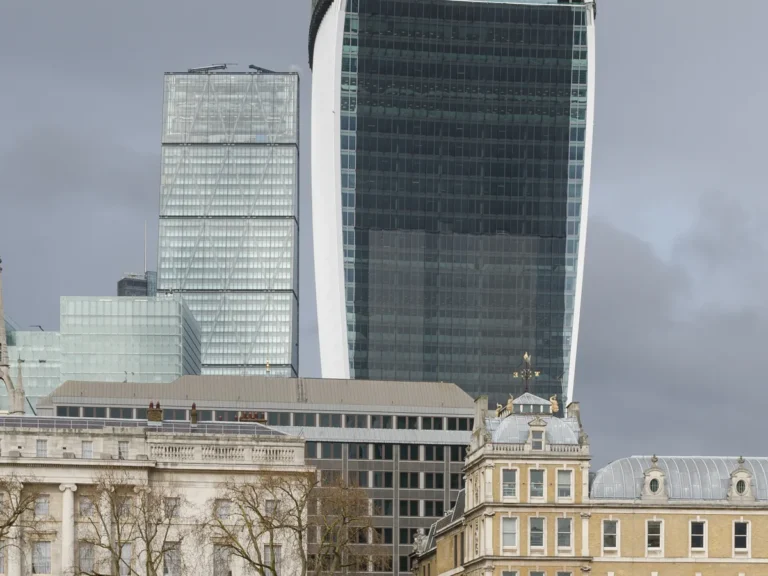

In late August 2013, the historic financial district of London was hit by a bizarre phenomenon straight out of science fiction: a newly constructed 37-story skyscraper at 20 Fenchurch Street, widely dubbed the «Walkie-Talkie» for its distinctive top-heavy profile, began generating an intense concentrated thermal death ray that melted parked luxury cars, scorched shop doormats, and cracked pavement tiles. When businessman Martin Lindsay returned to his parked Jaguar XJ on Eastcheap, he found the wing mirror melted, body panels warped, and the vehicle emblem liquefied into a plastic puddle. Quickly redubbed the «Walkie Scorchie», the building became an enduring cautionary tale of dangerous optical oversights in modern parametric skyscraper design.
The Eastcheap Melting Event: Anatomy of a £45,000 Jaguar XJ Destruction
On August 29, 2013, Martin Lindsay parked his high-end Jaguar XJ on Eastcheap in the City of London, directly opposite the towering glass facade of 20 Fenchurch Street. Returning just two hours later, he was greeted by the smell of burning polymer and shocking physical damage: the plastic housing of the side-view mirror had completely melted, the window pillars had warped and buckled, and the chrome finish had blistered off. Thermal imaging and surface pyrometers placed at the hotspot recorded ground temperatures exceeding 90°C (194°F), with localized peak measurements reaching an astonishing 117°C (243°F).
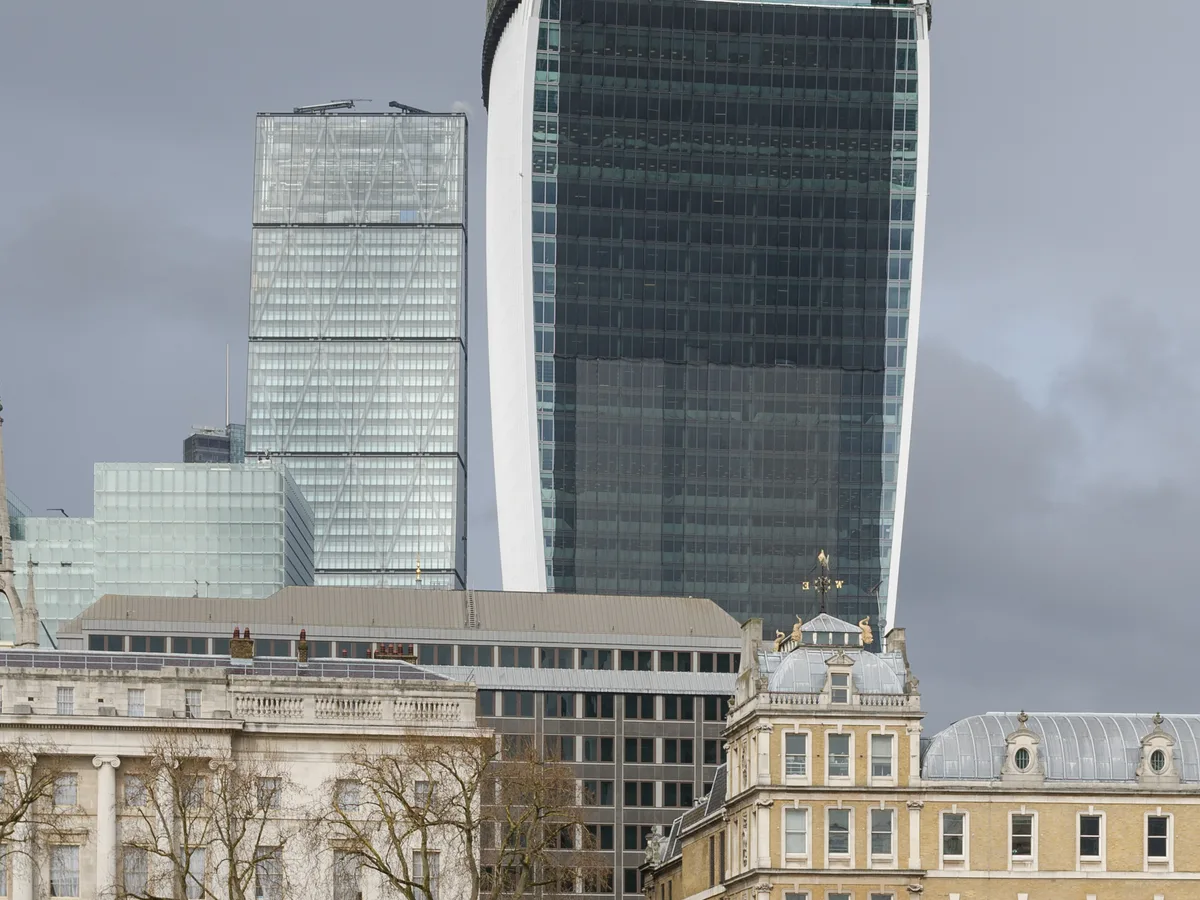
Mr. Lindsay was far from the only victim of the architectural solar concentrator. A nearby Vauxhall Vivaro commercial van suffered a warped dashboard, a bicycle lock melted into a congealed mess of rubber and zinc alloy, and an entrance mat at the Re幻ve hair salon caught fire under the focused solar reflection. Demonstrating the extraordinary thermal energy on live television, journalists successfully fried an egg in a skillet on the sidewalk in under five minutes using nothing but the building’s reflected solar glare.
Joint developers Land Securities and Canary Wharf Group acted quickly, apologizing publicly, paying £946 for Mr. Lindsay’s vehicle repairs, and working with local authorities to suspend three public parking bays directly in the firing line of the convergence beam.
The Physics of Parabolic Solar Concentrators: Curvature and Optical Focus
How did a £200 million state-of-the-art office skyscraper turn into a giant solar furnace? The root cause lay in the building’s architectural design by Uruguayan architect Rafael Viñoly. To maximize lucrative floor space on the upper commercial levels, the tower flares outward as it rises, while its south-facing elevation incorporates a pronounced two-dimensional concave curve. Thousands of square meters of double-glazed reflective curtain walling acted collectively as an enormous concave parabolic mirror, reminiscent of Archimedes’ fabled burning mirrors.
While conventional planar facades diffuse incident sunlight across wide angles, a concave facade forces parallel solar rays reflecting off disparate floor levels to converge toward a tight focal line. Much like how atmospheric temperature gradients create mirages and deceptive optical phenomena, the converging rays formed a moving solar hotspot approximately 3 to 4 meters wide and 15 meters long, sweeping across Eastcheap for about two hours each midday.
The solar irradiance concentrated within this focal area exceeded 3,000 W/m², triple the normal peak solar constant. At this intensity, structural thermoplastics with glass-transition temperatures between 70°C and 110°C underwent rapid thermal degradation and phase transitions, causing car trims and mirrors to sag and liquefy within minutes.
«We made a lot of mistakes with this building. We knew that temperatures in London could reach certain thresholds, but when an unusual string of cloudless 30-degree days hit, the cumulative parabolic geometry acted precisely like a concentrated solar power mirror.»
Rafael Viñoly, Lead Architect of 20 Fenchurch Street
The Vdara Hotel Precedent in Las Vegas: A Repeated Architectural Flaw
Remarkably, the solar reflection crisis at 20 Fenchurch Street was not the first time Rafael Viñoly had encountered this exact phenomenon. In 2010, the Viñoly-designed 57-story Vdara Hotel opened in the CityCenter complex of Las Vegas. Featuring a sweeping crescent-shaped glass facade facing a ground-level pool deck, the building quickly became infamous for the «Vdara Death Ray». Guests lounging by the pool reported singed hair, melted plastic drinking cups, and intense first-degree skin burns within seconds.
At Vdara, the management retrofitted oversized umbrellas and treated the glass panels with non-reflective coatings. The Las Vegas incident should have served as an urgent industry-wide lesson regarding concave curtain wall geometry and solar glare dynamics.
Yet, during the planning of the London skyscraper, engineers assumed the higher northern latitude of London (51°N) would render solar convergence benign compared to the blazing Mojave Desert (36°N). The solar ray modeling proved catastrophically inadequate: designers overlooked late August solar angles combined with modern high-performance spectrally selective low-E glazing that exhibits substantial exterior specular reflectance.
The maximum surface temperature recorded on the asphalt of Eastcheap directly within the Walkie-Talkie focal convergence beam.
Standing 160 meters tall, the skyscraper flares outward toward the crown, creating an inadvertent multi-tier parabolic mirror.
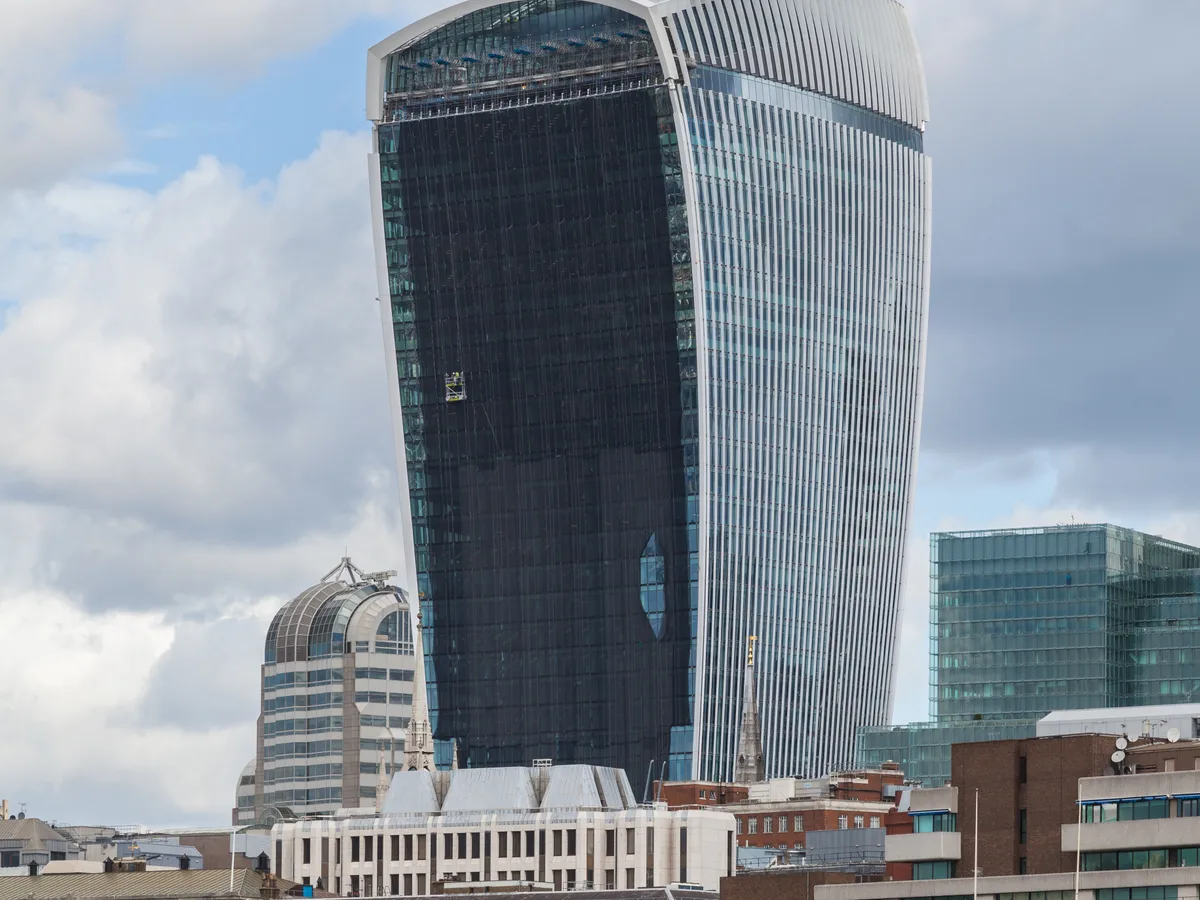
Permanent horizontal aluminum louver system installed on floors 3 through 34 to disrupt and scatter the focused reflection.
An identical solar glare issue occurred at Viñoly’s Vdara Hotel in Las Vegas, melting plastic poolside cups and lounge chairs.
The £12 Million Retrofit: How Brise-Soleil Louvers Neutralized the Beam
Immediate triage required the erection of temporary scaffold netting and dark vinyl screens along Eastcheap to block the beam. However, solving the problem permanently without compromising the architectural integrity of the skyscraper posed a complex engineering challenge. Applying internal films was mathematically ineffective, as the primary reflective bounce originated from the outermost glass pane.
In May 2014, the City of London Planning and Transportation Committee approved a comprehensive £12 million remedial scheme. Over several months, engineers installed horizontal aluminum brise-soleil sunshade louvers across levels 3 through 34 of the south elevation. Extending up to 500 mm from the curtain wall, these fins intercept incoming sunlight and disrupt the geometry required for simultaneous multi-tier reflection, scattering the solar rays harmlessly into the sky.
Historical manipulation of light pathways has long fascinated human ingenuity, from the colloidal nanoparticles of the 4th-century Roman Lycurgus Cup shifting colors under transmitted light to contemporary structural optics. In the case of the Walkie-Talkie, the louvers permanently resolved the solar hazard while preserving structural elegance.
- Concave glass facades function as optical collectors, concentrating energy from thousands of square meters into tight focal zones.
- High-performance spectrally selective low-E glazing has high specular reflection that amplifies thermal convergence intensity.
- Microclimate modeling must account for peak solar anomalies and extreme temperature spikes rather than moderate seasonal averages.
- External brise-soleil architectural louvers provide the most dependable retrofitting solution to physically disrupt optical convergence.
Skyscraper Glare Audits: Digital Twins and Caustic Modeling in Urban Planning
The Walkie-Talkie fallout triggered a revolution in municipal planning regulations across the United Kingdom and global megacities. The City of London Corporation instituted mandatory microclimate and solar reflection assessments for all proposed buildings exceeding 50 meters in height. Planning authorities now mandate comprehensive 3D digital twins subjected to dynamic solar caustic simulations throughout all 365 days of the solar calendar at 15-minute intervals.
Advanced parametric software now identifies potential focal concentrations, enforcing a strict safety cap of 1.5 kW/m² at pedestrian grade. If curvature calculations predict excessive convergence on streets, railway lines, or neighboring structures, developers must alter facade radiuses or incorporate non-specular diffuse glass before planning approval is granted.
Today, 20 Fenchurch Street remains a vibrant London landmark, drawing millions of visitors to its lush Sky Garden observation deck. Yet the memory of the melted Jaguar XJ endures as an essential case study in structural engineering: no matter how audacious an architectural vision may be, it must always respect the foundational laws of geometric optics.