

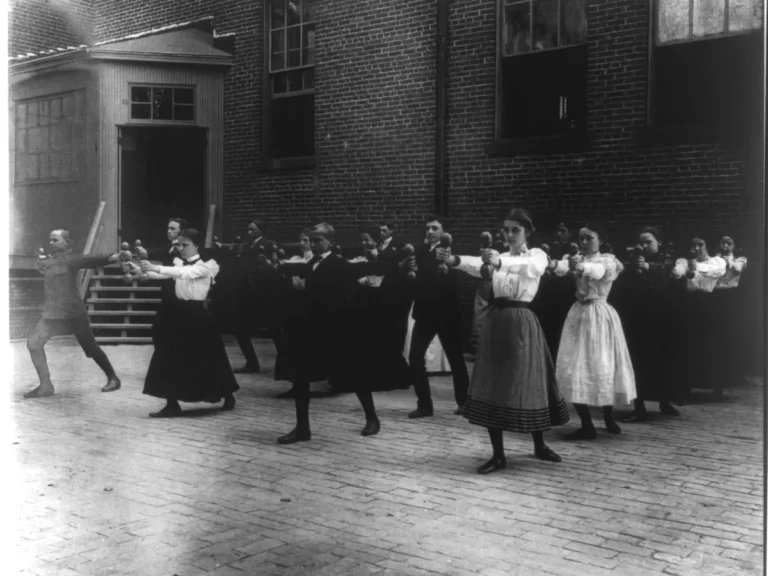

Social media feeds are awash with discussions of progressive overload, muscle hypertrophy, and gym aesthetics: the profound Gen Z weightlifting obsession has emerged as a generational defining phenomenon. Yet behind the viral TikTok #GymTok trends and pump covers lies an unexpected historical trajectory that traces back more than two centuries directly to the battlefields of Napoleon Bonaparte.
The Humiliation at Jena: How Defeat by Napoleon Spawned the First Gym
To decipher why contemporary adolescents are fanatically hoisting heavy barbells, one must journey back to October 1806. At the twin battles of Jena and Auerstedt, Napoleon Bonaparte’s Grande Armée decisively obliterated the vaunted Prussian royal military. This catastrophic defeat shattered Germanic prestige, plunging the nation into an existential identity crisis.
Prussian patriot and educator Friedrich Ludwig Jahn (revered as the ‘father of gymnastics’ or Turnvater Jahn) reached a radical diagnostic conclusion: German soldiers had succumbed because urban civilian life had rendered them physically weak, sedentary, and effeminate. To forge an indomitable generation capable of overthrowing French imperial hegemony, Jahn established the world’s first open-air gymnasium — the Turnplatz — in the Hasenheide forest outside Berlin in 1811.
Jahn systematically engineered apparatuses that remain standard fixtures in modern Olympic gymnastics and CrossFit boxes today: the parallel bars, rings, high horizontal bar, and pommel horse. His disciples (‘turners’) conditioned themselves through punishing physical regimens, hoisting boulders, climbing ropes, and building Spartan combat readiness that was pivotal in expelling Napoleon’s forces during the 1813–1815 Liberation Wars.
The Militarization of Muscle: Europe’s 19th-Century Physical Awakening
The Prussian gymnastics crusade triggered a rapid ripple effect across European capitals. Imperial powers swiftly grasped a sobering industrial reality: steam engines, factories, and clerical desks were degrading the baseline physical vitality required for national defense.
In Sweden, fencing master and anatomist Pehr Henrik Ling pioneered the wall bars (Swedish ladder) and developed a scientific curriculum of medical and military gymnastics that strictly measured mechanical strain on muscle groups. In Victorian Britain, traumatized by abysmal soldier fitness during the Crimean War, Scottish educator Archibald MacLaren formulated the British Army’s physical training code and erected Oxford’s landmark gymnasium in 1858.
Crucially, MacLaren was the first to argue that leisure team sports like cricket or rugby were structurally insufficient for balanced physical development: the human anatomy demanded symmetric, progressive resistance training with weighted apparatus. This framework established the modern physiological foundation of adaptation, paralleling how neurobiological protocols of deliberate physical training optimize biological resilience when pursued through disciplined repetition.
«Fitness is never culturally neutral. How a civilization chooses to train its physical bodies reveals its deepest psychological anxieties and historical traumas. Napoleon sought to conquer Europe, but inadvertently sparked a global physical movement that Zoomers inherit today.»
Dr. Conor Heffernan, Lecturer in the Sociology and History of Sport at Ulster University
Eugen Sandow and the Dawn of Commercial Bodybuilding
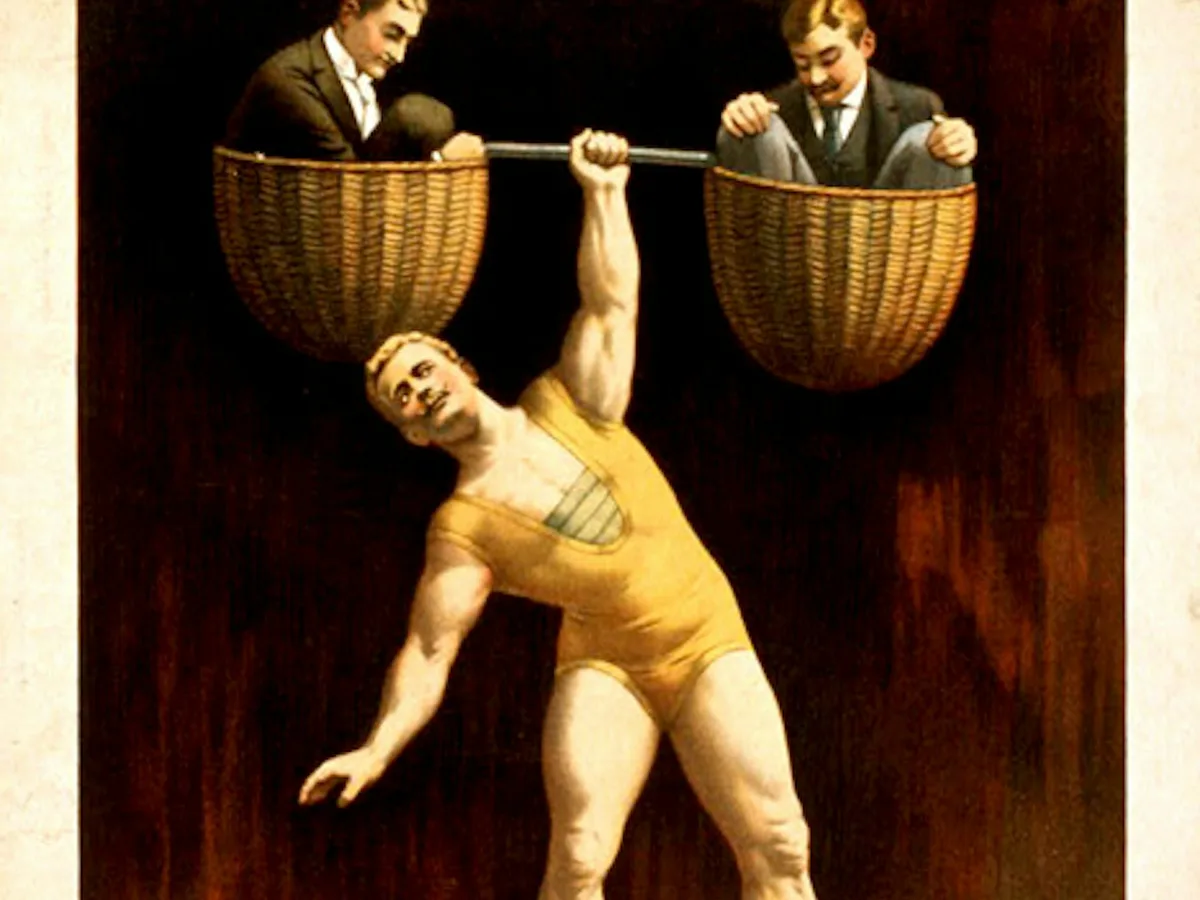
At the twilight of the 19th century, military regimentation crossed over into commercial showmanship and aesthetic body culture. The indispensable titan of this transformation was Prussian athlete Friedrich Wilhelm Müller, universally known by his stage moniker: Eugen Sandow.
Sandow flatly rejected the prevailing archetype of the rotund circus strongman, drawing aesthetic inspiration instead from classical Greco-Roman statuary. He meticulously measured ancient sculptures of Hercules and Apollo in European galleries, employing adjustable plate-loaded barbells and dumbbells to sculpt his own physique into a living classical masterpiece with chiseled abs, wide lats, and vascular definition.
Sandow became the world’s first true fitness celebrity: he toured international theaters demonstrating muscle control, published mass-circulation workout magazines, patented home exercise equipment, and in 1901 orchestrated the world’s first major physique pageant — ‘The Great Competition’ at London’s Royal Albert Hall — where Sir Arthur Conan Doyle served as a celebrity judge.
Napoleon’s crushing defeat of Prussia inspired Turnvater Jahn to invent the Turnplatz, parallel bars, and rings to rebuild national fitness.
Eugen Sandow married Greco-Roman sculpture aesthetics with progressive weightlifting, pioneering modern commercial bodybuilding.
Gen Z has abandoned the aerobic dance fads of the 1980s, with over 65% of young gymgoers prioritizing heavy barbell hypertrophy.
In an era of algorithmic volatility, the physical honesty of progressive overload offers Zoomers mental autonomy and tangible self-worth.
The Generational Pendulum: From Aerobic Dance Back to Heavy Iron
Throughout the 20th century, fitness trends oscillated between cardiovascular regimens and strength culture. During the 1970s and 1980s, the Western world was swept by an aerobic dance craze championed by Jacki Sorensen and Jane Fonda’s multimillion-selling VHS tapes. Weightlifting was largely marginalized as an esoteric hobby reserved for competitive powerlifters and fringe bodybuilders.
In recent years, however, the generational pendulum swung violently back toward heavy iron. Generation Z (born between the late 1990s and early 2010s) overwhelmingly abandoned monotonous cardio and lightweight calisthenics in favor of compound resistance training: deadlifts, squats, bench presses, and hypertrophy-focused machine training.
Global fitness surveys confirm that over 65% of Gen Z gymgoers prioritize heavy resistance training over cardio. Social media hashtags including #GymTok, #LiftHeavy, and #Hypertrophy have amassed hundreds of billions of impressions, transforming local fitness centers into the primary social sanctuaries of contemporary youth culture.
- 1806–1811: Defeat at Jena prompts Friedrich Ludwig Jahn to build the first Turnplatz and design parallel bars and rings.
- 1860s: Archibald MacLaren implements scientific barbell training for the British Army and Oxford University.
- 1901: Eugen Sandow stages the first world physique competition at Royal Albert Hall judged by Arthur Conan Doyle.
- 1970–1980s: Aerobic dance explosion led by Jacki Sorensen and Jane Fonda shifts mainstream culture to cardio.
- 2020s: Gen Z reclaims heavy iron: #GymTok becomes a dominant social media force with hundreds of billions of views.
The Iron Sanctuary: Why Gen Z Seeks Mental Solace in the Squat Rack
Yet while 19th-century youths trained to confront foreign imperial invaders, Generation Z seeks salvation from complex psychological and existential adversaries. Zoomers came of age amidst digital hyper-saturation, economic precarity, housing crises, and severe social fragmentation exacerbated by algorithmic isolation.
The weight room represents an uncompromising bastion of tangible sovereignty. In a volatile world where social media algorithms distort reality and career milestones remain uncertain, a loaded barbell is ruthlessly authentic: gravity cannot be faked, gaslighted, or negotiated with. Progressive overload delivers immediate, mathematical verification of personal growth.
Moreover, resistance training boasts profound biochemical efficacy against chronic anxiety and depressive disorders, triggering the release of endorphins, dopamine, and brain-derived neurotrophic factor (BDNF). Thus, the historic arc from Napoleon’s conquests to modern gym culture has reached full circle: what began as military mobilization against an imperial emperor has transformed into the ultimate psychological shield of an anxious generation.