



For decades, comparative neurobiology treated the six-layered mammalian neocortex as the undisputed pinnacle of analytical processing power and cognitive efficiency in the animal kingdom. However, pioneering electrophysiological research conducted by German neuroscientists has upended these long-standing assumptions about neural architecture: it turns out that crow decision making speed outpaces that of humans and rhesus macaques by a factor of nearly two. Carrion crows (Corvus corone) can resolve visual sensory noise, integrate conflicting evidence, reach an analytical threshold, and launch an intentional motor response in an astonishing 235 milliseconds. While primates require nearly half a second to perform an equivalent perceptual choice, the avian brain exhibits lightning-fast cognitive processing without sacrificing perceptual accuracy, forcing scientists to rethink how brains compute.
Twice as Fast as Primates: The Ultrarapid Decision-Making of Carrion Crows
In mainstream cognitive science, it has long been taken as an empirical given that the computational sophistication of a species is governed by the volume of its cerebral cortex and the presence of a stratified six-layered neocortex. Primates, and humans in particular, have viewed their own neural machinery as the gold standard of analytical performance, capable of rapidly parsing sensory landscapes and making nuanced deliberations. Yet nature presents challenging ecological niches where a half-second deliberative delay represents a lethal failure. Navigating dense arboreal canopies at breakneck velocity demands split-second spatial decisions, creating an evolutionary imperative for an ultra-compact and hyper-efficient neural design.
In a breakthrough study published in Science, neurobiologists at the University of Tübingen led by Philipp Schmidbauer and Professor Andreas Nieder demonstrated that carrion crows (Corvus corone) make complex sensory decisions at roughly twice the speed of monkeys and humans. Renowned for their tool-crafting and problem-solving abilities, crows proved capable of extracting meaningful visual signals from dynamic background noise and initiating deliberate motor responses in a fraction of the time required by primates.
The historical dismissal of avian intelligence as merely instinctual or reflex-driven has been thoroughly dismantled by this work. The experiments demonstrate that crows perform genuine cognitive deliberation: they gather optical evidence, weigh competing hypotheses, resolve perceptual ambiguity, and trigger a decisive motor command through their beak. That this complete cognitive loop unfolds within a mere 235 milliseconds demonstrates an unprecedented level of biological optimization in non-mammalian vertebrate brains.
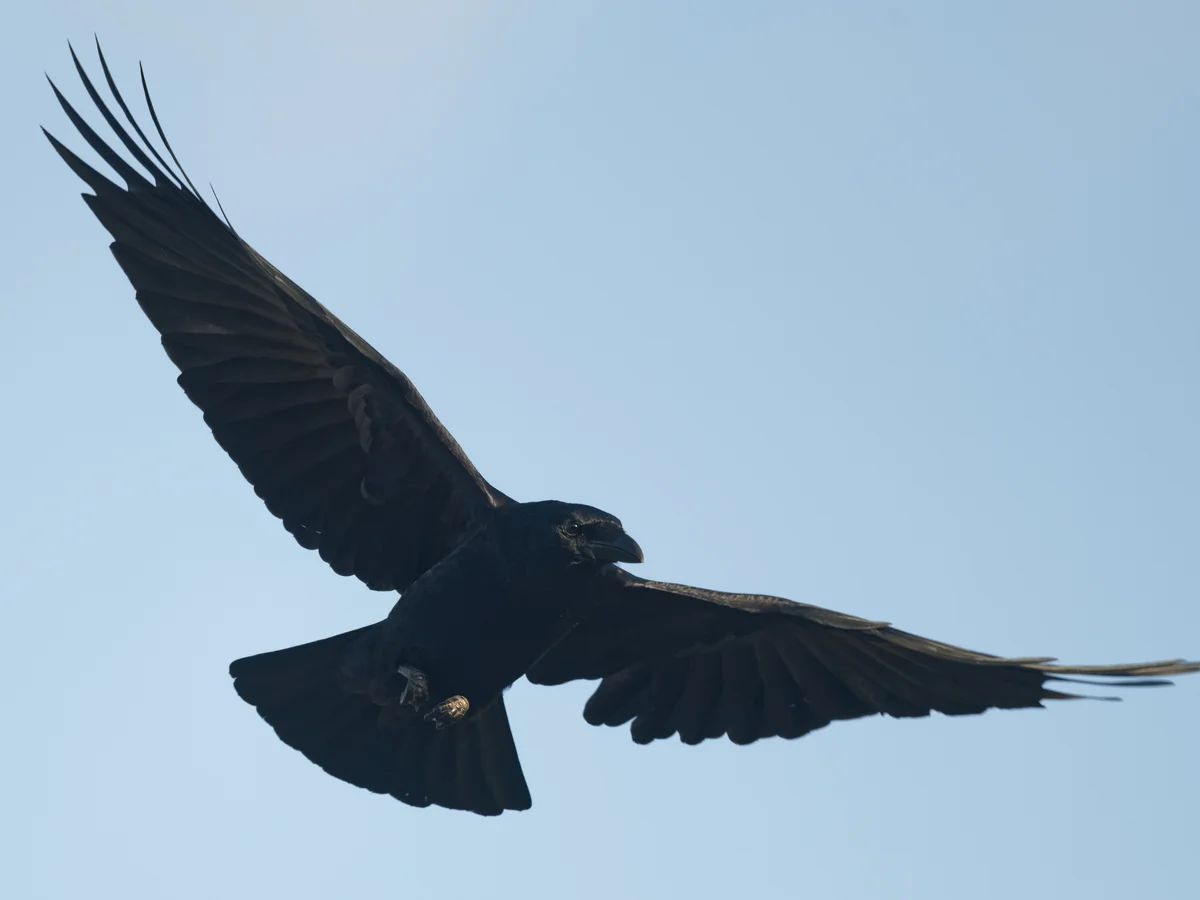
The Tübingen Experiments: Touchscreen Kinetics and the 235-Millisecond Threshold
To measure the microsecond dynamics of avian choice with absolute rigor, Philipp Schmidbauer and Andreas Nieder adapted the classic random dot kinetogram (RDK) paradigm, widely recognized as the gold standard for testing sensory deliberation in cognitive psychology. Carrion crows were positioned before an interactive touchscreen monitor. Each trial began with the bird fixating on a central point, after which a cloud of luminous dots appeared against a dark field. A variable fraction of these dots drifted coherently toward either the left or right, while the remaining dots moved in random, chaotic directions to introduce visual noise.
The crow was tasked with discerning the global direction of movement and striking a lateral target on the screen with its beak to register its choice. The experimenters systematically modulated the difficulty of the task by altering dot motion coherence from an obvious 100% down to a subtle 5%, where the directional drift was nearly imperceptible even to trained human observers. High-speed infrared cameras and sub-millisecond capacitive sensors recorded every nuance of the crow’s head orientation and strike timing.
The quantitative findings astounded the researchers: across hundreds of trials, the average reaction time from stimulus onset to peck was an incredible 235 milliseconds. By contrast, rhesus macaques performing identical random dot tasks require 400 to 500 milliseconds, and human subjects typically range from 450 to 550 milliseconds. Crucially, the crows’ remarkable speed did not result from rash guessing: under moderate noise levels, their choice accuracy remained well above 85%, confirming that rapid deliberation was achieved through an extraordinarily efficient analytical process.
Carrion crows resolve deliberate perceptual choices in just 235 ms, whereas humans and macaque monkeys routinely take 400 to 550 ms for identical tasks.
Instead of layered neocortex, birds rely on the nidopallium caudolaterale (NCL), boasting ultra-dense neuronal packing and ultra-short axonal pathways.
Single-unit recordings reveal that choice-selective neural firing in the crow NCL begins just 70 milliseconds following visual stimulus onset.
Separated by 320 million years of evolutionary divergence, corvids and primates independently arrived at identical drift-diffusion decision algorithms.
Inside the Avian NCL: Computing Without a Layered Neocortex
How does an avian brain weighing a mere 10 to 12 grams outpace a primate brain that is hundreds of times larger? The answer lies in the microcircuitry of the avian executive hub: the nidopallium caudolaterale (NCL). In mammals, high-level cognition, working memory, and executive decision-making are coordinated by the prefrontal cortex (PFC), which relies on six distinct horizontal laminae. Birds completely lack a layered neocortex; instead, their telencephalon is organized into densely packed nuclear clusters.
During the Tübingen study, microelectrodes implanted into the crow NCL monitored the spike trains of hundreds of individual neurons in real time as the birds performed the task. The neurophysiological data revealed that choice-selective signals emerge in the NCL astonishingly early—within just 70 milliseconds of stimulus onset. At this point, the firing rates of neurons tuned to leftward motion began to diverge sharply from those tuned to rightward motion. By approximately 140 milliseconds, the neuronal population reached a decisive commitment threshold, dispatching motor signals down to the brainstem.
A decisive architectural advantage of the corvid brain is its extreme neuronal packing density. Evolutionary studies show that the songbird and corvid forebrain contains as many associative neurons as small monkeys, but these neurons are dramatically smaller, with exceptionally short inter-somatic distances. These short axons substantially curtail axonal propagation delays, allowing local circuits within the NCL to synchronize and process evidentiary tokens at speeds mammals cannot match. Much like organisms mobilize protective physiological adjustments when confronting climatic stressors and severe physiological challenges to biological homeostasis, the avian nervous system is structurally shielded from latency penalties by its hyper-condensed neural geometry.
«What is truly astonishing is not merely that carrion crows resolve complex perceptual decisions in 235 milliseconds—twice as fast as primates—but that their forebrain employs the exact same mathematical principles of evidence accumulation. The avian brain attains breathtaking computational efficiency without a laminated neocortex.»
Andreas Nieder, Professor at the Institute of Neurobiology, University of Tübingen
Drift-Diffusion Dynamics: How Neurons Accumulate Evidence at Breakneck Speed
To determine whether the avian brain computes decisions using the same mathematical principles as mammalian cortex, the researchers applied the Drift-Diffusion Model (DDM) to the behavioral and electrophysiological datasets. In computational cognitive psychology, the DDM frames decision-making as a continuous stochastic accumulation of evidentiary tokens toward a decision boundary. Incoming sensory inputs continuously nudge an internal decision variable toward one of two competing thresholds until a boundary is crossed, triggering action.
The spike rate dynamics recorded from the crow NCL aligned flawlessly with DDM predictions. Rather than exhibiting all-or-none binary bursts, NCL neurons behaved as true mathematical integrators: their firing rates ramped up linearly as visual evidence accrued over time. When dot motion coherence was high, the rate of evidentiary accumulation (the drift rate) was steep, causing the neural population to reach the decision threshold in record time.
The fundamental difference between corvids and primates lies not in the underlying algorithm, but in the kinetic parameters of its execution. Crows exhibit a substantially steeper drift rate per sensory unit and maintain an optimized decision boundary calibrated for rapid motor execution. They do not squander precious milliseconds on redundant checks once statistical confidence reaches an actionable threshold, achieving an optimal trade-off between reaction latency and accuracy.
- Psychophysical touchscreen trials establish that carrion crows execute sensory decisions in an average of 235 ms with choice accuracy exceeding 85%.
- The avian forebrain hub known as the nidopallium caudolaterale (NCL) operates as the functional analog to the primate prefrontal cortex.
- Extremely high neuron packing density in avian pallial structures minimizes axonal propagation delay, accelerating local circuit synchronization.
- Drift-Diffusion Modeling (DDM) demonstrates that corvid decision circuits accumulate evidentiary tokens using the same stochastic calculus as primates.
- The evolutionary demands of high-velocity three-dimensional flight exerted intense selective pressure to optimize visual decision-making circuits.
Aerial Evolution and Convergence: Why Flight Pressures Forged Hyper-Speed Cognition
The findings from Tübingen provide a stunning example of convergent evolution in complex biological systems. The last common ancestor shared by birds and mammals lived roughly 320 million years ago during the Carboniferous period—a modest reptilian amniote with a primitive tubular brain. Over the subsequent hundreds of millions of years, the sauropsid and synapsid lineages evolved in complete anatomical isolation. Yet both lineages independently constructed executive hubs—the prefrontal cortex in primates and the nidopallium caudolaterale in corvids—that solve identical cognitive equations using remarkably similar neural population dynamics.
The dominant evolutionary catalyst driving hyper-fast processing in birds was the mastery of high-speed three-dimensional flight. A crow swooping through a tangled forest canopy or intercepting evasive prey at 40 kilometers per hour operates in an unforgiving physical regime. A 200-millisecond latency in recognizing an obstacle or correcting aerodynamic trajectory spells lethal catastrophe. Natural selection relentlessly winnowed individuals with sluggish neural conduits, crafting the corvid brain into an ultra-fast biological processor.
This discovery holds immense value beyond ornithology, offering profound insights for computational neuroscience and robotics. Until now, autonomous aerial drones and computer vision systems have predominantly relied on deep multi-layered artificial networks modeled after mammalian neocortex. The carrion crow demonstrates that compact nuclear architectures featuring dense local interconnects can execute high-level spatial choices twice as fast while consuming negligible metabolic energy, pointing toward transformative design paradigms for the next generation of artificial intelligence.