

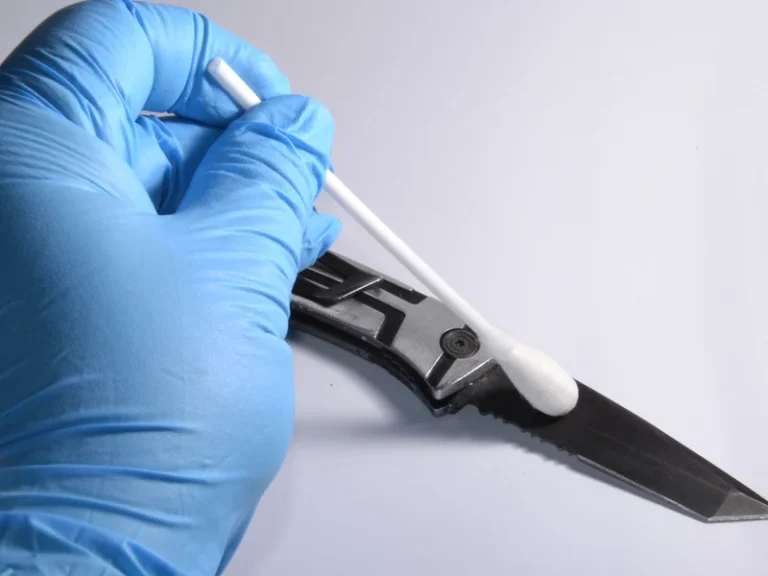

For decades, forensic DNA profiling has reigned supreme in courtrooms worldwide as the incontrovertible gold standard of physical evidence: a multi-locus profile matching a suspect to one-in-a-billion odds traditionally sealed an open-and-shut conviction. However, the astonishing real-world case of touch dna secondary transfer forensics involving Lukis Anderson in California nearly sent an innocent, destitute man to the execution chamber for the violent murder of Silicon Valley multi-millionaire Raveesh Kumra—a man Anderson had never met, in a mansion ten miles away, while Anderson himself was hospitalized in a medically monitored alcoholic coma.
The Monte Sereno Home Invasion and Fingernail DNA Evidence
In the early morning hours of November 29, 2012, an opulent gated estate in Monte Sereno, California, became the scene of a brutal home invasion. A gang of masked intruders ransacked the residence of 66-year-old technology investor and entrepreneur Raveesh Kumra. The assailants tied Kumra with industrial duct tape across his mouth and wrists, beating him before leaving him to suffocate on his living room carpet as they plundered the mansion for gold coins, currency, and jewelry.
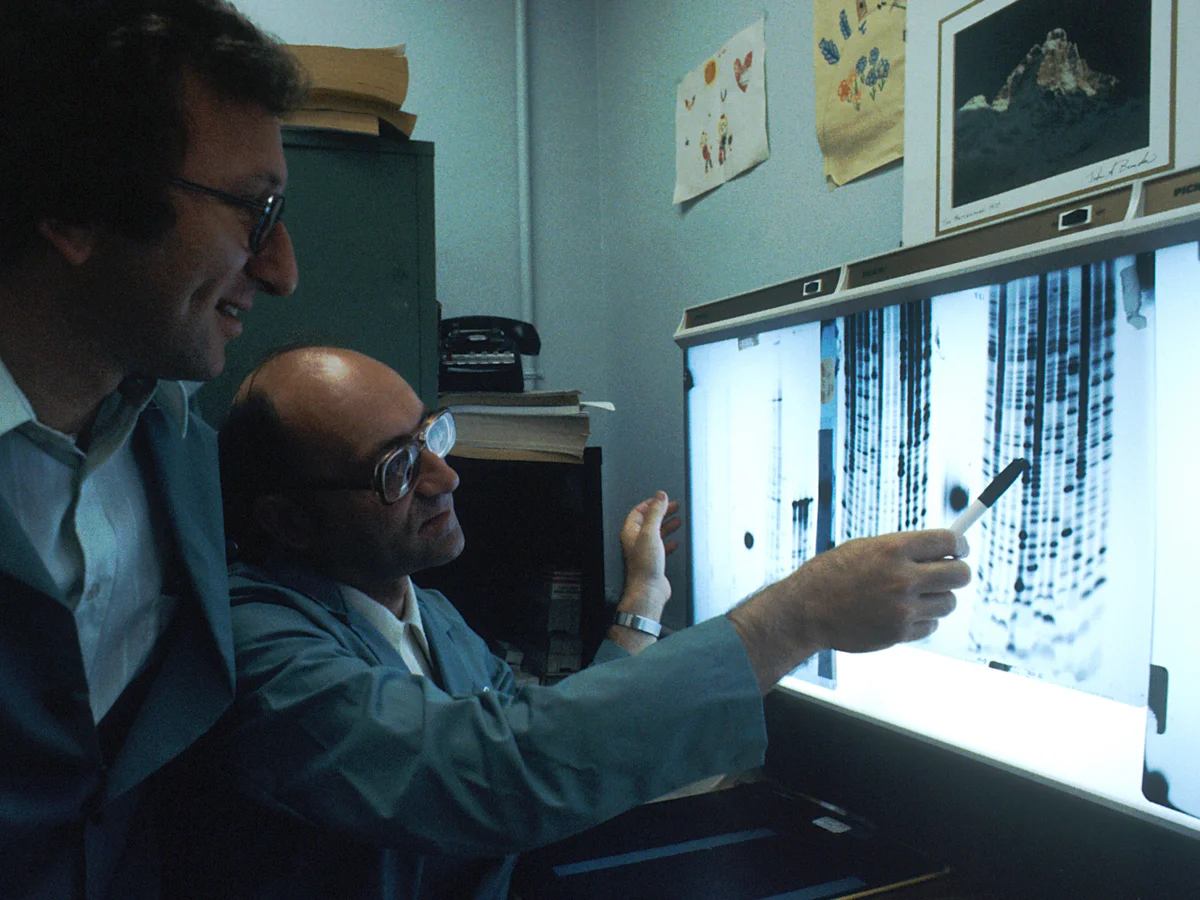
Santa Clara County crime scene investigators conducted a meticulous forensic harvest. Recognizing that victims frequently scratch their assailants during life-and-death physical struggles, technicians took scrapings and sterile swabs from underneath Kumra’s fingernails. Utilizing high-cycle Polymerase Chain Reaction (PCR) amplification, forensic geneticists successfully isolated a full male Short Tandem Repeat (STR) profile, promptly uploading the alleles into the FBI’s Combined DNA Index System (CODIS).
The database generated an unequivocal match. The profile belonged to Lukis Anderson, a 26-year-old unhoused resident of San Jose with a record of minor nonviolent property offenses and public intoxication. To the Santa Clara District Attorney’s office, the forensic narrative appeared ironclad: genetic material found under a homicide victim’s fingernails was considered unassailable, textbook evidence of direct physical struggle.
Arrest, Capital Murder Charges, and an Impossible Alibi
Police swiftly arrested Anderson, charging him with first-degree felony murder with special circumstances—a capital offense carrying either life without parole or the death penalty in California. Tormented by severe chronic alcoholism and frequent alcohol-induced blackouts, Anderson was utterly bewildered by the accusations. During intense police interrogations, he began to question his own sanity, terrified that he might have participated in the slaughter during a blackout state without retaining any conscious memory.
Anderson’s court-appointed public defender, Kelley Kulick, refused to accept the prosecution’s narrative at face value despite the seemingly infallible scientific evidence. Sifting through months of records, Kulick embarked on a painstaking quest to reconstruct Anderson’s exact timeline for the evening of November 29. Her investigation led directly to the records room of Santa Clara Valley Medical Center in San Jose.
The hospital records established an incontrovertible alibi that defied physical mechanics: at the precise hour Raveesh Kumra was being assaulted and suffocated inside his Monte Sereno mansion, Lukis Anderson was hospitalized nearly ten miles away in a state of near-fatal alcohol poisoning. Admitted with a toxic blood alcohol level of 0.40%, Anderson had been strapped into a monitored hospital bed under continuous nursing surveillance and electronic vitals telemetry, rendering his physical presence at the murder scene completely impossible.
In November 2012, home invaders bound and suffocated tech investor Raveesh Kumra. High-sensitivity PCR forensic swabs taken under the victim’s fingernails revealed Lukis Anderson’s clean DNA profile.
At the exact time of the murder, Anderson lay severely comatose with a blood alcohol level of 0.40% under continuous cardiac telemetry and nursing supervision in a San Jose county trauma center.
The identical two-person paramedic crew that transported an intoxicated Anderson earlier that evening responded to Kumra’s emergency call hours later, inadvertently transferring epithelial cells via a pulse oximeter.
State-of-the-art STR profiling instruments detect alleles from as few as five skin cells, transforming ambient environmental cross-contamination and tertiary shedding into deceptively definitive legal proof.
Unraveling the Vector: The Paramedic Contamination Pathway
The legal defense was faced with an extraordinary scientific paradox: how could a man’s biological cells be embedded beneath the fingernails of a murdered millionaire when the man himself was physically confined to an intensive care unit miles away? Santa Clara prosecutors initially suspected clerical error, hospital fraud, or an orchestrated conspiracy, but Kelley Kulick demanded an audit of the dispatch logs for the county’s emergency response teams.
The investigative breakthrough revealed an almost unbelievable coincidence of common vectors. Hours prior to the Monte Sereno homicide, concerned civilians in downtown San Jose found Anderson passed out on a public sidewalk and dialed 911. A two-member paramedic ambulance crew responded, physically lifting the heavily sweating, unwashed Anderson onto a stretcher, handling his wrists, and clipping a reusable pulse oximeter onto his finger to measure blood oxygenation before delivering him to the emergency ward.
Less than three hours later, the identical paramedic crew was dispatched to the crime scene at Kumra’s mansion. Upon discovering Kumra unresponsive, the medics immediately initiated CPR, checking carotid pulses and clamping the very same pulse oximeter onto Kumra’s fingers. In doing so, the paramedics acted as unwitting biological couriers, picking up Anderson’s shed epithelial cells from their gear and gloves and depositing them directly onto Kumra’s fingertips and under his nail beds.
«Our forensic DNA technology has advanced so dramatically that we can now generate complete genetic profiles from a mere handful of skin cells. But here lies the dangerous scientific paradox: finding a DNA profile at a crime scene proves that a molecule arrived there—it does not prove the human being ever set foot in the room. Molecules hitchhike through handshakes, gloves, and equipment completely untethered from human consciousness.»
Dr. Greg Hampikian, Professor of Biology and Director of the Idaho Innocence Project
The Touch DNA Dilemma: How Extreme Analytical Sensitivity Distorts Justice
The Lukis Anderson landmark case shattered the universal legal fiction that touch DNA represents an unfailing eyewitness. Prominent forensic geneticist Dr. Greg Hampikian points out that the fundamental dilemma stems from the sheer quantum leap in modern instrumentation sensitivity. In the early days of DNA forensics during the late twentieth century, tests required substantial, visible biological stains—such as a quarter-sized pool of blood or semen containing hundreds of thousands of intact cells.
Today, Low Template DNA (LTDNA) protocols can reconstruct a complete multi-locus STR profile from less than 100 picograms of genetic material—roughly five to eight microscopic shed skin cells. Humans shed an estimated 40,000 skin cells every minute, leaving an invisible aerosol of biological information across everything they handle. Furthermore, laboratory studies have repeatedly shown that individuals can be «good shedders» whose genetic material easily transfers to secondary and tertiary intermediaries through a simple handshake or shared public transit handrail.
Juries conditioned by fictional crime television routinely fall victim to the «CSI effect», viewing a DNA match as a mathematical proclamation of guilt. However, an analytical match only confirms that a molecular sequence is present in the sample tube; it provides zero contextual data concerning the mechanics of how, when, or through what intermediate vectors those molecules navigated into the crime scene.
Forensic Reform and the Safeguards Against False Incrimination
Following five agonizing months of wrongful incarceration, all murder charges against Lukis Anderson were formally dismissed, and he was released from custody. Detectives subsequently arrested the actual perpetrators—a seasoned home-invasion crew led by an escort who had previously visited Kumra’s residence—after tracking cell tower pings and stolen luxury assets.
The Anderson precedent reverberated throughout the international criminal justice apparatus, igniting a comprehensive overhaul of evidence collection protocols. Crime scene response teams worldwide established rigorous rules mandating frequent glove changes between discrete evidence items, strict decontamination of shared diagnostic equipment, and heightened conservative thresholds that prevent forensic scientists from presenting low-template touch DNA as definitive evidence of culpability without strong independent corroboration.
As jurisprudence adapts to twenty-first-century molecular science, legal scholars emphasize that technological sophistication must be tempered with methodological humility. As highlighted in discussions surrounding precision biomolecular profiling and forensic sequencing, our ability to observe the microscopic world at atomic resolution demands rigorous skepticism, ensuring that the invisible migration of molecules never replaces the foundational burden of proof. Also read our related investigative feature on precision biomolecular profiling and forensic sequencing.