

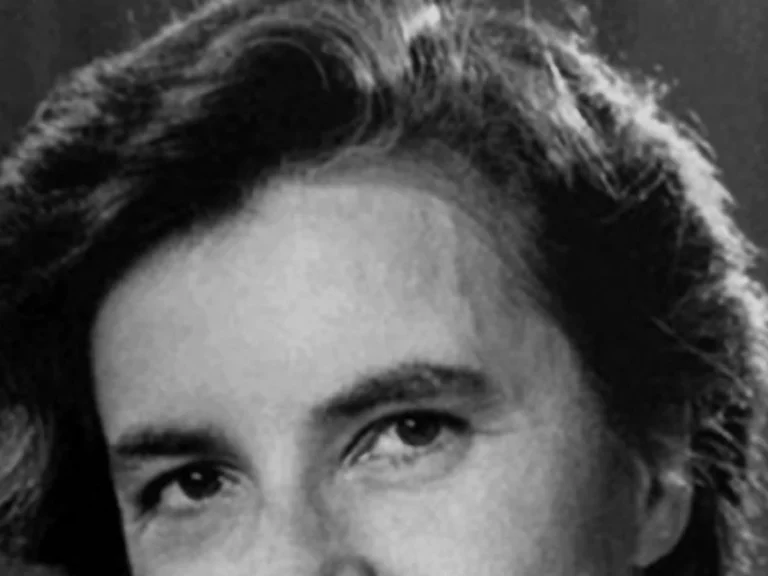

For decades, popular science history harbored an enduring myth: British biophysicist Rosalind Franklin was a gifted X-ray crystallographer who failed to grasp the significance of her own data. According to this narrative, it took James Watson and Francis Crick to decipher the iconic Photograph 51 and uncover the double-helix structure of DNA, earning them the 1962 Nobel Prize. However, groundbreaking archival discoveries published in the Journal of the History of Biology dismantle this myth, proving that Franklin had deduced DNA’s helical geometry well before Watson and Crick and was preparing to publish her findings.
The Myth of Watson’s “Aha Moment” and the Lab Automaton
In his 1968 memoir The Double Helix, James Watson famously recounted his encounter with Franklin’s data as a sudden lightning bolt of inspiration, claiming the cross-shaped diffraction pattern could only signify a helix. In the same breath, he painted Franklin as a stubborn lab technician who lacked the theoretical insight to interpret her own crystallography patterns.
Unbeknownst to Franklin, her King’s College colleague Maurice Wilkins showed her high-resolution diffraction photograph to Watson and Crick. Armed with her precise helical measurements, the Cambridge duo rapidly constructed a physical wire model and claimed the discovery.
“She took Photograph 51 because she wanted to get a really refined version for publication. Making the effort to take a better photograph of the same sample is a clear sign she knew she had something really important on her hands.”
Alistair Sponsel, historian of science at the Science History Institute in Philadelphia
The Tale of Two Plates: Photograph 49 vs. Photograph 51
Historian Alistair Sponsel and molecular biophysicist Brian Sutton of King’s College London conducted an extensive review of freshly unearthed notebooks belonging to Franklin and her student Raymond Gosling. Their findings reveal that Photograph 51, captured in May 1952, was never an isolated experimental shot.
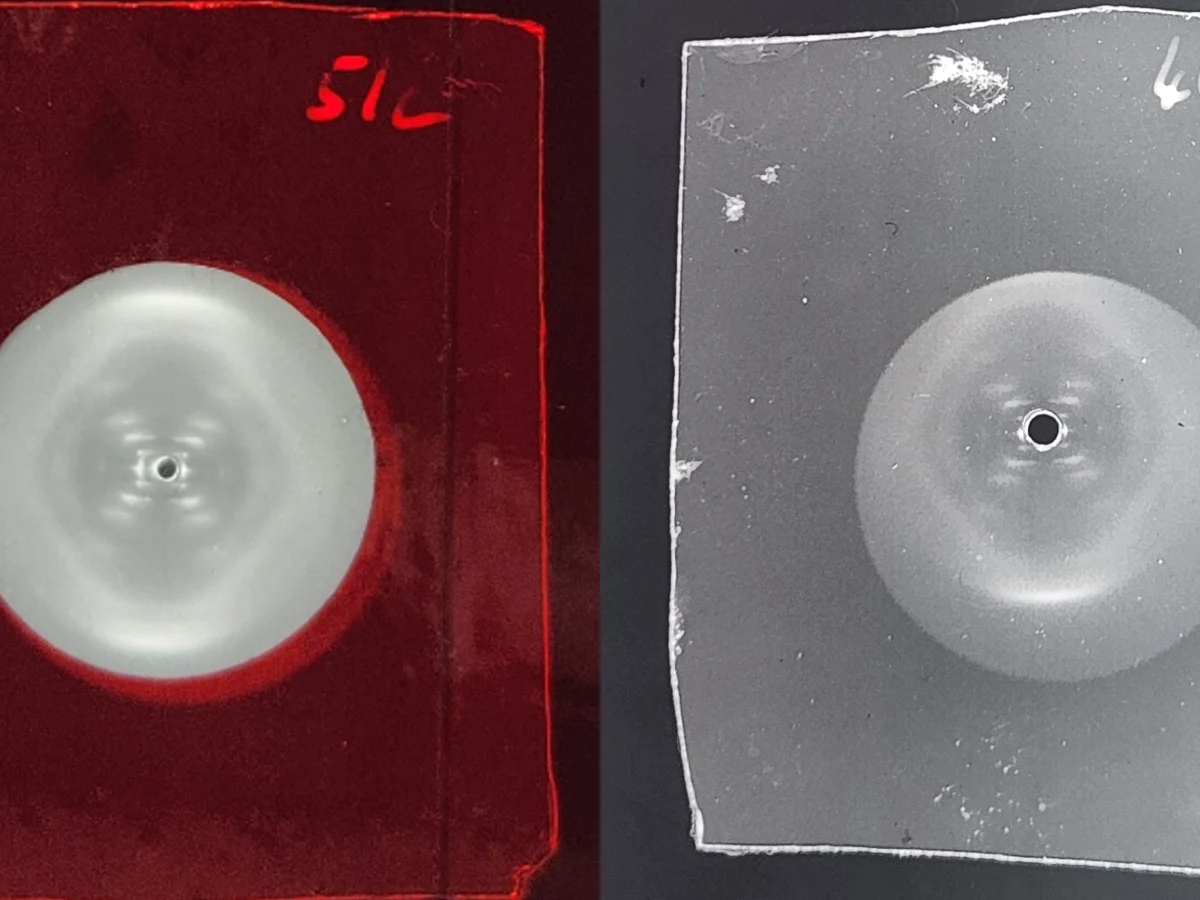
On the very day Franklin inspected Photograph 49, she recorded specific helical symmetry and structural parameters in her lab notebook, immediately ordering a fresh, ultra-clear exposure—Photograph 51—tailored specifically to serve as the visual centerpiece for publication.
Two Distinct Classes of Scientific Images:
- Photograph 49: The raw analytical image from which she derived quantitative pitch and diameter measurements.
- Photograph 51: The refined exhibition image created specifically to communicate the helical discovery with maximum clarity.
- Structure A vs Structure B: Franklin recognized DNA adopted two states—dehydrated Form A (rich in diffraction reflections) and hydrated Form B (the living double helix)—and methodically worked through both.
Why Rosalind Franklin Did Not Rush to Print
Critics have often questioned why Franklin held Photograph 51 in her drawer for months rather than publishing immediately. The newly analyzed documents clarify her rigorous scientific ethics. In February 1952, Franklin established a systematic research protocol to completely map Structure A before proceeding to Structure B.
While Franklin was methodically verifying every mathematical equation, her data was leaked without attribution. Watson and Crick capitalized on her rigorous groundwork to finalize their celebrated model in 1953.
Modern genomics owes its foundation to this breakthrough: we previously explored how genetic sequencing reveals how DNA shapes human traits, a revolution made possible by Franklin’s pioneering crystallography.
Restoring Historical Justice
Rosalind Franklin passed away in 1958 at just 37 years old from ovarian cancer, likely exacerbated by her extensive work with ionizing radiation. Since Nobel prizes cannot be awarded posthumously, she was excluded from the 1962 ceremony.
Today, archival evidence finally cements Franklin’s legacy not merely as an unsung contributor, but as a co-discoverer and visionary scientist whose analytical brilliance deciphered the fundamental architecture of life.
Sources: Research by Alistair Sponsel and Brian Sutton published in the Journal of the History of Biology (DOI: 10.1007/s10739-026-09866-7).