

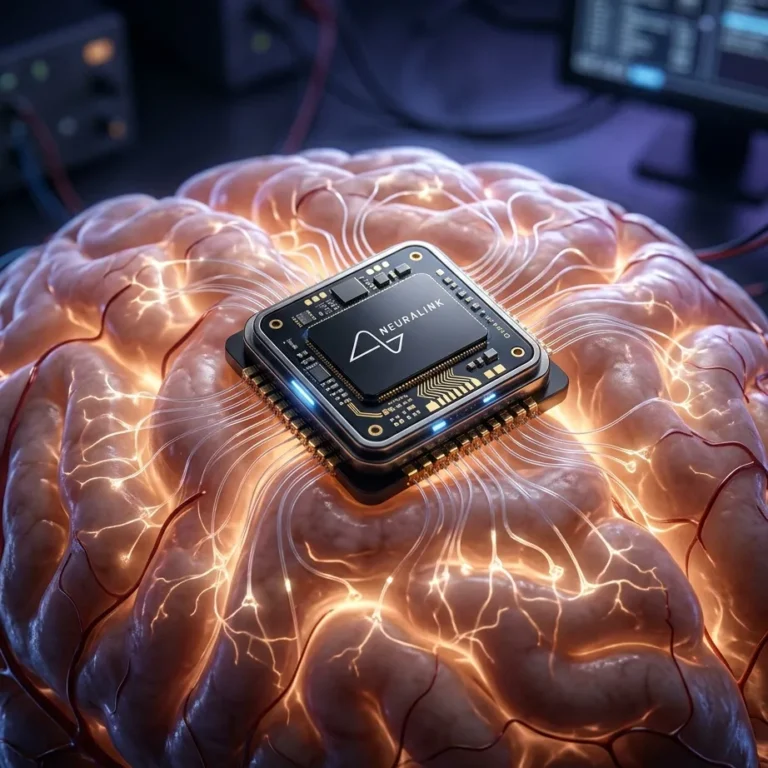

Noland Arbaugh, the first person to receive a Neuralink implant, has demonstrated the incredible capabilities of the technology by playing chess on a computer using only the power of his thoughts. The broadcast, hosted by Elon Musk’s company, marks a historic milestone in the development of brain-computer interfaces (BCIs). This event not only proves the chip’s functionality but also opens up entirely new perspectives for paralyzed individuals worldwide.
How the Telepathy Neurochip Works
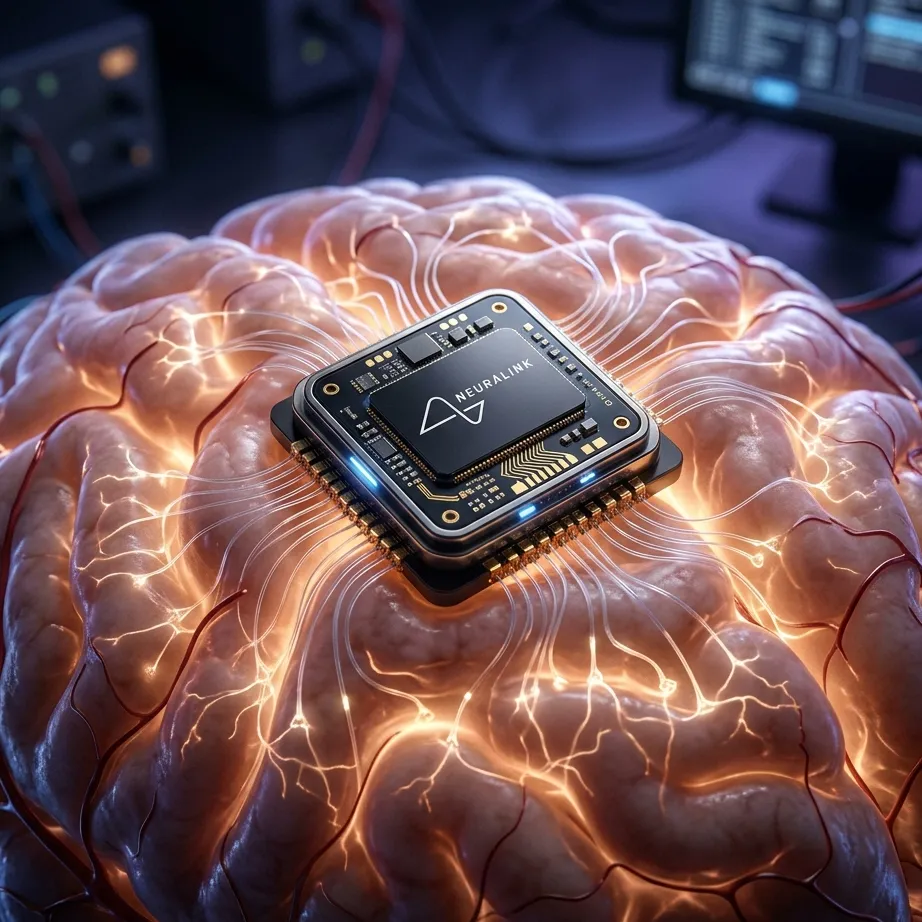
Neuralink’s device, named Telepathy, is a tiny implant about the size of a coin. It contains 1,024 ultra-thin electrodes distributed across 64 threads. These threads are inserted directly into the brain’s motor cortex—the area responsible for planning and executing movements. A surgical robot implants them with microscopic precision, avoiding damage to blood vessels.
The chip reads the electrical signals of neurons when the patient merely imagines a movement and transmits them via Bluetooth to an external computer, which decodes these intentions into actual cursor commands. Recently, scientists also learned how to use AI to diagnose Parkinson’s disease by belly button smell—another example of how technology is reshaping medicine.
“It’s Like Using The Force from Star Wars”
29-year-old Noland Arbaugh was paralyzed below the shoulders eight years ago following a diving accident. Before the surgery, he was forced to use a special mouth stick to interact with his tablet, which required immense physical effort and assistance from caregivers.
“At first, I had to think really hard about moving my right hand. But now it has become intuitive. I just look at the screen, and the cursor moves where I want it to. It’s like telekinesis or using The Force from Star Wars”
Noland Arbaugh, the first Neuralink patient
In addition to chess, Arbaugh shared that the chip allowed him to play Civilization VI for eight hours straight, taking a break only to recharge the implant. Charging is done wirelessly via a special wearable device.
Challenges and Setbacks of Early Trials
Despite the colossal success, the trials have not been without difficulties. A few weeks after the surgery, some of the electrode threads began to retract from the brain tissue, leading to a decrease in cursor speed and accuracy. Instead of performing a second surgery, Neuralink engineers reconfigured the decoding algorithms via software updates. They made the system more sensitive to the remaining signals, which not only restored but exceeded the initial performance.
This incident highlights the complexity of creating durable brain implants, as the brain constantly pulsates within the cerebrospinal fluid, creating mechanical stress on any foreign bodies.
The Future of Medical Gadgets and Cyborgization
Neuralink’s success heralds a new era in neuroprosthetics. The company’s primary goal for the coming years is to enable people with quadriplegia to control computers and mobile gadgets faster than healthy individuals can with their hands. In the long term, Elon Musk has announced plans to cure blindness, restore memory, and even achieve a symbiosis between the human brain and artificial intelligence.
Competitors like Synchron (developing stentrodes inserted through blood vessels) and Precision Neuroscience are also actively advancing their clinical trials. The battle for the BCI (Brain-Computer Interface) market has officially begun, and it is a massive victory for patients.
Sources: Official Neuralink blog, broadcast on X (Twitter).