

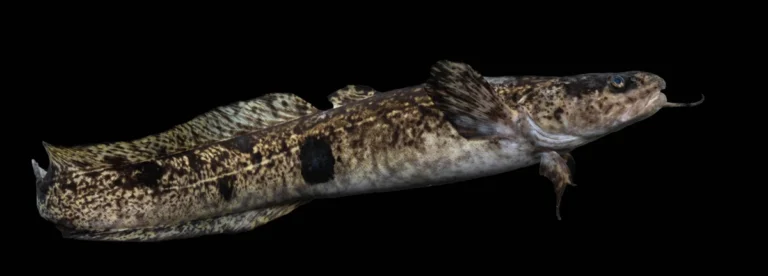

During a routine fisheries assessment in Oswego Harbor on Lake Ontario, biologists with the U.S. Fish and Wildlife Service (USFWS) hauled aboard a truly astonishing specimen: a vibrant yellow burbot xanthochromism mutation that turned a nocturnal, benthic-dwelling predator into an incandescent golden-yellow creature. Occurring in fewer than one in a million individuals in the wild, the rare discovery offers freshwater biologists unique insights into pigmentary genetics, evolutionary fitness, and the severe ecological costs of losing camouflage.
An Unexpected Catch in Oswego Harbor: Why Burbot Rarely Venture into the Shallows
Biologists from the USFWS Lower Great Lakes Fish and Wildlife Conservation Office, partnering with researchers from the U.S. Geological Survey (USGS), were conducting a routine Aquatic Invasive Species Early Detection and Monitoring survey along the Upstate New York shoreline. While deploying benthic nets to inventory native and non-native taxa, the team retrieved a catch that left seasoned ichthyologists completely speechless: emerging from the murky depths was a large fish boasting the brilliant yellow coloration of an ornamental canary.
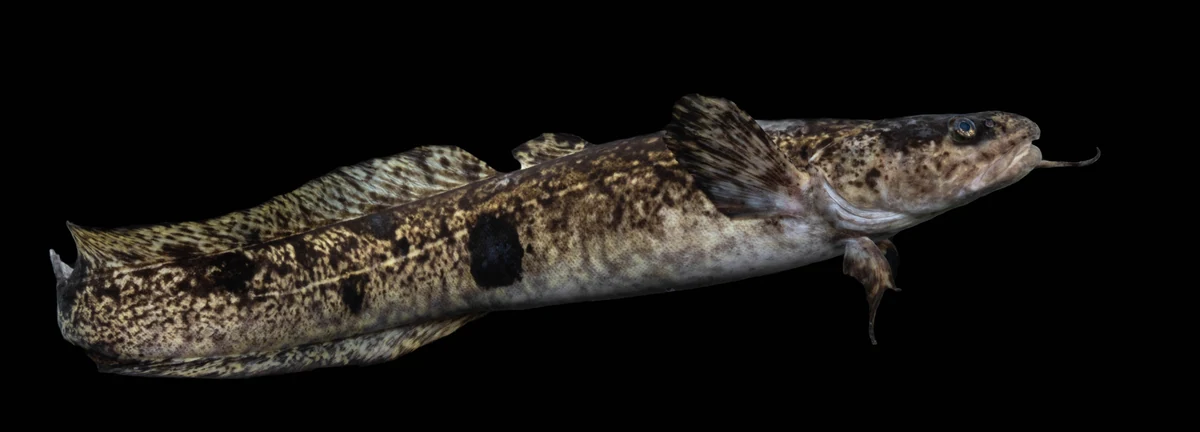
Morphological examination swiftly confirmed the identity of the animal: a burbot (Lota lota), the only strictly freshwater member of the cod family (Gadidae). Detecting a burbot in the shallow, semi-enclosed waters of Oswego Harbor was itself a remarkable event: burbot populations in Lake Ontario have experienced prolonged historical declines due to sea lamprey predation and warming water temperatures, with mature adults almost exclusively confined to deep, frigid benthic depths between 20 and 100 meters.
Much like modern breakthroughs in evolutionary biology and cellular genetics, determining the physiological consequences of this rare anomaly required immediate transport to leading veterinary diagnostic facilities in North America.
The Biochemistry of Xanthochromism: Chromatophores and Melanin Suppression
Under normal circumstances, the burbot is a master of camouflage. Its elongated, serpent-like body is cloaked in small, deeply embedded cycloid scales and a thick mucus layer patterned with mottled dark olive, deep brown, and slate-gray camouflage. This cryptic patterning allows the nocturnal predator to blend seamlessly into rocky substrates, gravel beds, and submerged timber while ambushing round gobies, sculpins, and crustaceans.
In this individual, a rare genetic condition known as xanthochromism (or xanthism) radically altered skin pigment distribution. Fish dermal pigmentation is governed by specialized chromatophores: melanophores (synthesizing dark brown and black eumelanin), xanthophores (storing yellow pteridines and carotenoids), and erythrophores (red pigments). The mutation selectively shuts down melanin enzymatic pathways, allowing vibrant carotenoid pigments to dominate without visual suppression.
Unlike complete albinism (characterized by total amelanosis and unpigmented pink eyes) or leucism (piebald, patchy pigment loss), xanthochromism yields an intense, uniform golden-orange hue throughout the scales. Ichthyologists note that xanthochromism is substantially rarer in wild fish populations than either albinism or melanism.
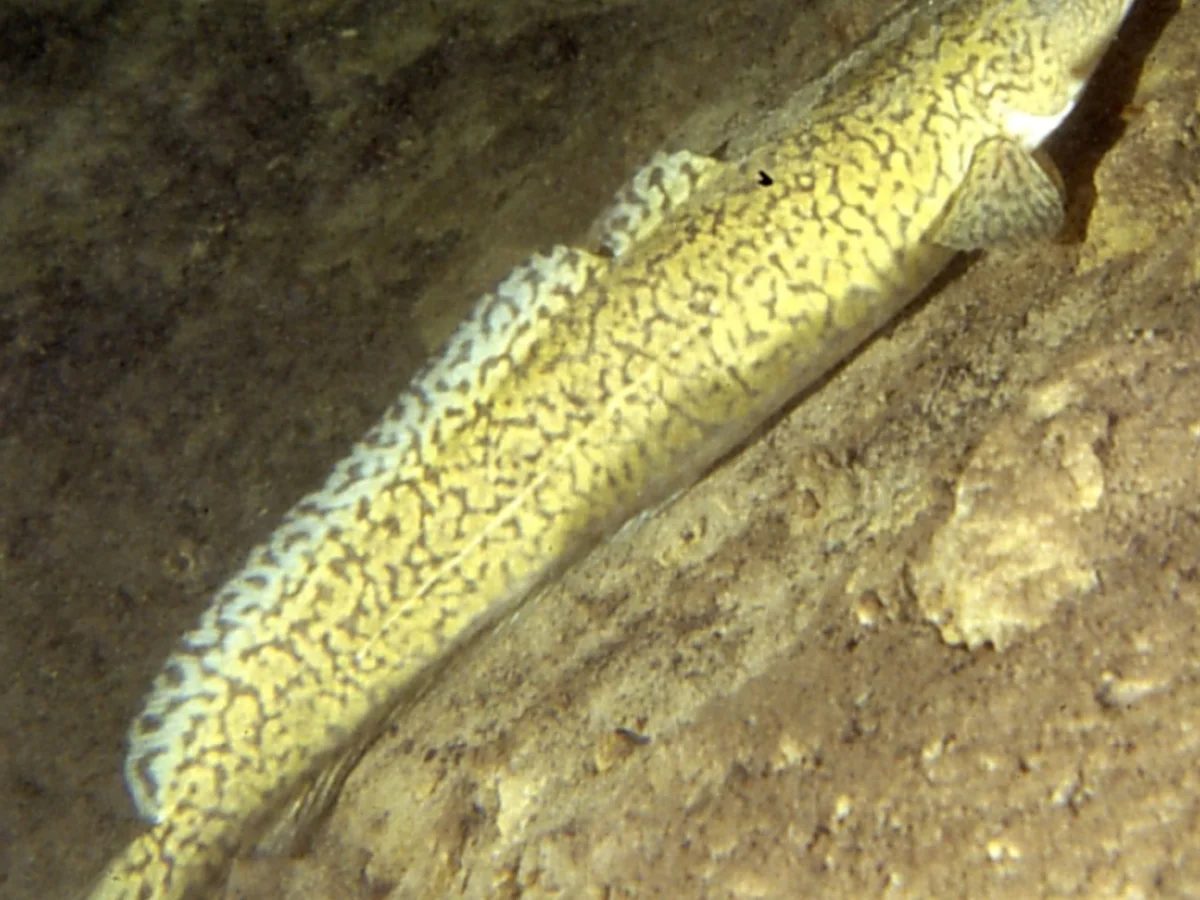
«This is an extraordinary biological discovery. Detecting a burbot inside Oswego Harbor was already remarkable, but uncovering a specimen with xanthochromism is truly one in a million. The fish was emaciated—without camouflage, survival in the benthic zone is immensely difficult.»
Field Biologists, Lower Great Lakes Fish and Wildlife Conservation Office (USFWS)
The Cost of Golden Hues: Why a Stunning Mutation Threatened Survival
While the fish presented a visually stunning spectacle, initial clinical inspection revealed an alarming physical condition: the specimen was noticeably emaciated, underweight, and physiologically distressed. Its cranial muscle mass and visceral fat reserves were severely depleted compared to standard length-to-weight metrics for healthy Great Lakes burbot.
The cause of this emaciation stems directly from its vibrant coloration. The burbot is an ambush predator relying on stealth and crypsis to strike unsuspecting prey in low-light environments. Deprived of its dark camouflage, the bright yellow fish acted as a luminous beacon against the dark lakebed: prey species detected its approach well outside strike range, while the fish itself became a conspicuous target for apex predators such as northern pike, walleye, and double-crested cormorants.
Recognizing the immense scientific importance of the animal, USFWS field personnel stabilized the burbot in an oxygen-enriched, chilled transport tank and rushed it to the Cornell University College of Veterinary Medicine. Specialists at Cornell initiated supportive therapy and commenced comprehensive genetic sequencing.
Xanthochromism in wild Gadiformes represents the first verified occurrence in the history of Great Lakes fisheries surveys.
The conspicuous bright yellow body made stealth hunting impossible, leading to severe nutritional deficit and emaciation.
The live specimen was transferred to Cornell College of Veterinary Medicine for rehabilitation and genetic analysis.
The expression of rare recessive traits highlights population bottlenecks and inbreeding trends in Lake Ontario burbot.
Burbot Ecology in the Great Lakes and Climate Pressures
The burbot (Lota lota) occupies a vital niche in cold-water freshwater ecosystems across the northern hemisphere. Remarkably, it is the only temperate freshwater fish species that spawns in mid-winter—depositing millions of pelagic eggs beneath solid sheet ice in January and February at water temperatures near 1–2 °C. Its unique ability to maintain robust metabolic activity in near-freezing water positions it as a keystone benthic regulator.
However, over recent decades, burbot numbers in Lake Ontario have faced severe headwinds. Habitat siltation, historic sea lamprey (Petromyzon marinus) parasitism, and warming summer epilimnions driven by global climatic shifts have compressed available thermal habitat. Burbot require cold, highly oxygenated hypolimnetic waters to thrive.
Studying surviving individuals—particularly those displaying genetic mutations—provides conservation biologists with valuable metrics regarding genetic diversity. In depleted, fragmented populations, increased inbreeding frequently elevates the phenotypic expression of rare recessive traits like xanthochromism.
- Xanthochromism stems from a selective genetic disruption of dark eumelanin production.
- The vivid yellow-orange hue is caused by carotenoids and pteridines stored in xanthophores.
- Unlike albinos, xanthochromic fish maintain normally pigmented dark retinas.
- Natural selection aggressively culls brightly colored mutants due to increased predation risk.
Scientific Implications for Genetics and Freshwater Management
Genomic sequencing conducted by researchers at Cornell University will map the precise genetic loci responsible for melanin synthesis inhibition in Gadiformes. While xanthochromism has been occasionally observed in freshwater bass, catfish, and yellow perch, this represents the first documented case in a wild Great Lakes burbot.
Furthermore, comprehensive toxicology screenings of plasma and gill tissues will evaluate bioaccumulated contaminants in Oswego Harbor, utilizing the fish as a bioindicator of regional water quality.
The golden burbot of New York serves as a poignant reminder of evolutionary trade-offs: a mutation that created an extraordinary natural wonder in human eyes proved nearly fatal in the wild, demonstrating the vital necessity of natural camouflage in freshwater ecology.