


A synthetic protein engineered with artificial intelligence has successfully switched on faulty insulin receptors in laboratory mice even when insulin itself could not open them. Published in Science Translational Medicine, the breakthrough points toward a new way to treat rare, life-threatening genetic forms of severe insulin resistance.
When Insulin Alone Fails: The Challenge of Genetic Resistance
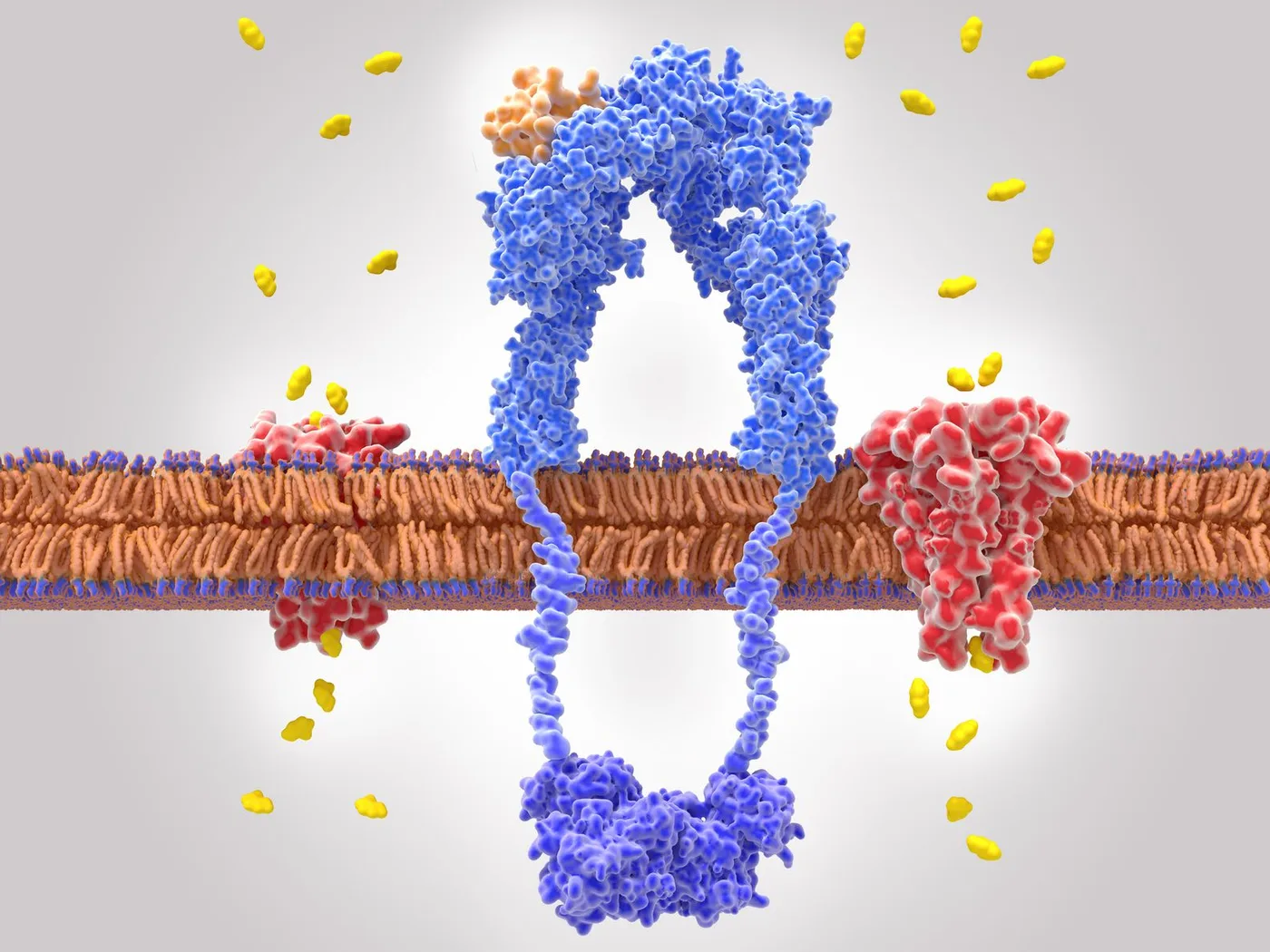
Whenever blood sugar rises after a meal, the pancreas secretes insulin, a hormone that binds to protein gates on cell surfaces known as insulin receptors. That binding alters the receptor’s three-dimensional shape, triggering an intracellular cascade that instructs cells to absorb glucose.
Yet more than 150 mutations in the insulin receptor gene can break this lock-and-key mechanism. In one of the gravest inherited forms, Donohue syndrome, infants suffer dangerously high glucose after eating paired with severe drops between meals, and according to clinical data in the Journal of Clinical Research in Pediatric Endocrinology, most children with the condition die before their first birthday.
“Some patients produce extremely high levels of insulin, but their receptors cannot respond properly,” study co-author Eunhee Choi (Eunhee Choi), a cell biologist at Columbia University, told Live Science. Simply administering higher doses of insulin fails to rescue the broken receptor, prompting her team to engineer an alternative activator.
Designing RF-409 With AI to Activate Insulin Receptors Differently
In 2025, Choi and colleagues used computational protein-design tools including AlphaFold2 to create synthetic proteins capable of activating insulin receptors differently from native insulin, reporting those initial candidates in Molecular Cell. Among them, a protein called RF-409 lowered glucose in both healthy mice and mice with obesity.
In the new study published November 25, 2026 in Science Translational Medicine, the team tested whether RF-409 could rescue defective receptors carrying disease-causing mutations. Experiments in cultured mouse and rat cells as well as healthy mice confirmed that RF-409 reproduces almost the complete metabolic and cellular signaling profile of natural insulin.
Even better, RF-409 exhibited a bloodstream half-life nearly 60 times longer than insulin in mice, staying active far longer before degrading. Dr. Rajiv Agarwal (Rajiv Agarwal), a nephrologist at Indiana University School of Medicine not involved in the work, noted that mimicking full insulin signaling—not just a partial slice—is essential for infants who require healthy growth alongside blood-sugar control.
«It is like designing a new key to open a defective lock. From a computational protein-design perspective, this is a major advance because it demonstrates that entirely new proteins can be engineered to restore receptor function without correcting the underlying genetic mutation.»
Kalaiarasan Ponnusamy, Computational Biologist at SRM Institute of Science and Technology, India
Bypassing the Broken Lock: 60% Glucose Drop in Mutant Mice
To test defective receptors directly, the scientists genetically engineered mice carrying a mutation identified in patients with Donohue syndrome that warps the binding pocket and blocks insulin attachment. Compared with mice holding a healthy gene copy, these animals showed roughly 2.5 times higher blood glucose and 10 times higher fasting insulin levels.
Computer modeling predicted that RF-409 could latch onto an undamaged region and hold the receptor in its active conformation. True to the models, regular insulin injections barely budged blood sugar in the mutant mice, whereas RF-409 cut blood glucose by approximately 60 percent within two hours.
Over 14 days of continuous treatment, five mice receiving RF-409 maintained lower blood sugar, preserved body weight and abdominal fat stores, and suffered less pancreatic damage than five saline-treated controls. Advances in metabolic therapeutics continue expanding rapidly alongside bioelectronic implants for clearing blood sugar and revised clinical definitions of metabolic disease.
RF-409 cut blood sugar by roughly 60% in two hours in mutant mice where standard insulin failed.
The engineered protein stayed active in mouse circulation nearly 60 times longer than natural insulin.
Two weeks of treatment prevented dangerous weight loss and reduced pancreatic tissue damage.
Future studies will evaluate long-term tissue effects, immune responses, and which mutations respond.
Which Mutations Could Respond to AI-Designed Activators?
Kalaiarasan Ponnusamy (Kalaiarasan Ponnusamy), a computational biologist at the SRM Institute of Science and Technology in India who was not involved in the research, described the achievement as a major milestone because it restores function without editing the patient’s underlying DNA.
Still, Ponnusamy cautions that this strategy has clear biological boundaries. It can only rescue defective insulin receptors that still reach the cell surface and retain intact internal signaling machinery.
Mutations that prevent receptors from folding, traveling to the outer membrane, or transmitting chemical signals inside cells will likely remain unresponsive to RF-409. Mapping exactly which of the 150-plus known mutations qualify is now a top priority for Choi’s laboratory.
- RF-409 was engineered using AI structural tools including AlphaFold2.
- Mice carrying a Donohue syndrome mutation had 2.5× higher blood sugar and 10× higher fasting insulin.
- The therapy works only if mutant receptors still reach the cell surface and retain signaling ability.
- Preclinical mouse results require extensive immune and safety testing before human trials.
Safety Hurdles Before Human Trials Begin
Translating a mouse breakthrough into a human therapy demands rigorous safety testing. Agarwal points out that researchers must carefully check whether the human immune system treats a synthetic AI-designed protein as foreign and mounts antibodies against it during long-term dosing.
Running clinical trials in infants with ultra-rare genetic disorders also poses substantial logistical and ethical challenges. Even so, clinicians view RF-409 as an exciting proof of concept—one of the first strategies to directly overcome the molecular defect itself rather than merely managing downstream symptoms.