

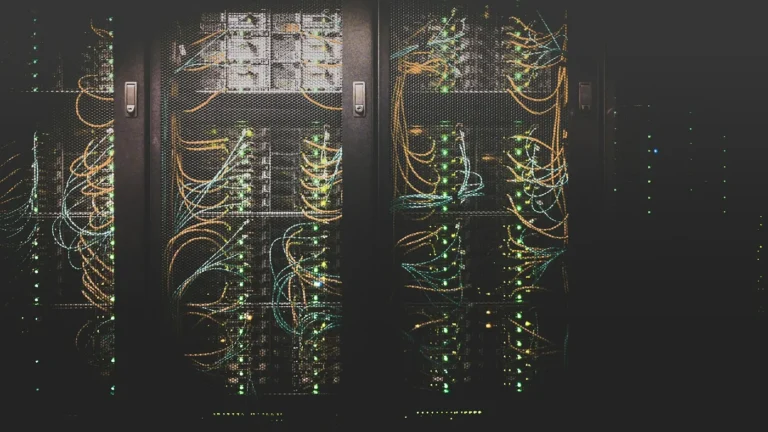

Diplomatic efforts at the COP31 climate summit met with stark resistance when only 11 nations agreed to ratify a landmark accord curbing the catastrophic environmental impact of artificial intelligence.
Environmental Impact of Artificial Intelligence: The Antalya Pledge and the Great Superpower Boycott
During the 31st United Nations Climate Change Conference (COP31) held in Antalya, Turkey, global leaders unveiled the Antalya Artificial Intelligence Pledge. Formulated by Turkey’s COP31 Presidency alongside the International Telecommunication Union (ITU) under Secretary-General Doreen Bogdan-Martin, the voluntary framework was designed as humanity’s first unified environmental standard governing artificial intelligence data infrastructure.
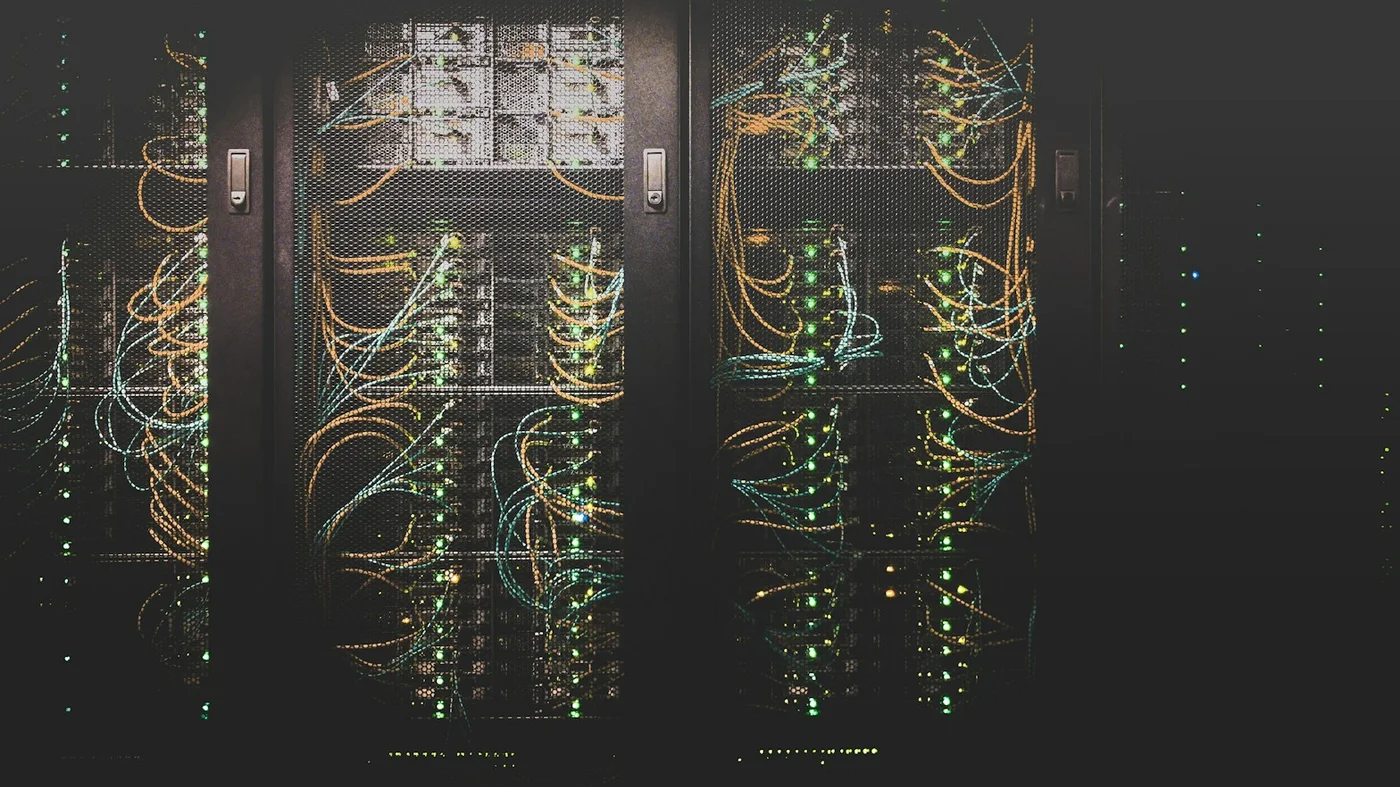
However, the formal signing ceremony underscored a glaring diplomatic fracture. Out of nearly two hundred member states, only 11 countries formally committed to the pact: Algeria, Andorra, Brazil, Colombia, Germany, Luxembourg, Sierra Leone, Somalia, South Korea, Turkey, and Uganda. The primary developers and hosting nations of global high-density computing—namely the United States, China, and the United Kingdom—conspicuously declined to sign.
Analysts at the International Energy Agency (IEA) caution that without binding participation from Washington and Beijing, who host over 85% of hyperscale facilities worldwide, the environmental impact of artificial intelligence will continue its unchecked surge, directly imperiling global net-zero milestones.
The AI Power Crunch: How Generative Algorithms Drain Global Electricity Grids
Training and inferencing modern multimodal large language models (LLMs) requires staggering quantities of baseload electric power. Peer-reviewed findings from the Massachusetts Institute of Technology (MIT) and Stanford University indicate that training a frontier model of GPT-4 or Gemini Ultra scale consumes thousands of megawatt-hours—equivalent to decades of household power consumption.
While a typical Google text search uses around 0.3 watt-hours, generating an enriched response through a reasoning model demands anywhere from 3 to 9 watt-hours, representing a 10- to 30-fold increase. According to IEA projections, total electricity consumption by data centers worldwide, which stood at roughly 460 terawatt-hours (TWh) in 2022, will surge past 1,050 TWh by the end of 2026—eclipsing the total annual electrical consumption of Japan.
In computing epicenters like Northern Virginia or Dublin, Ireland, server clusters consume 20% to 30% of total regional power supply. To prevent grid collapses, utility providers are extending the life of decommissioned coal facilities and natural gas turbines, directly counteracting national climate targets.
Crucially, the volatility of deep learning training runs introduces extreme strain on utility transmission infrastructure. Unlike legacy cloud hosting with stable base loads, parallelized training jobs generate sharp multi-megawatt power spikes that challenge grid frequency regulation, compelling regional suppliers to rely on spinning fossil fuel reserves.
«We cannot allow the greatest digital leap of the twenty-first century to be fueled by the coal infrastructure of the nineteenth. Artificial intelligence must accelerate ecological solutions rather than depleting municipal water reserves and overloading power grids.»
Doreen Bogdan-Martin, Secretary-General, International Telecommunication Union (ITU)
The Hidden Water Crisis: Millions of Gallons Evaporating for Chip Cooling
Beyond sheer electricity, dense server racks housing thousands of high-end accelerator chips generate extreme thermal dissipation. To prevent silicon junctions from exceeding operational thermal thresholds, modern facilities rely on industrial evaporative cooling towers that convert potable water into airborne vapor.
A standard 100-megawatt hyperscale data center can evaporate up to several million liters of fresh water every single day. Landmark research conducted by Shaolei Ren’s engineering team at the University of California, Riverside revealed that engaging in a standard 20-to-50 query dialogue with a conversational AI model effectively evaporates 500 milliliters of pristine water.
In drought-stricken areas such as the American Southwest and Southern Europe, computing clusters are locked in fierce resource competition with municipal reservoirs and agricultural irrigation, sparking growing civic protests against new server zoning permits.
Environmental hydrologists emphasize that evaporative cooling towers not only deplete drinking water aquifers but also necessitate heavy biocidal chemical treatment. The discharge of thermal blowdown effluent into local watersheds disrupts aquatic ecosystems, compounding regional biodiversity degradation.
Global datacenter power needs will double to over 1,050 TWh annually by 2026, matching the combined annual electricity consumption of Japan or Germany.
A single 100 MW server facility evaporates millions of liters of potable water daily, triggering acute resource strain across arid agricultural regions.
The United States, China, the UK, and Big Tech giants declined to sign the Antalya Pledge due to the geopolitical race for Artificial General Intelligence dominance.
Germany, South Korea, Turkey, Brazil, and 7 other nations are instituting mandatory PUE efficiency benchmarks and direct-to-chip liquid cooling mandates.
Geopolitical Competition: Why National Security Trumps Climate Pledges
The refusal of the United States and China to endorse the Antalya Pledge stems from an intense geopolitical race to achieve Artificial General Intelligence (AGI) and military computing supremacy. Under intense technological rivalry, mandatory environmental caps on data center power allocations are viewed by policymakers as unacceptable strategic vulnerabilities.
Major tech corporations—including Microsoft, Google, Amazon, and Meta—have pledged to power future campuses via nuclear Small Modular Reactors (SMRs) and advanced geothermal energy. However, commercial deployment of these advanced reactors is not expected before 2030–2035, while massive computing footprints are being energized today.
Without binding multilateral oversight, voluntary corporate sustainability targets remain fragile. Just as high-precision energy transmission systems optimize electrical grids, the global computing ecosystem urgently requires standardized transparency mandates.
- 11 Signatories: Formally ratified by Algeria, Andorra, Brazil, Colombia, Germany, Luxembourg, Sierra Leone, Somalia, South Korea, Turkey, and Uganda.
- Energy Intensity: A generative AI reasoning query consumes 10 to 30 times more electrical energy than a traditional search engine request.
- Water Equivalence: Every 20 to 50 conversational exchanges with an LLM evaporates approximately 500 mL of clean cooling water.
- Fossil Fuel Reliance: Grid operators in Virginia and elsewhere are delaying the retirement of coal plants to meet peak datacenter power draw.
- Nuclear Lead Times: Commercial Small Modular Reactors (SMRs) contracted by tech companies will not enter commercial operation until the mid-2030s.
Architecting Sustainable Compute: Liquid Cooling, Optical Chips, and District Heating
Despite the diplomatic impasse, the coalition of 11 signatory nations plans to enforce regional procurement mandates across their jurisdictions. The framework introduces mandatory reporting for Power Usage Effectiveness (PUE) and Water Usage Effectiveness (WUE) across all public and commercial computing clusters.
Engineers are pioneering vital technological counter-measures: transitioning from inefficient air conditioning to direct-to-chip liquid cooling and full dielectric immersion, developing optical interconnects to minimize resistive thermal loss, and capturing waste data-center heat to warm municipal district housing and agricultural greenhouses.
The coming decade will decide a critical planetary question: will artificial intelligence accelerate clean energy breakthroughs through novel material discovery and nuclear fusion modeling, or will its relentless energy hunger precipitate an irreversible environmental crisis?