

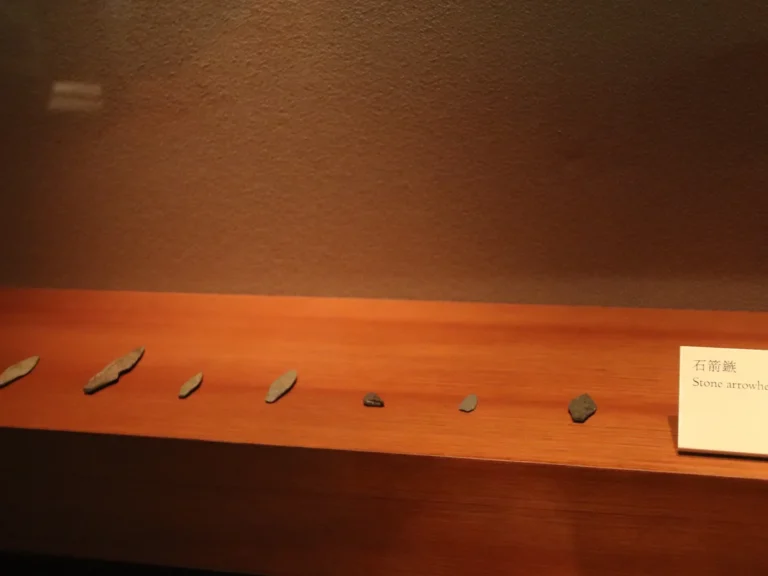

A ground-breaking archaeological discovery has radically reshaped our understanding of prehistoric human cognition and weapon development: the earliest known poisoned weapons in saudi arabia prove that early Homo sapiens utilized lethal plant-based cardiac toxins as early as 125,000 years ago. Published in the prestigious journal Science, the study details excavations along the ancient shoreline of Lake Mundafan in the southern Rub’ al-Khali desert. This monumental finding pushes back the earliest empirical evidence of chemical hunting technology by roughly 65,000 years, shedding unprecedented light on human ingenuity during the ancient ‘Green Arabia’ humid phase.
A Lush Oasis in the Sands: Poisoned Weapons in Saudi Arabia and the Mundafan Basin
Today, the Rub’ al-Khali (‘Empty Quarter’) in the southern Arabian Peninsula is one of the most hyper-arid, scorched, and uninhabitable expanses on Earth. Massive sand dunes rise hundreds of meters into rainless skies. Yet roughly 125,000 years ago, during the Last Interglacial period (Marine Isotope Stage MIS 5e), the global climate was substantially warmer and more humid. Robust monsoon patterns penetrated deep into the Arabian interior, transforming barren dunes into lush grasslands, meandering river valleys, and sweeping lakes—a remarkable paleoclimatic phenomenon termed ‘Green Arabia.’
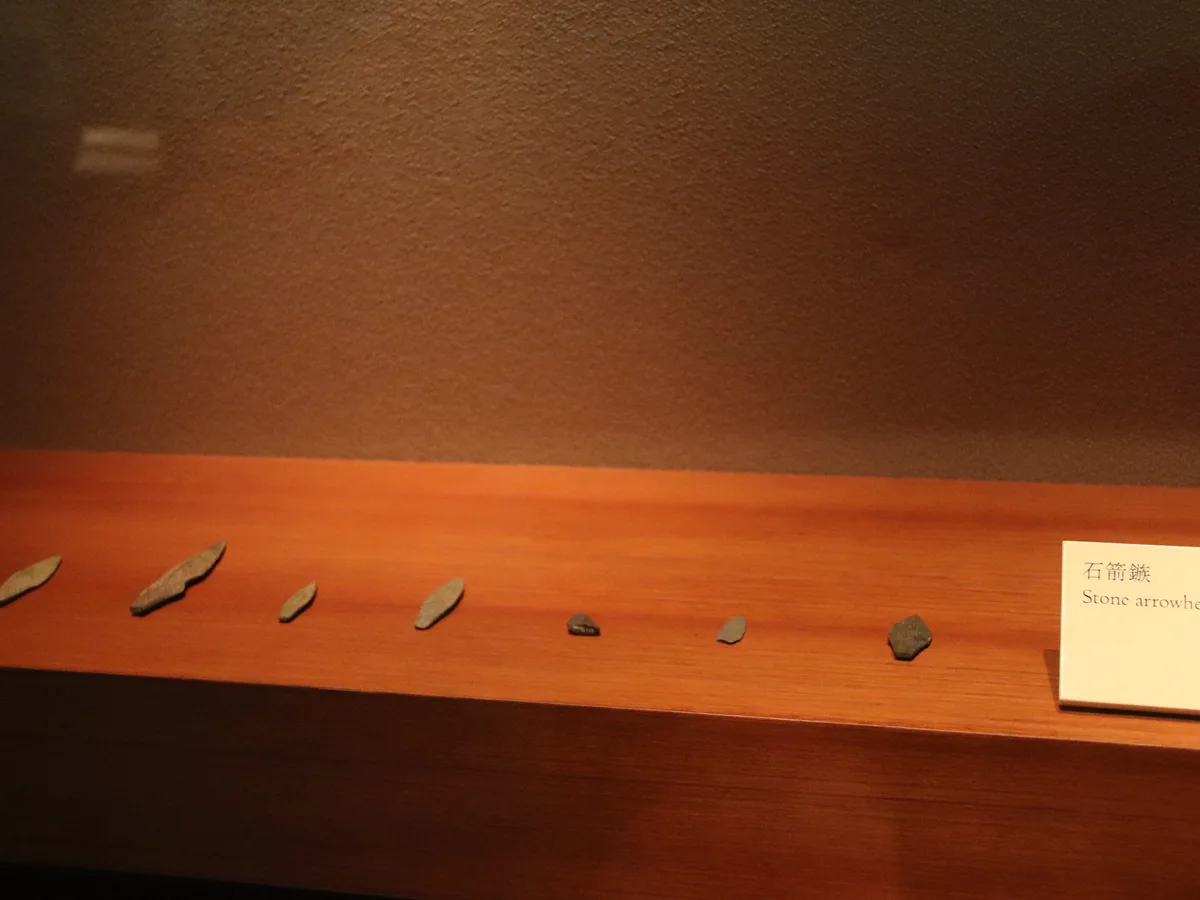
At the heart of this ancient oasis network sat the Mundafan Basin, which held a deep freshwater lake spanning over 130 square miles (330 square kilometers). At the lakeside site of ‘Uruq Aljelibah (‘sand dunes of a watering hole’), an international archaeological team co-authored by Dr. Chris Clarkson uncovered rich Middle Paleolithic tool assemblages, hearths, and butchered faunal remains. Among the knapped stone artifacts, researchers identified finely retouched triangular stone projectile points bearing distinct impact fractures and microscopic organic residues.
These artifacts offer the earliest indisputable physical proof that early human populations migrating out of Africa did not merely wander opportunistically through the Arabian corridor; they arrived armed with sophisticated, specialized weaponry tailored to hunt formidable megafauna.
Biochemical Residue Analysis: Identifying Ouabain and Cardiac Glycosides
Weapon poisoning represents a complex cognitive milestone requiring deep empirical knowledge of botany, toxicology, and mechanics. Unlike blunt trauma weapons, poison relies on delayed biochemical disruption: hunters had to identify toxic plants, extract their sap, blend it with pitch or resin adhesives, and track their prey while the toxin arrested its cardiovascular system.
Using liquid chromatography-tandem mass spectrometry (LC-MS/MS), scientists extracted and analyzed chemical residues trapped in the microscopic surface fissures of the stone points. The biochemical signature matched cardiac glycosides, specifically identifying ouabain-like compounds derived from plants such as Acokanthera schimperi (the arrow-poison tree). Ouabain inhibits the sodium-potassium pump (Na+/K+-ATPase) in cardiac muscle cells, triggering rapid ventricular fibrillation, cardiac arrest, and lethal collapse even in massive quadrupeds.
Furthermore, binocular microscopic inspection detected traces of plant fiber cordage and natural tree resin at the bases of the stone points. This confirms that these items were not hand-held scrapers; they were hafted onto wooden or reed shafts using thermal adhesive resins and sinew bindings to construct high-velocity projectile darts or spears.

«Finding molecular residues of cardiac glycosides on stone points from 125,000 years ago proves that ancient Arabian populations were not merely opportunistic foragers, but sophisticated applied biochemists who mastered natural plant toxins to survive in challenging frontier environments.»
Chris Clarkson, Professor of Archaeology at the University of Queensland and study co-author
Hunting Hippos and Giant Buffalo: Why Chemical Weapons Were Essential for Survival
The faunal remains unearthed at ‘Uruq Aljelibah reveal an astonishing menu of butchered megafauna. Alongside swift gazelles and wild camels, the ancient lake inhabitants regularly slaughtered semi-aquatic hippopotamuses (Hippopotamus amphibius) and the extinct giant long-horned buffalo (Pelorovis oldowayensis), whose massive curved horns spanned over three meters.
Hippos are notoriously aggressive, territorial, and armed with impenetrable hides several centimeters thick over dense subcutaneous fat. Attempting to bring down an adult hippo in hand-to-hand combat using simple thrusting spears was virtually suicidal for Paleolithic hunters. Even a deep spear wound would fail to immobilize an enraged multi-ton animal before it crushed its attackers.
This is precisely where poisoned weapons in saudi arabia provided an evolutionary leap. By delivering a poison-coated projectile from a safe distance, hunters only needed to puncture the animal’s hide. Once in the bloodstream, the cardiac toxin rapidly halted the beast’s heart. This minimized life-threatening close-quarters fighting, drastically lowered hunter mortality, and reliably secured enormous quantities of calorie-dense meat and marrow for the clan.
A 130-square-mile paleolake in the modern Rub’ al-Khali desert formed a vital biological refuge during the Green Arabia interglacial humid epoch.
Mass spectrometry identified plant-based ouabain toxins from Acokanthera, engineered to cause rapid heart arrest in large prey.
Microscopic traces of adhesive tree resin and plant cordage demonstrate advanced projectile shaft manufacturing techniques.
Pushes the earliest documented archaeological record of poisoned hunting weapons from 60,000 years back to 125,000 years ago.
Rewriting Human Prehistory: Chemical Warfare Pushed Back by 65,000 Years
Prior to the Mundafan discoveries, the oldest widely accepted evidence of poisoned hunting weaponry came from southern Africa—notably Border Cave and Sibudu Cave—dating to between 44,000 and 60,000 years ago. Anthropologists widely assumed that weapon poisoning emerged relatively late in human prehistory as part of the Late Stone Age cultural expansion and the invention of the bow and arrow.
The Saudi Arabian evidence shatters that timeline, pushing the antiquity of chemical hunting back by 65,000 years to 125,000 years ago. This demonstrates that anatomically modern humans possessed sophisticated composite tool traditions and empirical pharmacological understanding during the Middle Paleolithic era, long before their widespread dispersal across Eurasia.
The ‘Uruq Aljelibah findings prove that human survival during the Pleistocene was driven by intellectual synthesis rather than physical brute force. When the Green Arabia humid phase eventually waned and the desert returned, these cognitive and technological innovations accompanied early humans across the globe.
- Unprecedented chemical antiquity: poison weapon usage extends 65 millennia earlier than previously established models.
- Green Arabia paleoclimatology: vast lakes in the Rub’ al-Khali served as crucial biological stepping stones for early human migrations.
- Low-risk megafauna hunting: utilizing cardiac glycosides enabled the safe harvest of dangerous multi-ton animals like hippos.
- Composite weapon manufacturing: definitive physical residue of plant adhesives and bindings demonstrates mature modular engineering.