


A pioneering satellite telemetry study conducted across the coastlines of the United Arab Emirates has delivered an eye-opening revelation for marine conservationists: young green turtles uae wetlands refuge dynamics reveal that juvenile reptiles rely not only on pristine coastal mangrove forests, but also thrive within human-modified lagoons. Researchers from the University of Exeter and Sharjah’s Environment and Protected Areas Authority (EPAA) discovered that an artificial marine basin excavated over twenty years ago has evolved into an indispensable foraging nursery for endangered sea turtles.
The Mystery of Juvenile Sea Turtles: Unraveling the «Lost Years» in the Arabian Gulf
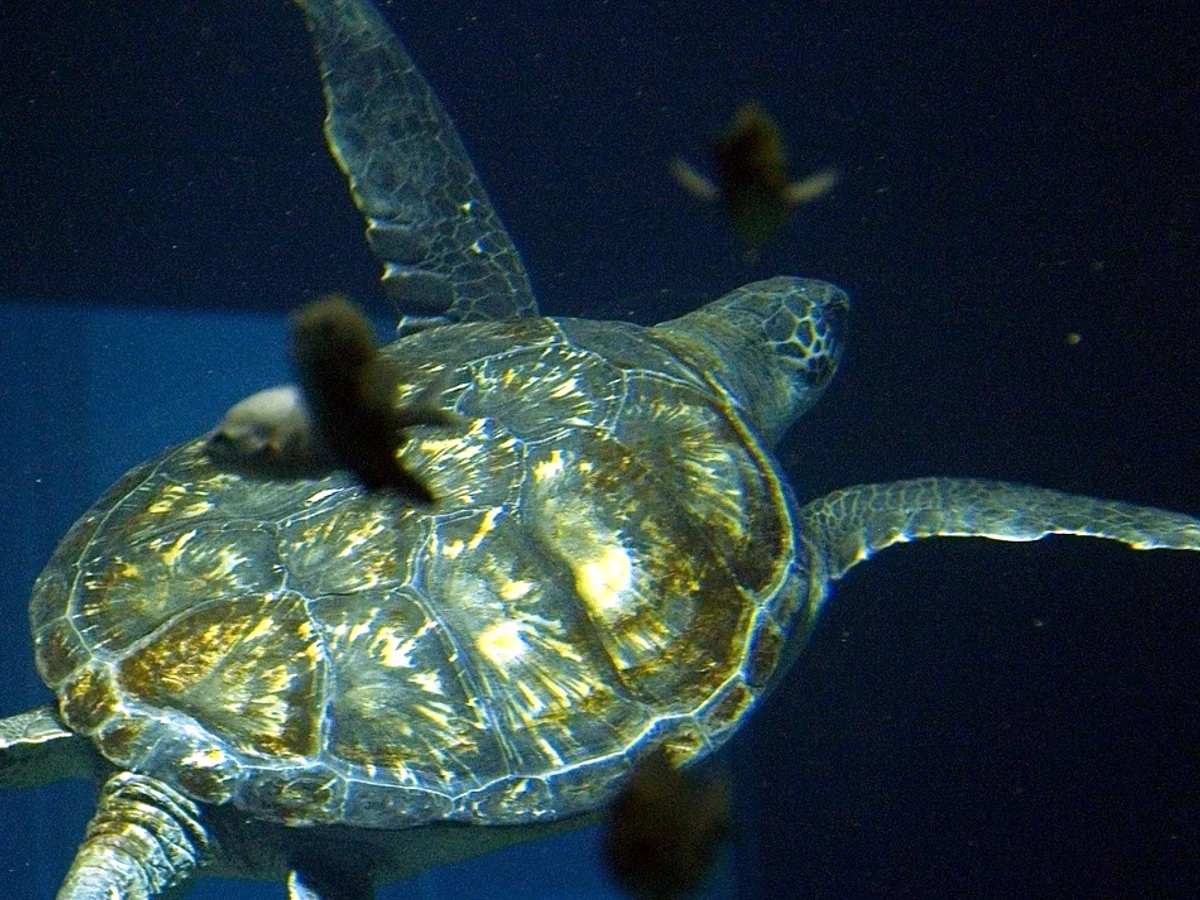
The green sea turtle (Chelonia mydas) is one of the most majestic and ecologically vital marine reptiles in global oceans, categorized as Endangered on the IUCN Red List. For decades, the early developmental stages of these ocean wanderers represented a profound biological mystery known to scientists as “the lost years.” While nesting beaches and adult foraging seagrass meadows were extensively mapped, the whereabouts and habitat preferences of young juveniles remained largely enigmatic.
After hatching and scuttling into the surf, tiny hatchlings disperse into pelagic ocean currents, drifting offshore for several years. Only upon reaching intermediate juvenile dimensions (30 to 45 centimeters in curved carapace length) do they recruit back into shallow coastal wetlands. However, intense urbanization, coastal dredging, and shoreline reclamation projects throughout the Arabian Gulf have severely degraded traditional nearshore nursery habitats.
Coastal wetlands—such as mangrove swamps and tidal saltmarshes—act as critical carbon sinks, protect shorelines from storm erosion, and provide essential nurseries for marine fauna. Much like how modern marine conservation and satellite telemetry tracking of ocean species unlocks migration pathways of endangered whales, deploying satellite transmitters on turtle shells in Sharjah has illuminated how juveniles navigate fragmented coastlines.
The Khor Kalba Field Site: Satellite Telemetry in Sharjah’s Mangrove Sanctuary
Led by marine ecologist Dr. Owen Exeter from the University of Exeter in the UK, alongside researchers from Sharjah’s Environment and Protected Areas Authority (EPAA) and the Sharjah Marine Science Research Centre, the study focused on the Al Qurm Protected Area in Khor Kalba on the eastern Gulf of Oman coastline of the UAE.
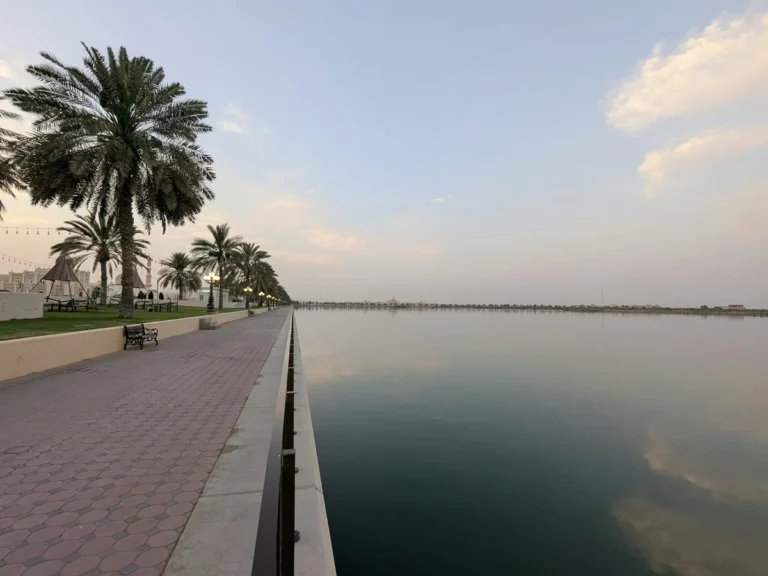
Khor Kalba shelters the oldest and most extensive natural stands of grey mangrove (Avicennia marina) on the Arabian peninsula. Adjacent to these pristine mangroves, however, lies an expansive artificial seawater basin dredged in the early 2000s for an abandoned commercial waterfront marina. The development project stalled and was permanently abandoned, and the basin eventually became integrated into the marine protected reserve.
In a rigorous field tracking campaign detailed in a landmark peer-reviewed scientific paper, conservationists safely captured nine juvenile green turtles, affixing compact satellite transmitters to their carapaces using harmless dental-grade resin. Over seven months of continuous tracking, the transmitters relayed more than 2,800 precise satellite location fixes.
«Nature can find a way to thrive in unexpected, human-made environments too. But this is no substitute for protecting natural habitats: the artificial basin functions as a sanctuary only because it remains seamlessly connected to living mangroves and the open ocean.»
Dr. Owen Exeter, Lead Author, Marine Ecology, University of Exeter
The Artificial Basin as Primary Haven: Why Turtles Prefer Human-Dredged Waters
The spatial tracking data yielded unexpected insights. All nine tagged turtles spent over 80% of their total tracking duration strictly within the boundaries of the marine protected area, remaining within two miles of the wetland mouth. The sanctuary decisively proved its merit as an essential developmental haven.
Yet the most surprising finding was the turtles’ strong affinity for the modified landscape: juvenile green turtles were five times more likely to be located within the deep, artificial basin than within the adjacent natural mangrove channels! Fully 77% of their high-density core-use activity was concentrated within the dredged basin.
“We identified two critical ecological mechanisms explaining this preference,” Dr. Owen Exeter explained. “First, benthic macroalgae rapidly colonized the basin’s deep floor and rocky slopes, providing an abundant, concentrated buffet for herbivorous juveniles. Second, the enclosed, lagoon-like architecture with a single narrow opening creates an effective predator exclusion zone, sheltering vulnerable juveniles from large apex ocean predators such as tiger and reef sharks.”
Satellite tags on juvenile carapaces yielded over 2,800 tracking coordinates across 7 months.
Juveniles were 5x more likely to occupy the dredged basin due to dense algal foraging beds.
One juvenile completed an epic 500-mile ocean crossing south to Masirah Island in Oman.
The main tidal inlet channel remains outside the reserve, leaving waiting turtles exposed to boat strikes.
An Epic 800-Kilometer Ocean Crossing: The Journey to Masirah Island, Oman
While the majority of the tracked turtles exhibited high site fidelity, remaining happily resident in Kalba’s sheltered waters, one juvenile embarked on an astonishing oceanic voyage. After utilizing the protected basin for 93 days, this adventurous turtle exited the wetland and ventured south into the open Arabian Sea.
Navigating commercial shipping corridors and strong seasonal currents, the young turtle completed a phenomenal open-ocean transit of over 500 miles (more than 800 kilometers) south, ultimately establishing itself off the coast of Masirah Island in neighboring Oman—a globally recognized turtle haven.
This long-distance migration underscored the profound ecological value of small coastal wetlands: they serve as indispensable regional staging posts where juveniles rest, forage, and build vital physical reserves before undertaking demanding open-ocean dispersals.
- Juvenile green sea turtles spent over 80% of tracked time within the Al Qurm sanctuary.
- Human-modified lagoons can provide vital wildlife refuges if connected to open marine systems.
- Extending protection to unprotected tidal entrance channels is urgent for regional turtle survival.
- Satellite tracking confirmed vital biological connectivity between UAE nurseries and Omani waters.
Identifying Conservation Gaps: Protecting Unregulated Tidal Access Corridors
Despite the study’s uplifting discoveries, the researchers highlighted an urgent vulnerability in current marine zoning. The primary natural tidal channel that connects the open ocean to both the natural mangroves and the artificial basin currently lies outside the formal marine protected area boundaries.
Telemetry records demonstrated that juvenile turtles routinely congregate in this unprotected entrance channel during low tide, waiting for water levels to rise so they can re-enter the basin. While waiting, the animals are exposed to motorized vessel strikes, recreational fishing line entanglements, and disturbance.
The study’s authors urge environmental authorities in the UAE to formally expand the Al Qurm reserve to incorporate these crucial connecting channels. The Khor Kalba findings offer a powerful lesson for global coastal management: with thoughtful ecological connectivity, modified environments can play a valuable role in wildlife conservation alongside natural wetlands.