

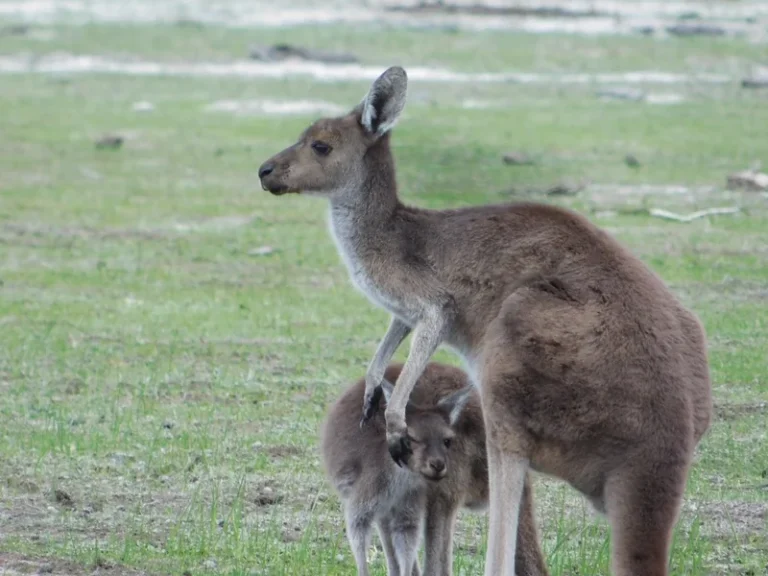

Australia has long captivated naturalists and evolutionary biologists with its extraordinary fauna, where kangaroos, koalas, wombats, and Tasmanian devils reign supreme across diverse habitats. Yet the greatest biological paradox is that the true ancestral homeland of these iconic pouch-bearing creatures lies halfway across the globe. The definitive scientific answer to why are there so many marsupials in australia stems from plate tectonics, fossil excavations, and deep-time climatic shifts. Ancestral metatherians originated in the Americas, traversed an ice-free, temperate Antarctica during the Eocene epoch, and became marooned on an isolated island continent that drifted northward, giving rise to an unprecedented evolutionary explosion free from placental competition.
The Great Island Paradox: Why Are There So Many Marsupials in Australia
Australia has long stood as an evolutionary anomaly in the eyes of naturalists. While placental mammals (Eutheria) — ungulates, carnivores, primates, and rodents — dominate the ecosystems of Africa, Eurasia, and the Americas, Australia remains the unrivaled kingdom of marsupials. More than 250 species of marsupials inhabit the continent and neighboring islands such as New Guinea and Tasmania. They encompass an astonishing spectrum of lifestyles, ranging from giant bouncing kangaroos traversing arid plains to burrowing marsupial moles and tiny carnivorous dunnarts.
For early European biologists, this stark ecological contrast was baffling. For decades, outdated scientific hypotheses claimed that marsupials were simply primitive, inferior evolutionary precursors to placental mammals — living fossils that managed to survive only because Australia was too remote for superior placental beasts to reach. However, modern evolutionary genomics and biomechanical research have thoroughly dismantled this myth. Marsupial reproduction via a maternal pouch is an exceptionally flexible and energy-efficient strategy, brilliantly attuned to Australia’s unpredictable droughts and nutrient-poor soils.
The genuine scientific explanation behind why are there so many marsupials in australia is geological and historical rather than physiological. To understand their current dominance, paleontologists had to piece together plate tectonics and deep-time fossil deposits, reconstructing an era when the Southern Hemisphere’s landmasses formed the united supercontinent of Gondwana, and the South Pole was blanketed in verdant, ancient beech forests.
Just as paleontologists investigate unique evolutionary adaptations and giant claws of ancient reptiles, evolutionary biologists study Australian marsupials as one of the planet’s supreme demonstrations of ecological convergence, where an isolated lineage evolved to fill every niche occupied elsewhere by placental mammals.
South American Roots: The Surprising American Birthplace of Marsupials
One of the most remarkable discoveries in vertebrate paleontology is that Australia is not the birthplace of marsupials. The oldest known stem-marsupials, known scientifically as metatherians, first arose during the Cretaceous period over 100 million years ago in what is now North America. Early fossils such as Sinodelphys and Kokopellia demonstrate that the ancestral split between placentals and marsupials was already well underway while dinosaurs still ruled the land.
Following the catastrophic Cretaceous-Paleogene extinction event 66 million years ago, marsupials expanded southward into South America. For tens of millions of years during the early Cenozoic, South America existed as an isolated island continent, fostering a spectacular radiation of marsupials. This prehistoric menagerie included saber-toothed marsupial predators such as Thylacosmilus, hypercarnivorous borhyaenids, and diverse arboreal omnivores. South America was the crucible where modern marsupial lineages truly took shape.
Genomic sequencing of living species has provided undeniable proof of this South American origin. Biologists discovered that a tiny, reclusive creature inhabiting the temperate valdivian rainforests of Chile and Argentina — the monito del monte (Dromiciops gliroides) — is genetically far closer to Australian kangaroos, koalas, and wombats than it is to any other South American opossum. The monito del monte is the sole surviving member of the order Microbiotheria, the exact ancestral lineage from which all modern Australian marsupials descended.
This striking genetic link confirmed that the founding ancestors of Australia’s marsupials embarked on their evolutionary journey from ancient Patagonia. Yet this realization raised an even more intriguing geographic question: how did tiny, terrestrial mammals cross thousands of miles of open southern ocean to reach Australia?
The earliest marsupial metatherians arose in the Americas, not Australia, proven by Cretaceous and Paleocene fossils dating back over 100 million years.
A warm, temperate rainforest climate in Eocene Antarctica 55 million years ago formed a continuous overland migration route connecting Patagonia to Australia.
Continental drift detached Australia into an isolated “island Noah’s Ark”, permanently shielding its fauna from invasive placental mammal competitors.
Free from placental rivals, marsupials diversified across all niches, evolving into apex carnivores, burrowers, gliders, and specialized megaherbivores.
Ice-Free Antarctica: The Lost Green Corridor of the Eocene
The bridge between South America and Australia was none other than Antarctica. During the Paleocene and early Eocene epochs (approximately 60 to 50 million years ago), our planet experienced a hyperthermal greenhouse climate. Global temperatures were substantially higher than today, and permanent polar ice caps were completely absent. Antarctica was not the frozen, desolate wasteland we know today, but a temperate, humid landmass cloaked in vast forests of southern beech (Nothofagus), podocarp conifers, and lush ferns.
Crucially, the continental fragments of Gondwana had not yet fully parted ways. The southern tip of South America was linked to the Antarctic Peninsula via land bridges and shallow island chains across what is now Drake Passage. Simultaneously, eastern Antarctica remained physically connected to Tasmania and the Australian mainland. This vast, unbroken trans-Antarctic forest corridor provided a continuous terrestrial highway through which plants and animals could migrate eastward across high southern latitudes.
Tangible fossil evidence discovered in Seymour Island’s Eocene geological formations confirmed this hypothesis. Paleontologists recovered fossilized teeth, jaw fragments, and cranial bones belonging to early microbiotherians and other metatherians alongside plant fossils. These small, insect-eating and fruit-eating mammals lived within the Antarctic rainforest canopy, slowly dispersing eastward across generations over millions of years until their descendants stepped foot onto Australian soil.
Eventually, the inexorable force of plate tectonics ended this ancient transit. The Australian plate began tearing away from Antarctica, slowly drifting northward toward warmer subtropical latitudes. Between 45 and 35 million years ago, the opening of the Tasmanian Gateway and Drake Passage severed the final terrestrial ties. The newly formed Antarctic Circumpolar Current encircled the South Pole, freezing Antarctica beneath glaciers and forever isolating Australia’s marsupial migrants in the Pacific.
«Marsupials did not originate in Australia — they arrived via an ancient land bridge when South America, Antarctica, and Australia were connected. When that final continental connection severed between 45 and 35 million years ago, Australia became a giant floating lifeboat, granting marsupials the ultimate evolutionary monopoly to conquer every terrestrial ecological niche.»
Robin Beck, Reader in Evolutionary Biology and Paleontology at the University of Salford
Island Noah’s Ark: Absolute Isolation Without Placental Rivals
The geological detachment of Australia proved to be the single most defining event in the history of modern mammals. While Australia was drifting away, mammalian evolution in the Northern Hemisphere and connected landmasses underwent a dramatic transformation. Advanced placental mammals (Eutheria) developed sophisticated internal gestation and prolonged fetal development, outcompeting and displacing marsupials across Europe, Asia, and North America.
Australia, however, became an inaccessible geographic fortress. Advanced terrestrial placental carnivores and ungulates simply missed the window of opportunity before the Antarctic bridge submerged. The only placental mammals that ever managed to enter prehistoric Australia arrived under exceptional circumstances millions of years later: bats flew across the oceans around 15 to 20 million years ago, and ancestral murine rodents hitched rides on floating vegetation rafts during the Pliocene epoch, approximately 4 million years ago.
Without large placental predators or competing placental herbivores, Australia became a giant, self-contained “Noah’s Ark.” The early marsupial colonists encountered a continent of boundless opportunity, featuring empty ecological niches spanning dense coastal rainforests, expansive river basins, and the drying interior woodlands created by the continent’s gradual northward journey.
As paleontologist Dr. Robin Beck notes, the phenomenon came down to exquisite geological timing. Marsupials successfully navigated the Antarctic transit just before the continental door shut tight, whereas advanced placental competitors arrived at the southern gateway too late, leaving Australia exclusively in marsupial hands.
- Metatherian mammals diverged from placental relatives in the Cretaceous period in North America before migrating into South America.
- During the Paleogene greenhouse climate, Antarctica was lush with temperate rainforests and completely devoid of ice sheets.
- Fossil dental remains of ancient microbiotherians discovered on Seymour Island prove marsupials actively migrated across Antarctica.
- The opening of Drake Passage and the Tasmanian Gateway triggered the Antarctic Circumpolar Current, freezing the continent and isolating Australia.
- Convergent evolution allowed marsupials to mirror placental forms: thylacines mirrored wolves, Thylacoleo mirrored lions, and wombats mirrored badgers.
The Triumph of Adaptive Radiation and Convergent Evolution
Unconstrained by ecological competition, Australian marsupials underwent one of the most spectacular evolutionary radiations in Earth’s history. A modest pool of ancestral colonizers diversified into hundreds of specialized forms, occupying every imaginable ecological niche. In doing so, marsupials generated striking examples of convergent evolution — a process where unrelated organisms independently evolve virtually identical physical structures in response to similar environmental demands.
The thylacine or Tasmanian tiger (Thylacinus cynocephalus) evolved a skull shape, dental arrangement, and predatory gait remarkably indistinguishable from those of placental canids such as wolves. The marsupial mole (Notoryctes) developed spade-like digging claws, velvety fur, and vestigial eyes, replicating the anatomy of placental golden moles. The formidable marsupial lion (Thylacoleo carnifex) became the apex predator of Pleistocene Australia, wielding crushing bolt-cutter premolars functionally equivalent to the shearing carnassials of saber-toothed cats.
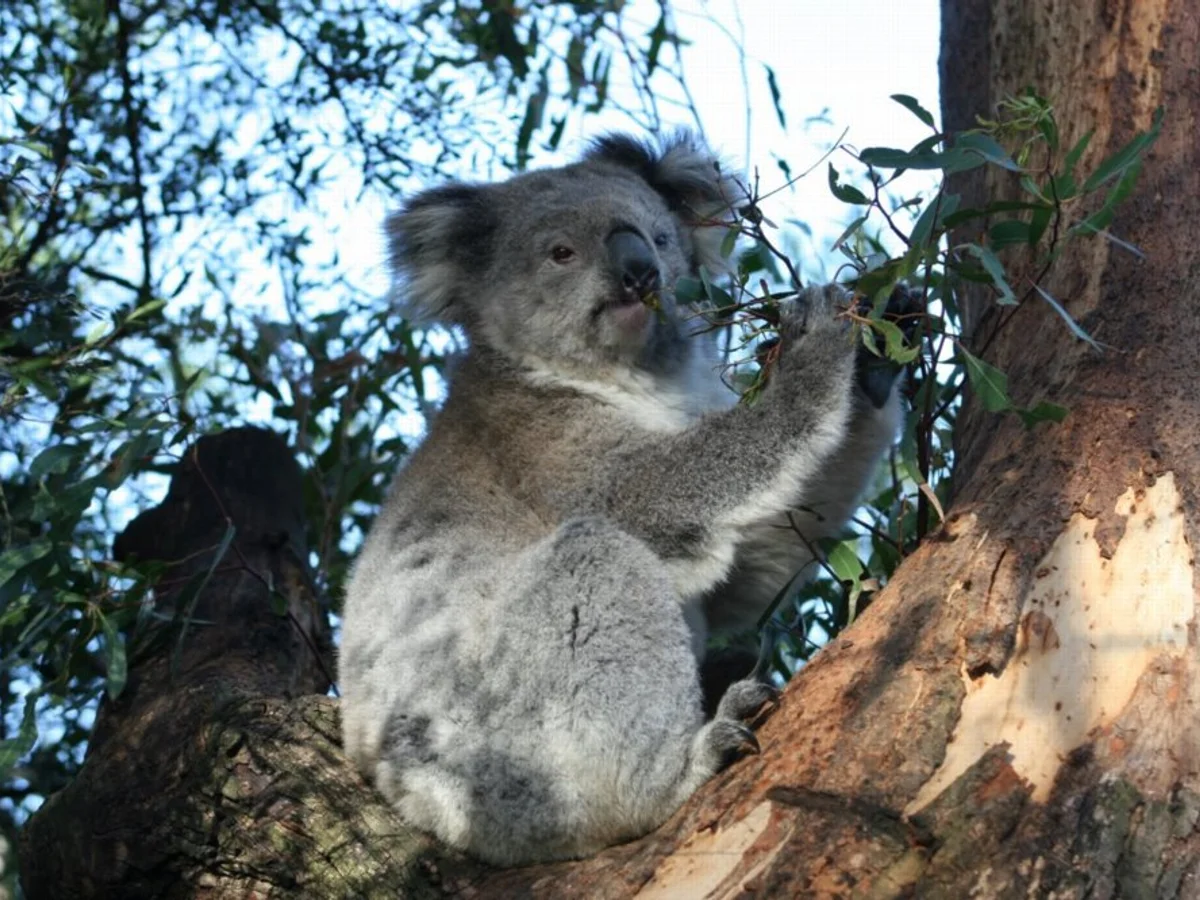
Herbivorous marsupials developed equally brilliant survival specializations. Kangaroos evolved their iconic bipedal hopping mechanism, recognized by biomechanists as one of the most energy-efficient modes of high-speed locomotion over arid, low-productivity terrains. Koalas evolved a slow metabolism and specialized liver detoxifying enzymes to thrive exclusively on nutrient-poor, toxic eucalyptus foliage that few other animals can ingest.
While modern Australian marsupials face severe challenges today from introduced placental species like feral cats and foxes, as well as anthropogenic climate change, their surviving diversity remains a testament to the power of deep time. The journey from ancient Patagonia across green Antarctic forests transformed humble marsupial travelers into the enduring masters of the Australian continent.