

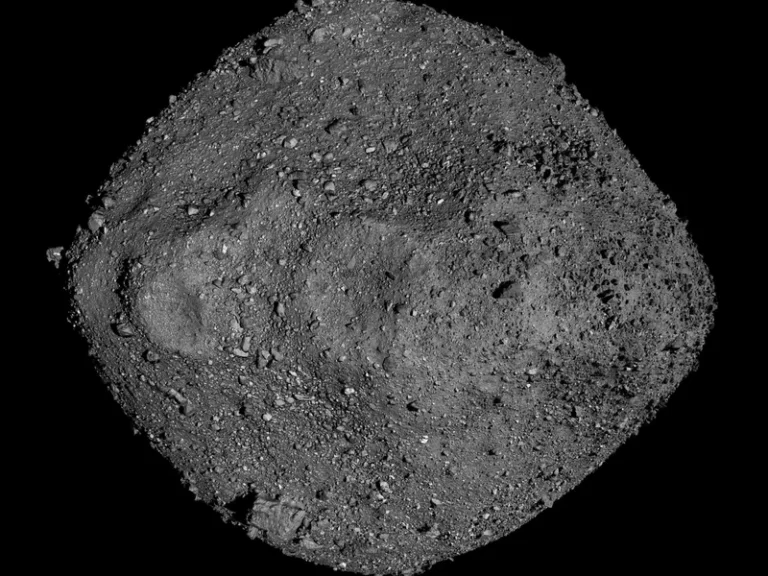

When the sample return capsule from NASA’s OSIRIS-REx mission parachuted onto the desert floor of the Utah Test and Training Range in September 2023, planetary scientists received a treasure trove: the first pristine regolith from asteroid Bennu regolith OSIRIS-REx preserved untouched for more than 4.5 billion years. Rigorous laboratory examination of 121 grams of dark, extraterrestrial aggregate inside specialized nitrogen gloveboxes at Johnson Space Center has unveiled evidence of hydrated extraterrestrial water, complex organic building blocks, prebiotic amino acids, and magnesium-sodium phosphates pointing to an ancient hydrothermal environment.
The OSIRIS-REx Odyssey: A Seven-Year Chase for Primordial Rubble
Asteroid 101955 Bennu was selected as the flagship destination for NASA’s New Frontiers program because of its primitive B-type carbonaceous composition. Spanning 500 meters in diameter, Bennu escaped the high-temperature melting and geological differentiation that altered major planets, retaining an unaltered chemical inventory from the protosolar nebula.
Traveling over two billion kilometers, the OSIRIS-REx spacecraft arrived in orbit in December 2018. High-resolution imaging by PolyCam and the OLA laser altimeter revealed a rugged terrain littered with house-sized boulders and craters rather than the smooth gravel beaches anticipated by early radar maps.
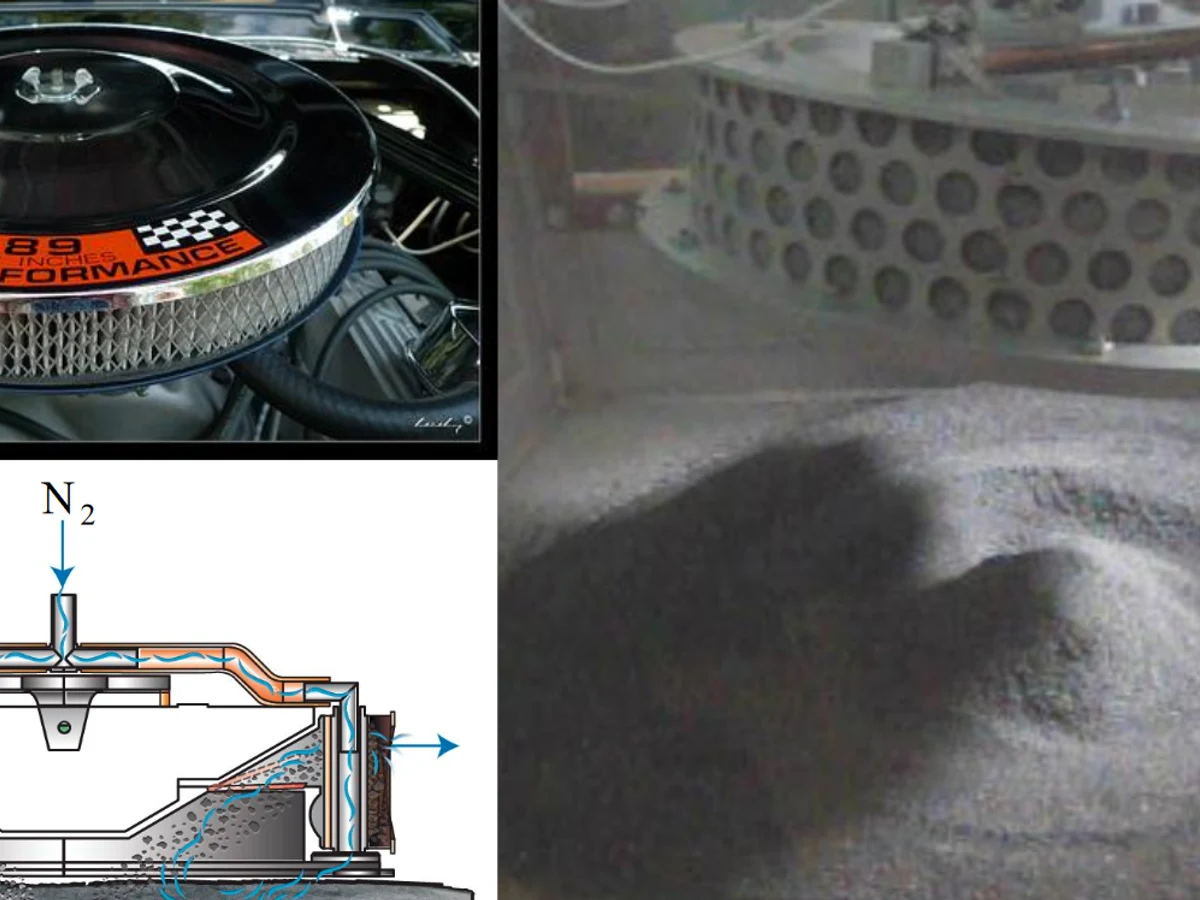
On October 20, 2020, the probe executed a historic Touch-and-Go maneuver inside the Nightingale crater. Extending its 3.3-meter TAGSAM arm, the spacecraft contacted the surface, fired pressurized nitrogen gas to agitate the loose regolith, and collected over 120 grams of material before embarking on its return trajectory.
Orbital integrations trace Bennu origin back to the primordial Polana or Eulalia asteroid families in the inner Main Asteroid Belt. Over hundreds of millions of years, the subtle thermal push of the Yarkovsky effect—anisotropic photon emission from the rotating, sunlit asteroid surface—gradually migrated Bennu into a planetary resonance corridor, nudging it into its current near-Earth trajectory.
A Carbon-Rich Haven: Prebiotic Amino Acids and Extraterrestrial Sugars
Detailed analytical spectroscopy published in peer-reviewed journals confirmed that Bennu regolith contains nearly 5 percent total carbon by weight—the highest concentration of organic carbon ever measured in an extraterrestrial sample.
Chromatography and ultra-high-resolution mass spectrometry detected an intricate suite of polycyclic aromatic hydrocarbons, monocarboxylic acids, and essential purine and pyrimidine nitrogenous bases that form the structural backbone of ribonucleic acids (RNA) and DNA.
Crucially, racemic mixtures of amino acids such as glycine, alanine, and isovaline displayed equal proportions of D- and L-enantiomers, providing unambiguous verification that these organic building blocks synthesized abiotically in space before the dawn of terrestrial biology.
Complementing soluble amino acids, scanning transmission X-ray microscopy revealed extensive insoluble organic matter (IOM) resembling terrestrial kerogen. Rich in polyaromatic units interconnected by aliphatic chains, this macromolecular organic framework synthesized in cold molecular clouds before the young Sun ignited, capturing prebiotic chemistry at cosmic baseline.
Nearly 5% of Bennu regolith consists of organic carbon, hosting amino acids and essential RNA/DNA precursors.
The deuterium-to-hydrogen ratio in Bennu minerals perfectly mirrors Earth’s oceans, proving an asteroidal origin.
Sodium-magnesium phosphates indicate warm, briny hydrothermal reservoirs inside Bennu’s parent body.
Rubble-pile porosity data provides the scientific blueprint to deflect potential Earth impactors in 2182.
Hydrothermal Fingerprints: Evidence of Warm Briny Reservoirs
Approximately 80 percent of Bennu’s mineralogical volume consists of hydrated phyllosilicates (serpentine and smectite clays). Hydroxyl groups (-OH) bound directly into these crystal lattices confirm extensive chemical alteration by liquid water during the Solar System’s first few million years.
However, the most startling discovery was bright veins of pure sodium-magnesium phosphate. On Earth, these minerals precipitate exclusively in alkaline brines or seafloor hydrothermal venting systems during the serpentinization of ultramafic crust.
This diagnostic evidence reveals that Bennu is a fragment of a differentiated parent planetesimal measuring hundreds of kilometers across, possessing an internal hydrothermal ocean heated by the decay of radioactive aluminum-26, remarkably similar to Saturn’s icy moon Enceladus.
Transmission electron microscopy of phyllosilicate matrix grains indicates that internal hydrothermal circulation occurred at moderate temperatures between 50C and 150C under mildly alkaline conditions. These warm, aqueous chemical environments provided ideal catalytic surfaces for the oligomerization of simple organic compounds into complex polymers.
«Bennu’s material represents a pristine planetary time capsule sealed before Earth’s crust ever solidified. We are holding the primordial molecular foundation from which Earth’s oceans and biological life emerged.»
Dr. Dante Lauretta, Regents Professor of Planetary Science and OSIRIS-REx Principal Investigator
Resolving the Origin of Earth’s Primordial Oceans
The origin of Earth’s vast hydrosphere has generated decades of scientific debate. The classical cometary hypothesis faced an impasse when space missions demonstrated that cometary water possesses a deuterium-to-hydrogen (D/H) ratio two to three times greater than Standard Mean Ocean Water (VSMOW).
Isotopic measurements of water liberated from Bennu’s clay minerals yielded an exact match: the D/H signature of Bennu’s regolith aligns with the isotopic baseline of Earth’s seawater.
This correlation demonstrates that volatile-rich carbonaceous asteroids supplied the vast majority of Earth’s surface water and prebiotic precursor molecules during the Late Heavy Bombardment.
Comparisons with samples from asteroid Ryugu returned by JAXA Hayabusa2 confirm that while both asteroids share CI-like chondritic lineage, Bennu preserves significantly higher abundances of volatile-soluble sodium phosphates and organic nitrogen, highlighting localized geochemical diversity across the early Solar System.
- Identification of abiotic amino acids and nucleic acid building blocks.
- Proof that carbonaceous asteroids delivered Earth’s oceans and primordial atmosphere.
- Discovery of hydrothermal phosphate minerals identical to deep-sea alkaline vents.
- Redirection of the spacecraft as OSIRIS-APEX to intercept asteroid Apophis in 2029.
Planetary Defense and the OSIRIS-APEX Journey to Apophis
Understanding Bennu’s structural properties holds vital importance for planetary defense. Bennu is categorized as a potentially hazardous object with a cumulative 1-in-2,700 impact probability in the year 2182. Its high bulk porosity (exceeding 70%) classifies it as a fragile rubble-pile asteroid, informing deflection strategies.
Following the capsule release, NASA repurposed the main spacecraft as OSIRIS-APEX. The probe is currently cruising toward a rendezvous with asteroid 99942 Apophis during its historic 31,000-kilometer flyby of Earth in April 2029.
Observing tidal distortion during Apophis’s close gravitational encounter will provide key data on asteroid interior geophysics and hazard mitigation.
Beyond hazard mitigation, the low mechanical cohesion and high porosity measured at Bennu provide vital engineering data for future in-situ resource utilization architectures. Water-bearing clays and volatile carbonaceous matrices on near-Earth asteroids could serve as deep-space refueling hubs producing liquid hydrogen and oxygen propellant.