

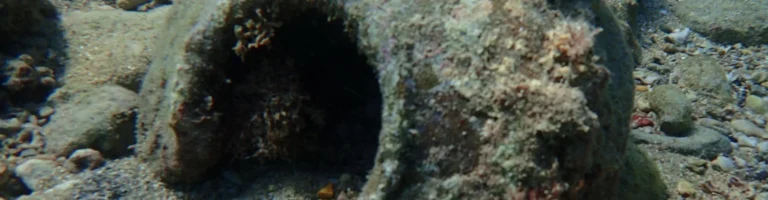

Marine archaeology has achieved a historic milestone of unprecedented global significance: at a depth of roughly 30 meters off the rugged shores of Kekova Island in southern Turkey, an international scientific expedition has located the remains of the oldest known merchant shipwreck ever identified in the Mediterranean Sea. Radiocarbon dating and ceramic typological analyses place the catastrophic sinking between 2700 and 2400 BCE—dating squarely to the Early Bronze Age, concurrent with the construction of the Great Pyramid of Giza in Old Kingdom Egypt. Although the 10-meter timber hull disintegrated across nearly five millennia of marine immersion, a pristine seabed time capsule survived: dozens of Levantine amphorae preserving organic residues of extra-virgin olive oil, vintage wine, and antiseptic resins, alongside specialized dairy-processing vessels and massive stone anchors that fundamentally overturn established paradigms regarding early trans-Mediterranean seafaring.
A Submerged Time Capsule at 30 Meters: Chronology of the Discovery
The jagged coastline of Turkey’s Antalya province, famed for submerged grottos and treacherous offshore shoals, has long drawn international marine archaeological missions. Yet the maritime shelf surrounding Kekova Island yielded a generational breakthrough. Conducting systematic multibeam sonar profiling, researchers registered an acoustic anomaly resting on a sandy terrace thirty meters beneath the surface.
Subsequent scuba ground-truthing confirmed an astonishing reality: rather than an isolated scatter of discarded pottery, divers encountered an intact commercial cargo assemblage from a lost merchantman. The previous record-holder for antiquity—the Dokos Island wreck in Greece, dated to roughly 2200 BCE—was eclipsed by more than three hundred years, establishing the Kekova vessel as the undisputed sovereign of Early Bronze Age (2700–2400 BCE) nautical finds.
While the ship’s organic superstructure—cedar planks, oak ribs, and tenon joinery—fell prey to saline decay and wood-boring shipworms (*Teredo navalis*), the spatial distribution of the surviving stone anchors and ceramic jars mirrored the exact original waterline: approximately ten meters in overall length and three meters in beam.
Anatomy of the Cargo: Levantine Amphorae and Onboard Cheese Processing
The core scientific prize comprises over thirty two-handled ceramic jars. Mineralogical clay sourcing confirmed they were fired in ceramic workshops across the Jordan Valley and the central Levantine coastline. This geochemical signature demonstrates that the vessel set sail from eastern Mediterranean trading ports, charting a westerly course toward proto-urban kingdoms in Anatolia or emerging prepalatial centers in Minoan Crete.
Inside hermetically silt-sealed vessels, organic residue specialists detected telltale biomolecular traces. Gas chromatography identified fatty acid methyl esters from cold-pressed olive oil, tartaric acid hallmarks of fermented wine, and terebinth tree resin, which served as an ancient antimicrobial sealant and flavoring agent.
Most intriguing was an anomalous ceramic vessel featuring precision-drilled perforations beneath its rim. Morphological comparison revealed it operated as an onboard straining vat for milk curdling—allowing the prehistoric mariners to manufacture fresh cottage cheese or cultured butter during extended offshore voyages.
«The Kekova discovery pushes back the timeline of organized open-water maritime commerce in the Mediterranean by several centuries. This vessel was plying Anatolian coastal routes while Egyptian pharaohs were raising their monuments, ferrying bulk commercial commodities across ancient sea lanes.»
Prof. Hakan Öniz, Expedition Lead and Chair of Underwater Archaeology, Akdeniz University
Monolithic Stone Anchors: Engineering Protocols of Early Navigators
Resting directly adjacent to the ceramic cargo were three massive trapezoidal stone anchors, each weighing between 50 and 80 kilograms, complete with carved apical hawsers designed for thick hemp mooring lines.
Carrying three redundant anchors aboard a modest 10-meter vessel illustrates the strict survival protocols observed by prehistoric sailors. Navigation during the Early Bronze Age was predominantly cabotage—daytime coastal hopping that steered clear of trackless pelagic waters.
At dusk or upon encountering sudden squalls, anchoring inside protected coves was mandatory. A primary bow anchor held the vessel into breaking swells, while stern backups guarded against cable abrasion against sharp reefs. Tragically, a sudden nocturnal gale evidently drove the laden merchantman onto Kekova’s submerged limestone spurs before the second anchor could catch bottom.
✦ 4,700 Years Old
Dated to 2700–2400 BCE, surpassing all known Mediterranean wrecks by over three centuries.
✦ Levantine Amphorae Cargo
Over 30 ceramic jars carrying olive oil, vintage wine, resins, and specialized dairy-processing vessels.
✦ Heavy Stone Anchors
Three trapezoidal stone anchors up to 80 kg reveal sophisticated storm-anchoring and seamanship protocols.
✦ Early Globalization
Proves bulk maritime commerce connected Egypt, Canaan, and Anatolia during the Great Pyramid construction era.
Rewriting Prehistoric Trade: The Dawn of Maritime Globalization
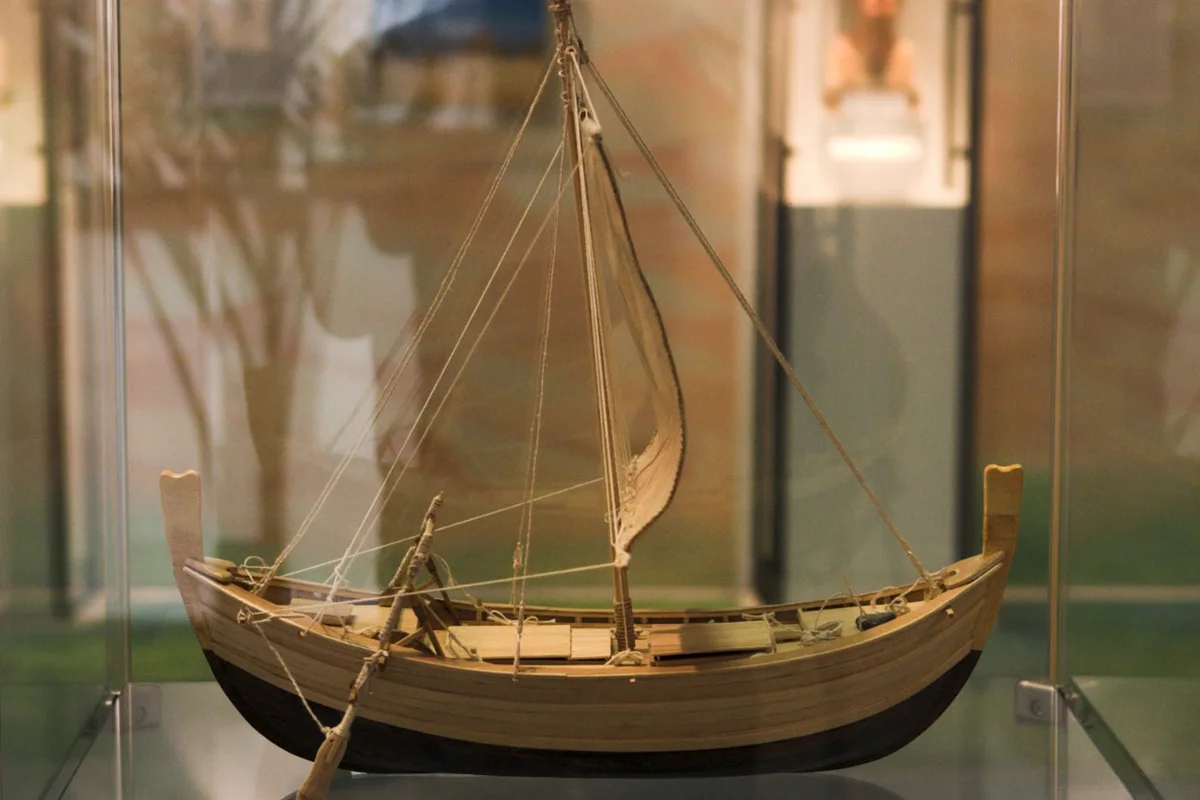
For generations, mainstream economic historians argued that third-millennium BCE commerce between the Near East and Europe was overwhelmingly terrestrial, characterized by laborious, segmented donkey caravans across the Anatolian highlands. Sustained bulk maritime transit was assumed to be an innovation of second-millennium Phoenicians and Mycenaeans.
The Kekova wreck decisively dismantles this conservative view. It provides incontrovertible material proof that complex, long-distance maritime trading networks flourished centuries before the Trojan War. Bronze Age economies were not isolated; they were interconnected through regular commercial seafaring.
Maritime corridors linked the Old Kingdom of Egypt during the reigns of Djoser and Khufu with Canaanite city-states, the second citadel phase of Troy, and early Aegean seafaring communities. Waterborne logistics slashed transport costs by orders of magnitude, serving as the primary catalyst for technological diffusion across the ancient world.
Key Facts on the World’s Oldest Mediterranean Shipwreck at Kekova:
- Discovered at 30 meters depth off Kekova Island, dating to the Early Bronze Age (~2500 BCE).
- Surpasses Greece’s Dokos shipwreck by over 300 years, establishing a new record in nautical archaeology.
- Chemical residues confirm shipments of olive oil, wine, and antimicrobial resins, plus onboard cheese-making.
- Demonstrates that bulk trans-Mediterranean seafaring catalyzed economic exchange long before Phoenician dominance.
Future Conservation: Deep In Situ Preservation and Digital Reconstruction
Turkey’s Ministry of Culture and Tourism is spearheading a comprehensive multi-year conservation protocol. Because lifting porous terracotta that has absorbed seawater for 4,700 years risks catastrophic osmotic fracture, each recovered artifact undergoes multi-stage desalination baths in climate-controlled laboratory tanks.
Simultaneously, underwater photogrammetry has constructed sub-millimeter 3D spatial models of the seabed site. A dedicated virtual reality exhibition in Antalya will soon enable visitors to explore the shipwreck in real time without disturbing the fragile marine ecosystem.
Sub-bottom acoustic probes suggest additional artifact layers lie buried beneath the surrounding sand ripples, potentially concealing copper oxhide ingots or tin caches—the foundational building blocks of the Bronze Age metallurgical revolution.