

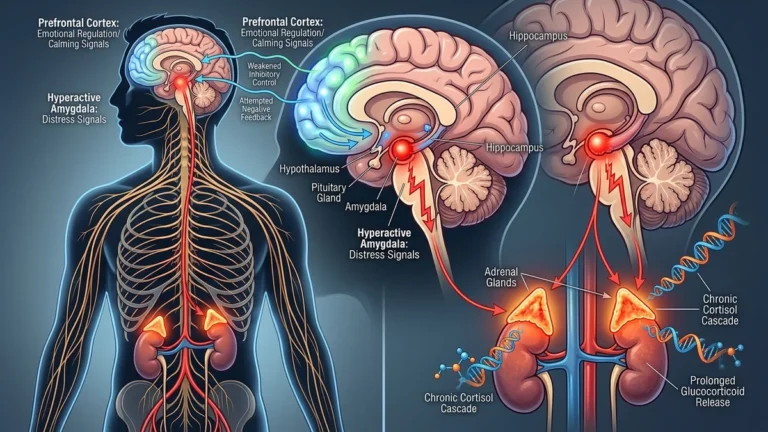

From an evolutionary perspective, the acute fight-or-flight response was designed as a brief, high-stakes metabolic adaptation that mobilized survival mechanisms for mere minutes to escape immediate physical threats. In modern post-industrial society, however, stressors are primarily chronic, psychosocial, and unrelenting. Sustained hyperactivity of the hypothalamic-pituitary-adrenal (HPA) axis transforms the vital regulatory hormone cortisol into a potent endogenous neurotoxin, driving structural atrophy within key cognitive and affective centers of the brain.
The Stress Cascade: Endocrine Mechanics of the HPA Axis
Upon perception of a psychological or somatic threat, the basolateral amygdala conveys excitatory signals to the paraventricular nucleus of the hypothalamus. The hypothalamus secretes corticotropin-releasing hormone (CRH), which stimulates the anterior pituitary gland to release adrenocorticotropic hormone (ACTH) into the systemic circulation.
ACTH binds to melanocortin 2 receptors in the adrenal cortex, triggering robust glucocorticoid biosynthesis — predominantly cortisol. Cortisol mobilizes glucose, elevates vascular tone, and temporarily suspends digestion, reproduction, and immune surveillance to prioritize immediate survival.
Feedback Loop Collapse: Glucocorticoid Receptor Downregulation
Under physiological conditions, the HPA axis is tightly governed by a negative feedback loop: circulating cortisol binds to high-affinity mineralocorticoid (MR) and low-affinity glucocorticoid (GR) receptors in the hippocampus and prefrontal cortex, which in turn signal the hypothalamus to cease CRH output.
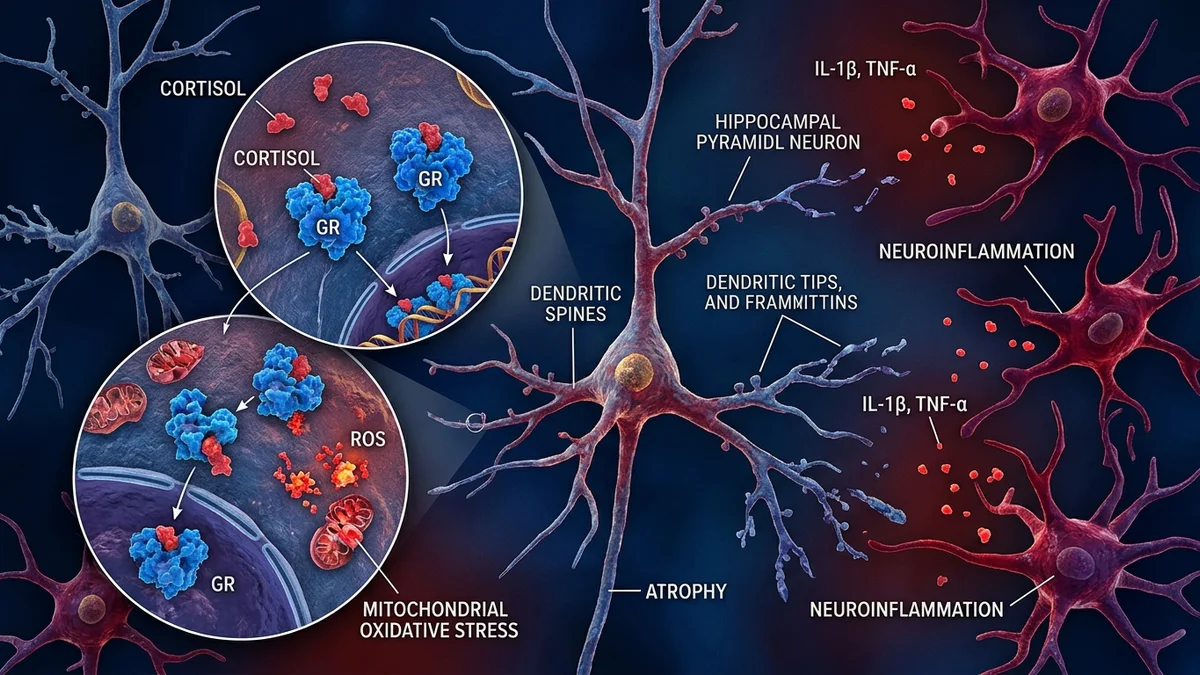
Under unremitting chronic stress, prolonged hypercortisolemia causes glucocorticoid receptor downregulation and neurotoxic degradation within the hippocampus. The brain loses its inhibitory braking system, leaving the HPA axis in a permanent runaway state even during nocturnal rest.
Hypothalamus, pituitary, and adrenal glands mobilize emergency metabolic defenses in seconds.
Chronic excess cortisol degrades hippocampal receptors, disabling the shutdown switch.
Glutamate excitotoxicity and calcium influx shrink the memory center volume by up to 14%.
Circadian entrainment, adaptogenic support, and breathwork restore hippocampal synaptic density.
Glutamate Excitotoxicity: Hippocampal Atrophy and Amygdala Expansion
Excessive glucocorticoid signaling impairs glial glutamate reuptake, generating lethal synaptic glutamate accumulation. Excess glutamate overstimulates NMDA receptors, triggering massive intracellular calcium influx that destabilizes mitochondrial bioenergetics.
Volumetric MRI scans reveal an 8–14% reduction in total hippocampal volume alongside widespread loss of CA3 dendritic branching. Conversely, the basolateral amygdala undergoes dendritic hypertrophy and hyperconnectivity, cementing a state of chronic vigilance, panic, and catastrophic thinking.
«Chronic stress physically remodels the brain. Prolonged, unremitting exposure to elevated glucocorticoids acts like slow cellular poison: it causes hippocampal dendrites to retract and wither away, while simultaneously stimulating dendritic hypertrophy in the amygdala — transforming the fear and panic circuit into a hypersensitive alarm that never turns off.»
Dr. Robert Sapolsky, Professor of Biology and Neurology at Stanford University, Author of Why Zebras Don’t Get Ulcers
Somatic Consequences: Endothelial Damage and Low-Grade Inflammation
While acute cortisol administration suppresses inflammatory responses, persistent elevation induces glucocorticoid receptor resistance in leukocytes. This leads to paradoxical systemic low-grade inflammation.
Elevated circulating interleukin-6 (IL-6) and TNF-alpha damage the vascular glycocalyx, fostering arterial stiffness, endothelial dysfunction, insulin resistance, and heightened cardiovascular vulnerability.
- Secure 10–15 minutes of direct morning sunlight to anchor the circadian cortisol awakening response.
- Deploy the physiological sigh (two nasal inhales followed by an extended oral exhale) for rapid parasympathetic tone upregulation.
- Refrain from strenuous high-intensity interval training past 7:00 PM to prevent nocturnal hypercortisolemia.
- Utilize phosphatidylserine (300 mg) alongside magnesium bisglycinate prior to sleep to blunt nighttime ACTH elevations.
Clinical Protocols for HPA Recalibration and Neuroprotection
Restoring GR sensitivity and dampening excessive sympathetic tone requires a targeted circadian and biochemical protocol. Morning photon exposure within 30 minutes of awakening optimizes the Cortisol Awakening Response (CAR), aligning diurnal rhythms and suppressing evening cortisol secretion.
Clinically validated adaptogens (such as KSM-66 ashwagandha and phosphatidylserine to blunted excess ACTH), physiological sigh breathing techniques that engage parasympathetic vagal brakes, and structured mindfulness-based stress reduction (MBSR) reverse hippocampal gray matter loss within 8 weeks.