



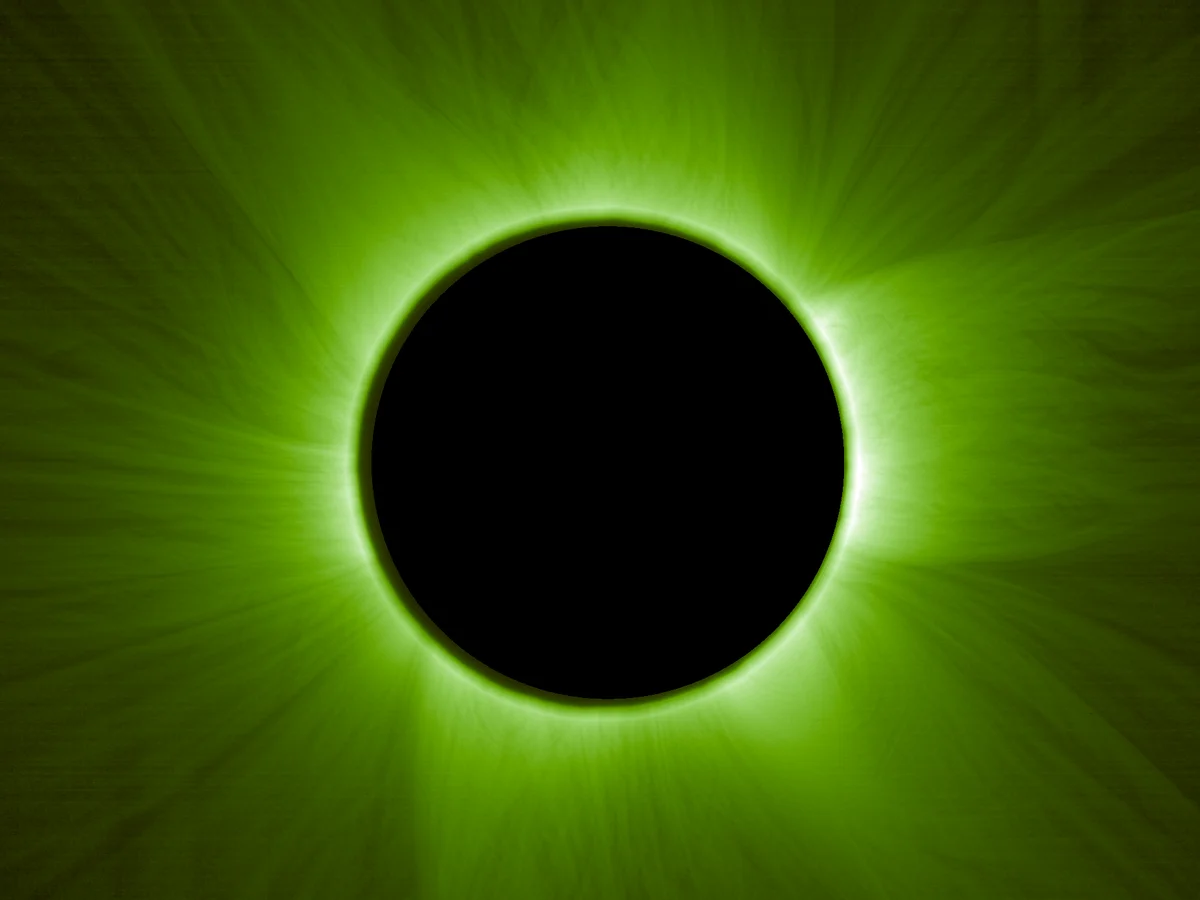
The European Space Agency (ESA) has revealed the remarkable first findings from its ground-breaking Proba-3 mission. Operating in high Earth orbit with sub-millimeter precision, two autonomous spacecraft have achieved an unprecedented milestone by creating an artificial solar eclipse in deep space. By mechanically occluding the dazzling solar disk, the onboard coronagraph captured three colossal plumes of magnetized plasma erupting into the corona, shedding new light on long-standing solar mysteries.
Observing the solar corona from the ground is notoriously difficult: natural total eclipses are brief and rare, while Earth’s atmosphere scatters sunlight and degrades resolution. Just as deep-space observatories like the James Webb Space Telescope probe cosmic origins, Proba-3 is designed to unlock the fundamental physics operating in our solar neighborhood.
The Proba-3 tandem consists of two satellites: a 240 kg Occulter spacecraft and a 310 kg Coronagraph spacecraft. Flying in a highly elliptical orbit 144 meters apart, they act as a single rigid 150-meter-long virtual solar telescope. Any alignment deviation exceeding a single millimeter would spoil the shadow, but onboard laser metrology and visual tracking maintain flawless formation.
Time-Lapse Eruptions and the Artificial Solar Eclipse
Solar physicists synthesized a five-hour continuous ASPIICS observation run with data from NASA’s Solar Dynamics Observatory (SDO). The resulting high-resolution time-lapse illustrates three massive prominences — dense structures of cool 10,000 °C plasma suspended by magnetic arches — erupting outward through the surrounding million-degree coronal furnace.
Unlike standard flares, prominence eruptions are propelled by magnetic reconnection events that release billions of tons of coronal mass into interplanetary space, generating geomagnetic storms that threaten orbital hardware and terrestrial power grids.
«Generating a stable occultation shadow for hours at a time fundamentally alters coronal research. We can finally observe where the solar wind is accelerated right at its point of origin without atmospheric distortion».
Damien Galano, ESA Proba-3 Project Manager
The Coronal Heating Mystery: The visible solar surface sits at roughly 5,500 °C, while the tenuous outer corona reaches 1 to 2 million degrees. Proba-3’s polarimetric observations aim to prove whether magnetohydrodynamic Alfvén waves supply this intense thermal energy.
Precision Formation Flying for Future Astronomy
The triumph of Proba-3 confirms that distributed satellite constellations can substitute for massive, cost-prohibitive space telescopes. This formation-flying architecture lays the foundation for future exoplanet imaging missions, echoing recent breakthroughs such as the discovery of a second-generation phoenix planet around a white dwarf.
- Sub-Millimeter Guidance: Uses visual markers, pulsed laser rangefinders, and cold-gas thrusters for real-time station keeping.
- Observation Window: Yields up to 6 hours of continuous coronal imaging during each 19.7-hour orbital revolution.
- Space Weather Forecasting: Enhances predictive early warning models for coronal mass ejections impacting Earth.
The mission results have been compiled by the Royal Observatory of Belgium alongside the European Space Agency (ESA), with dozens of additional occultation campaigns planned to build an unprecedented high-resolution archive of our Sun.